


Is the graphics card you bought really durable? Recent data from German retailer Mindfactory may give you a clue. The company used its own channels to calculate the recent RMA ratio and number of cases for graphics cards from the two camps, and found that AMD graphics cards have a higher repair rate than its rival camp. The retailer combined data from more than 100,000 graphics cards it sold, so the statistics are relatively close to reality. Interestingly, the reason why AMD’s repair rate is higher than that of its competitors may be thanks to its partner manufacturers. Looking at the repair rate of individual brands, it turns out that the repair rate of AMD graphics cards produced by Powercolor is slightly higher, thus increasing the overall repair rate of A cards:
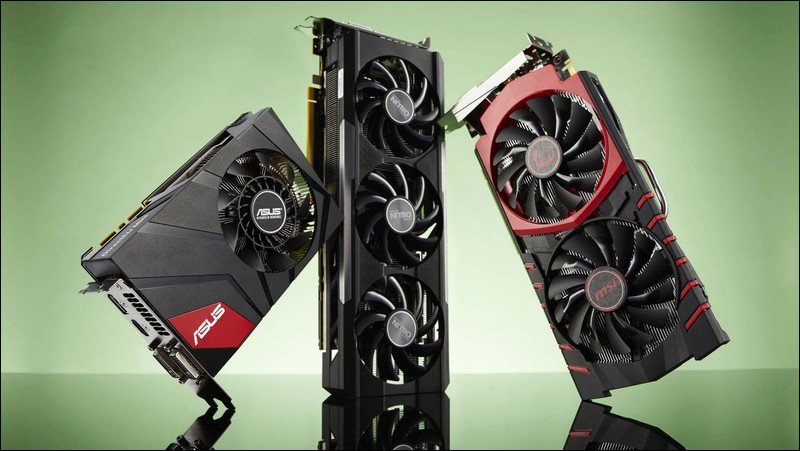
▲Although AMD graphics cards have excellent cost performance, the repair rate is dragged down by second-tier board manufacturers (Image source)
The proportions of each brand vary, but overall they are still within the normal range.
When many people buy a graphics card, they may not only consider whether it can run games smoothly and happily, but also consider the issue of their wallet. As a result, choosing a cheap and fast graphics card is what many people are targeting. However, cheap graphics cards sometimes also mean that the warranty period is shorter, or they save more materials in other aspects. The accumulation of these various problems is reflected in the figures, which is an ugly stain.
Mindfactory.de, a local German retailer, has made statistics on its nearly 100,000 graphics cards sold. Generally speaking, 2% to 4% of graphics cards will malfunction due to some unpredictable problems. As a seller, naturally you have to accept customer complaints and repairs. Among these graphics cards, what is surprising is that the repair rate of AMD Radeon 5000 series graphics cards is slightly higher than that of rival NVIDIA. Although the average repair rate of 3.29% is still within the acceptable range, it is always annoying to compare people. NVIDIA has a 2.11% repair rate and a relatively large sales volume to stabilize its opponents. For A-card fans, this data is really a big slap in the face to Xiangxiangka in their hearts:

▲AMD is gradually growing in graphics card market share, but the repair rate seems to be quietly increasing (Image source)
If you spread out the data and look at it, you will see a wonderful phenomenon. The graphics card brands sold by Mindfactory.de include common Taiwanese brands such as ASUS, ASRock, Gigabyte, MSI, Sapphire, PowerColor, and Zotac. Most of these brands have their own supported graphics card camps. Most of them choose to do both. A few brands such as Sapphire, PowerColor, XFX, and KFA2 produce graphics cards for one camp alone. As far as the repair rate of each brand is concerned, it roughly falls on the spectrum of 1% to 2%. The NVIDIA camp’s repair rate is relatively stable, mostly controlled at 2% or lower. Except for Palit’s graphics card repair rate, which reaches 4.13%, the data can be said to be relatively stable, while the AMD camp is somewhat unstable. The repair rate of XFX reaches 3.59%, while the repair rate of PowerColor is as high as 5.59%, which can be called a “war criminal” that increases the overall repair rate.
The NVIDIA camp is relatively stable in terms of brand. At least Taiwan’s board manufacturers mostly perform well and can be said to be performing at a normal level. However, if we look at the repair rates of the two camps in terms of GPUs, the RTX 2080 Ti (5.35%) has the highest repair rate of the GPU, which is two percentage points more than the GPU Radeon 5700 with the highest repair rate in the AMD camp. Except for this point, the data are basically quite low and basically within a reasonable range:
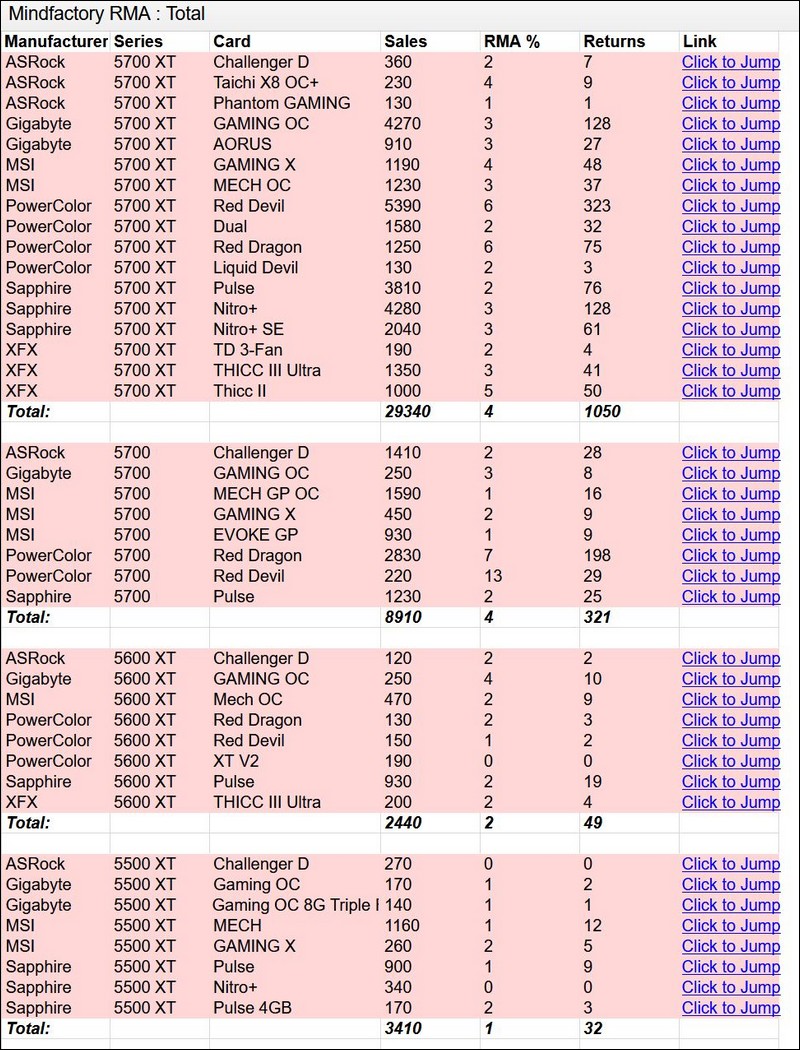
▲AMD graphics card RMA quantity and proportion information of each brand (Image source)
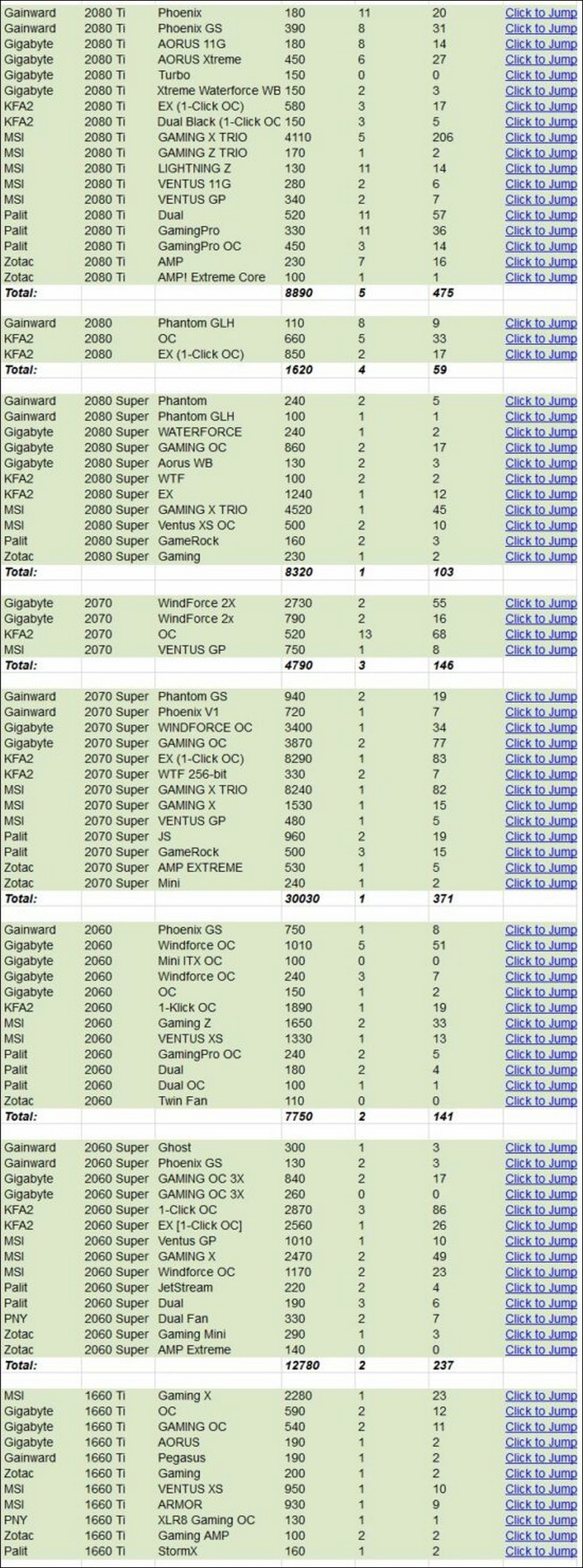
▲NVIDIA graphics card RMA quantity and ratio information for each brand (Image source)
From these data, we can find that even for PowerColor graphics cards with a relatively high proportion, the RMA proportion is only more than 5%. Overall, the chances of the graphics card itself actually being repaired is not very high. With such a huge number of statistics, there is only a very low proportion. I believe that the skills of each board manufacturer are still quite superb. The author believes that the data can be used as a reference, but when buying a graphics card, you still have to look at the warranty period, additional services or gifts, etc.
Buying a first-tier brand graphics card is always more secure, but of course you have to pay more in terms of money. It all depends on personal acceptance. The GPU war between the two camps also allowed players to buy cheap and high-quality cards. Excluding the rare possibility of large-scale disasters, buying a graphics card is actually not a gamble on one’s character. If you are really unfortunate to encounter a defective product, as long as you buy it through legitimate channels, you will be covered by the original manufacturer’s warranty.
Source: KOCPC Chinese