


Apple’s AI smart glasses, which have been rumored for quite a long time, now really seem likely to debut next year. Earlier, Mark Gurman shared more details: Apple does not plan to develop a dedicated app platform for the glasses; instead, it will let Siri operate apps on the iPhone, so developers won’t have to rewrite software for the glasses. According to current plans, the glasses will be unveiled at WWDC in June 2027 and begin shipping before the end of the year.

Image source: MacRumor
Details have emerged about Apple’s first AI smart glasses, the N50: no dedicated app is required—just wear them and tell Siri to hail a ride or make a reservation.
According to foreign media MacRumor According to the report, Mark Gurman revealed the latest progress on Apple’s AI smart glasses in a recently published issue of the Power On newsletter. The glasses’ internal codename is N50. The project began in the early 2020s, and the hardware design is now largely finalized. The goal is to announce them at WWDC in June 2027 and begin shipping by the end of 2027.
Mark Gurman said the prototype’s frames are slightly thinner than Meta’s second-generation Ray-Ban, the camera cutouts are built directly into the frame, and users can charge it while wearing it. The system runs a stripped-down version of visionOS 28, with the main processing handled by a paired iPhone, and it does not support Android. The first generation has no AR display; all interactions are handled through Siri voice commands and the camera. Third-party services also do not require dedicated apps—Siri directly operates the apps on the iPhone.
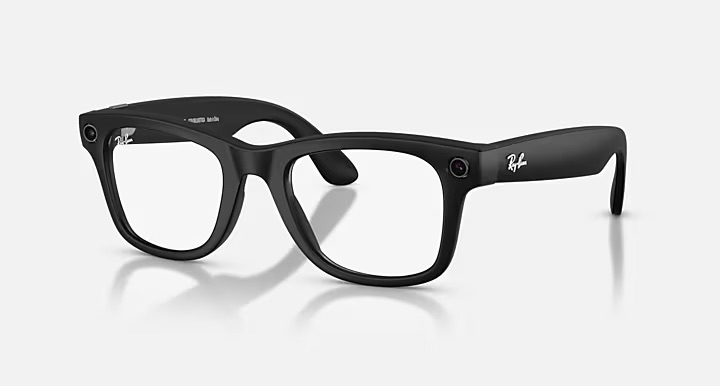
RAY-BAN META (GEN 2) WAYFARER (Image source:RayBan official website)
When a new device first launches, if no apps are available, users may feel that these glasses aren’t very useful, and the platform side also has to persuade developers to build separate versions specifically for smart glasses, resulting in a long painful transition period. To address this, Apple’s possible approach this time looks quite good: developers only need to let Siri operate specific features in their own iPhone apps, and the glasses can directly reuse them. It’s also simple for users—they just need to wear the glasses and speak commands, which also means the glasses themselves are only responsible for listening, seeing, and responding.
The report also gives many everyday examples, such as reserving a restaurant, hailing a ride, ordering coffee, shopping online, and buying movie tickets. Gurman previously reported that Apple had used third-party apps such as Uber, Amazon, YouTube, and WhatsApp to test the new version of Siri’s ability to operate apps. Still, a reminder: these are all use cases planned by Apple. Whether they ultimately work will depend on whether developers provide support in time; not every app will be usable on the glasses as soon as it launches.

Siri can also understand what’s in front of you through the camera. Many people can imagine how useful this feature is—for example, while traveling and walking down the street, if you see a building with a distinctive design, you can ask Siri directly what place it is; open the fridge and ask it what you can cook with the ingredients you have; when abroad and you can’t read road signs or understand what the other person is saying, you can also ask Siri to help translate. For navigation, Siri will tell you how to go by voice.
Of course, it also has the basic everyday assistant features, including answering calls, handling messages, iPhone notifications, calendar, reminders, music control, and smart home control.
On the hardware side, the prototype details revealed this time are more extensive than before.
Besides the previously mentioned frame being slightly thinner than Meta’s second-generation Ray-Ban and the camera integrated into an oval opening on the frame, the N50 prototype is reportedly equipped with an indicator light at the front of the frame to show that the glasses are in use or charging, and Apple is still researching more privacy protection designs. There are also more styles and colors, with a focus on materials, sensors, and audio quality. Internal employees even describe the sound quality as “industry-leading,” and the glasses can be used to listen to music, make phone calls, and conduct FaceTime voice calls.
The charging design is one of the more interesting aspects this time. Near the end of the left temple on the prototype is a flat three-contact magnetic charging connector, about the size of a Tic Tac mint, allowing testers to charge the glasses while wearing them. This is more convenient than Meta’s Ray-Ban, which has to be placed in a charging case to charge. However, Gurman also said it is still unclear whether the official release version will use this charging method.
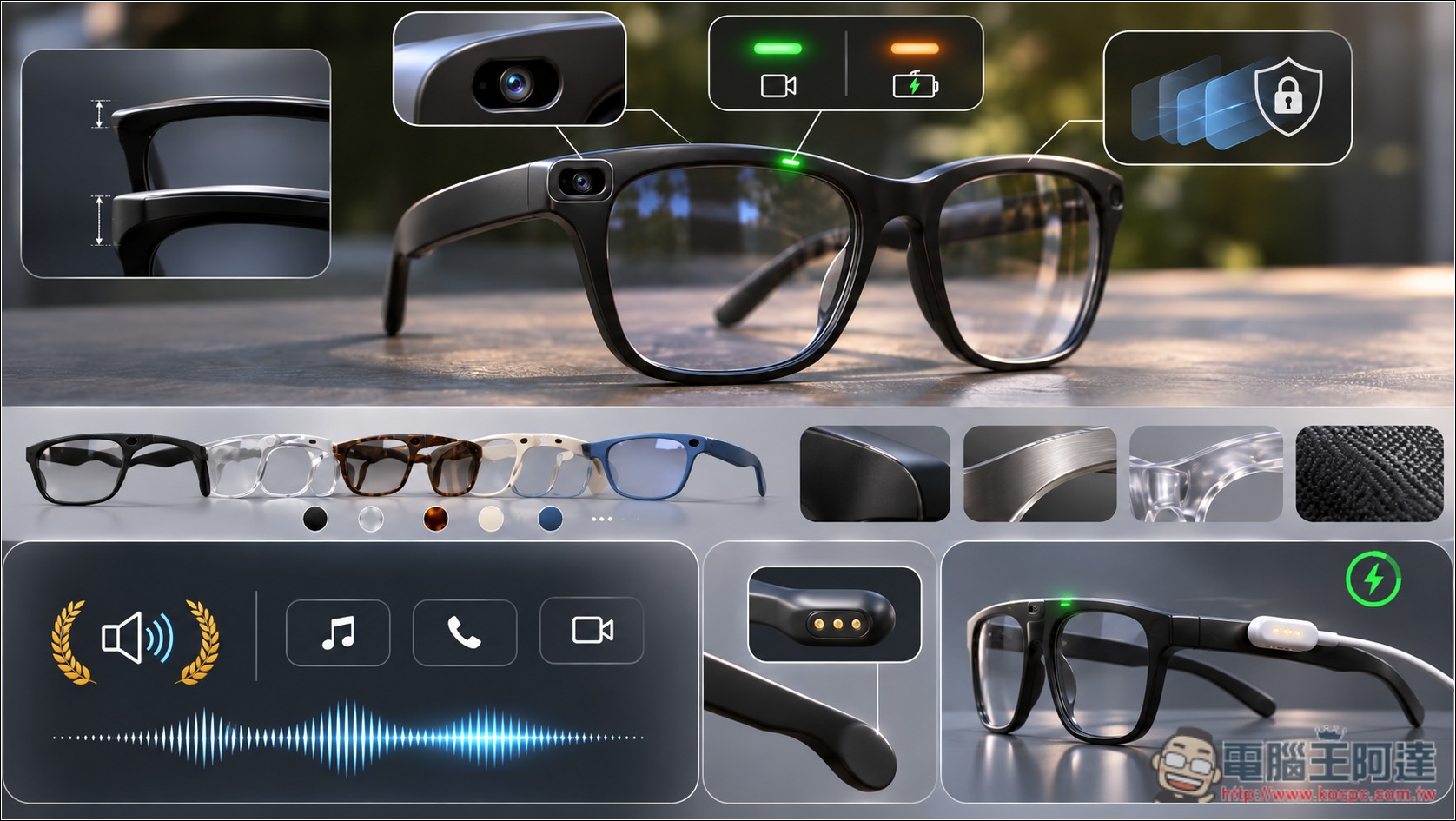
AI-generated schematic diagram
Gurman points out that the hardware has largely been finalized; what is actually lagging is software and AI development progress, which could delay the originally planned 2027 launch. However, Apple is still aiming to announce it at next year’s WWDC, hoping developers will have integrations ready before the glasses launch.
| Item | Current rumored specifications |
|---|---|
| Product code | N50 |
| Operating system | Lite version of visionOS 28 (prototype) |
| Processor | Derived from an older Apple Watch chip, with additional custom components handling wireless connectivity and imaging. |
| Operation method | Siri voice, camera |
| AR display | The first generation does not support it. |
| App support | No dedicated app required; use Siri to control the paired app on your iPhone. |
| Phone compatibility | Newer iPhones do not support Android. |
| Connection | Built-in Wi-Fi; some features can be used without an iPhone. |
| Charging method | Three-contact magnetic charging; can charge while worn (prototype) |
| Expected publication | WWDC June 2027 |
| Expected launch | Not yet determined by the end of 2027. |
| Selling price | Not yet announced |
Source: KOCPC Chinese