


Jensen Huang’s resignation as NVIDIA CEO on November 12 is still reverberating, yet graphics card prices in Akihabara, Japan, are falling at the same time. Recently, the GeForce RTX 5090 and RTX 5080 have seen single-day price drops of up to 22% in Japanese retail channels, and the timing is sensitive enough to bring to mind the issue of NVIDIA’s CEO transition. Yusuke Furuta, a senior editor at the Japanese media outlet ITmedia PC USER, published in the early hours of November 14Visiting Akihabara…, to make the picture of this round of price cuts clearer: the same GPU, on the same weekend, on the same electronics street, had a price gap of more than 500,000 yen.
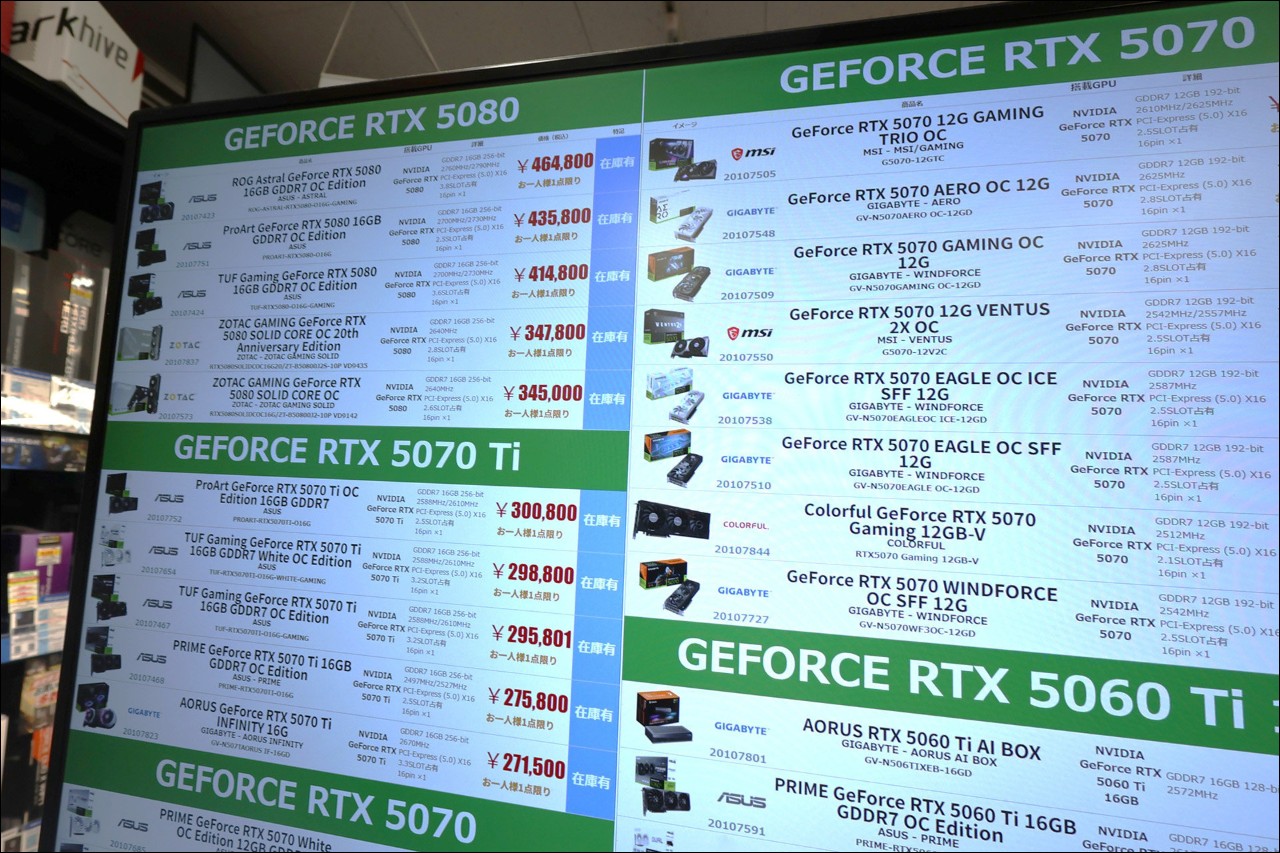
The Price Divide in Akihabara
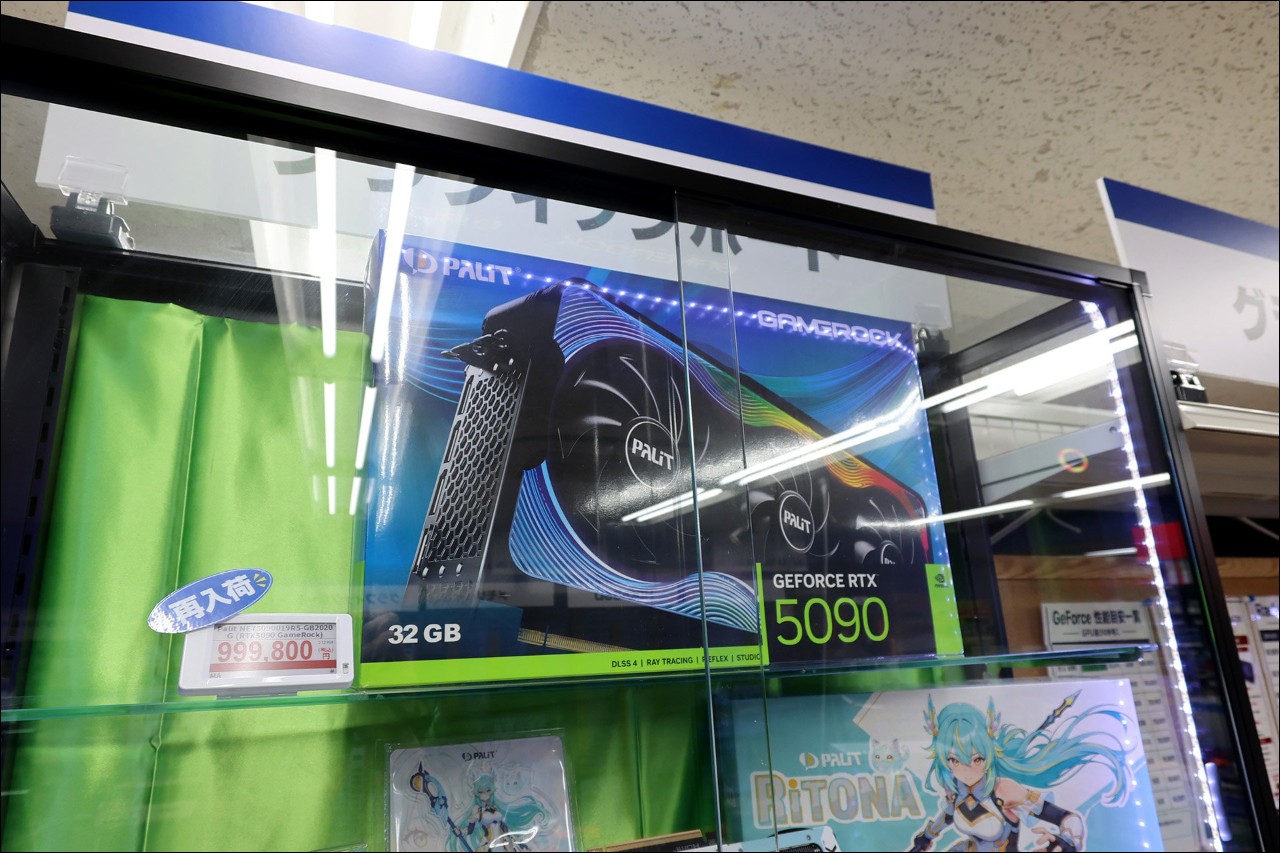
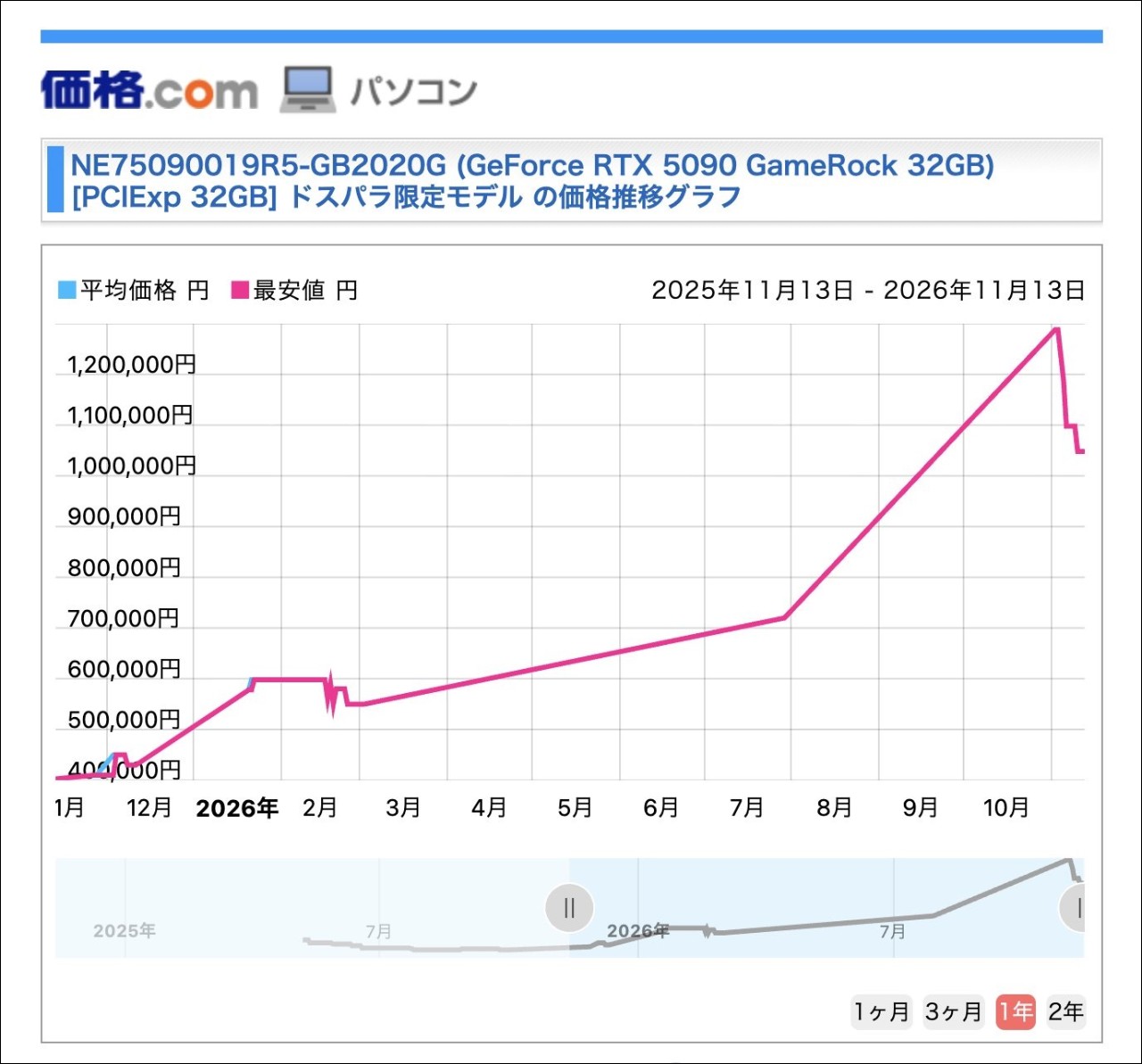
ITmedia’s visit report and data from the price comparison site Kakaku.com corroborate each other. The Palit GeForce RTX 5090 GameRock 32GB sold by retailer Dospara was restocked last week at 1.288 million yen, and one week later it was priced at 999,800 yen at the Dospara Akihabara main store, a price difference of 288,200 yen. Converted at the November 15 exchange rate, the old price was about NT$265,000 and the new price about NT$210,000, a drop of 22.38%, falling below the 1 million yen mark.
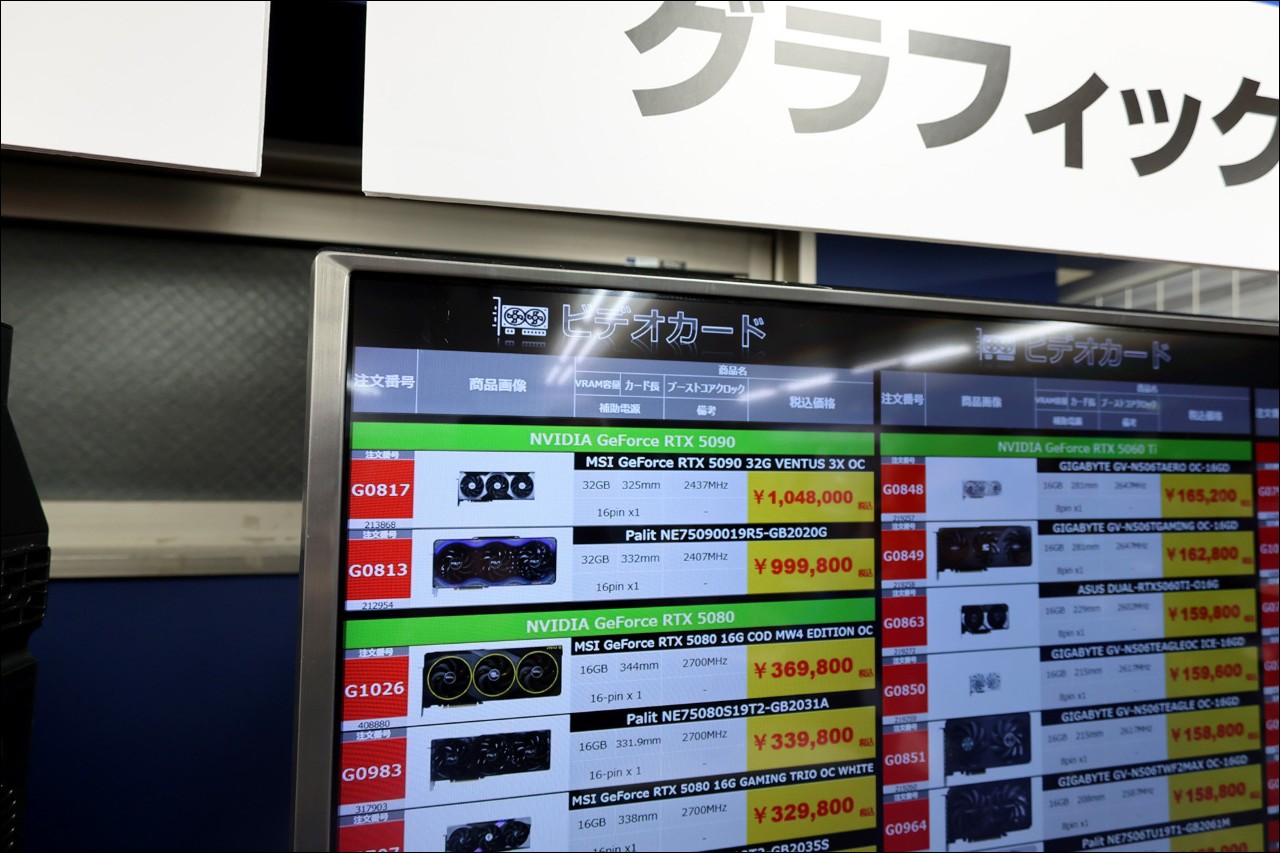
At the same store, the MSI GeForce RTX 5090 32G VENTUS 3X OC was originally priced the same as the Palit, but is now listed at 1.048 million yen, a drop of more than 200,000 yen. A store staffer told ITmedia that he was surprised himself when news of the price revision came out, but after the X post the day before, only one unit sold, and stock remains quite plentiful. The price list ITmedia photographed was from the evening of November 13; judging from the situation at that time, this is not a limited-time sale.
Another example is ASUS Japan. ASUS adjusted its prices this week, and the actual selling prices of several of its RTX 5090 products have reached over 1.5 million yen. Among them, the ROG Astral GeForce RTX 5090 32GB GDDR7 OC Edition, launched in January 2025, was still selling for around 1.1 million yen last week. People at the TSUKUMO eX. store said that cards from other manufacturers only count as cheap if they are below 1.2 million yen. The store also mentioned that stock availability is unstable: “Whenever we finally manage to get stock in, we’re surprised by that price.”
Yusuke Furuta points out the key point at the end: at the same point in time in the Akihabara electronics district, there is indeed a price difference of more than 500,000 yen between cards with the same GPU, while the intentions of manufacturers and distributors cannot be grasped. The so-called “maximum price drop of 22%” is merely the cheapest quote in the overall market; the price differences between graphics cards are actually more worth noting.
The price curve of the RTX 5080
Price tracking on the Japanese hardware site Gazlog provides the full curve. The lowest domestic price for the RTX 5080 16GB version was 267,700 yen (about NT$55,000) on October 13, surged to 345,000 yen (about NT$71,000) on October 31, and fell back to 299,800 yen (about NT$62,000) on November 13. That is down 45,200 yen, or 13%, from the peak, but still about 32,000 yen higher than the mid-October low.
Beyond price movements, there is also a supply-side indicator. According to Gazlog’s statistics, the number of retail stores with inventory had fallen to just 3 at the end of October, and returned to 8 starting November 12. The average of each store’s lowest price also fell from about 366,000 yen on October 31 to about 344,000 yen on November 14, indicating that price cuts were not limited to the single cheapest store.
The RTX 5090 figures show a different pattern. Japanese channels had no stock after the end of September; when supply resumed on November 3, the lowest price was about 1.29 million yen, and on November 14 it was about 1.05 million yen. The lowest price fell by about 240,000 yen, but the average of each store’s lowest price fell by only about 60,000 yen. The same summary notes that this means the large price cuts were concentrated in a few stores and products, while price tags at most stores did not move much.
Gazlog’s own conclusion is that prices above 300,000 yen have already dampened demand, leaving channels with accumulated inventory no choice but to cut prices to clear stock. On November 13, Japanese custom PC shop owner @pcbuildnet posted that prices finally began to fall after November began, but a year ago the RTX 5090 was about 400,000 yen and the RTX 5080 about 260,000 yen. Converted at the November 15 exchange rate, these two cards are still about NT$124,000 and NT$43,000 more expensive than a year ago, respectively.
The timing relationship between price reductions and resignations
The timing of the price cuts did indeed come right after Nvidia’s executive personnel change, a point multiple media outlets noted. Nvidia’s board accepted Jensen Huang’s resignation on November 11 and announced it the next day; the RTX 5080 price peak tracked by Gazlog was on October 31, and the RTX 5090 restock was on November 3—both earlier than the resignation news. Stores interviewed by ITmedia also said the atmosphere on the sales floor was calm, with almost no changes in products or sales.
The markets in Taiwan and China are taking a different path.
The situation in Taiwan is almost the opposite of Japan. In mid-October, Liberty Times reported that NVIDIA’s official Taiwan online store did not list any RTX 50 series graphics cards, and the RTX 5090 was almost completely out of stock across major 3C retail channels. The card’s initial suggested retail price in Taiwan was NT$71,990 and up, but now even if you have the money, you may not be able to buy one. Even for the next tier down, the RTX 5080 16GB, some in-stock listings are asking as much as NT$80,000 to over NT$90,000; compared with its initial official price of NT$35,990 and up, the price has soared to 2 to 3 times the original.
Our previous report also documented the same trend. A survey in early November showed that the lowest in-stock price of the RTX 5090 in multiple countries had reached $9,400, 262% higher than its $1,999 launch MSRP, with a global average increase of 44%. The Chinese market moved differently: Colorful raised all its factory prices in November, with the RTX 5080 rising by up to RMB 2,800.
On-the-ground interviews in Huaqiangbei, Shenzhen, showed that several graphics card merchants denied the claim of “sharp price fluctuations for high-end graphics cards,” saying it was just ongoing recent adjustments. At the time, the RTX 5080 was in stock at about RMB 14,300, the RTX 5090 at about RMB 48,500, and the RTX 5060 at over RMB 3,000. Liu Wenji, head of Xinjunwei Computers at the Shenzhen SEG Electronics Market, said that before September, an RTX 5080 was only over RMB 8,000 each and an RTX 5090 was only over RMB 20,000.
Huaqiangbei channel quotes have also followed their own downward trajectory. The transaction price of the RTX 5080 has fallen from a high of about RMB 18,000 in late October to around RMB 14,000, while the RTX 5090 has dropped from close to RMB 50,000 to near RMB 46,000. Both high-end models have fallen by about RMB 4,000, equivalent to about NT$20,000. Merchants attribute the price cuts to a natural correction after excessive earlier increases, as well as voluntary margin concessions to recoup cash during the tail end of Double 11. A price gap remains between online and offline channels; on some online platforms, the RTX 5080 is still priced between RMB 16,000 and RMB 18,000, more than RMB 2,000 higher than spot prices in Huaqiangbei.
Upstream supply prices are still rising.
Consumer prices are falling, but upstream is moving in the opposite direction. On November 4, Gazlog…point outChinese manufacturers plan to raise their shipment prices to distributors, with the RTX 5080 rising by up to about 66,000 yen and the RTX 5070 Ti also rising by about 24,000 yen, and these increases are expected to be reflected in Japanese domestic prices in December. Huaqiangbei channel distributors have recorded the same phenomenon: in Colorful’s November price adjustment notice, the RTX 5080 supply price was raised by RMB 2,500 to 2,800, while the RTX 5090 D V2 rose by RMB 2,200 to 3,300. The squeeze on GDDR7 capacity from AI data centers is the core reason brands are insisting on raising prices.
The most direct knock-on effect is on complete-system cost. Huaqiangbei channel quotes show that 32GB DDR5 memory rose from RMB 900 last year to RMB 3,800, a 322% increase; 16GB DDR5 rose 255%; and 1TB hard drives rose 139%. The assembly cost of a standard gaming PC rose from RMB 5,000 last year (about NT$25,000) to RMB 8,000–10,000 (about NT$39,000–49,000). GPUs have come down a little, but memory eats up the increase.
Gazlog’s outlook for the RTX 5090 market is that prices will remain above 1 million yen. Reasons include channels currently being unable to order GB202 chips and 32GB GDDR7 memory, and production capacity continuing shipments through January to March 2027. NVIDIA Vice President Jeff Fisher said in Taipei on October 16 that the RTX 5090 has not been discontinued and will continue to be supplied, but supply is constrained. The consensus among Japanese channel partners on the graphics card outlook is sideways trading; as factory shipments tighten and spot prices approach the cost line, room for further sharp declines is limited.
Conclusion
Looking at the three markets together makes the nature of this round of price cuts in Japan clear. Japan is seeing channel destocking after demand cooled; both the price peak and the restocking timing came earlier than Jensen Huang’s resignation. Taiwan and China are at the tail end of a price rally, and the gap between Huaqiangbei channel prices and manufacturers’ supply prices shows that manufacturers are still raising their orders. The RTX 5080 has fallen from 345,000 yen at the end of October back to 299,800 yen, still 32,000 yen above its mid-October low.
As for the broader environment of price increases, there is no reason to expect it to ease anytime soon. AI data centers are absorbing advanced storage capacity, GDDR7 supply is tight, and as a result memory prices have more than tripled in a year and whole-system costs have doubled. For those who want to pick up a high-end card while prices are low, the RTX 5090 dropping to 1 million yen is a signal, but treating it as the “starting point of a broad price cut” is probably premature. If you are buying a graphics card for gaming, I personally really suggest you not waste your money these two years.
Source: KOCPC Chinese