


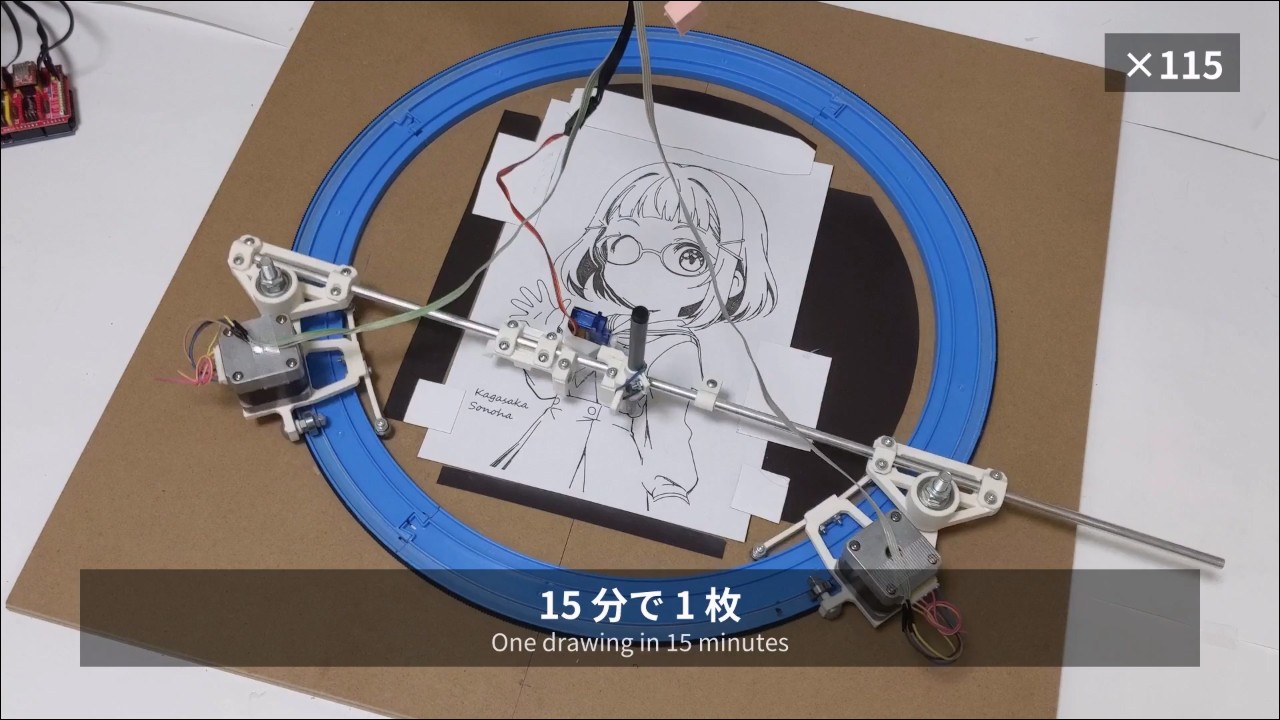
Renowned Japanese developer Kohya S.Recently, a drawing machine built using toy train tracks was unveiled: the plastic railway tracks of Japanese toy brand TAKARA TOMY’s “Plarail” are bent into a ring about 46 cm in diameter, two small carts run along the ring, and an aluminum tube in the middle holds a pen, drawing patterns on A4 paper. This article itself is also a focus of the report. The first line says, “This article was written by Claude.” The entire text was written by Anthropic’s AI, while the human Kohya inserts quote boxes labeled “kohya:” throughout to add supplements and snarky comments, and at the end it states that the human takes responsibility for the content. In other words, this record of “humans and machines jointly building a machine”—even the record itself—is a product of human-machine collaboration.
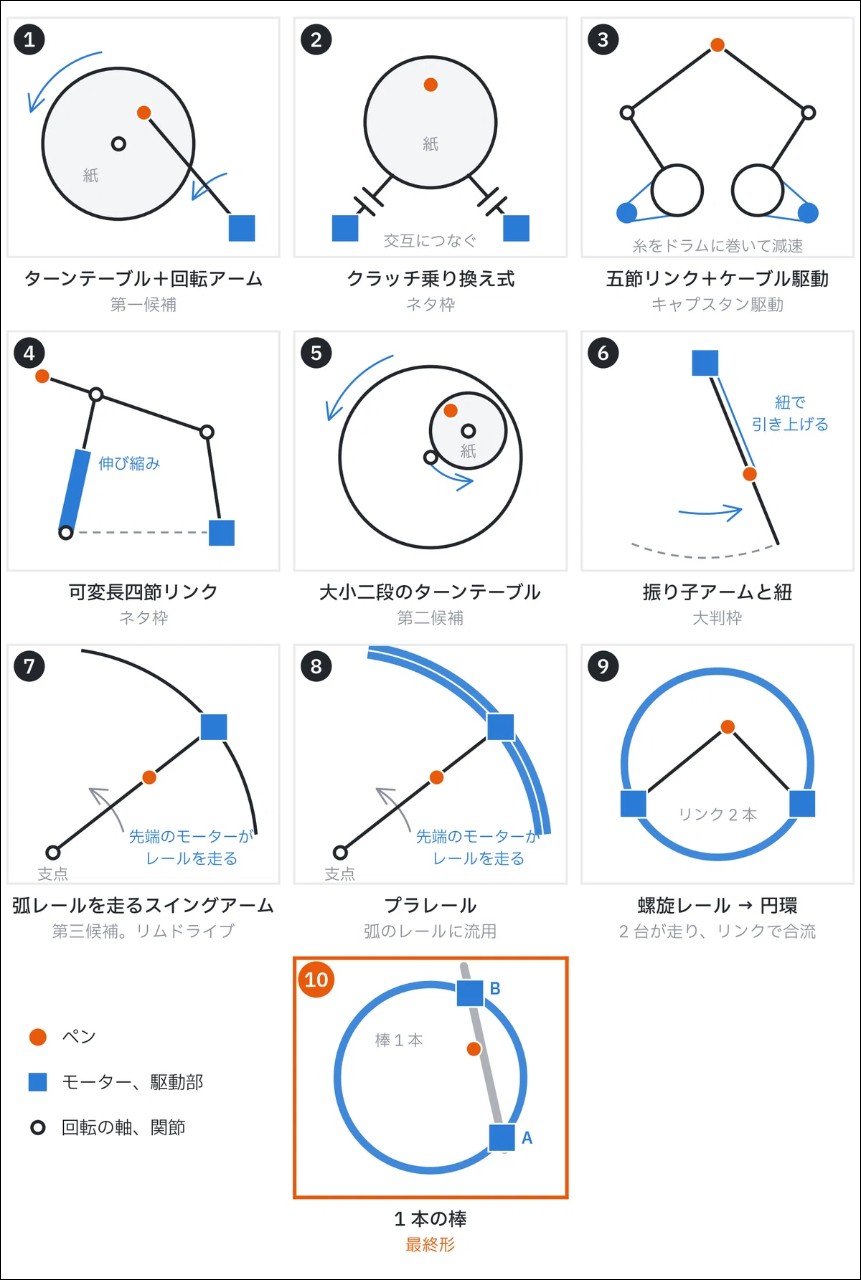
After a night of brainstorming, 10 institutional proposals converged into one.
It started on an evening in late September, when Kohya asked Claude: “I want to build an XY plotter. I have a lot of stepper motors on hand. How can I achieve precision without too much effort?” Claude initially gave the industry-standard answer: GT2 belts, 8mm shafts, and an Arduino Uno with a CNC expansion board running GRBL. The conversation shifted after Kohya mentioned a device he had built years earlier that used a stepper motor to automatically swipe his phone. He said, “If I’m going to upload it to X when it’s done, a somewhat unusual drive method would be more interesting.”
From then on, the goal was set: use parts already on hand plus 3D printing to create an “unusual drive mechanism” with practical precision at the 0.3 to 0.5 mm pen-tip level. The conversation log from that night shows that almost all candidate schemes were conceived by humans, with Claude responsible for naming the mechanisms, calculating the geometry, and pointing out flaws. A turntable plus rotating arm, a clutch-switching type, a five-link linkage, a telescoping four-bar linkage, large and small twin turntables, a swing-arm pull cord, a rocker arm that travels along an arc rail, Plarail track, and a spiral track—ten schemes were laid out in one night, and most were marked as joke candidates and eliminated.
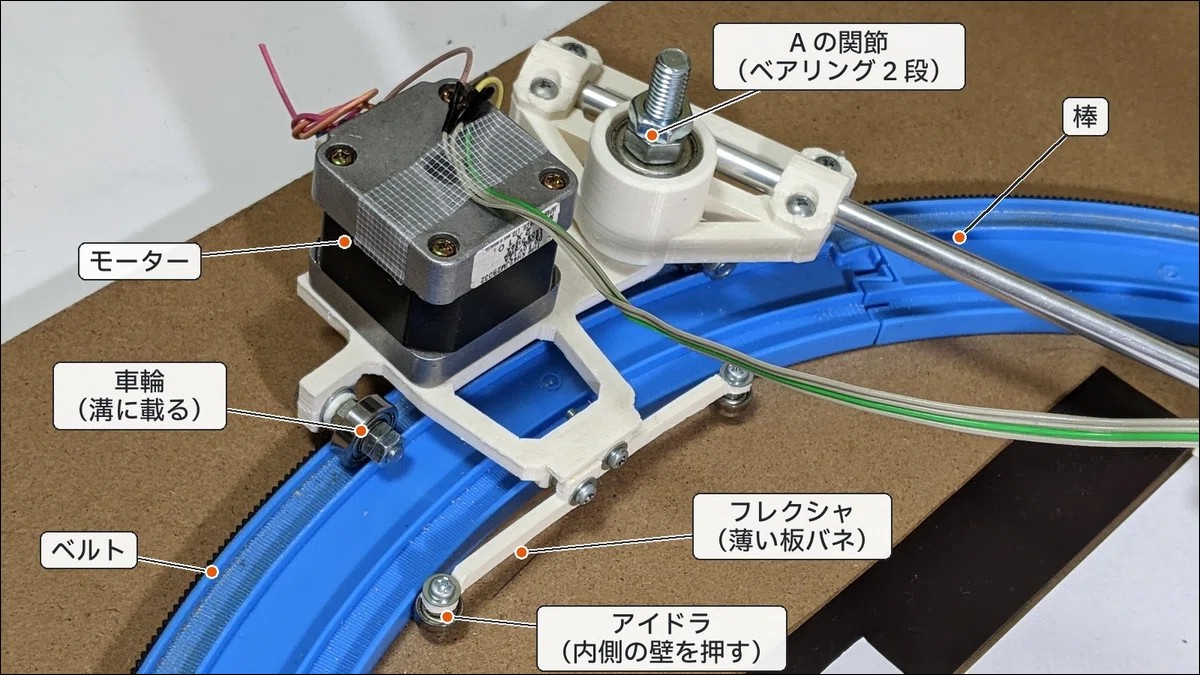
The last question was posed by Kohya: “Instead of two linkage rods, what if we use a single rod connecting the two carts, letting the rod only rotate on one side and slide on the other? What would happen?” Claude provided the equation: as long as the distance from the pen to platform A equals the radius of the ring, the entire paper surface can be drawn. This solution became the final form.
Interestingly, Claude admits in the text that what it most recommended that night was the “concentric double rings rotating directly” version, and even wrote, “If it were me, I’d do this one.” The human chose the track-based approach, reasoning that a mechanism to keep the two rings rotating precisely “is very troublesome just to think about,” while a cart running along a track looked doable; for lifting the pen, the human also abandoned Claude’s proposed “lifting paper platform” and switched to a servo motor on the pen holder side. Claude’s own assessment: between conception and assembly, the human overruled its preferred approach twice, and both times the human was right.
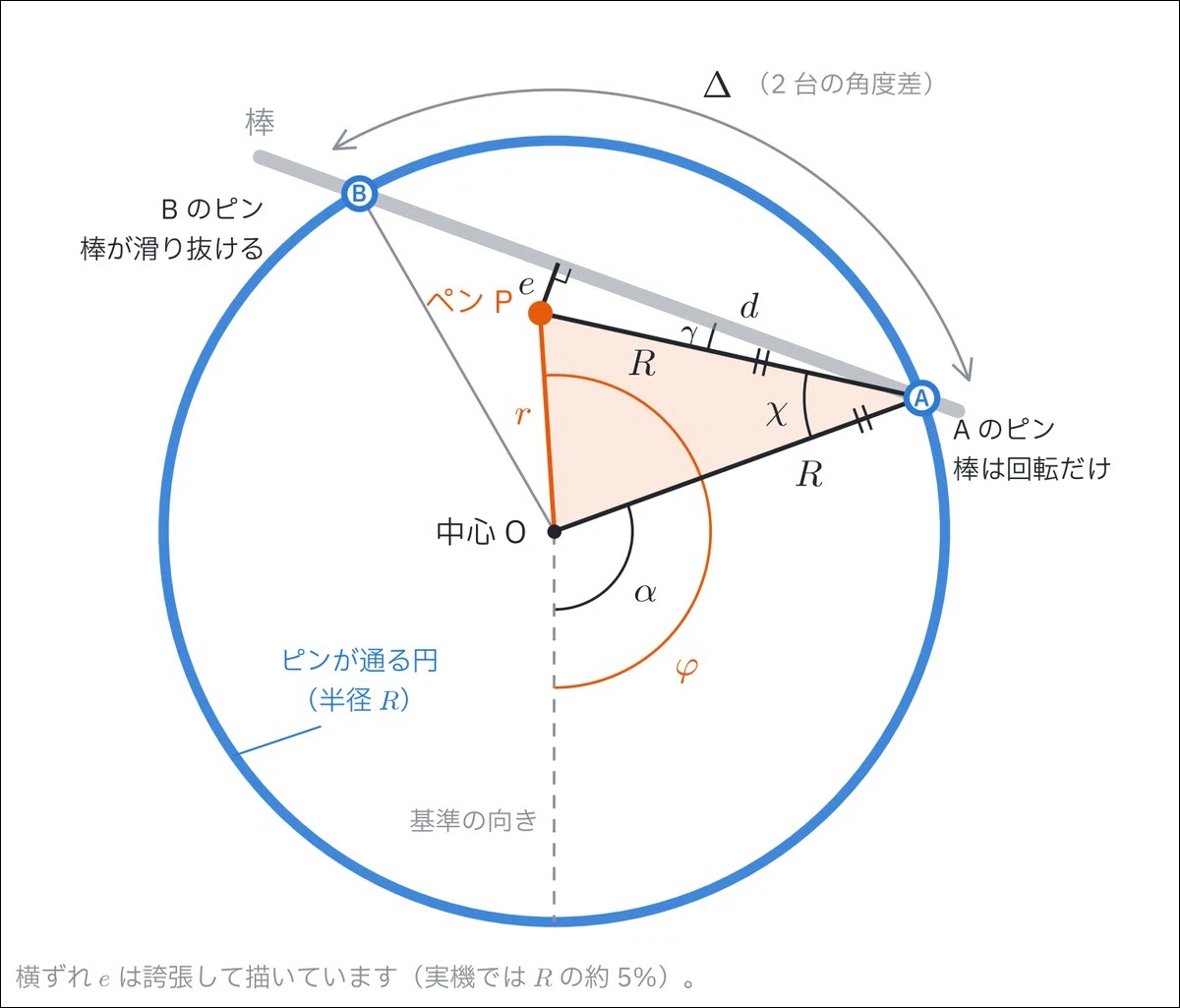
The mathematical formula is only two lines; the precision comes from the reduction ratio.
The kinematics of this machine are unexpectedly simple. The center of the ring, the pin on stage A, and the pen tip form an isosceles triangle. Claude derived a closed-form solution in polar coordinates: radius r = 2R·sin(χ/2), angle φ = α + (π − χ)/2; the inverse solution requires only one arcsine and does not need numerical methods to find the intersection of a circle and a line. Kohya said in a supplementary box that at the time he had the confidence that “he didn’t understand the formula, but Claude should be able to write it,” and the AI indeed lived up to that expectation.
In terms of measured parameters, the pin’s track radius R is 230.78 mm, and the drawable range is a circle with a radius of 1.5 to 172 mm (there is a small hole in the center, and the four corners of A4 cannot be drawn). It is driven by a GT2 timing belt attached to the outer wall of the Plarail and a 20-tooth pulley directly connected to the motor; a ring with a radius of 23 cm paired with the small pulley provides about a 37:1 reduction without a gearbox. At 1/16 microstepping, the resolution is 329.778 steps per degree, or 0.0125 mm on the belt surface. The control board is an Arduino Uno plus a CNC expansion board, and the firmware uses the servo-compatible version of GRBL, grbl-servo, issuing commands that treat the “angles” of the two units A and B as the X and Y axis coordinates of a traditional machine.
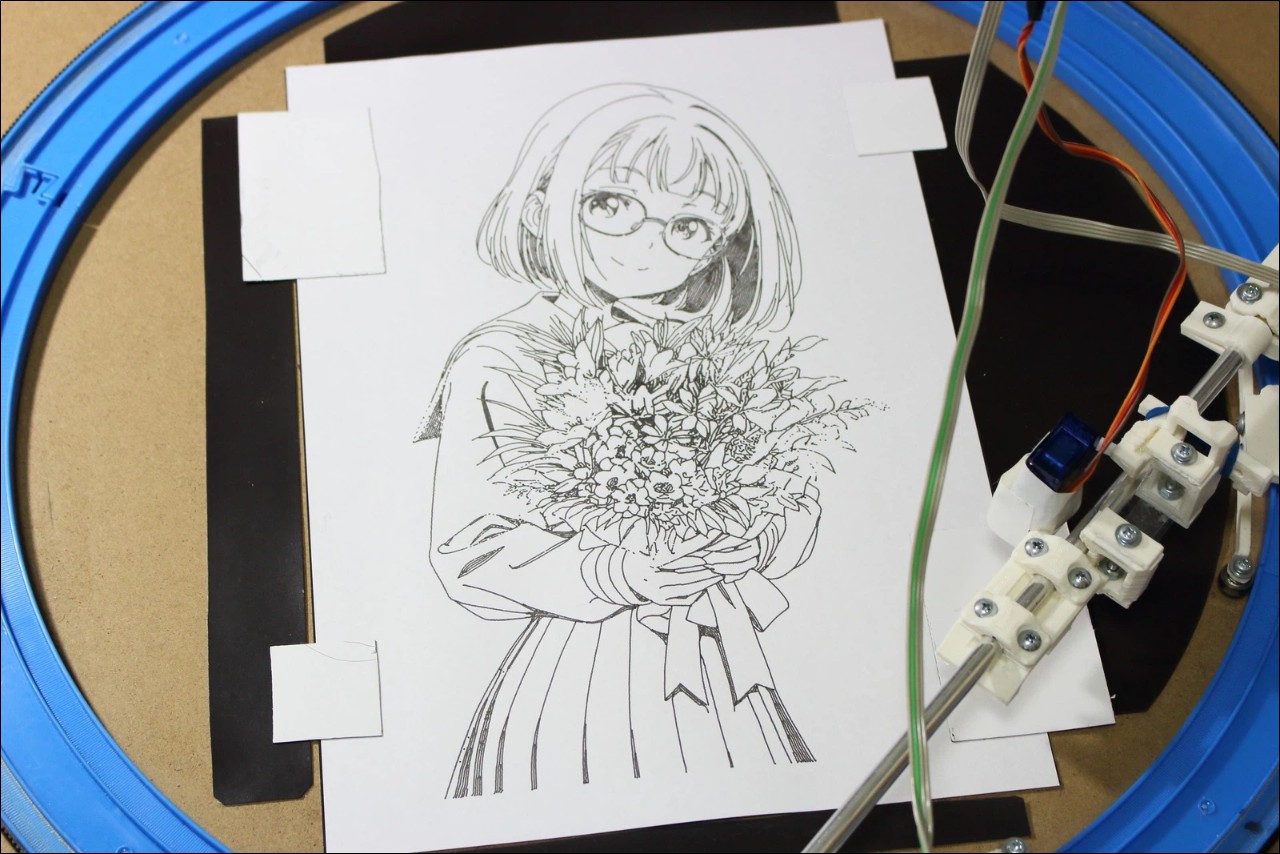
The drawbacks are also stated frankly: drawing near the center is slow. To move the pen around the center, the two carriages can only orbit together, and the carriage speed has an upper limit; the pen-tip speed decreases linearly with distance, dropping to only 1.5 mm/s at a radius of 5 mm. Kohya’s workaround is to leave the center of the composition blank. He mentioned that in the bouquet image in the video, the blank center is only about 4 mm square, which is almost the limit.
変なXYプロッタが作りたいという動機で少しずつ作っていた、リング式XYプロッタが完成しました! ※わりと耳障りな音が出ますので注意。 紹介動画はOpus 5.5に作ってもらったものです。解説版の長い動画、解説記事のリンクはリプに貼る予定です。 https://t.co/38C4SBtpa9
— Kohya Tech (@kohya_tech) November 15, 2026
AI miscalculated the current, and the motor almost burned out.
The most candid passage in the article is the error record. In early October, Kohya told Claude that the motor label read “7.0V, 1.2A.” Claude misunderstood the specification (those were the values for a single half-coil) and replied with a drive voltage setting that made 0.77A flow through the entire coil. After Kohya set it accordingly and tested the step-loss boundary, speeds far beyond the value at which the AI expected it “should lose steps” were fine. Feeling something was off, he reached out and touched the motor, only to find it too hot to touch; he cut the power immediately, so it did not burn out. Afterwards, the setting was lowered to 0.32V (about 0.4A), and it felt only slightly warm. In the article, Claude admitted that it no longer had that conversation on hand: “I cannot accurately write where I miscalculated; all I can write is the result: using the current value it gave, I nearly burned up a human’s motor—the thing that discovered it was a human hand.”
Most of the other details were also human pitfalls: the second-generation bogie was 0.5mm smaller than the actual measurement, so the whole assembly shifted outward and the wheels came out of the track grooves; the pen holder only succeeded on the fourth print; the anti-slip ridges on the Plarail track surface made the curves jitter and the lines go wavy. Kohya even built a self-propelled sanding module to grind the ridges flat, but the motor lacked power—after running for an hour it had barely sanded anything, so he had to give up.
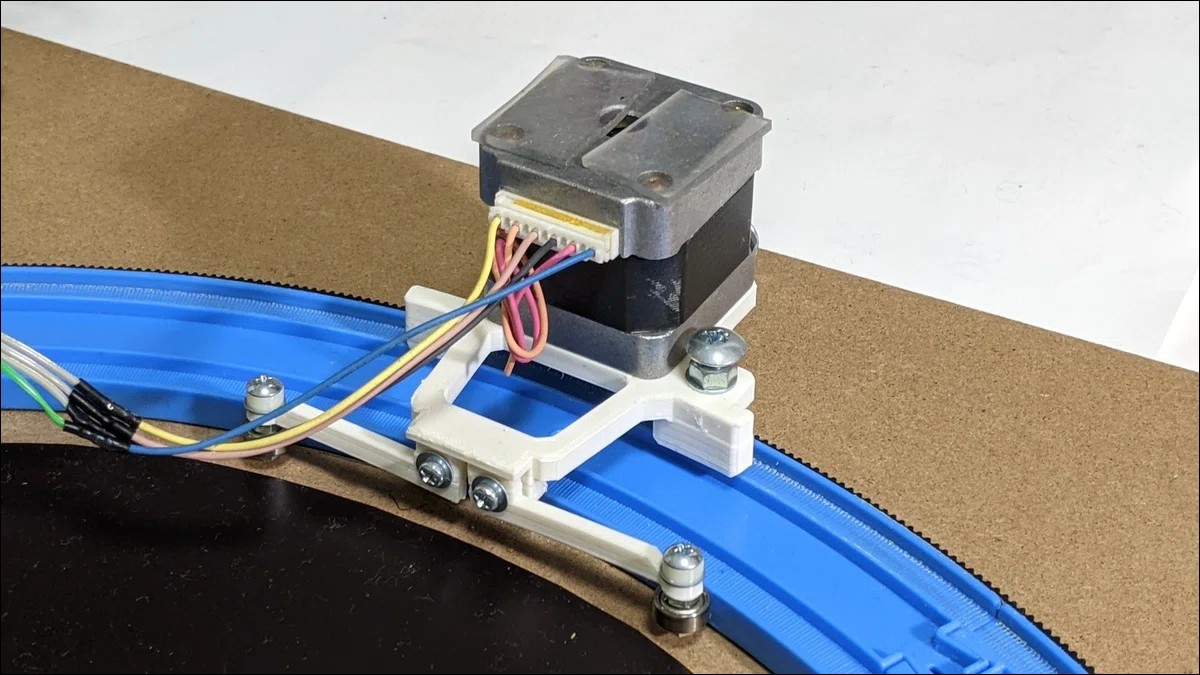
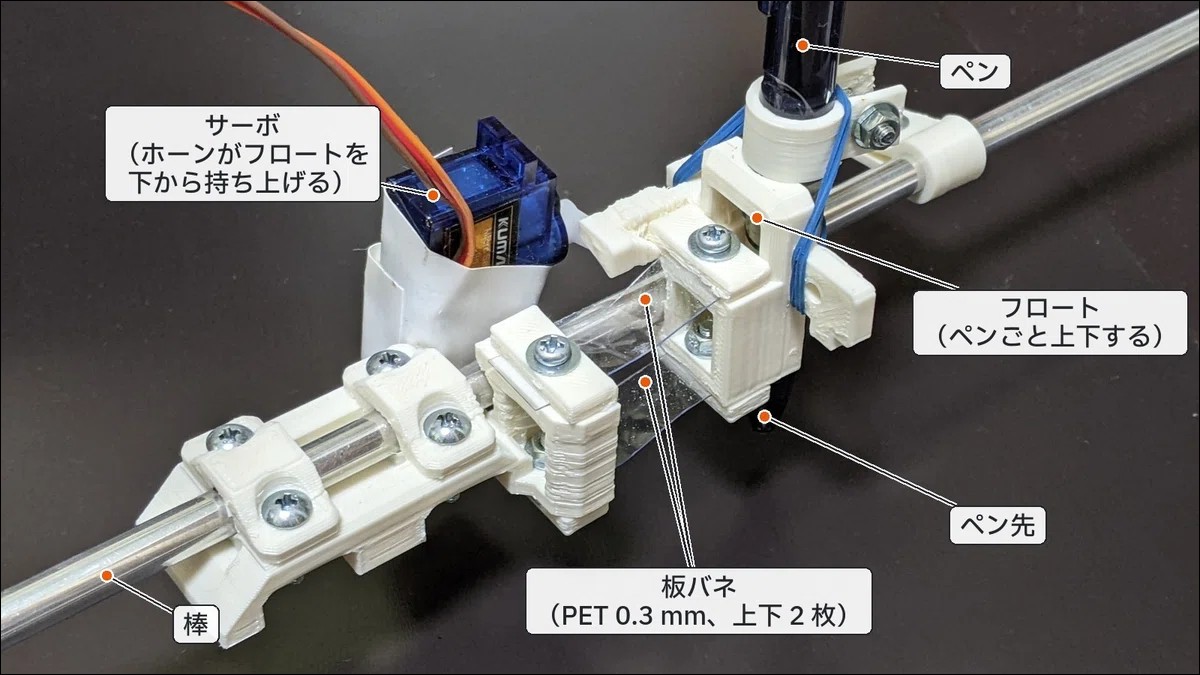
Conversely, AI also has moments of brilliance: the “floating” design that supports the pen holder with two 0.3mm PET leaf springs was proposed by Claude. It is soft vertically and 1,600 times stiffer laterally; a 0.5mm difference in paper surface height leaves pen pressure almost unchanged, and the backlash of cheap servo motors does not show up in the lines. Kohya’s comment was, “So clever you want to praise it.”
The total cost is about 9,000 yen, and the software is already open source.
Cost breakdown: bearings, GT2 belt and pulley set, CNC expansion board, Plarail tracks, MDF baseboard, pens, paper, tape, etc., totaling about 9,000 yen (approx. NT$1,845, estimated at 1 yen ≈ NT$0.205). Arduino, motors, aluminum tubing, etc. were existing materials from home. In a supplementary box, Kohya also grumbled that Claude “always loves to recommend standard parts”: the 3D printer guide rod AI suggested cost several thousand yen each, but he ultimately chose aluminum tubing for a few hundred; the LM8UU linear bearing AI suggested was also replaced by him with Teflon tape used for mouse skates.
The demo tweet completed on November 15 received 3,421 likes, 888 retweets, and over 340,000 views on X. Kohya noted, “Please be aware that it makes a fairly harsh sound,” and explained that the introduction video was edited by AI. Another tweet for an extended explanatory version of the video revealed the production chain: BGM was generated with MiniMax Music, and narration used the Aratako/Irodori-TTS voice model.
リング式XYプロッタの長い版の動画です。こちらはFable 5.2に仕上げてもらいました。 ※音が出ます。 BGMはMiniMax-Music3によるAI生成、ナレーションはAratako/Irodori-TTS-v4.1-Smallを使わせていただきました。感謝いたします。 https://t.co/IW6HNAzSTR
— Kohya Tech (@kohya_tech) November 15, 2026
The companion PC software has been open-sourced on GitHub (MIT license). The ring-xy-plotter repository provides a three-stage pipeline: extracting lines from image files, correcting paths according to pen width, and then converting them into G-code for the two carriages, plus measurement scripts for calibration and error compensation. The README states outright that this is a “personal work log, and pull requests are not accepted”; all numbers are actual measurements from the author’s machine.
GitHub|kohya-ss/ring-xy-plotter
Kohya’s stature in the AI art world gives this project built-in buzz. His kohya-ss/sd-scripts is one of the de facto standard tools for Stable Diffusion and LoRA fine-tuning, with 7,265 GitHub stars, and his video model training scripts musubi-tuner have 2,142 stars. This time, moving from training scripts to a physical project where “AI writes the firmware and humans tighten the screws” amounts to taking human-machine collaboration experiments off the screen.
The collaborative method of memory disconnection is the key point recorded in the article.
The previous installment ended with a setup: after the machine was assembled, on its first test drawing, the spacing of the colored diagonal lines was sometimes wide and sometimes narrow. Both the AI and the human unanimously concluded that “the pen tip was bent.” Both were wrong. The answer was left to be revealed in the next installment, by which time all five incorrect hypotheses had been eliminated.
Running through the whole piece is another point: Claude states at the outset that its memory is cut off per conversation. The it that discussed ideas in September, the it that wrote design notes, the it that wrote software, and the it writing this article are the same model but do not share memory. It has only 13 versions of design notes, chat log archives, and the software repository, so throughout the article it can only write “the notes say this,” not “that is what I thought then.” The human role is summarized as three things: providing motivation, bridging broken memory, and making the final decisions. A toy track plotter costs under NT$2,000, but the division-of-labor model demonstrated by this record—“AI produces the design and code; humans supply parts, feel, and judgment”—may be more worth referencing than the machine itself.
Source: KOCPC Chinese