


Samsung recently released its new S26 Ultra machine. One of its requested features is the “Smart Privacy Display”, which allows you to choose to hide the entire screen or customize the protection range to prevent others from peeking into the screen. Compared with the “anti-peep glass protector” advertised in the market, which only costs a few hundred to a thousand yuan, netizens have different supporters of the pros and cons of “smart anti-peep screen privacy display” and “anti-peep screen protector”.
What are the differences between Samsung’s smart anti-peep screen and commercially available anti-peep protectors? The following is a summary and analysis:
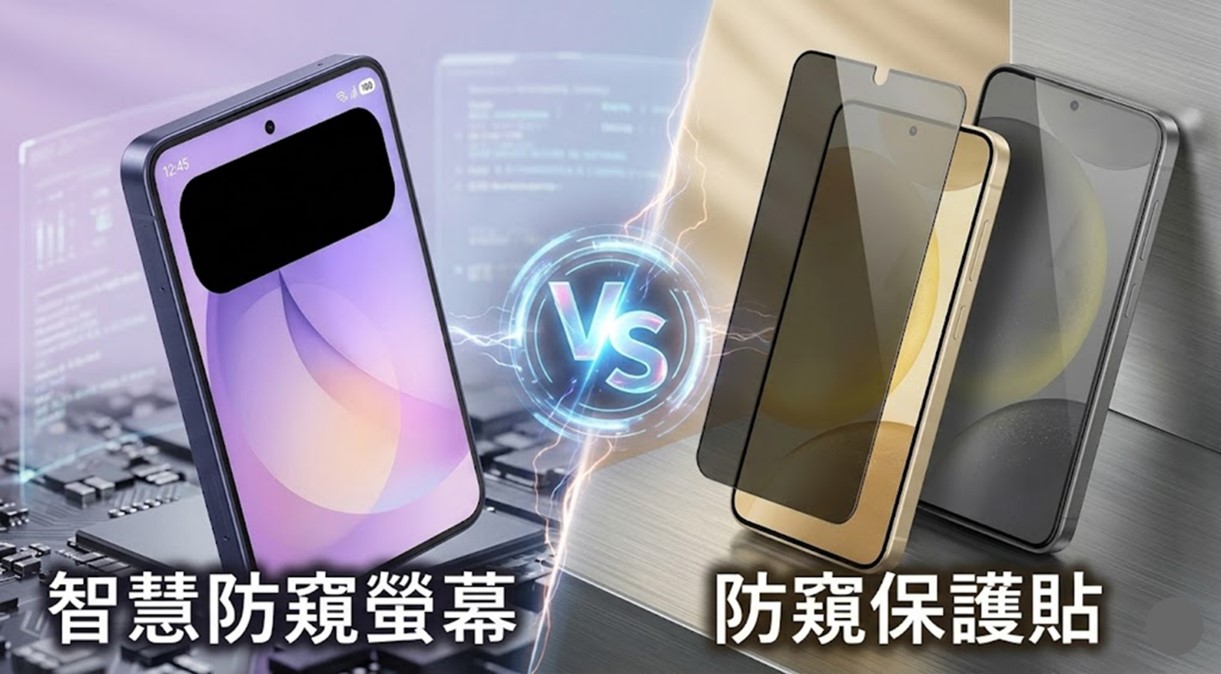
In the modern digital society, smartphones play an important role in daily life, and they also preserve a lot of personal privacy and confidentiality to prevent others from losing. The secrets in the mobile phone are becoming more and more important. The new Samsung S26 Ultra features a smart privacy display, which has also sparked heated discussions about privacy protection. The following is a summary video and detailed description of the advantages and disadvantages of Samsung Smart Privacy Screen and Privacy Protector:
1.What is Samsung smart anti-peep screen?
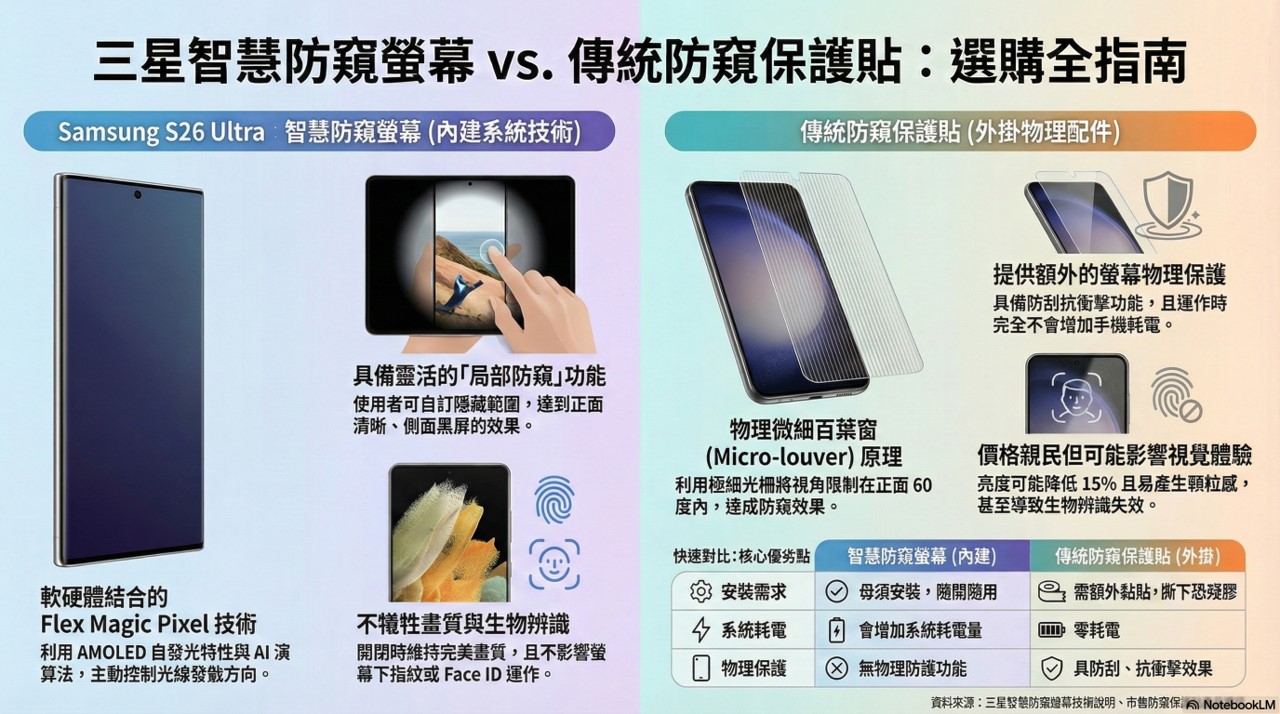
Samsung Smart Privacy Display is the first “system-built-in” privacy protection technology installed on the Samsung Galaxy S26 Ultra. The smart privacy display uses Samsung’s Flex Magic Pixel technology and is built into the mobile device screen. Through a combination of software and hardware, users can actively control the switch and even set “partial privacy” or “whole privacy display” to limit the light direction from side viewing angles to achieve the effect of “clear front, full or partial darkness on both sides”.
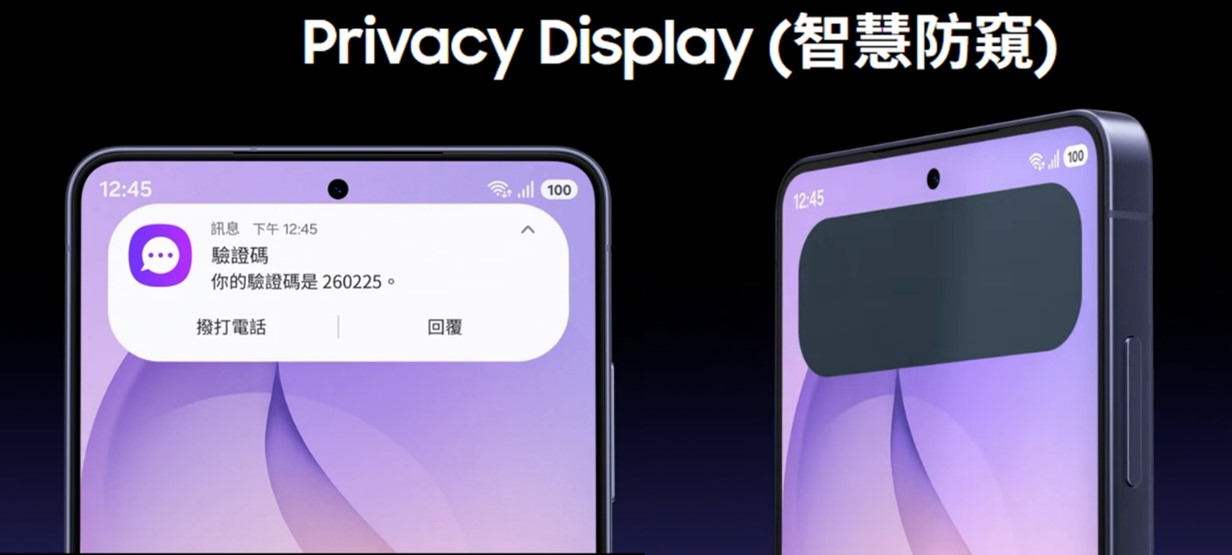
In the past, HP’s Sure View or LCD panels developed by Innolux used voltage to control the light emission angle. Pressing a key (such as Fn+F2) can switch between sharing mode and privacy mode without removing or inserting a physical privacy film.
Samsung’s smart privacy screen technology uses AMOLED to spontaneously generate specific direct light and scattered light characteristics, uses AI algorithms to detect scenes, and controls the light divergence angle to achieve privacy protection in specific areas with “clear front and black screens on both sides”.
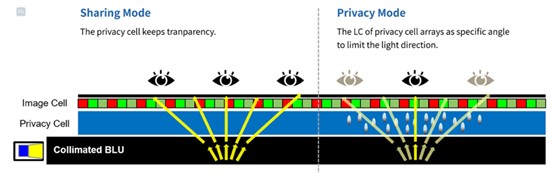
Image source: Innolux
Currently, Samsung’s smart anti-peep screen function is only available on the Samsung S26 Ultra model. According to well-known tipster Digital Chat Station, this feature has attracted the attention of many Android brands. It is expected that the new generation of flagship phones of mainland brands will follow up around September this year and provide native anti-peep protection through hardware.
2. What are the differences between Samsung Smart Privacy Screen and commercially available privacy protectors?
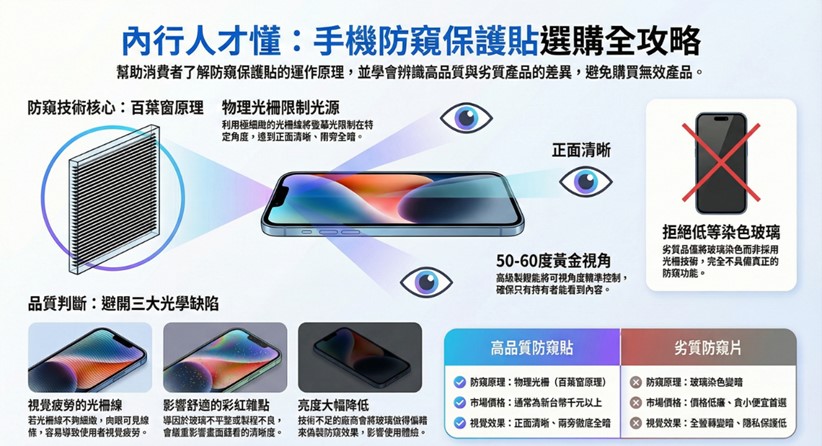
[Anti-privacy protector] is a physical anti-peeping effect achieved through an external screen protector. The anti-peeping method uses the principle of micro-louver to limit the light propagation angle by using extremely fine gratings to limit the screen light to plus or minus 25°~30°. The viewing angle is limited to 60 degrees from the front and 30-45 degrees from the side to make the side appear black or blurry to achieve the anti-peeping effect.
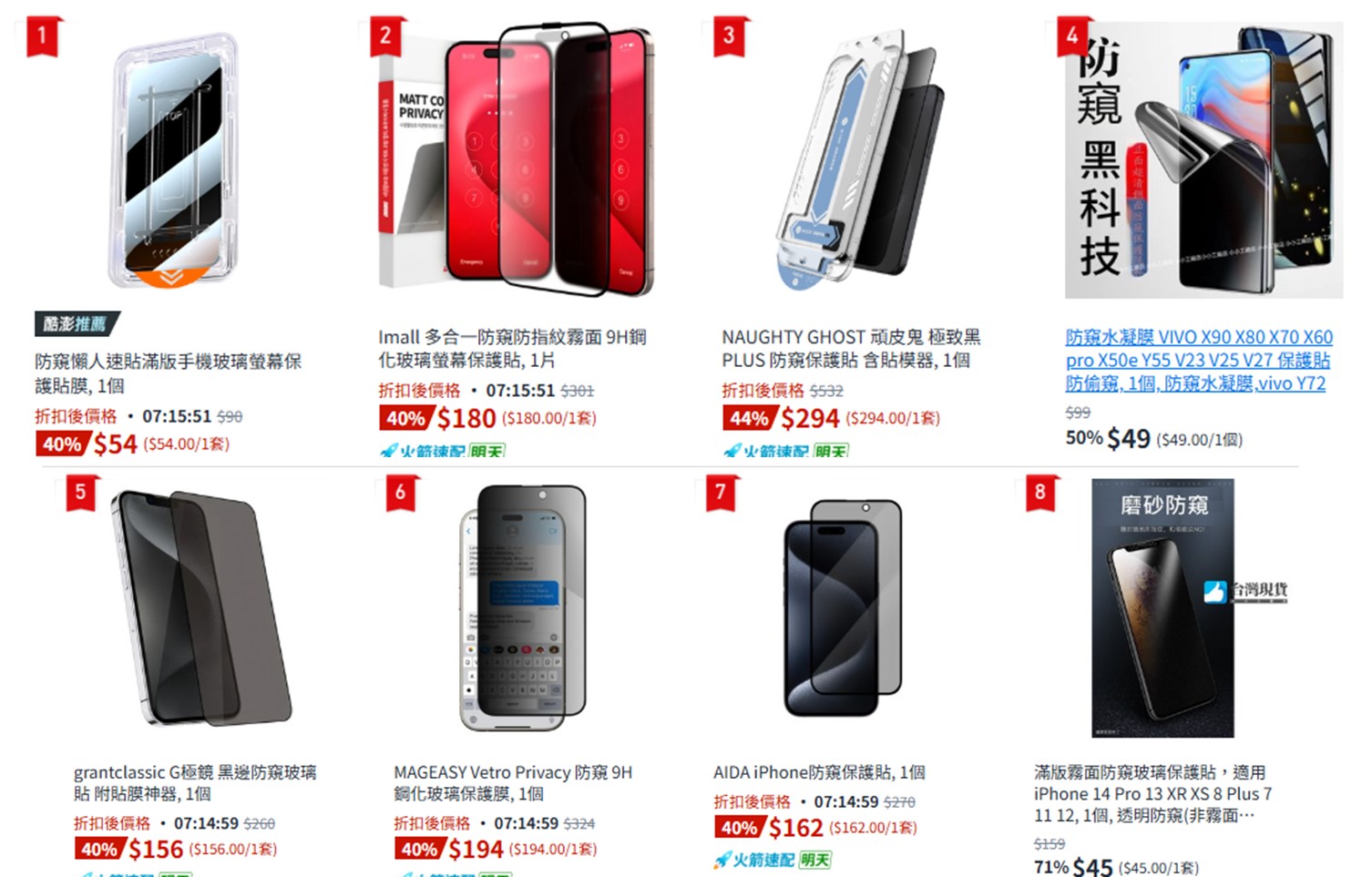
Image source: cool
Since the anti-peeping function is only one type of protective film in the market, a real anti-peeping protective film must have a micro-blind function. The commercial price is usually $500~$1,500. An anti-peeping protective film priced at 100 yuan may only tint the glass. [Anti-Peeping Protector] The external plug-in method can meet the needs of screen privacy protection, but if the product quality is poor, light bars, rainbow noise spots, and insufficient brightness may easily appear, causing visual fatigue and unclear images.
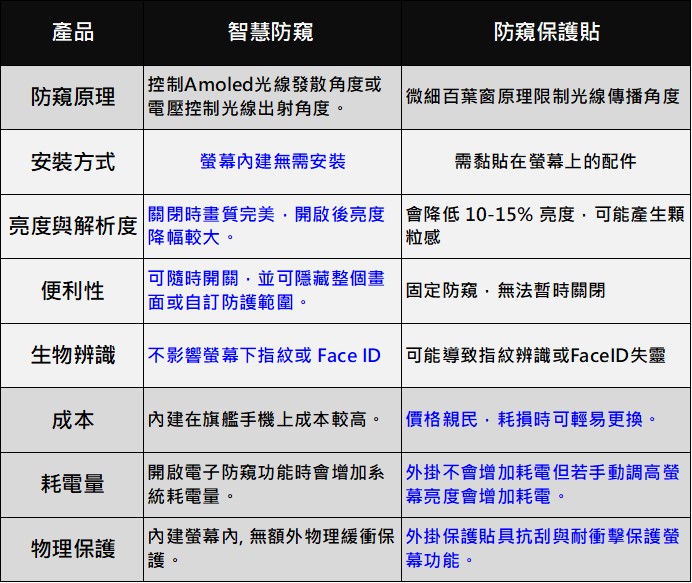
Comparison of the advantages and disadvantages of [Smart Anti-Peep Screen] and [Anti-Peep Protector]:
[Smart Anti-Peeping Screen] Because the screen has built-in and customizable protection ranges, it does not require installation, can be turned on and off at any time to customize the anti-peeping range, has perfect picture quality when turned off, and does not affect the under-screen fingerprint or Face ID functions. However, it is currently only installed on certain flagship mobile phone screens. When turned on, it will increase system power consumption and does not have a physical screen protection function.
[Anti-Peeping Protector] is a plug-in anti-peeping screen protector. It is affordable and affordable, has the function of physically anti-scratch and impact-resistant screen protection, and does not increase the battery consumption of the phone. However, it must be fixed and cannot be limited to time or partial privacy. It will cause the screen brightness to decrease by 10~15% and is prone to graininess. It requires additional installation and may leave adhesive residue after being removed. It may cause fingerprints under the screen or Face ID to fail. etc.
Will [Smart Anti-Peep Screen] cause [Anti-Peep Protector] to crash?
[Anti-privacy screen protector] is just a type of screen protector. The screen protector itself is suitable for many models, is affordable and has the function of physically protecting the screen. It will not disappear because it is limited to the built-in [smart anti-privacy screen] of flagship phones. On the contrary, it is possible that the popularity of [Smart Anti-Peep Screen] has greatly increased, stimulating the demand for screen anti-privacy, and increasing the number of early adopters to buy [Anti-Peep Protector] instead.Warm reminder: Although anti-peep technology has not been medically proven to directly harm the eyes, turning on smart anti-peep or using anti-peep protectors will result in insufficient brightness, and long-term use can easily increase eye fatigue. It is recommended that the screen brightness should be appropriately increased during use.
In short, the emergence of Samsung’s [smart anti-peep screen] technology is an option for people who pursue ultimate privacy without sacrificing picture quality, but they will have to face a heavy loss of money and be careful of the sequelae of “there is no silver here”.
Source: KOCPC Chinese