


As AI technology reshapes productivity and workflows across the board, it is also striking at the trust baseline of global education and qualification certification systems in unexpected ways. Recently, South Korea has seen a string of major exam-cheating incidents involving AI tools, from national-level vocational qualification exams to the College Scholastic Ability Test (the Korean SAT), which is crucial for university admissions—none have been spared. Faced with new cheating methods enabled by the combination of computing power and miniature hardware, several top Korean universities have been forced to launch “physical defenses,” even producing the bizarre scene of requiring all candidates in the room to wear “disposable aprons” during the exam.
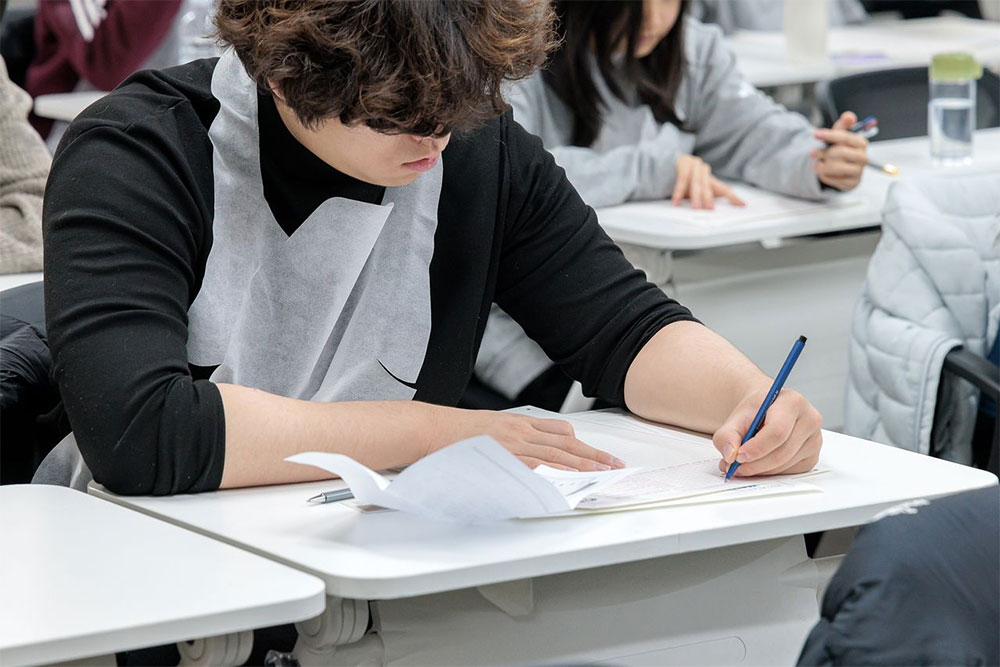
South Korean high schools deploy 30,000 white aprons to curb a wave of miniature-camera cheating.
As multimodal large language models (Multimodal LLMs) have made substantial leaps in image recognition and real-time reasoning, the cheating industry chain has also rapidly completed a technological iteration. Candidates no longer need cumbersome text input; they only need to use miniature cameras hidden in clothing buttons, eyeglass frames, or stationery to photograph exam questions, and the back-end AI can solve them within seconds and transmit the answers back through miniature earphones.

To completely cut off this cheating chain of “visual capture—cloud computing power—voice feedback,” several universities in Seoul have recently rolled out visually striking countermeasures. According to reports from multiple local media outlets, including South Korea’s SBS TV, Kyung Hee University, a well-known institution in Seoul, unprecedentedly purchased and prepared about 30,000 “disposable white non-woven aprons” in advance for final exams held from November 21 to 22.

According to mandatory rules issued by the school, all students entering the examination room must wear this white apron uniformly provided by the school throughout the exam, thereby physically covering the candidates’ own clothing and preventing any miniature cameras hidden in shirt collars or jacket linings from being exposed to photograph exam questions. The school’s stance is extremely firm, explicitly stating that any candidate who refuses to cooperate in wearing the apron will have their eligibility for that subject’s exam directly cancelled.
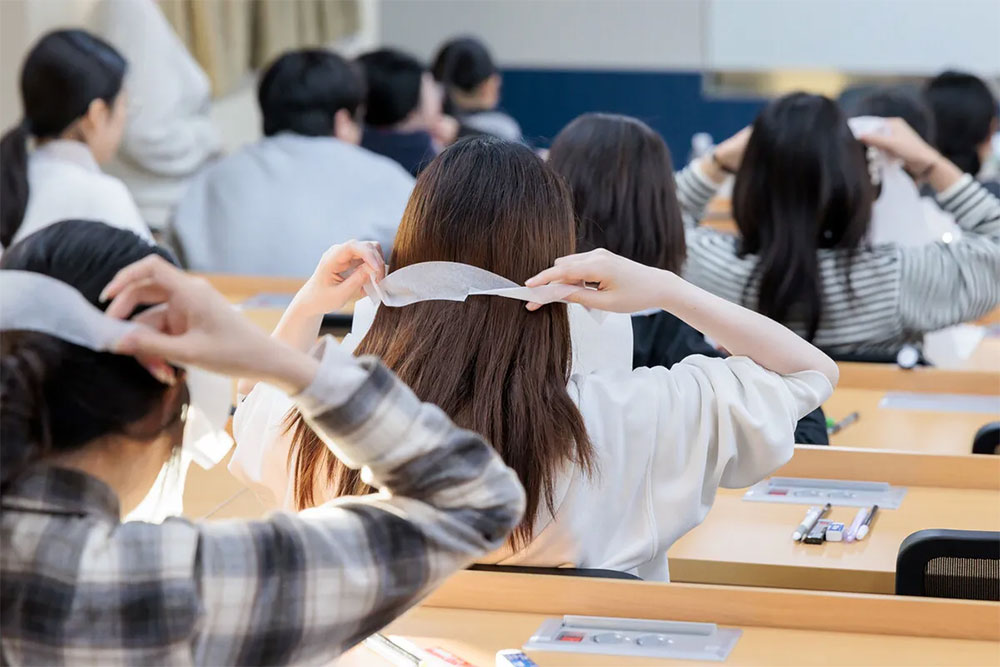
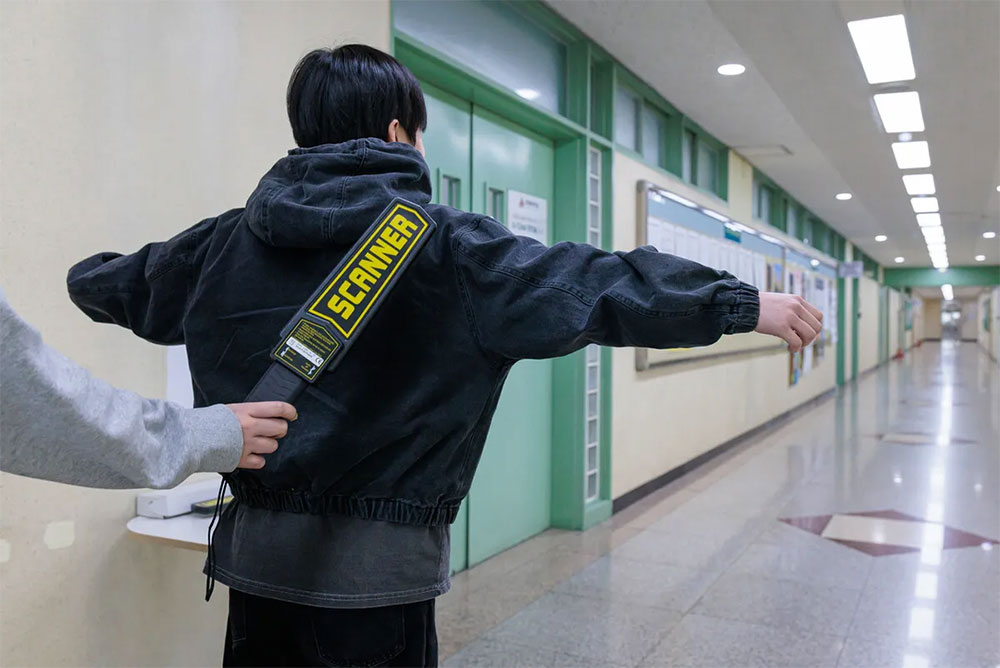
In addition to the “apron defense line,” security screening inside the exam venue has also been raised to the highest level across the board. Invigilation rules explicitly prohibit candidates from bringing any unrelated electronic devices into the venue, and even traditional noise-blocking earplugs have been placed on the list of prohibited items; in addition, all candidates with long hair are required to tie their hair up and fully expose both ears. South Korean media analysis points out that the purpose of this combination of measures is very clear: to completely shut down, at the physical level, any possibility of candidates using miniature bone-conduction earphones or wireless receivers to hear AI voice answers.
The reason Korean universities are sparing no expense to adopt seemingly “absurd” physical defenses reflects the enormous social anxiety triggered by a recent spate of AI cheating cases. In a Korean society that places extreme importance on academic credentials and qualifications, the public is broadly worried that the exam system, which has underpinned fair social mobility, is being ruthlessly overwhelmed by new technology.
Looking back at two landmark events that have recently sparked public debate one after another:
- Top Scorer of National Qualification Exam Turns Himself In: On November 15, a candidate who achieved “first place nationwide” with an overwhelming high score on the Korean Certified Tax Accountant examination voluntarily turned himself in to police under immense psychological pressure. He confessed to police that he had relied on AI tools to assist him in answering throughout the entire exam, which enabled him to achieve the top score. The incident shocked South Korea’s professional services sector, making people realize that existing AI’s professional reasoning capabilities are already sufficient to easily overcome the high-difficulty threshold for national-level professional licensure.
- More than 100 violations uncovered in South Korea’s college entrance exam: In the nationwide college entrance exam held on November 19, during on-site inspections, South Korea’s Ministry of Education caught as many as 111 examinees who had illegally brought smart electronic devices into the exam venue, a scale and severity far exceeding violation records for the same period in previous years.
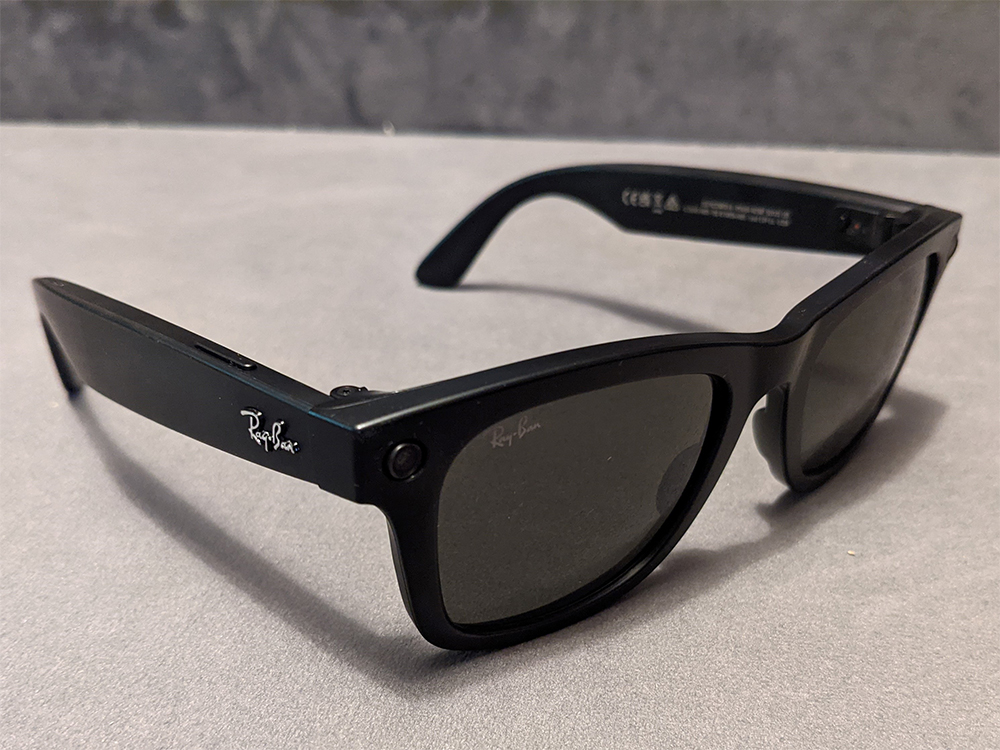
In the past, AI was seen as a productivity engine that empowered individual learning and improved research efficiency; however, in exam environments lacking effective technological countermeasures, it has evolved into a rule-breaking “super cheat.” As optical recognition and miniature wearable devices become increasingly accessible, traditional invigilation systems that rely on visual inspection and basic metal detection are clearly struggling to keep up.
In this escalating “technological offense-defense battle,” South Korean universities have used 30,000 white aprons to build a line of defense that is somewhat tragic yet pragmatic. It is foreseeable that before more precise radio spectrum jamming technology and AI behavior monitoring systems become widespread, unconventional physical anti-cheating measures such as “uniform dress for exams” are highly likely to become a new defensive normal that exam venues around the world will have to adopt in the face of the AI wave.
Source: KOCPC Chinese