


Walk into a 3C store or open an online shopping page, and the router packaging is covered with spec terms like Wi-Fi 6, Wi-Fi 6E, and Wi-Fi 7, making your eyes glaze over. Just as mobile networks evolved from 4G to 5G, Wi-Fi technology has undergone earth-shaking innovation in recent years. Not long ago, a 5 Mbps connection was enough to make people happy; today, if speeds drop below 100 Mbps, you’ll immediately notice obvious lag when streaming shows or joining video conferences.
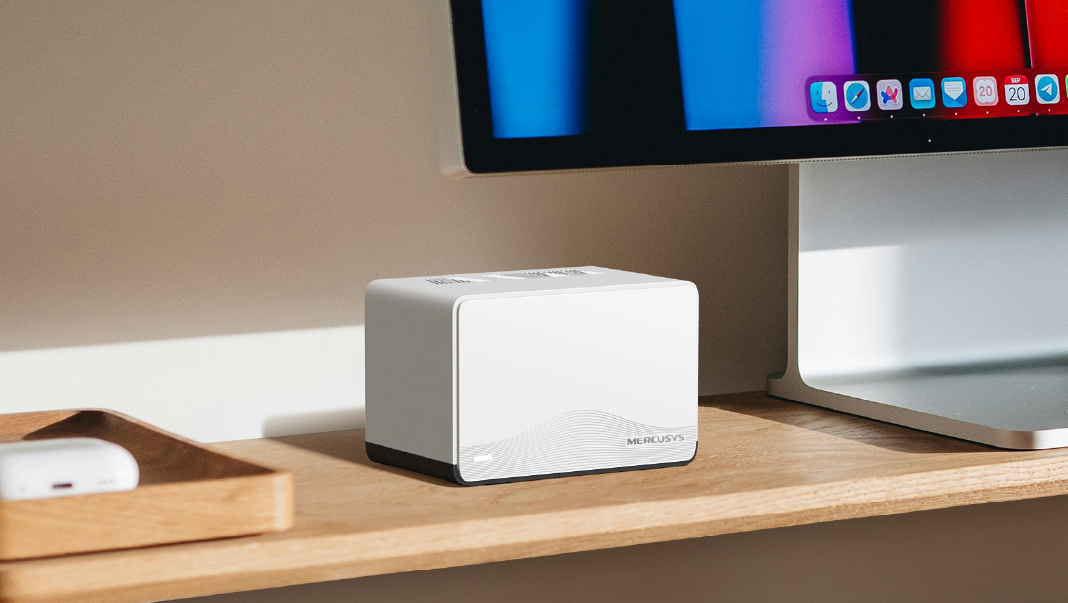
A Quick Guide to Wi-Fi 6, 6E, and Wi-Fi 7: What’s the Difference, and Which Is the Best Value to Buy Right Now?
On the surface, Wi-Fi 6, Wi-Fi 6E, and Wi-Fi 7 may seem like merely numerical iterations across three generations of standards and a linear increase in network speeds, but in reality, the evolution of each generation has completely reshaped the available wireless bands, channel bandwidth, and the communication logic between end devices and routers.
Top Entry-Level Choice, King of Value: Wi-Fi 6
Although some Wi-Fi 5 inventory models can still be found on the market, if you’re buying a new device now, Wi-Fi 6 is absolutely the minimum requirement and baseline.
Introduced in 2019, Wi-Fi 6 brought an architectural-level upgrade, with a theoretical peak speed of up to 9.6 Gbps. Of course, actual speeds still depend on your ISP plan, router hardware, and connected devices; for a common 1 Gbps fiber plan, for example, Wi-Fi 6 typically delivers impressive real-world speeds of 800 to 900 Mbps.
Wi-Fi 6 operates in both the 2.4 GHz and 5 GHz bands:
- 5 GHz: Fast speeds, but weaker wall penetration and coverage.
- 2.4 GHz: wide coverage, and it is currently the only supported band for the vast majority of smart home appliances.
If your budget is limited and you have a large number of smart home devices at home that need to connect, mature, stable, and affordably priced Wi-Fi 6 is still the best no-brainer choice.
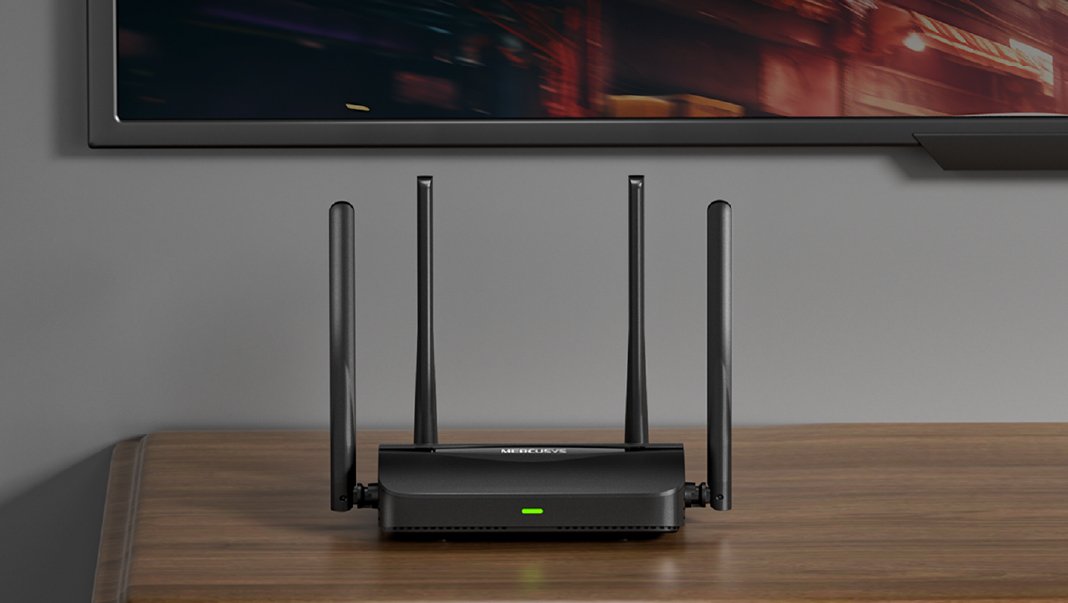
Your own interference-free highway: Wi-Fi 6E
In 2020, the Wi-Fi Alliance, which leads wireless standards, officially launched Wi-Fi 6E. Its theoretical maximum speed remains at 9.6 Gbps, but the core highlight is the newly opened 6 GHz band.
Although the physical characteristics of the 6 GHz band mean its signal coverage is narrower than that of 5 GHz (don’t expect a single unit alone to penetrate walls and cover an entire multi-story house), because it is essentially a “dedicated highway” free from competition with legacy devices, the three bands can operate independently and simultaneously without interfering with one another, greatly reducing network congestion when multiple devices are connected and delivering extremely stable transmission performance.
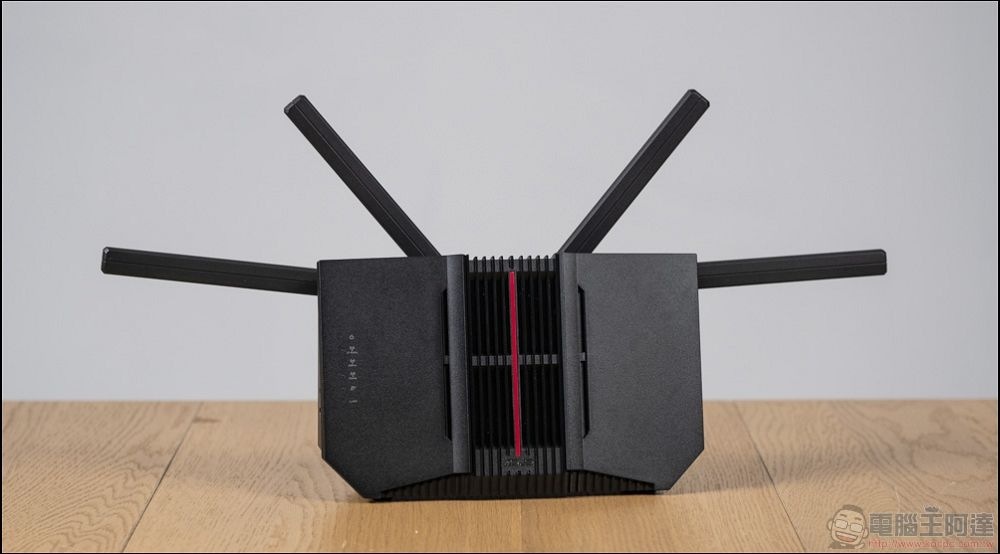
Enter the spec monster: What exactly makes Wi-Fi 7 so powerful?
As the current technological ceiling, Wi-Fi 7 builds on the architectural foundation of Wi-Fi 6E but delivers explosive performance growth:
- Theoretical network speeds double, then double again: peak theoretical speed jumps to an astonishing 46 Gbps. In Intel’s real-world demonstration, actual average transfer rates have already reached 5.8 Gbps—enough to download a complete high-definition movie in just a few seconds.
- Multi-Link Operation (MLO): This is Wi-Fi 7’s killer feature. It allows supported devices to connect to multiple bands “simultaneously” and send and receive data in sync, delivering extremely low latency and interference resistance—a dream for hardcore esports players or users streaming multiple 8K videos at once.
- Doubled bandwidth: Channel bandwidth is directly doubled to 320 MHz and can precisely confine external signal interference to specific areas, ensuring overall network smoothness.
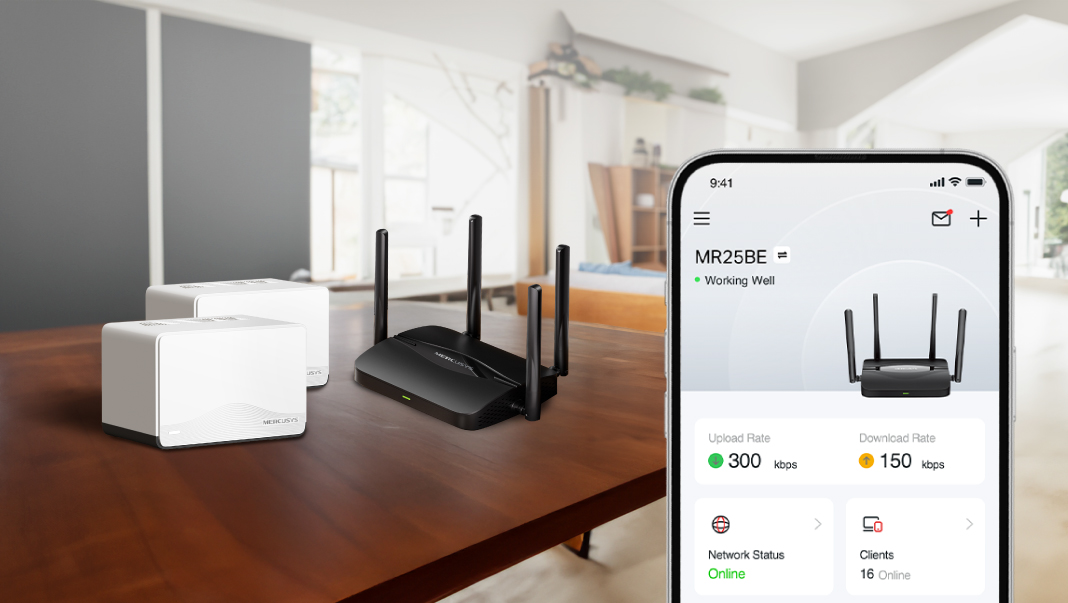
Since Wi-Fi 7 is so powerful, should I just go straight for the top now?
After hearing about Wi-Fi 7’s powerful specs, going straight for the top-end model may seem like the obvious choice. But don’t rush to open your wallet—before you swipe your card, there are three practical considerations you still need to face:
- Can your broadband plan keep up? If your home’s fiber internet plan is only 300M or 500M, even with a top-tier Wi-Fi 7 router, you’ll hardly feel its true speed advantage in everyday internet use.
- Insufficient end-device support: Although the latest flagship phones such as the iPhone 18 Pro fully support Wi-Fi 7, most laptops, tablets, and smart home appliances at home still use older-generation standards, and when connecting to the network they still automatically fall back to older frequency bands at reduced speeds.
- Mesh network deployment costs are high: A single entry-level Wi-Fi 7 router may cost only US$100 to US$300 (about NT$3,000 to NT$9,500), which is fairly affordable; but building a complete Mesh system with multiple linked units for a large home still requires a considerable overall budget.
At this stage, which model should I actually buy?
Returning to everyday home needs, Wi-Fi 6E is currently the most well-balanced “sweet spot” in overall performance. It features a tri-band architecture that can effectively ease network congestion, its price has become reasonable, and it is perfectly backward compatible with all kinds of smart home devices. Of course, if you already have an ultra-high-speed fiber plan and own flagship devices that support the latest specifications, going straight for Wi-Fi 7 will future-proof your setup.
For users who already have a Wi-Fi 6E system, there is really no need to rush to upgrade to Wi-Fi 7 at this stage, especially now that the next generation, Wi-Fi 8, is already on the horizon. It is said that Wi-Fi 8 will not blindly chase higher on-paper network speeds; instead, it will focus its R&D on “ultimate stability,” using technologies such as Distributed Resource Units (DRU), Multi-AP Coordination (MAPC), and Enhanced Long Range (ELR) to greatly reduce signal dead zones, lower packet loss rates, and expand coverage, bringing a truly seamless wireless experience to large homes. Rather than spending a lot of money now to chase higher specs, it is better to let your current Wi-Fi 6E keep going for a few more years and wait for the next generational shift.
Source: KOCPC Chinese