


Meta’s annual developer conference Meta Connect 2026 kicked off at 7 p.m. U.S. time on September 23 (7 a.m. Taiwan time on the 24th), where CEO Mark Zuckerberg unveiled a whole slate of new wearable devices in his keynote. The star of the show was a new device that packs VR display technology into an eyeglasses form factor, “Meta VR Glasses,” along with a pair of Ray-Ban Meta Audio with no camera at all, and the next-generation Ray-Ban Meta Gen 3 smart glasses.
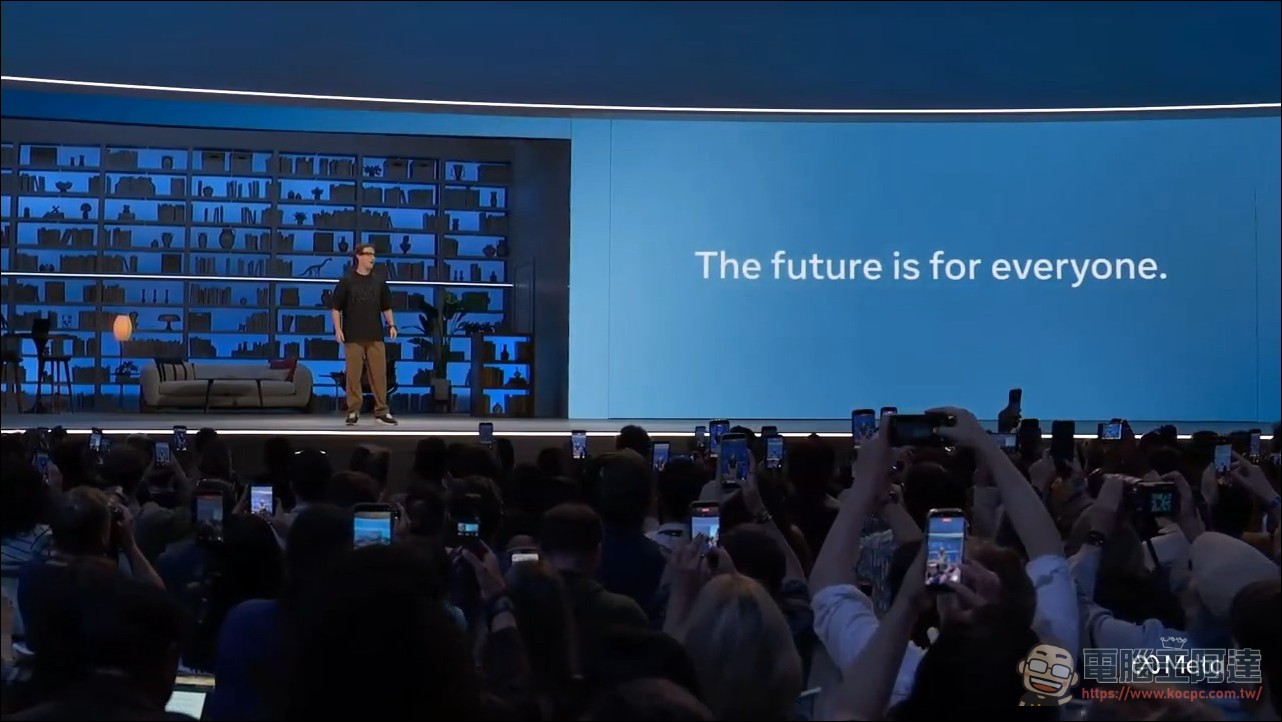
The backdrop to this launch event is quite delicate: Meta’s smart glasses have recently sparked widespread controversy over covert recording and harassment because of their built-in cameras, and have been criticized by outsiders as “pervert glasses.” Wearable surveillance technology is facing strong backlash. Meta’s response is direct: release a model without a camera, while stepping up privacy protections for the AI assistant Muse and the smart glasses. The main thrust of the entire keynote has also shifted from the metaverse of the past to personal superintelligence, placing Muse at the center of all its hardware.
Meta VR Glasses: 100-gram VR glasses
Meta VR Glasses’ approach is to split the components of a traditional VR headset into two parts: the glasses unit worn on the face weighs only 100 grams, claimed to be five times lighter than the 515-gram Meta Quest 3; the computing, battery, and storage are placed in a pocket-sized external puck with a built-in Qualcomm Snapdragon Reality Elite chip, 12GB RAM, and 128GB storage. For the display, it uses a 5K micro OLED “Infinite Display,” with a per-eye resolution of 2412 × 2288 and a refresh rate of up to 120Hz.
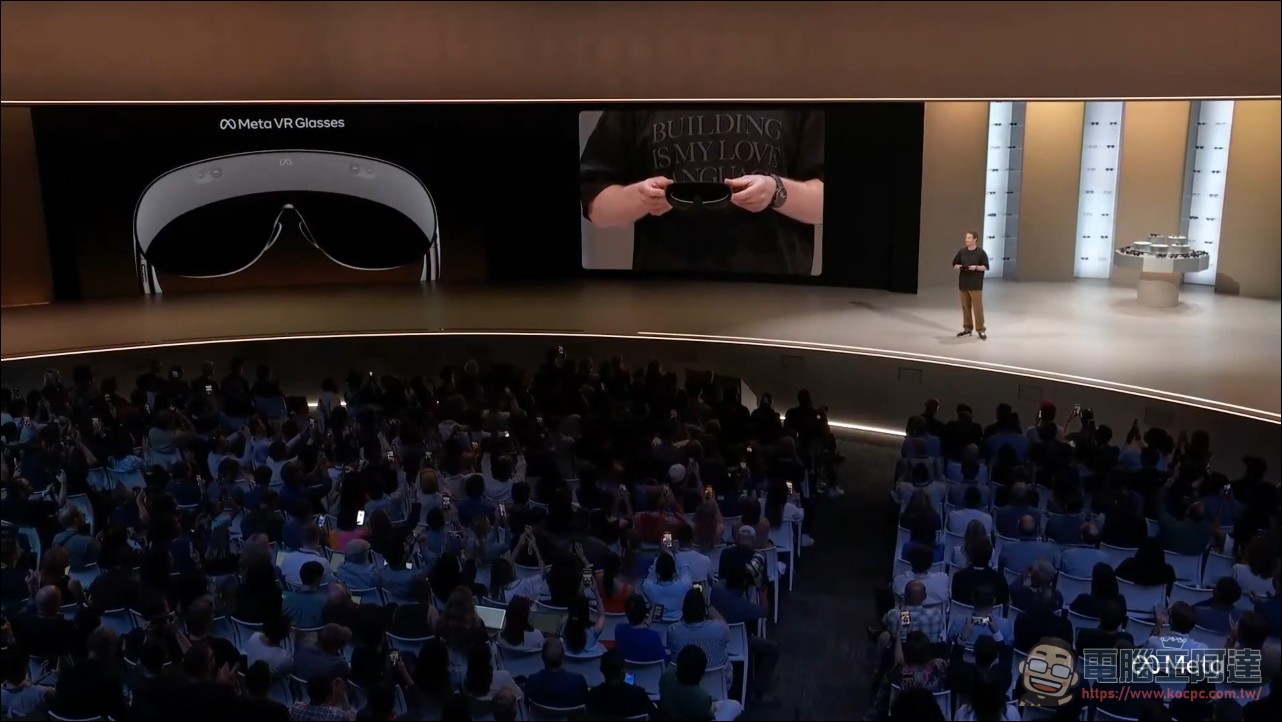

Meta VR Glasses’ glasses-style design turns VR into something you can put on and take off whenever you want, without having to strap it to your head like traditional headsets and turn it into a “full gear-up” ritual. Overall, it feels like a lightweight version of the Vision Pro. On the functionality front, Meta VR Glasses can connect to a Mac or Windows laptop and serve as a virtual external monitor, and it provides a virtual keyboard and trackpad; it can also access the full Quest app and game catalog and supports Xbox Cloud Gaming.
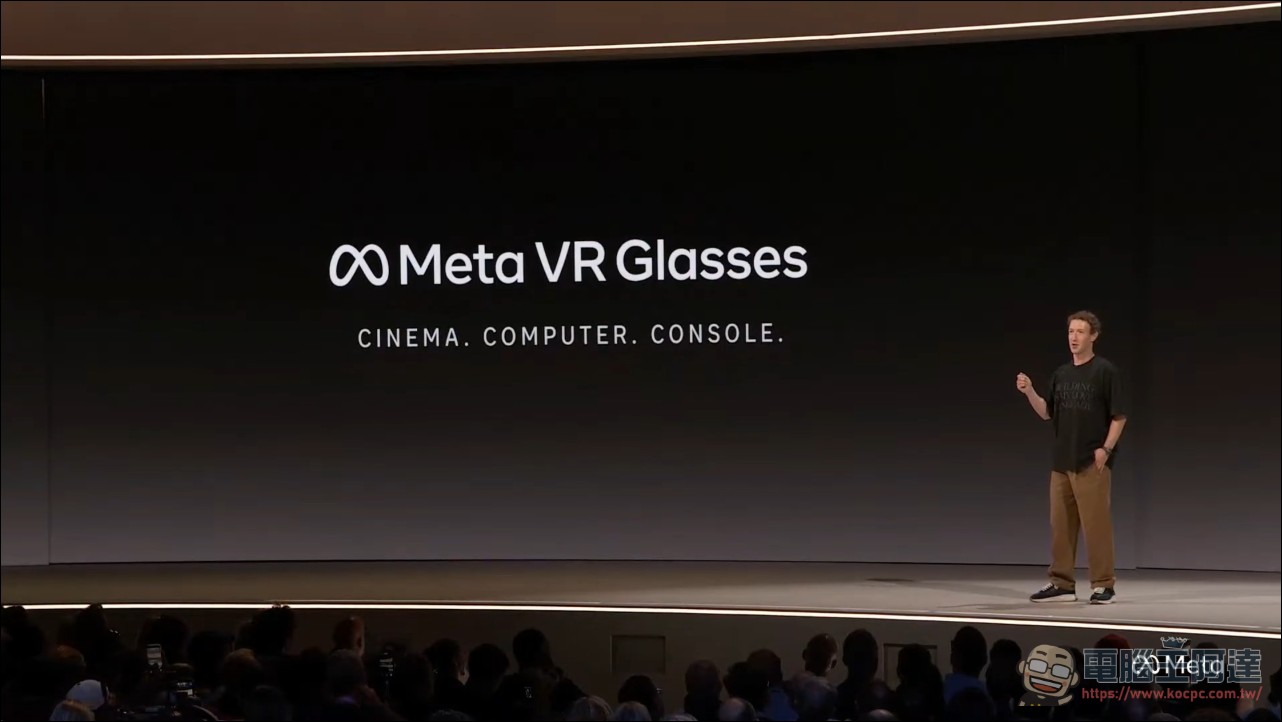
- WeightGlasses body: 100g (Quest 3 is 515g)
- Display: 5K micro OLED, 2412 × 2288 per eye, up to 120Hz
- External puck:Snapdragon Reality Elite、12GB RAM、128GB
- EntertainmentThe first IMAX Enhanced-certified VR device, supporting 3D movies and immersive live sports events.
- Video callThe “Hologram” feature can generate photorealistic digital avatars for calls, a concept similar to Apple Vision Pro’s Persona.
- Selling price: US$1,299 (approx. NT$42,200), launching in spring 2027
The content ecosystem is also being built out in tandem. Meta announced that Quest headsets will let users rent or buy movies directly later this year, starting with “hundreds” of titles in the US, and when Meta VR Glasses launch in spring 2027, “thousands” of international titles will be available.

Ray-Ban Meta Audio: Removing the camera entirely
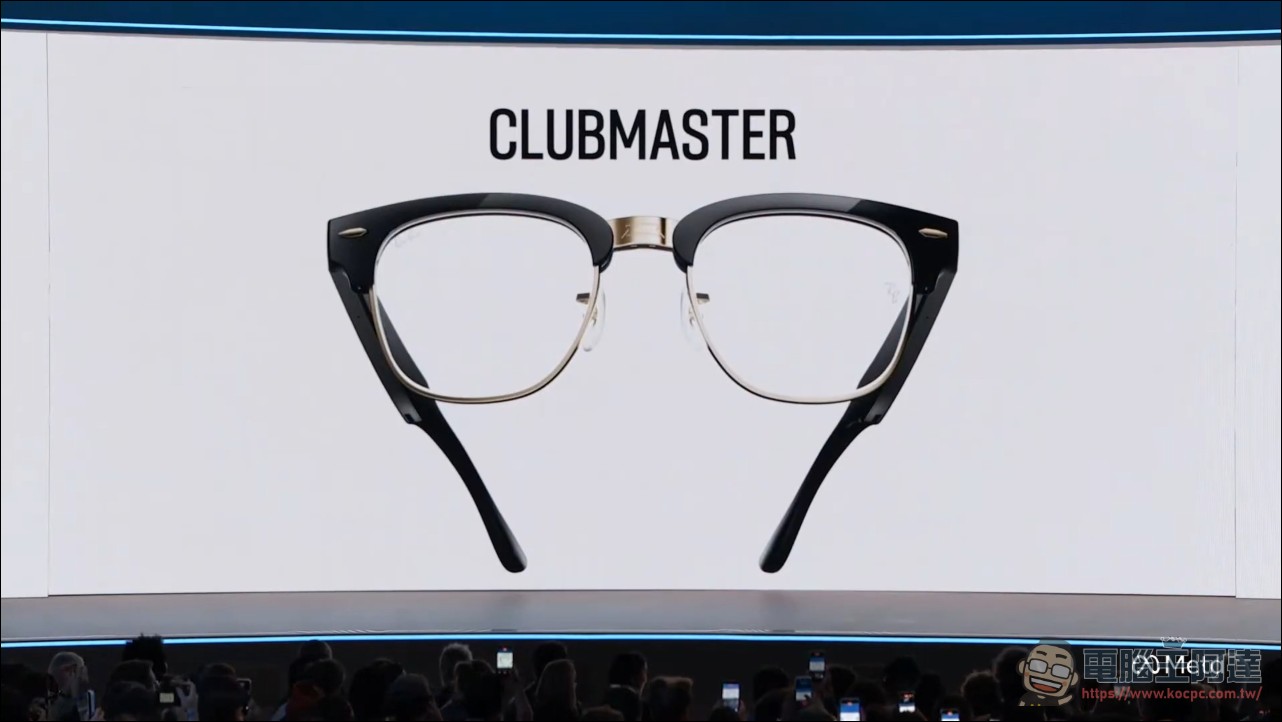
In response to the secret-recording controversy, Meta has launched the Ray-Ban Meta Audio, which has no camera at all. It retains music playback, calls, and Meta AI voice assistant features, but cannot take photos or record video, directly removing the biggest source of controversy at the hardware level. Meta emphasizes that these are its lightest and thinnest AI glasses, weighing only 43 grams, with 12 hours of battery life on a single charge and up to 48 hours with the charging case. They come in 23 color and lens combinations, launch on October 13, and start at US$349 (about NT$11,350).
The other main model, Ray-Ban Meta Gen 3, still retains the camera, with upgrades focused on battery life and call quality: battery life increases from 8 hours to 9 hours, it gets a six-microphone array claimed to eliminate over 90% of background noise, and adds a customizable physical button to wake Meta AI with one press. It comes in 27 color and lens combinations, starting at US$449 (about NT$14,600), and the LED indicator light that turns on during recording remains unchanged.
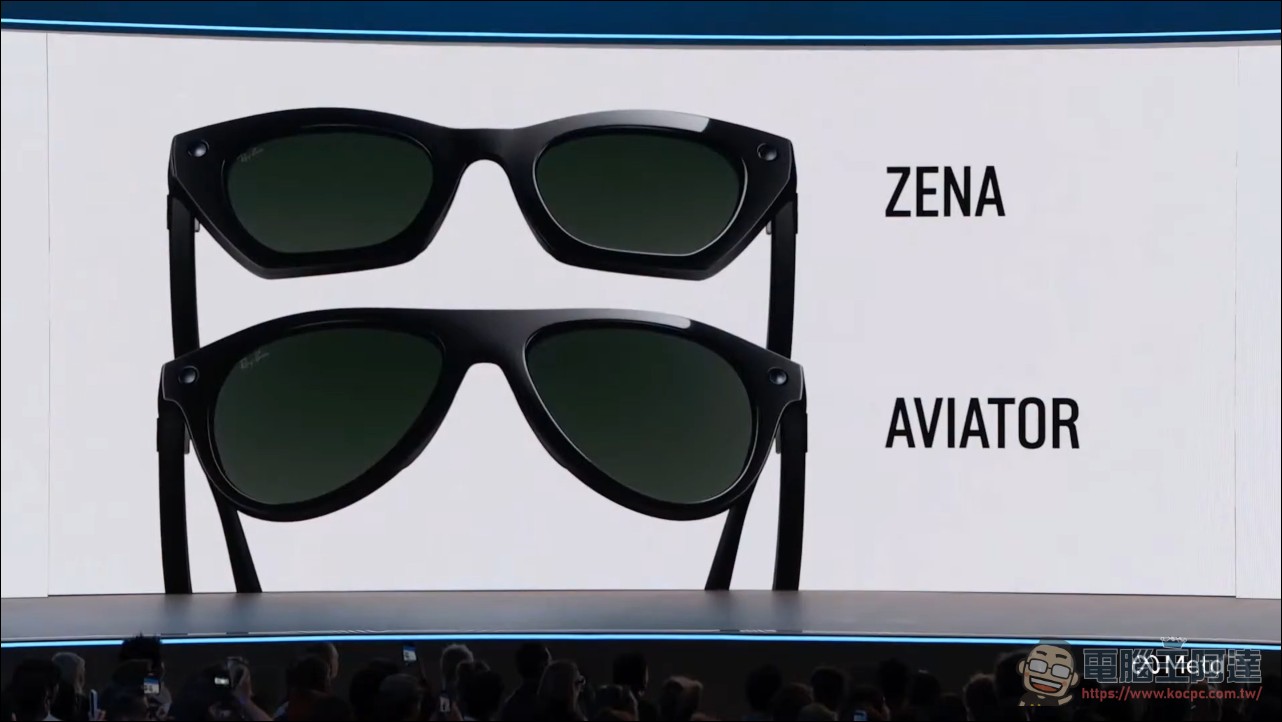
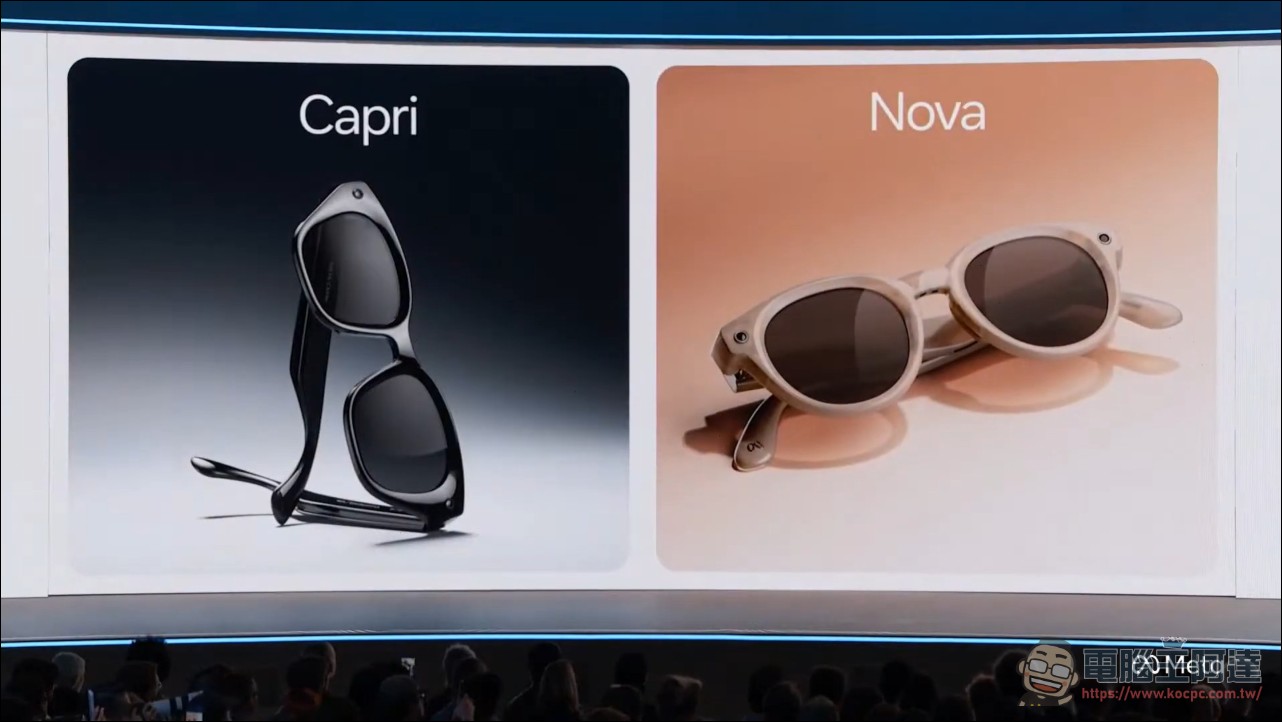
There’s something new in the budget market too: Meta Adventurer is launching an entry-level model with a black frame and gray lenses, starting at US$249 (about NT$8,100), available October 23. Meta is also introducing a “Mix & Match” customization option that lets you freely combine frame, lens, and case colors; the EssilorLuxottica line adds two styles, Capri and Nova; the Kylie Jenner collaboration Starfire line adds ivory, and a collaboration model with BLACKPINK’s Lisa is being launched. Sales regions are also expanding to Singapore, South Korea, Mexico, and the United Arab Emirates, with Brazil “coming soon.”
Muse AI Expands Across the Board
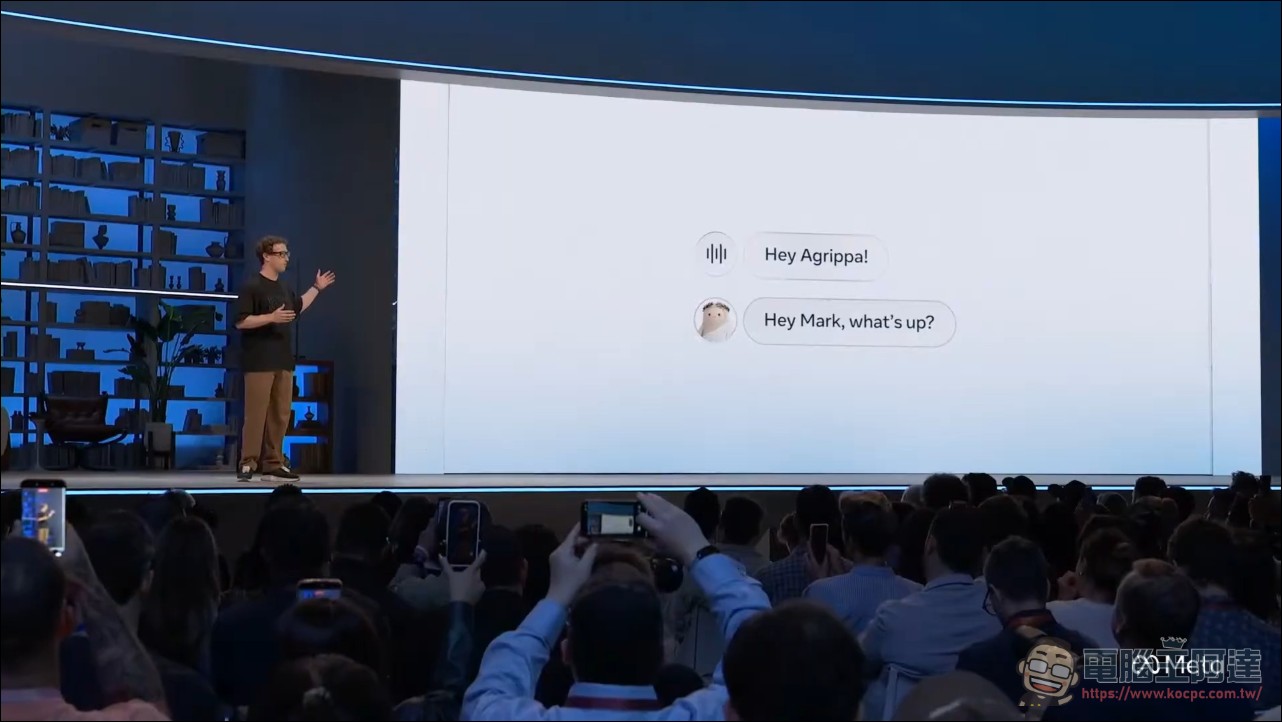
The recently announced Muse AI assistant was another main theme of the conference. Meta announced that it is bringing Muse to smart glasses, where saying its name will wake it; it can coach workouts, log meals, book trips, and help users buy items they see in front of them. Muse itself also continues to evolve: it has added video calling, allowing users to talk with a customizable real-time avatar; each Muse Agent will have its own email account for sending and receiving messages and handling to-dos; and the Mac app will also gain the ability to operate the computer.
On the hardware side, Zuckerberg teased onstage a small portable AI device called Muse Charm that looks like a scaled-up Tamagotchi, letting users talk to Muse AI anytime without wearing glasses. Detailed specs will be announced “soon,” with the goal of shipping before the year-end holiday season.
Privacy Protection and Accessibility Features
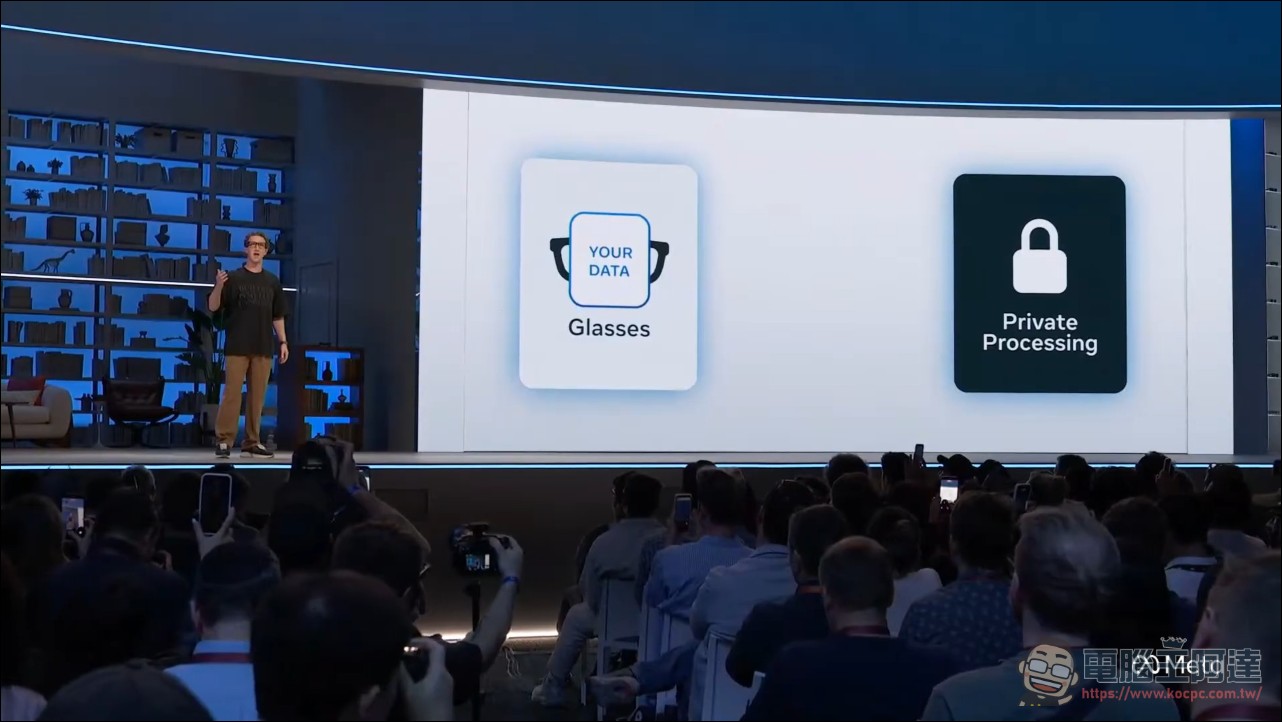
As Meta asks users to hand more of their daily lives over to AI, privacy becomes a question it must answer. In his speech, Zuckerberg announced the Muse Confidential VM initiative: currently every Muse runs on a dedicated virtual machine in the cloud (Muse Secure VM), and the new confidential version will add encryption, making it impossible for even Meta itself to access user data. For an assistant that connects various accounts and helps send emails, book tickets, and shop, this is a crucial promise.
In accessibility, the smart glasses add a “Hearing Enhancement” feature, FDA-cleared software for adults with self-perceived mild-to-moderate hearing loss, available later this year with a Meta One subscription or as a US$149 (about NT$4,850) add-on. When Meta AI sees what the user is looking at, it can give richer answers, helping visually impaired and low-vision users interpret their surroundings; a new audio customization feature can freely distribute volume between the left and right ears, including focusing all sound to one side. In addition, the “Hologram” digital avatar video feature, previously limited to Ray-Ban Meta Display, will open in the U.S. later this fall as a WhatsApp early-access experience.
Pricing strategy
- Meta VR Glasses: US$1,299 (approx. NT$42,200), available in spring 2027
- Ray-Ban Meta Gen 3From US$449 (approx. NT$14,600)
- Ray-Ban Meta AudioFrom US$349 (approx. NT$11,350), available October 13
- Meta Adventurer Basic ModelStarting at US$249 (approx. NT$8,100), available October 23.
- Hearing enhancement featureIncluded with a Meta One subscription, or available as an add-on for US$149 (approx. NT$4,850)
The pricing tier is clearly arranged: at US$1,299, VR Glasses sits between Ray-Ban Display and Apple Vision Pro, with features benchmarked against Vision Pro, a much lower price, and a much lighter design than head-mounted devices like Quest.
Conclusion
Watching the whole Meta Connect 2026, Meta’s strategic shift is quite clear: VR no longer appears in the form of a headset but is tucked into a pair of glasses; the controversy over smart glasses cameras is answered by “simply removing the camera”; and AI is centered on Muse, extending from phones, Mac, and glasses all the way to portable small hardware like Muse Charm. Meta VR Glasses won’t launch until spring 2027. By then, the actual wearing experience, battery life, and third-party app support will be the key to judging whether it can overturn the market. Before that, the two new smart glasses going on sale in October will first face market testing, especially whether the camera-free Ray-Ban Meta Audio can win back consumers concerned about privacy.
Source: KOCPC Chinese