


At the earlier iPhone 18 Pro series launch event, Apple claimed that its A20 Pro delivered up to 40% better graphics performance than the previous-generation A19 Pro. Generally, official figures are tested in optimal conditions, so in real-world use, performance should be somewhat lower—but this time the A20 Pro is very different. Recently, an overseas YouTube channel tested the AAA gaming performance of the iPhone 18 Pro Max and compared it with the previous-generation iPhone 17 Pro Max. Unexpectedly, in the Resident Evil 4 remake, the average frame rate was 50% higher, and the 1% Low was even 77% higher—both figures higher than Apple’s own claimed 40%.
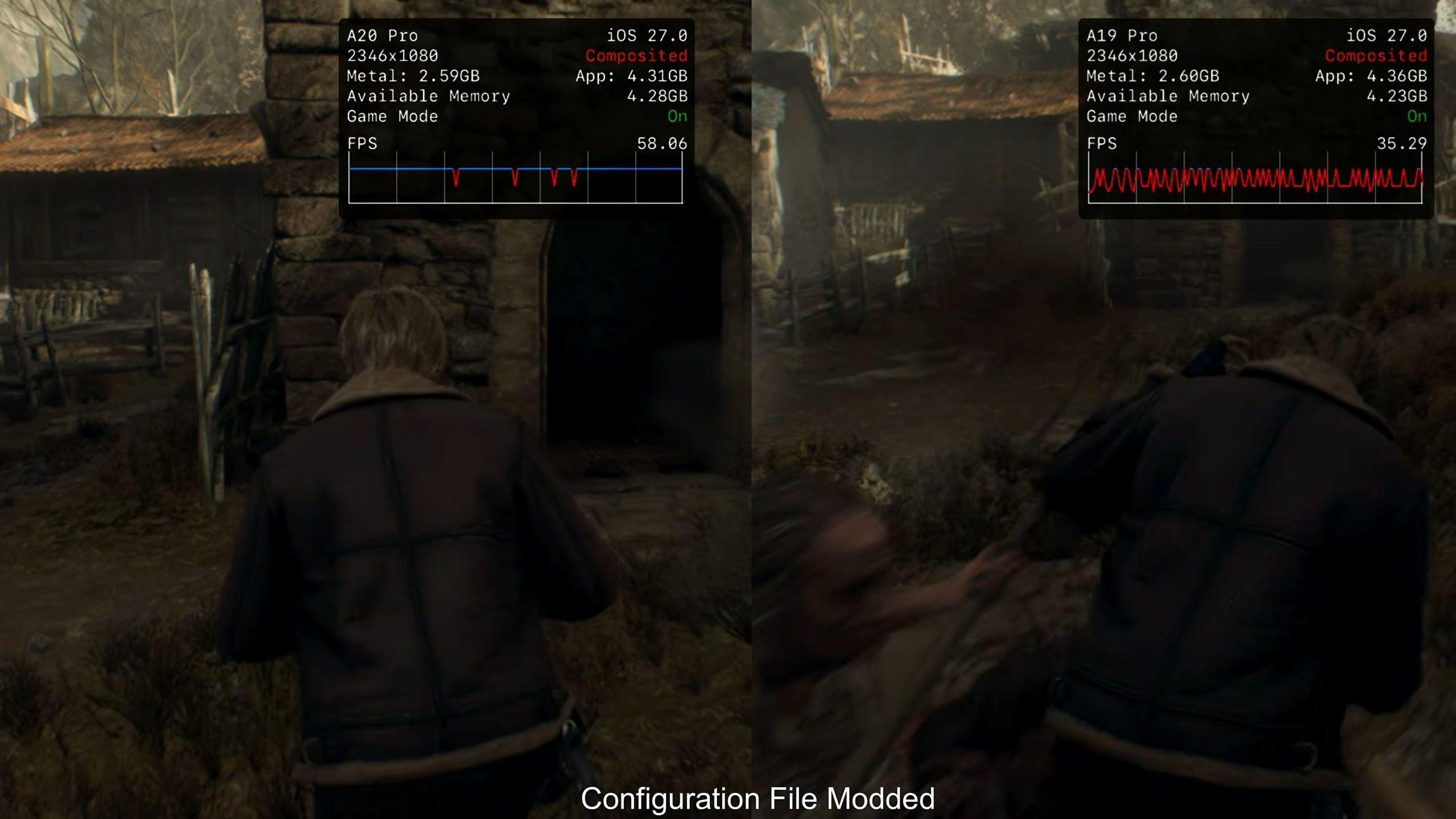
A20 Pro runs Resident Evil 4 at an average of 58 FPS, 50.3% more than the A19 Pro and 77.8% higher in 1% Low.
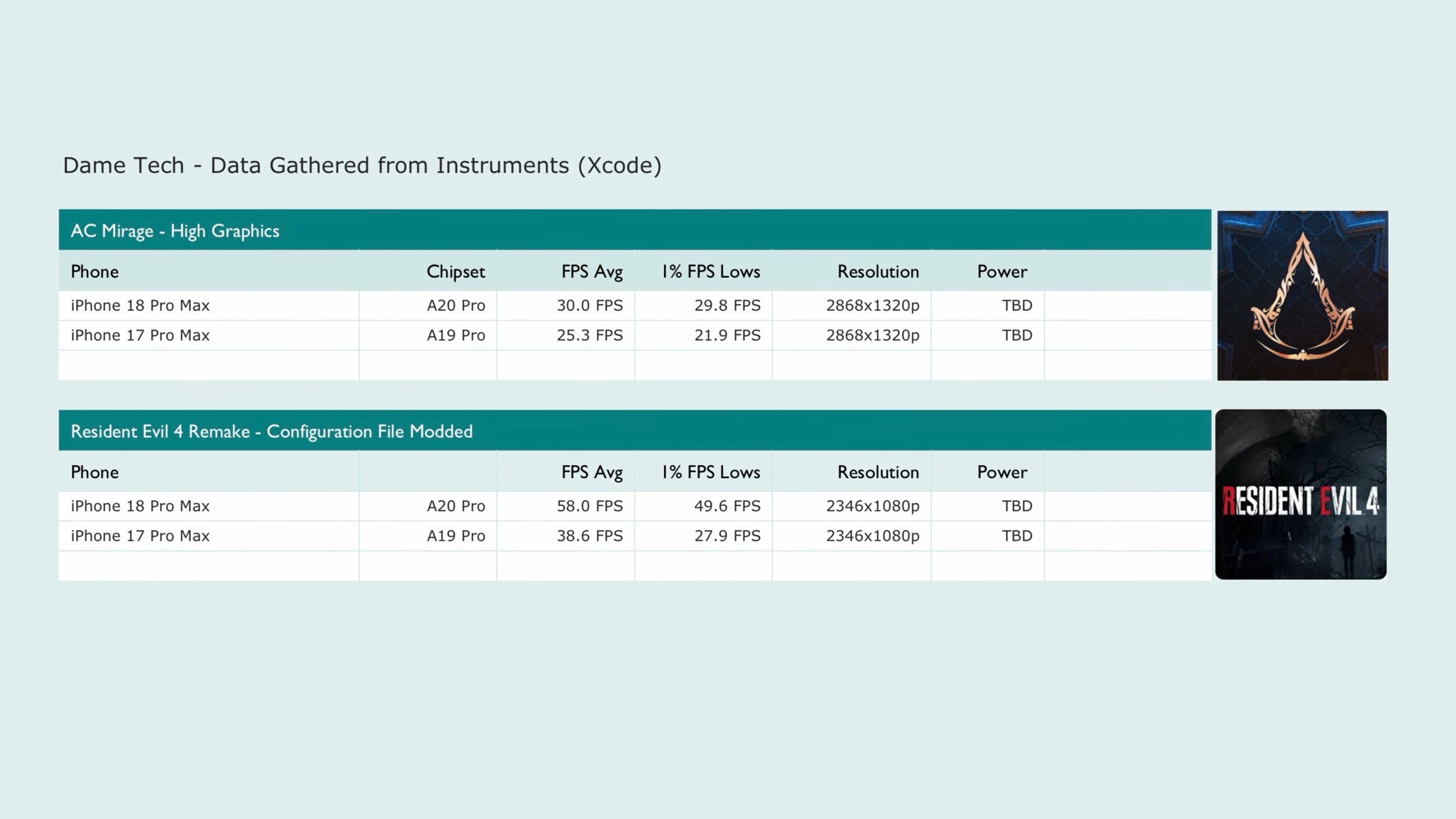
The overseas YouTube channel Dame Tech recently shared a gaming test of the iPhone 18 Pro Max, directly comparing it with the previous-generation iPhone 17 Pro Max powered by the A19 Pro in two games: Resident Evil 4 Remake and Assassin’s Creed Mirage.
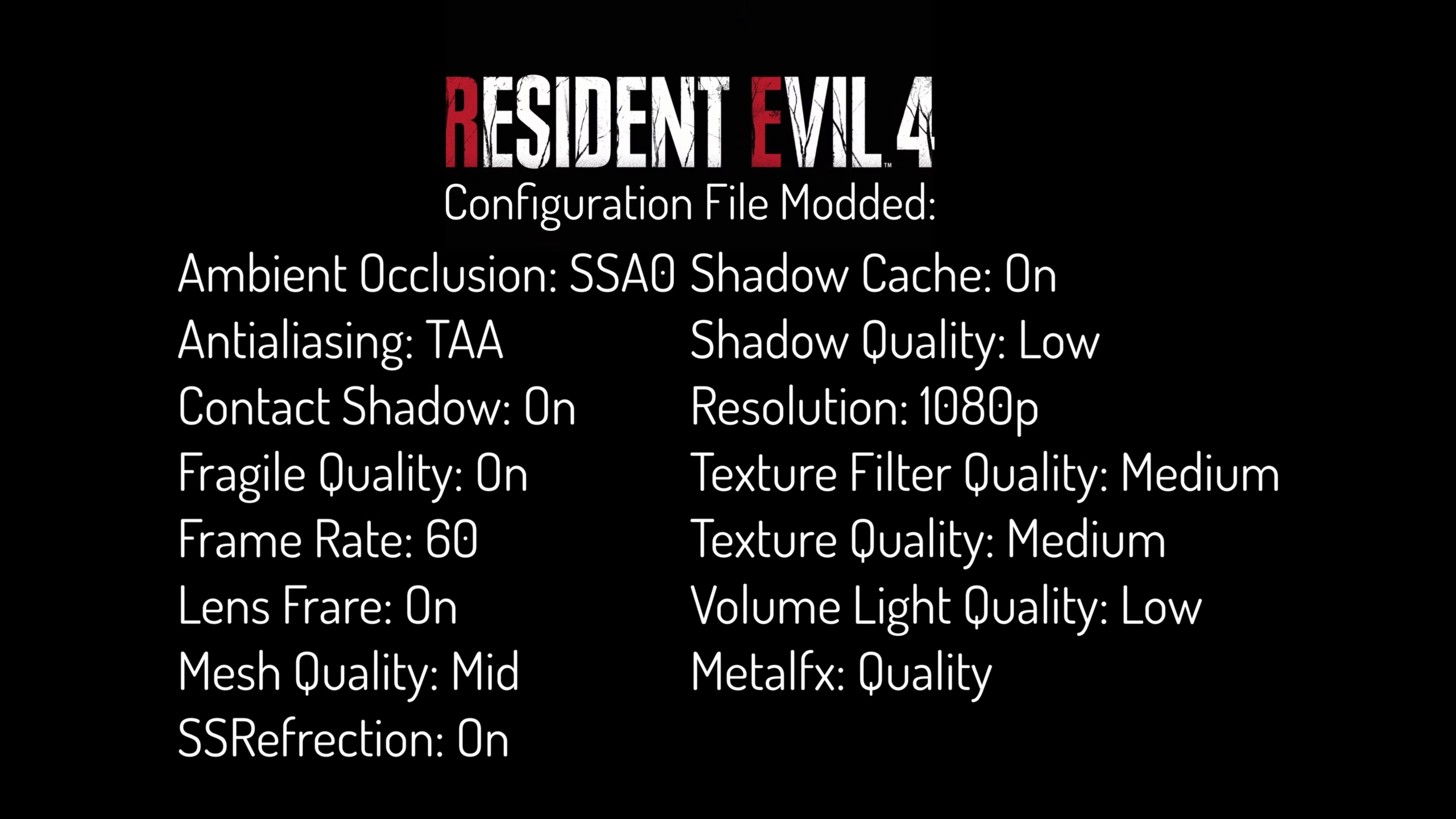
- In the Resident Evil 4 remake, Dame Tech modified the game’s config file to unlock more custom graphics options and set the frame rate cap to 60 FPS.
- Assassin’s Creed Mirage uses high-quality settings at a resolution of 2868×1320, but the game is capped at a maximum of 30 FPS.
| Test game | Mobile phone (chip) | average frame rate | 1% Low | Resolution |
|---|---|---|---|---|
| Resident Evil 4 Remake (Modify configuration file) |
iPhone 18 Pro Max(A20 Pro) | 58.0 FPS | 49.6 FPS | 2346×1080 |
| iPhone 17 Pro Max(A19 Pro) | 38.6 FPS | 27.9 FPS | 2346×1080 | |
| Assassin’s Creed Mirage (High Definition) |
iPhone 18 Pro Max(A20 Pro) | 30.0 FPS | 29.8 FPS | 2868×1320 |
| iPhone 17 Pro Max(A19 Pro) | 25.3 FPS | 21.9 FPS | 2868×1320 |
The Resident Evil 4 remake averaged 58 FPS on the A20 Pro, already very close to 60 FPS. The A19 Pro averaged 38.6 FPS, mostly fluctuating between 35 and 40 FPS in the same section. The biggest difference is in 1% Low, where the A20 Pro is 77.8% higher, and the A20 Pro’s frame-rate curve is much flatter than the A19 Pro’s, meaning smaller fluctuations and fewer sudden frame drops.
In Assassin’s Creed Mirage, the A20 Pro almost always stayed at the 30 FPS cap, while the A19 Pro averaged 25.3 FPS, an 18.6% difference. The A19 Pro’s 1% lows dropped to 21.9 FPS, so the A20 Pro was ahead by as much as 36.1%. That 18.6% looks much lower than the 40% Apple claimed, but that’s because the A20 Pro has already hit the game’s ceiling and can’t run above 30 FPS.
The A20 Pro generation isn’t just an upgrade to the GPU itself—it also brings major changes to packaging and thermal design, helping the chip sustain higher performance under prolonged high loads.
The A20 Pro is Apple’s first iPhone chip built on TSMC’s 2nm process, and it adopts a packaging method (WMCM) inspired by M-series chips. Previously, memory was stacked on top of the processor, so heat had to pass through the memory to dissipate. Now the memory is placed beside it, allowing the chip to attach directly to a vapor chamber for cooling. The vapor chamber’s heat-dissipation surface area is 3x that of the iPhone 17 Pro, and it also uses more highly thermally conductive graphite and nano-twinned copper. Memory bandwidth is also 50% higher than the A19 Pro.
The iPhone 18 Pro series went on sale on September 18. In Taiwan, the iPhone 18 Pro starts at NT$44,900 and the iPhone 18 Pro Max starts at NT$49,900, a NT$5,000 increase over the previous generation.
Source: KOCPC Chinese