


The global warming crisis is becoming increasingly severe, and all countries are actively seeking solutions to reduce carbon dioxide emissions. However, the latest research from ETH Zurich recently found that carbon dioxide is not only the culprit of the greenhouse effect, but is actually a “carbon resource” that can be utilized. Converting carbon dioxide into useful chemicals can not only reduce greenhouse gases in the atmosphere, but also create economic value. It can be said to kill two birds with one stone.
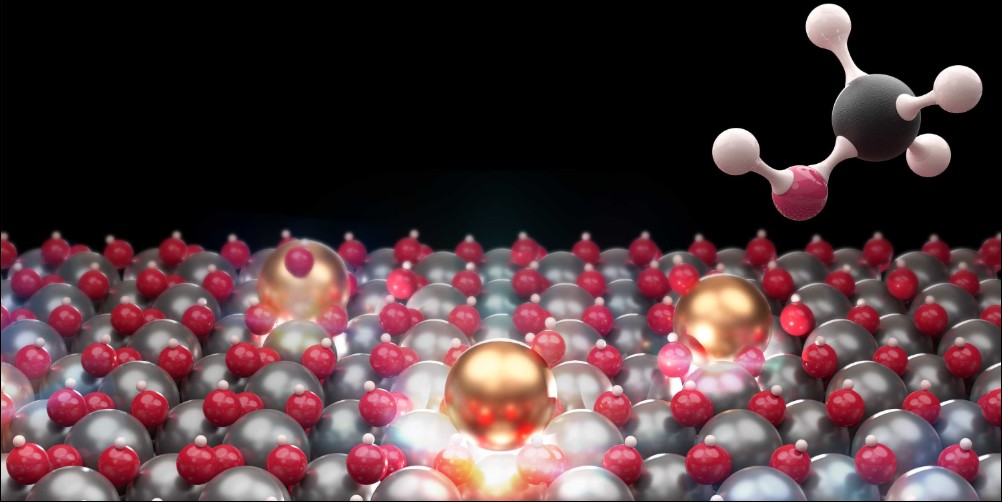
The conversion rate of the new catalyst increases by 70%, turning carbon dioxide into “liquid green hydrogen” is no longer a dream
Among the many carbon dioxide conversion technologies, converting it into methanol (CH₃OH) is regarded as one of the most promising directions. Methanol is not only an important chemical raw material, but also a liquid fuel with extremely high energy density. Its energy density is equivalent to that of liquid hydrogen, but it is easier to store and transport. In addition, methanol can be directly used in ship engines and can also be used as a raw material in the chemical industry, with a wide range of applications.
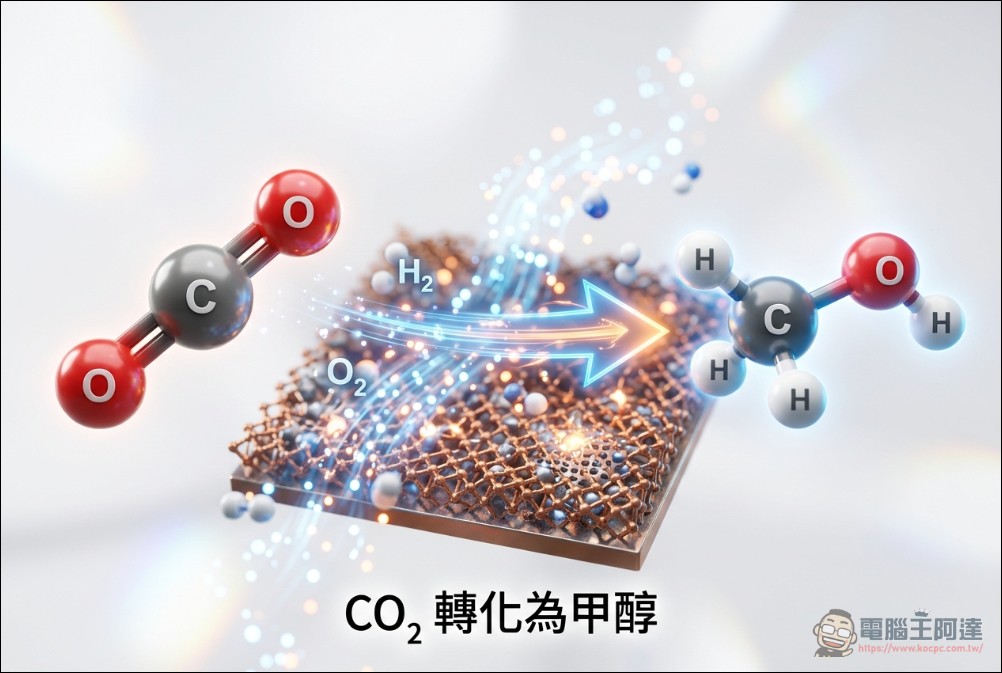
However, the traditional technology of converting carbon dioxide into methanol has problems such as low efficiency and high cost, and has been unable to be applied in large-scale industrial applications. Now, a research team at ETH Zurich has brought a major breakthrough!
Single-atom catalysts: a new milestone in nanotechnology
On March 4, 2026, ETH Zurich published a study that shocked the academic world in the journal Nature Nanotechnology.Research. The research team developed a revolutionary catalyst technology usingsingle atom indiumAs a catalyst, carbon dioxideThe efficiency of conversion into methanol has been greatly increased by 70%!
Speaking of catalysts, you may think of traditional metal particle catalysts. These catalysts are usually composed of thousands or even tens of thousands of atoms. The active centers are dispersed inside the particles, and only the atoms on the surface can participate in the reaction, resulting in a waste of resources. Single-atom catalysts are a completely different concept: each metal atom is an independent active center and can participate in catalytic reactions.
“Imagine that a traditional catalyst is like a stone, with only its surface energy reacting with the outside world; and a single-atom catalyst is like breaking this stone into countless independent particles of dust. Each particle of dust can produce chemical reactions with the surrounding substances.” The leader of the research team said, “This is the power of single-atom catalysts.”
Key technologies: Hafnium oxide carrier and high temperature preparation
The key to this breakthrough lies in two elements: the selection of catalytic support and the optimization of the preparation process.
The research team chose hafnia (HfO₂) as the catalyst carrier. Hafnium oxide is a high-melting-point ceramic material that remains stable in high-temperature environments, providing an ideal support platform for single-atom indium. More importantly, the surface properties of hafnium oxide enable indium atoms to be evenly dispersed to form a stable single-atom structure.
Speaking of preparation conditions, this technology has a rather specific requirement: it requires high-temperature processing of at least 2000°C. This temperature is even higher than the melting point of most metals! At such high temperatures, indium atoms can form strong interactions with the surface of hafnium oxide, ensuring the stability of the single-atom structure and preventing atoms from aggregating to form clusters during the reaction.

“The high-temperature preparation at 2000°C is the most challenging part of this technology,” a member of the research team admitted. “But it is this seemingly harsh condition that ensures the long-term stability of the catalyst. Our single-atom catalyst showed excellent durability in continuous reaction tests, which is crucial for industrial applications.”
Indium metal: a more affordable choice than precious metals
When it comes to catalysts, many people first think of precious metals such as platinum, palladium, and iridium. These metals do have excellent catalytic properties, but they are expensive and scarce, severely limiting their feasibility in large-scale industrial applications. The indium used in this study is an attractive alternative. Indium is a relatively abundant metal, and its content in the earth’s crust is much higher than that of precious metals. Although indium itself is not the most common element, its supply is relatively stable and its price is more affordable.
“Using indium can not only reduce costs, but also avoid risks in the precious metal supply chain,” the researchers explained. “More importantly, single-atom catalysts greatly improve the utilization efficiency of indium atoms, further reducing the cost of practical applications.”
Green methanol: a key piece of the energy transition puzzle
Methanol is known as “liquid green hydrogen” and will play an important role in the future energy transformation. Compared with hydrogen, methanol is liquid at normal temperature and pressure, does not require expensive low-temperature storage equipment, and is more convenient to transport. In addition, methanol can be used directly as a fuel, and existing internal combustion engines can use methanol fuel with only minor modifications.
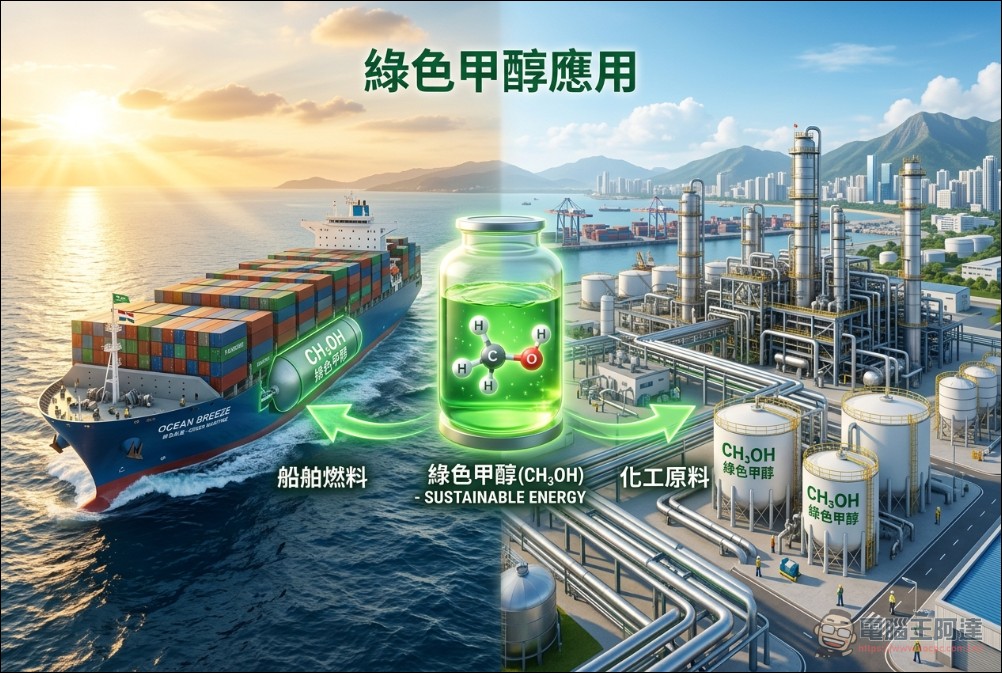
The breakthrough of this new technology brings hope for the large-scale production of “green methanol”. The so-called green methanol refers to the use of electricity generated by renewable energy sources (such as solar energy and wind energy) to drive the carbon dioxide conversion reaction. The entire process does not produce additional carbon emissions and is a truly zero-carbon energy source.
“Our goal is to establish a carbon circular economy,” the research team said. “In the future, the carbon dioxide emitted by industry can be captured and converted into methanol, which can in turn be used as fuel or raw material, forming a virtuous cycle. This single-atom catalyst technology is a key step in realizing this vision.”
Scientific significance: Deep understanding of reaction mechanisms
In addition to practical application value, this research also has great scientific significance. The research team used extremely high-precision measurement technology to accurately observe the behavior of each indium atom and the conversion process of carbon dioxide molecules on the catalyst surface.
“Single-atom catalysts provide us with a perfect model system,” the researchers explained. “By studying the catalytic behavior of single atoms, we can more thoroughly understand the basic mechanism of chemical reactions. The results of this basic research will promote the development of the entire field of catalytic chemistry.”
In fact, single-atom catalysis is one of the hottest research directions in the field of catalytic chemistry in recent years. This research provides valuable theoretical guidance for the design and optimization of single-atom catalysts and is expected to inspire more related innovative research.
Industrialization prospects: long way to go
Although this technology has shown great potential, the research team also admitted that there is still a long way to go to achieve large-scale industrial application.
“The results under laboratory conditions are exciting, but the factors that need to be considered in industrial production are much more complex,” the researchers said. “We need to further optimize the catalyst preparation process, reduce costs, and solve various engineering challenges that may be encountered during scale-up production.”
At present, the research team has begun to negotiate cooperation with a number of chemical companies, hoping to bring this technology to the market as soon as possible. They predict that if all goes well, industrial production of green methanol could be possible within the next five to 10 years.
Conclusion: Giving new impetus to carbon neutrality goals
In the context of the global push for carbon neutrality, this breakthrough from ETH Zurich can be said to have come at just the right time. Single-atom indium catalyst technology not only greatly improves the efficiency of converting carbon dioxide into methanol, but also provides a more economically feasible path.
With the further development and application of this technology, we are expected to see more “carbon emissions” transformed into “carbon resources”, making an important contribution to the establishment of a sustainable circular economy. Perhaps in the near future, the ship fuel and industrial raw materials we use will all come from captured carbon dioxide: this is the beautiful vision that technology brings to mankind.
Source: KOCPC Chinese