


At its fall product launch event on September 7, Xiaomi officially unveiled the Xiaomi 18 Fold, a foldable device that takes a different path than its predecessors: rather than pursuing a large book-style fold that “opens like a tablet,” it adopts a brand-new form factor Xiaomi calls “mid-fold,” with a body that is close to passport-sized when folded. The announcement comes two days before Apple’s iPhone Ultra launch. Xiaomi president Lu Weibing made it clear on Weibo that the Xiaomi 18 Fold is “the top-tier flagship with the highest positioning and the most cutting-edge exploration in the entire series.” It is also Xiaomi’s first product with pricing across the entire lineup exceeding 10,000 yuan, officially entering the high-end foldable market. 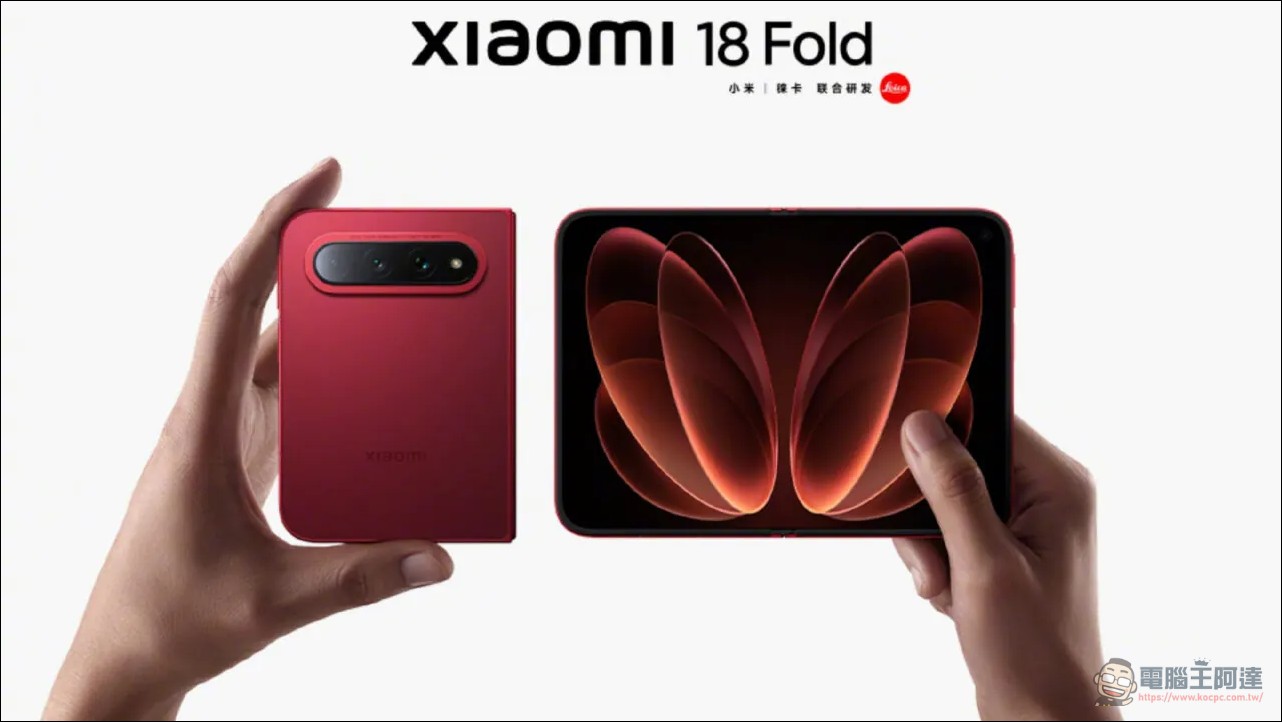
Xiaomi officially launches Xiaomi 18 Fold: the “mid-fold” flagship with a new form factor and a new experience.
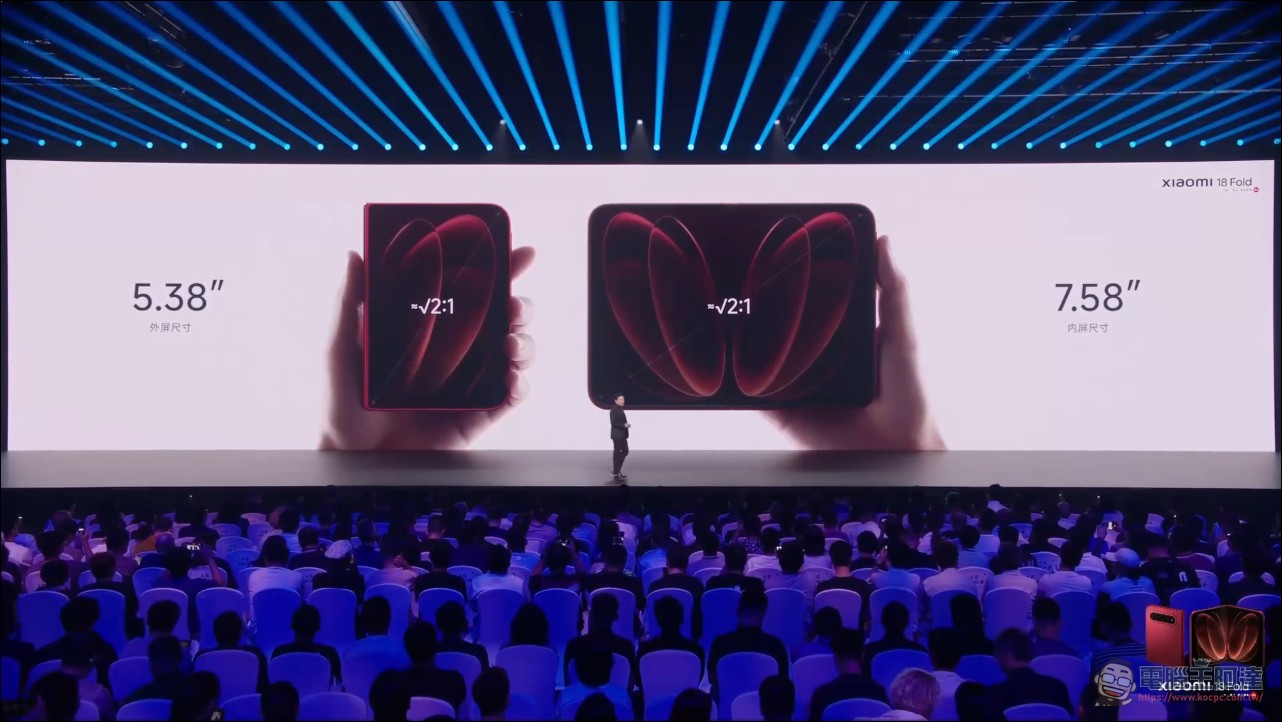
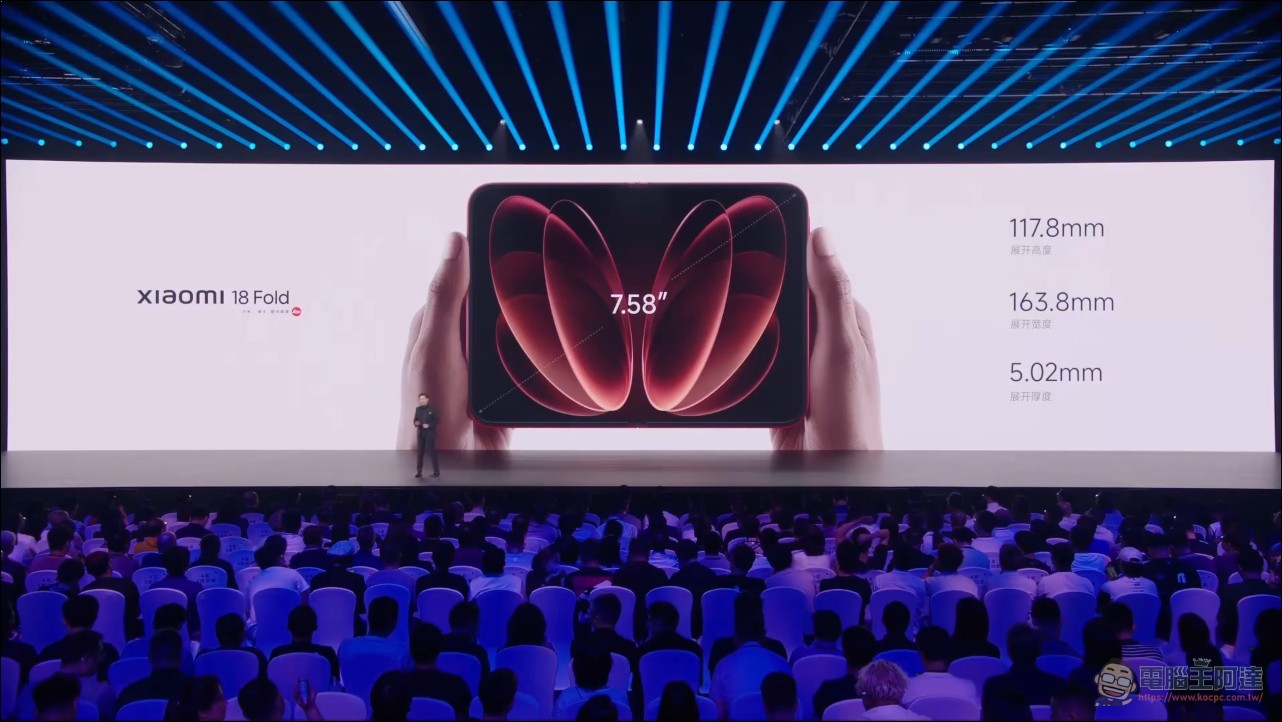
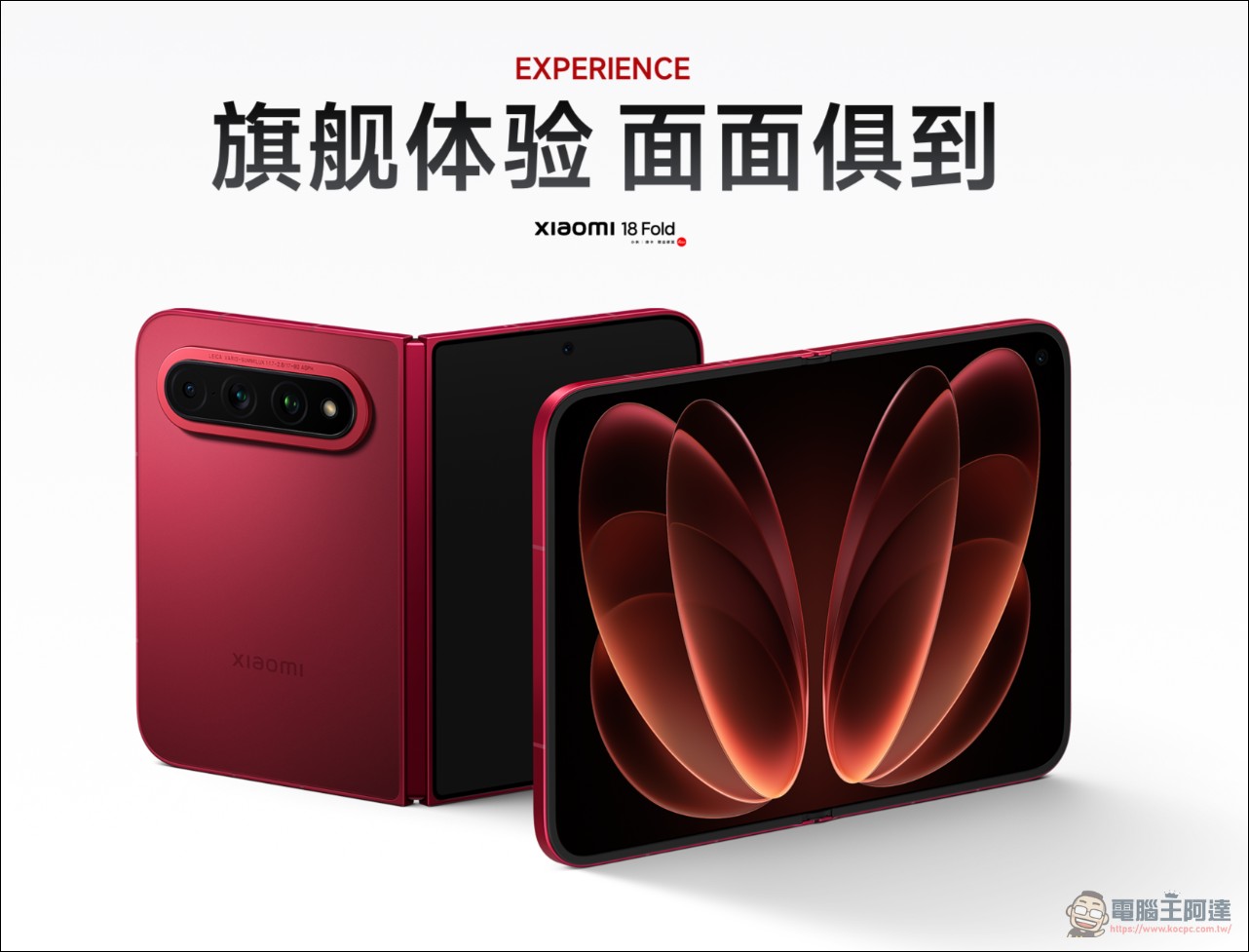
The Xiaomi 18 Fold’s “mid-fold” design sits between traditional large book-style foldables and small flip-style foldables. When folded, it features a 5.38-inch external screen; when unfolded, it reveals a 7.58-inch internal display. Both use the √2:1 standard paper aspect ratio, so reading feels like flipping through a book, and movie viewing spreads across the screen without cropping.
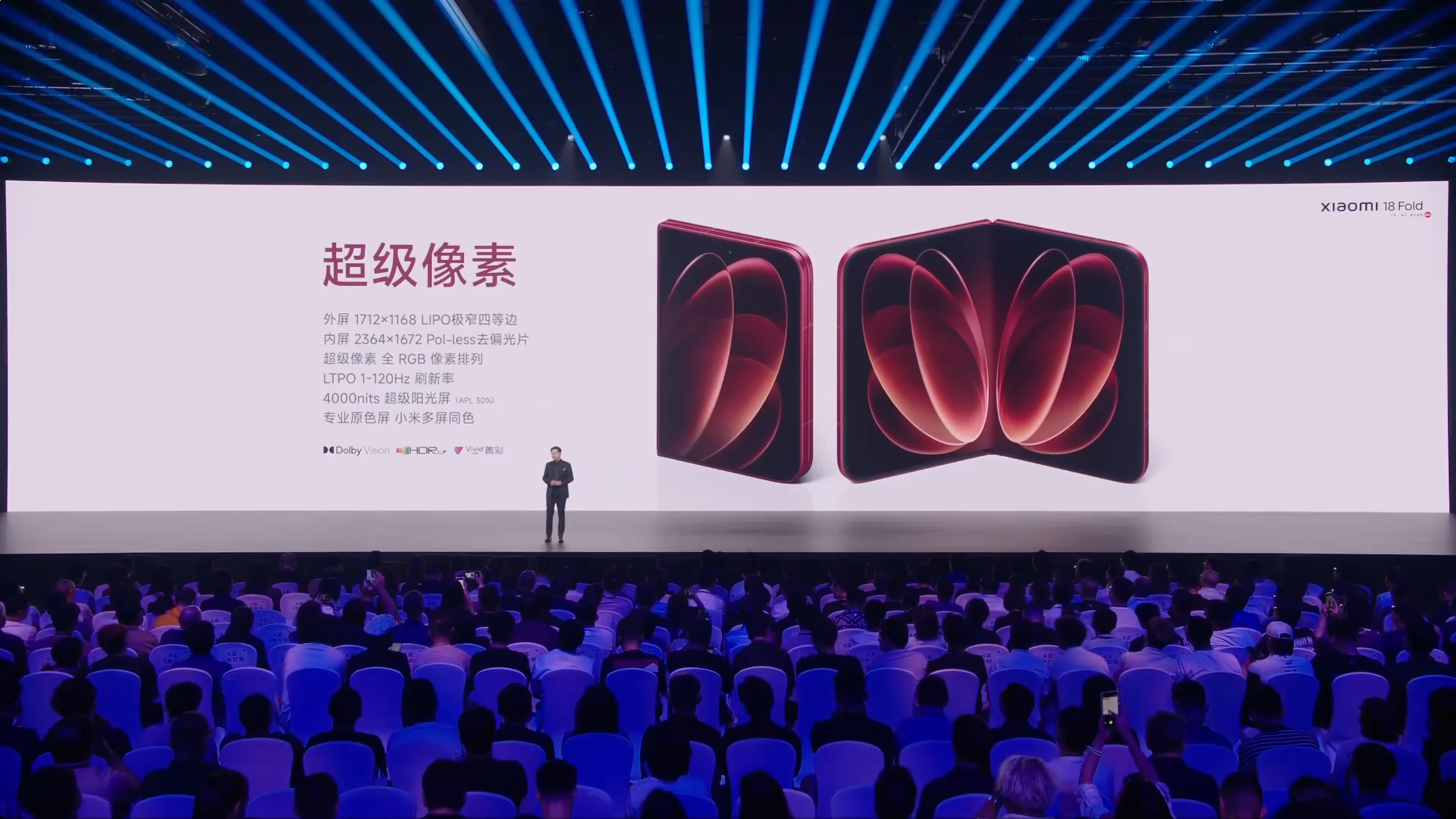
The display supports a 1–120Hz LTPO dynamic refresh rate, up to 240Hz touch sampling rate, peak brightness of 4,000 nits, and high-frequency PWM dimming. The screen surface is covered with Xiaomi Dragon Crystal Glass 3.0 and dual-layer UTG ultra-thin glass, finished with an anti-reflective coating.
XRING O3 Debut: Self-Developed Chip on TSMC 3nm Process
The Xiaomi 18 Fold debuts with Xiaomi’s self-developed flagship processor, the XRing O3, built on TSMC’s 3nm process, integrating 24 billion transistors on a chip area of 133mm².
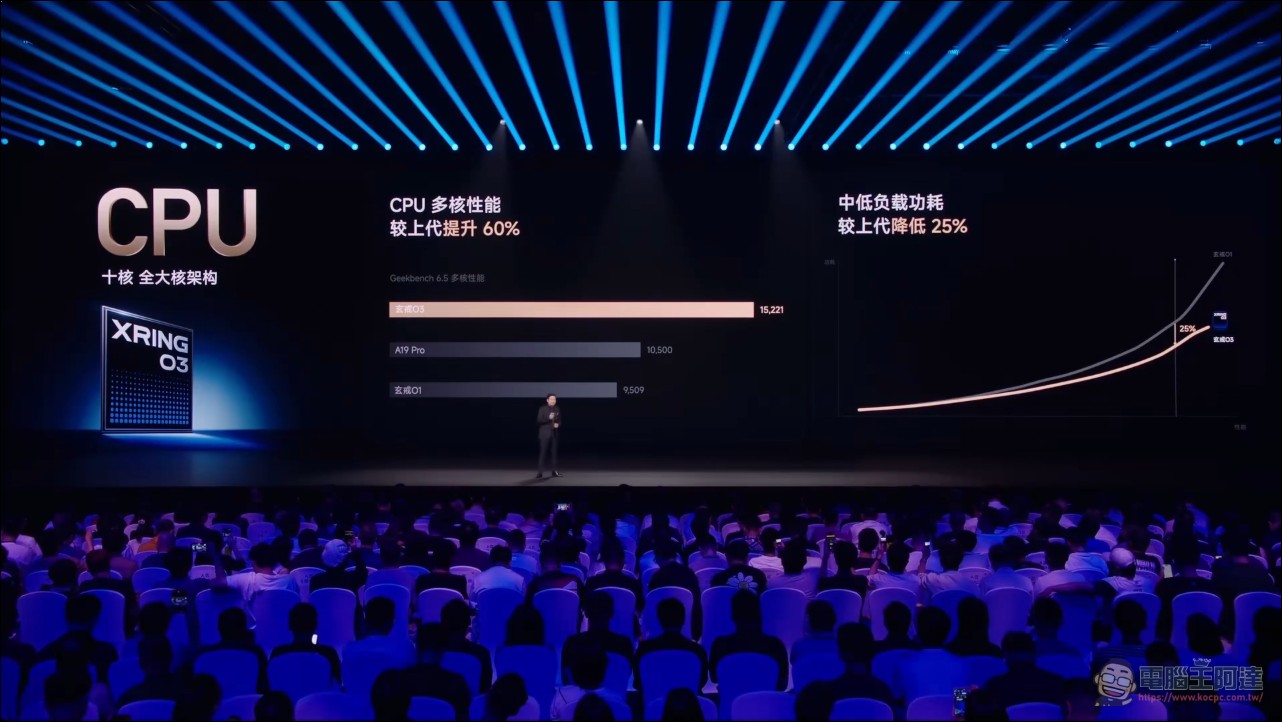
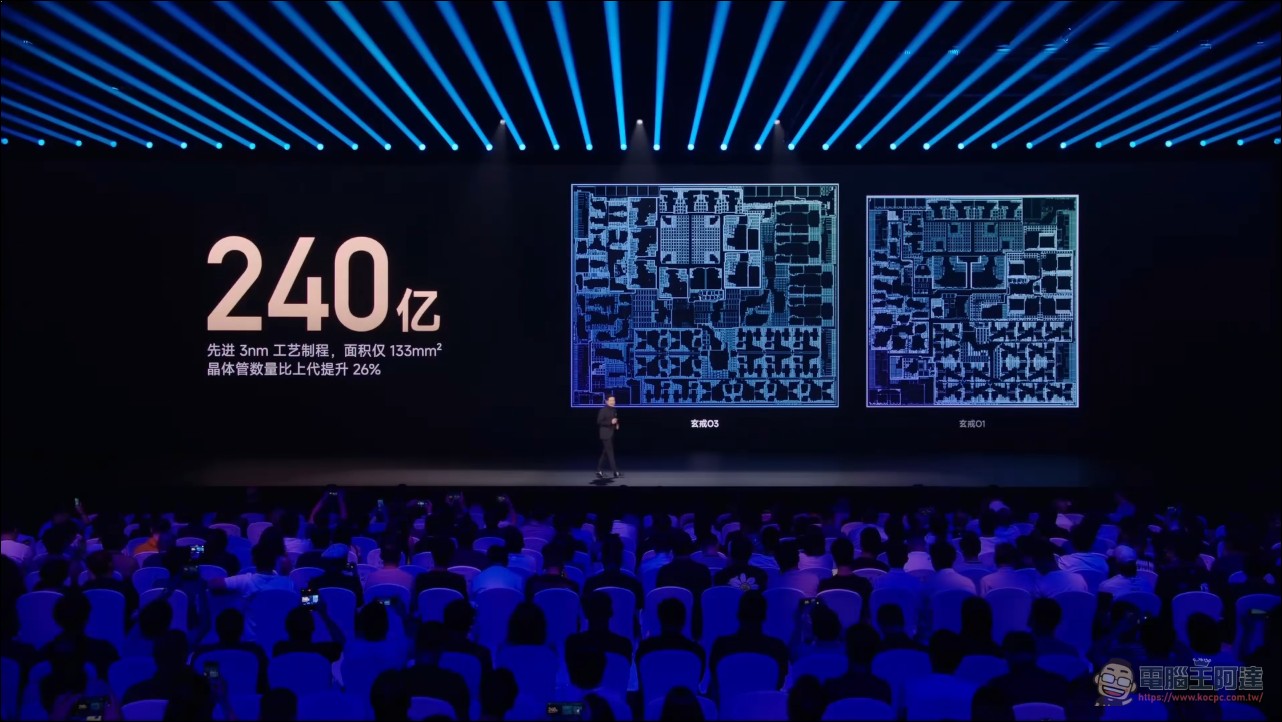
The CPU uses a ten-core all-big-core architecture: 2 C1-Ultra super-large cores (up to 4.35GHz) + 4 C1-Premium large cores (3.68GHz) + 4 C1-Pro large cores (3.15GHz). The GPU is a 16-core Mali-G2-Ultra, with official claims of 85% graphics performance improvement and 64% power consumption reduction over the previous generation. The NPU delivers 200 TOPS of computing power, and the AnTuTu score surpasses 5.22 million, making it the first flagship SoC to exceed 5 million points. In terms of memory, it supports up to 16GB LPDDR6 (113.8GB/s bandwidth), with storage up to 1TB UFS 4.1.
Leica triple camera: 200MP main lens + periscope telephoto
The Xiaomi 18 Fold, developed in partnership with Leica, features the Summilux optical system with a triple rear camera configuration:
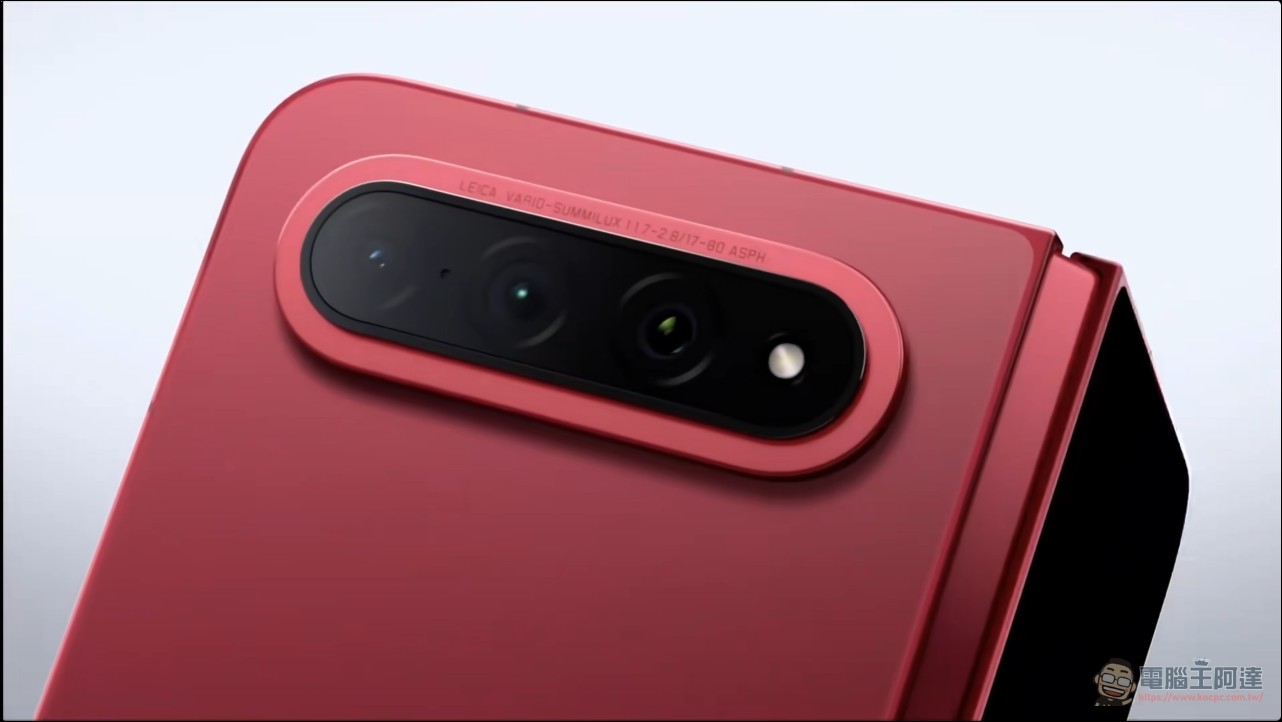
- Main camera200MP Samsung HP5, 1/1.56-inch large image sensor, with OIS support
- Ultra-wide-angle:50MP OV50M
- Periscope telephoto50MP JN5, 3.5x optical zoom, supports OIS
Both the inner and outer screens feature a 16MP front camera. When folded, the outer screen serves as a real-time preview, and Xiaomi likens the experience to shooting with a “classic card camera.”
Body design: 5.02mm unfolded thickness, 219g weight
Xiaomi 18 Fold measures just 5.02mm thick when unfolded, 10.68mm when folded, and weighs 219g. Xiaomi claims its in-hand feel is “already indistinguishable from a typical upright flagship phone,” and it won’t feel noticeably bulky or heavy for everyday carry.
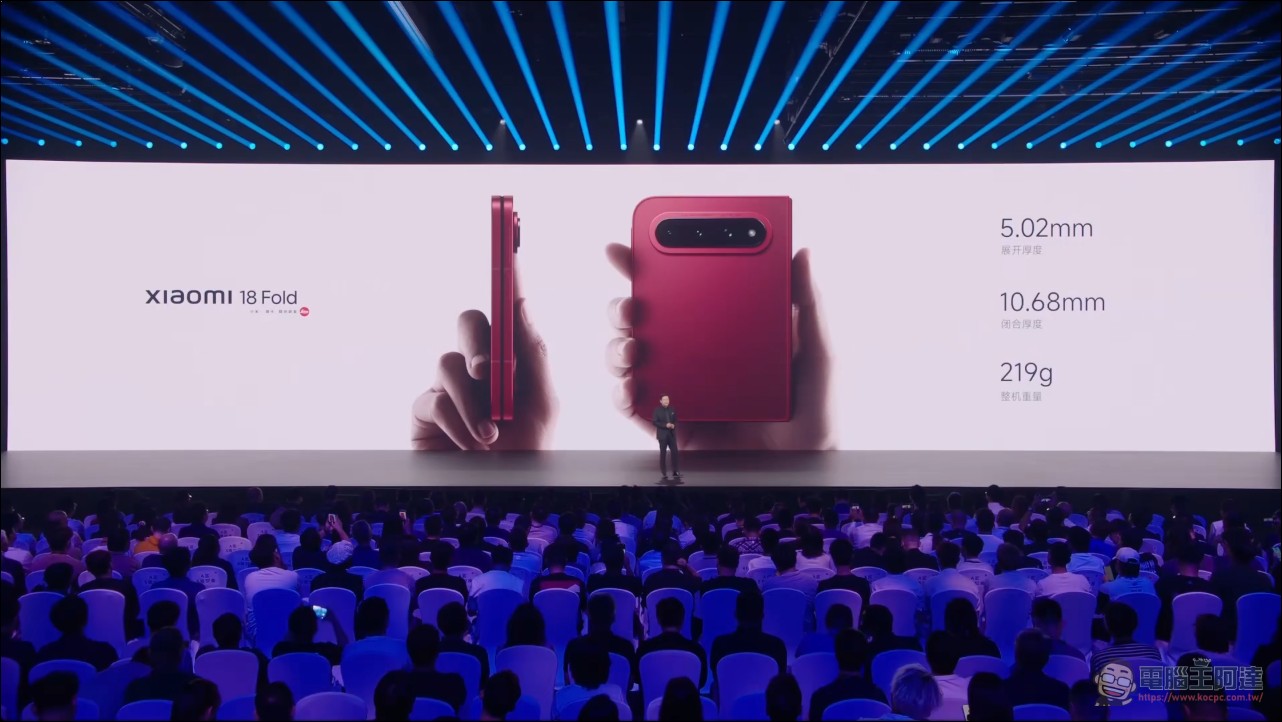
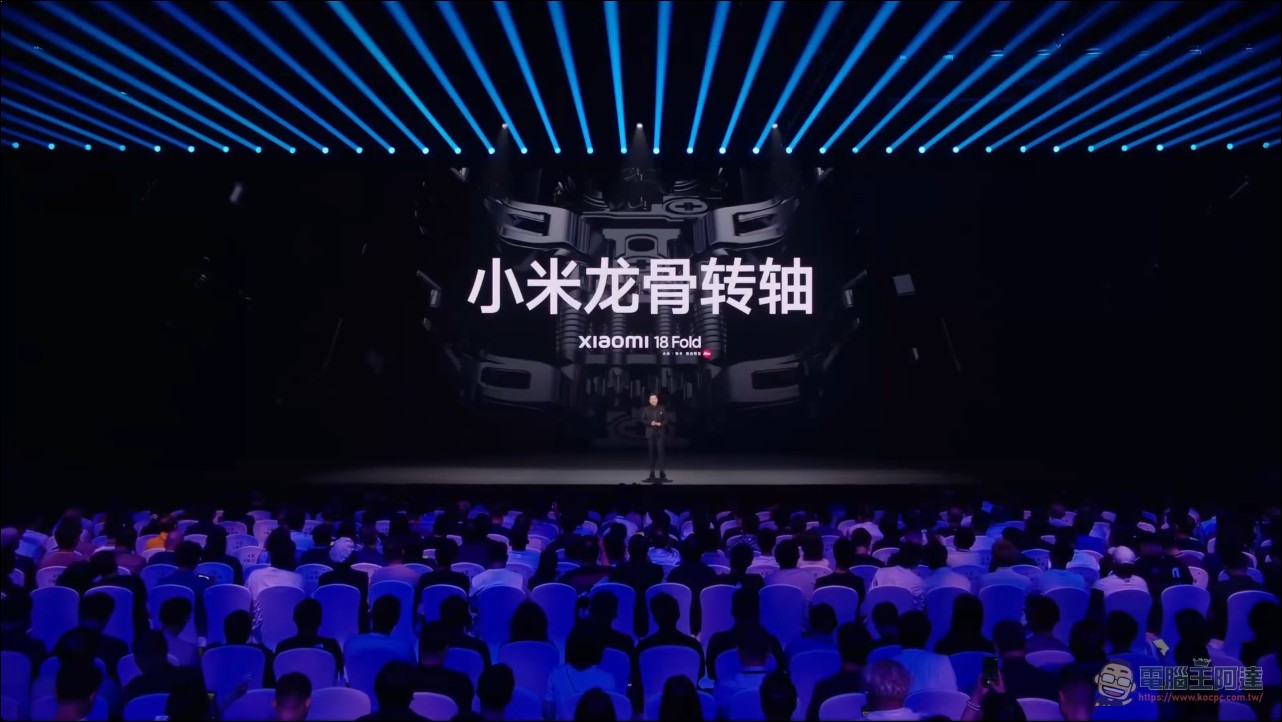
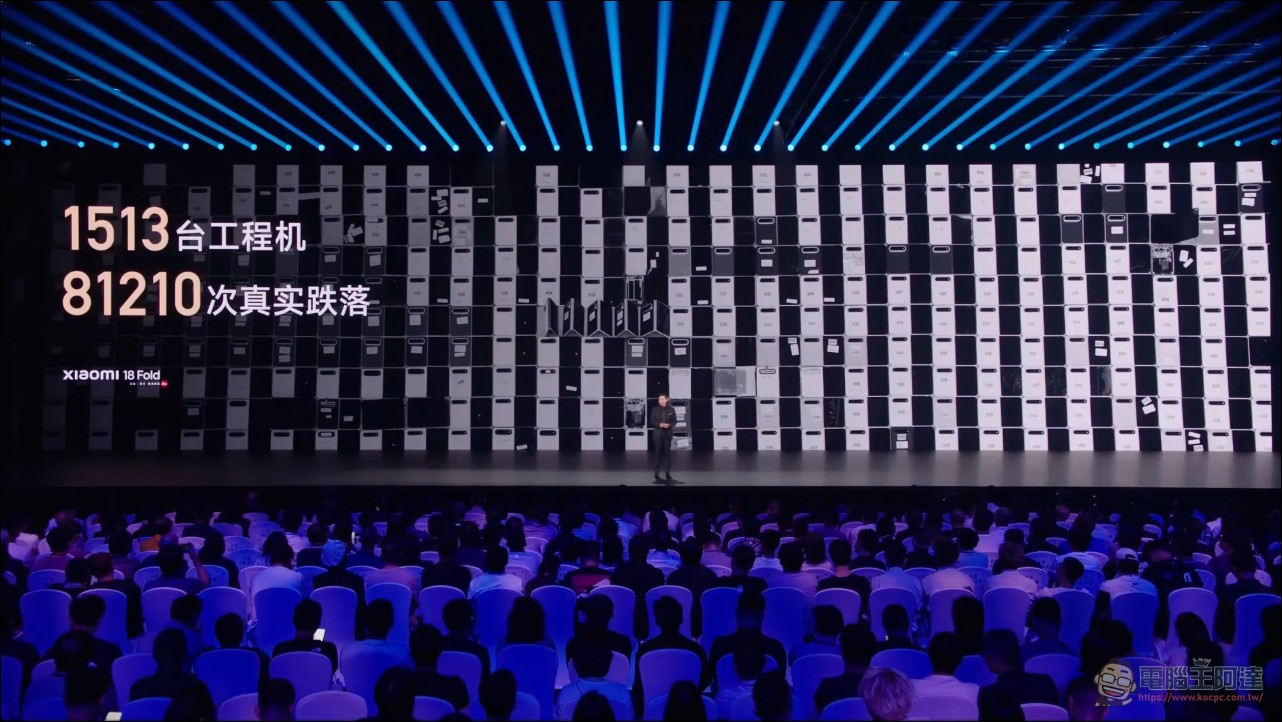
The hinge adopts the next-generation Xiaomi Dragon Bone hinge, featuring 1.2-meter drop resistance (with drop testing reportedly conducted over 80,000 times), and the crease is claimed to be “nearly imperceptible.” The body carries IP58 + IP59 dust and water resistance certifications, the mid-frame is made of 7-series aluminum alloy, and the back cover comes in two options: Longjing Glass 3.0 and a special ceramic edition (lightweight silicon nitride ceramic).
Battery and Charging
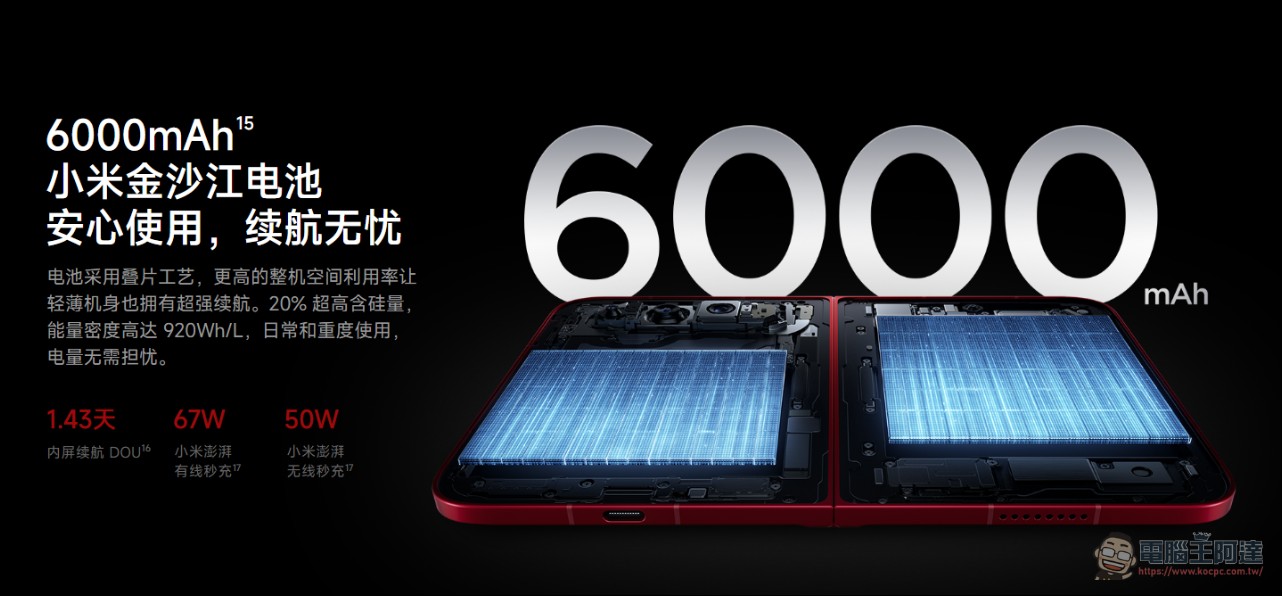
Battery capacity 6,000mAh, using the innovative stacking process of Xiaomi’s Jinshajiang battery, fitting a large capacity into a slim foldable body. Charging specs are 67W wired fast charging and 50W wireless fast charging, so everyday use should be fine with one charge a day.
Software and AI Features
Xiaomi 18 Fold debuts with HyperOS 4 (based on Android 17), featuring Xiaomi’s built-in Mimo large language model and the on-device Ultra Xiao Ai assistant. The software highlight is the “Xiao Ai Inspiration Ball” feature, which lets users drag and select text and image content on the large screen, then complete complex operations through voice commands.
Pricing and launch information
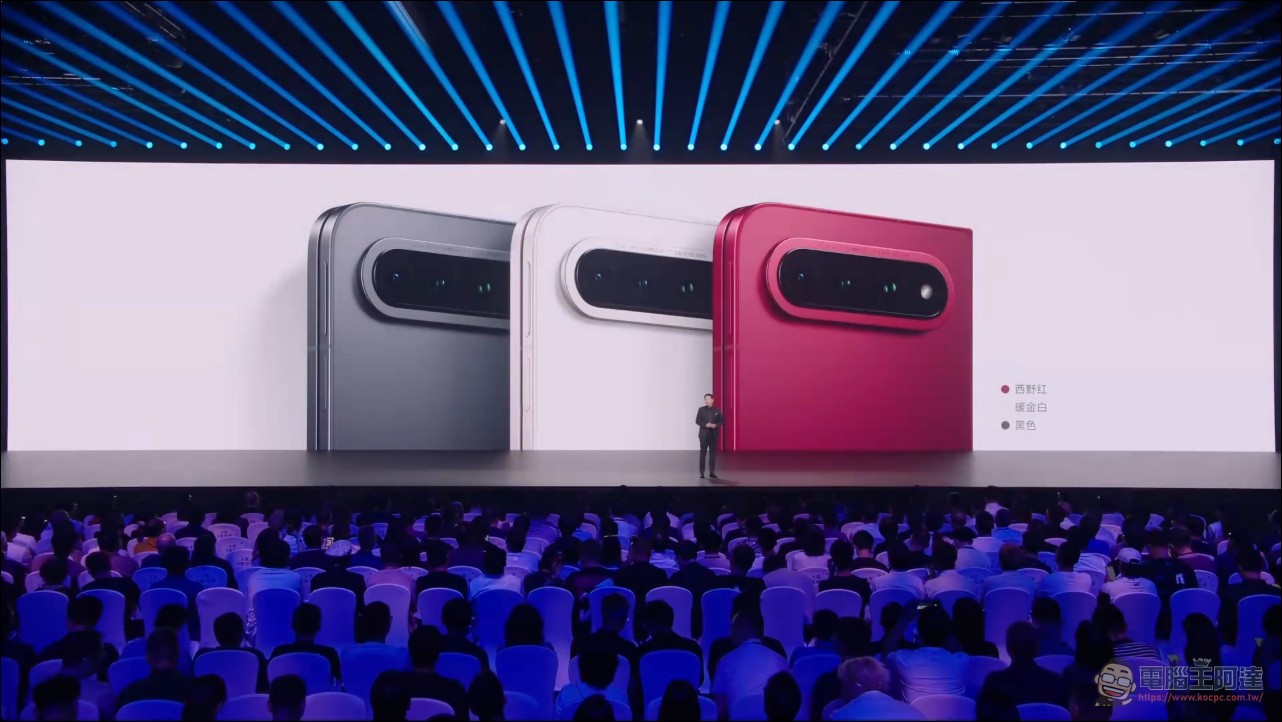
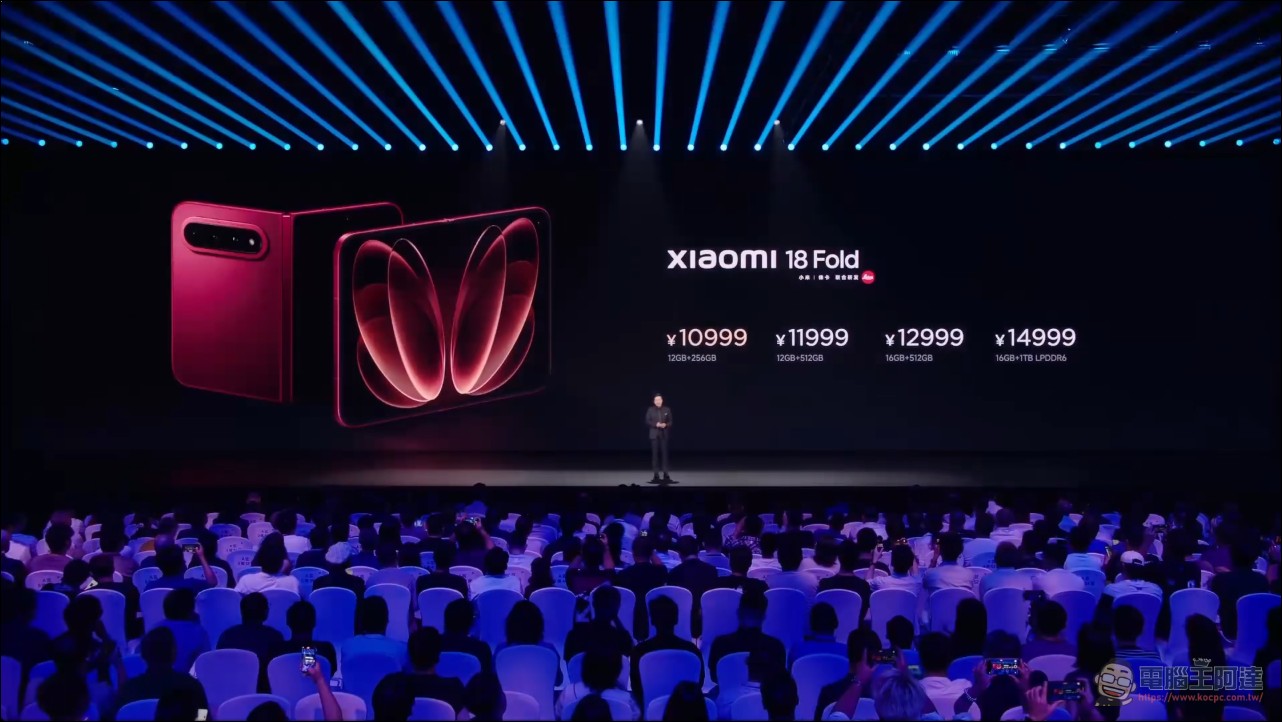
Xiaomi 18 Fold is available in Warm Gold White, Black, and Nishino Red. Pricing is as follows:
- 12GB + 256GB:¥10,999(約 NT$49,500)
- 12GB + 512GB:¥11,499 (approx. NT$51,700)
- 16GB + 512GB:¥12,999(約 NT$58,500)
- 16GB + 1TB:¥14,999 (approx. NT$67,500)
- Ceramic Special Edition 16GB + 1TB: ¥15,999 (approx. NT$72,000), limited to 1,500 sets
Currently, the Xiaomi 18 Fold is open for pre-order on China’s Xiaomi Mall and at Xiaomi Home stores. Plans for release in Taiwan and international markets have not been announced yet (likely won’t be sold there). Following past foldable phone strategy, it may initially still focus mainly on the Chinese market.
Market positioning: debuting two days before Apple
Xiaomi deliberately scheduled its launch event for September 7, two days before Apple’s iPhone event on September 9. Apple is expected to unveil its first foldable phone, the iPhone Ultra, at that event, while Samsung’s Galaxy Z Fold 8 was already released earlier this year.
“Wide foldable” (passport-style foldable) is becoming the new battleground in the foldable phone market. Samsung’s Galaxy Z Fold 8 hit the market in July, and Huawei is alsoToday, [they] are launching a tri-fold product.Apple iPhone Ultra is expected to debut on September 9. The Xiaomi 18 Fold, with its in-house chip, Leica triple cameras, and a starting price of 10,000 RMB, is trying to get a head start in this race.
For Xiaomi, the 18 Fold’s significance goes beyond a single product. It marks the first time Xiaomi has used its own in-house processor in its top-tier flagship, and it is also the first phone in the lineup priced above 10,000 yuan. The mass production of the XRING O3 represents another step forward in Xiaomi’s chip autonomy, moving from power management ICs to image ISPs and now to a full SoC, gradually narrowing the gap with Qualcomm and MediaTek. However, with initial shipments of only 200,000 to 300,000 units, this remains an extremely small fraction compared to Xiaomi’s quarterly shipments of over 31 million phones. Whether its self-developed chips can be steadily scaled up will determine Xiaomi’s influence in the high-end market.
Source: KOCPC Chinese