


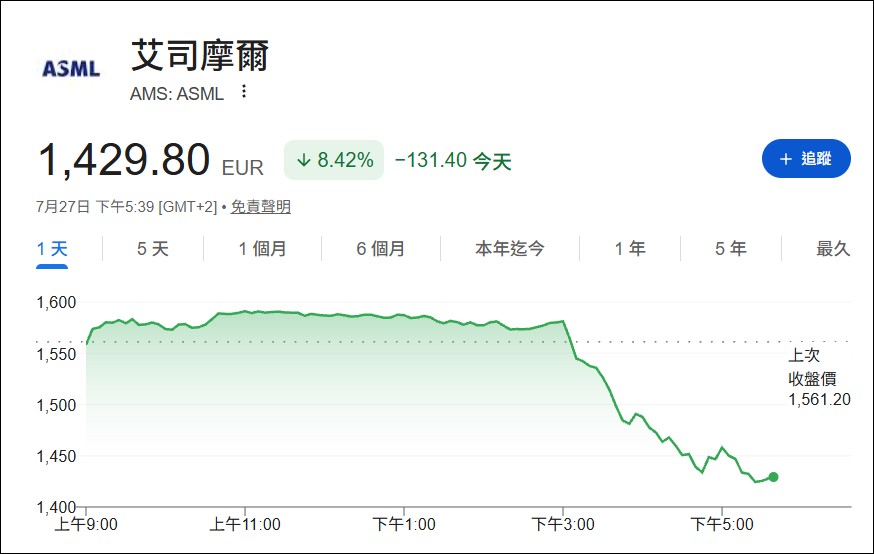
Last night, U.S. semiconductor equipment stocks suffered a significant wave of selling pressure. Dutch semiconductor equipment manufacturer ASML fell more than 7% in early trading, and U.S. equipment suppliers Applied Materials, Lam Research, KLA and other peers also fell simultaneously. The main reason that triggered this wave of decline in semiconductor stocks was market rumors that China’s Shanghai Microelectronics Equipment had skipped the US technology blockade and began mass production of China’s own DUV deep ultraviolet lithography machines. ASML shares fell to their lowest since early June as investors worried that the development could weaken ASML’s future sales prospects and thus shake the foundation of the long-term effectiveness of U.S. export controls.
SMEE SSA800: core specifications of China’s domestic DUV lithography machine
The protagonist that caused the market shock this time was “Shanghai Microelectronics Equipment (Group)” (SMEE), a semiconductor equipment manufacturer supported by the Chinese government. The SSA800 series DUV lithography machine developed by SMEE uses a 193-nanometer argon fluoride (ArF) light source, supports immersion lithography technology, and can reach a 28-nanometer process in a single exposure, and can be extended to the 11-nanometer level through multiple exposure technology. Its overlay accuracy reaches 1.9 nanometers, which is comparable to international products of the same level.
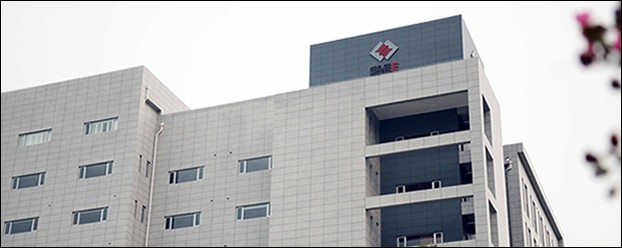
According to previously disclosed information, SMEE’s SSA800 series has passed process verification, and the first device has been delivered to the Semiconductor Manufacturing International Corporation (SMIC) production line. The yield rate has stabilized at more than 90%, and the localization rate has reached 85%. An industry report in early 2026 stated that SMEE plans to go into full mass production in 2026, with a target annual production of 50 to 200 units. This means that China has moved from the research and development stage to actual mass production in the process of autonomous semiconductor manufacturing equipment.
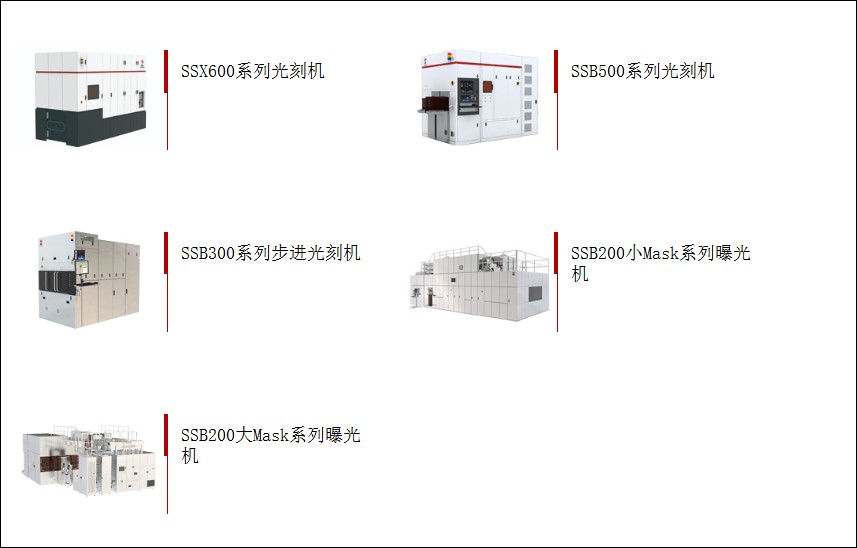
The self-aligned quadruple patterning technology adopted by the SSA800 allows China to manufacture more advanced process wafers with DUV equipment without relying on ASML EUV machines. Although this multiple exposure method is inferior to EUV in terms of yield and cost, it is a feasible alternative path for the Chinese semiconductor industry blocked by US export controls.
ASML is the first to bear the brunt, and its market share in China is facing shrinking
ASML was the biggest casualty of the sell-off, with shares falling between 5% and 7.1%, hitting a new low in nearly two months. Seeking Alpha reported that ASML fell 5% in early trading on Monday, and TickerSpark data showed that the intraday decline once expanded to 7.1%. Applied Materials fell more than 6.5% intraday, with Lam Research and KLA also posting significant losses.
The focus of investor concerns is the revenue contribution of the Chinese market to ASML. China is ASML’s largest single market in 2025, accounting for 33% of its total exposure machine sales and contributing more than 8 billion euros. ASML has previously guided investors to expect China’s market share to drop to about 20% in 2026, citing the end of the DUV equipment pre-order cycle. Nowadays, the news about the mass production of domestically produced DUV in China may make this decline larger and faster than expected.
Export controls from the United States and the Netherlands have banned ASML from selling state-of-the-art EUV machines to China, and later also advanced immersion DUV equipment. The original logic of this control measure is that as long as the West does not sell it, China will not be able to obtain key equipment. However, the news of SMEE’s mass production of DUV directly challenged this premise, and investors began to reassess the long-term impact of export controls on ASML’s revenue.
SMEE’s technical positioning: feasible but still lagging behind
Despite the strong market response, there is still a technological gap between SMEE’s DUV equipment and ASML. TechInsightsAnalysis points out, SSA800’s 28nm single exposure capability is competitive at the stand-alone manufacturing level, but ASML’s advantage lies in more advanced EUV machines and a more mature ecosystem. SMEE has not yet crossed into the EUV field, and EUV is the only option for processes below 7 nanometers.
However, the process range from 28nm to 11nm can already cover the needs of a large number of mature process chips, including applications such as Internet of Things devices, automotive chips, and power management ICs. For China’s semiconductor industry, the strategic value of domestic DUV mass production is to ensure that the supply of equipment for mature processes is not subject to external constraints, rather than to catch up with the most cutting-edge processes. Huawei has previously reported that it will use SMEE SSA800 for chip manufacturing testing and aims to complete tape-out in 2026.
In fact, SMEE’s mass production plan does not intend to stop at DUV. In December 2025, SMEE submitted an EUV-related technology patent application to the Chinese patent agency, with the goal of mass production in 2026. Although mass production of EUV is much more difficult than that of DUV, and the industry generally believes that China is still lagging behind ASML in the EUV field by at least 10 years, the technology roadmap from DUV to EUV has emerged. In 2025, Shanghai Microelectronics won the bid for a stepper scanning lithography machine project on the government procurement network, with a transaction value of approximately 110 million yuan, showing that China’s domestic equipment has begun to enter the actual procurement and deployment stage.
Export control strategies face re-evaluation
News of the mass production of China’s domestically produced DUVs has caused the market to question the long-term effects of the U.S. export control strategy. Since 2023, the United States has continued to tighten export restrictions on semiconductor equipment to China, extending from EUV to advanced DUV to specific mature process equipment. The Dutch government also revoked ASML’s license to export some DUV machines to China under pressure from the United States. Control measures have indeed limited China’s ability to acquire advanced equipment in the short term, but they have also accelerated China’s investment in local equipment research and development. In early 2026, Chinese media reported that the localization rate of China’s wafer manufacturing equipment has increased to 55%. Among them, etching and thin film deposition equipment have made the fastest progress, while photolithography and measurement are still the biggest shortcomings. The mass production of SMEE DUV represents that the shortcomings are narrowing, although there is still a significant gap from ASML’s EUV technology.
For ASML and U.S. equipment manufacturers, the advancement of China’s domestic substitution means that both pricing power and shipments in the Chinese market will be under pressure in the future. ASML reported strong first-quarter 2026 earnings, with revenue and guidance beating expectations, driven primarily by demand for AI chips. However, the risk of structural shrinkage in the Chinese market has begun to be reflected in valuations. This market reaction highlights the sensitivity of the semiconductor equipment industry. ASML’s monopoly in the EUV field will not be shaken in the short term, but the competitive landscape of the DUV market is changing. If SMEE’s SSA800 can achieve stable mass production and continue to improve yields, it will gradually erode the share of ASML and other Western suppliers in the mature process market from 28 nanometers to 11 nanometers.
Source: KOCPC Chinese