


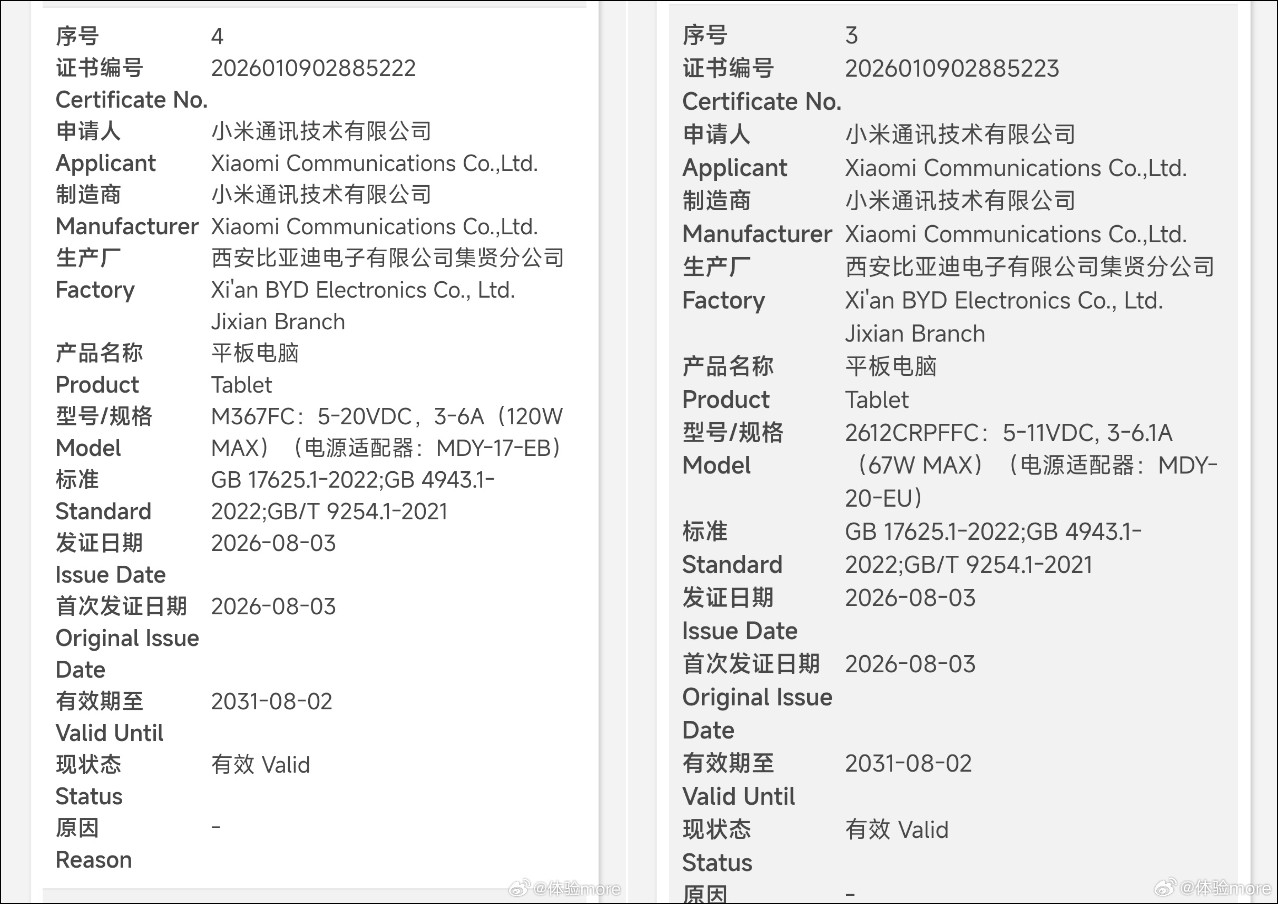
According toChinese media reportsThe Xiaomi Pad 8S Pro, which will debut with Xiaomi’s self-developed XRING O3 processor, has officially passed China’s MIIT network access approval, marking Xiaomi’s expansion of its self-developed chip efforts from smartphones to tablets. The XRING O3 is Xiaomi’s second-generation self-developed system-on-chip (SoC) following the XRING O1, built on TSMC’s 3nm process. Compared to the XRING O1 unveiled last year, the O3 features a comprehensive overhaul of its core architecture, shifting from the O1’s “10-core, 4-cluster” design to the more mainstream “1+3+4” three-cluster configuration, delivering notable improvements in both overall performance and power efficiency.
XRING O3 chip specification analysis
Based on currently available information, the XRING O3’s CPU architecture consists of the following three clusters:
- Super coreBuilt on the ARM C1 architecture, with a clock speed of up to 4.05GHz, it successfully breaks the 4GHz threshold, representing an approximately 4% improvement over the XRING O1’s 3.89GHz.
- Performance coreMain frequency increased to 3.42GHz, responsible for handling medium to high workload tasks.
- Efficiency coreThe clock speed reaches 3.02GHz, compared to XRINGO1’s 1.79GHz, a frequency increase of about 68%, which is the biggest improvement in this upgrade.
On the GPU side, the XRING O3’s clock speed reaches 1.49GHz, an increase of about 25% compared to the XRING O1’s 1.2GHz. Memory bandwidth reaches 9600MT/s, enabling more efficient data transfer.
In terms of IPC (instructions per clock cycle) performance, the XRINGO3 is expected to improve by at least 15%, with peak performance gains potentially exceeding 30%. The significant evolution of the energy-efficient small cores is particularly noteworthy—their 3.02GHz frequency is already close to the level of the previous generation’s performance big core (1.89GHz), which will result in better power consumption control during daily light usage.
Xiaomi Pad 8S Pro Full Specifications at a Glance
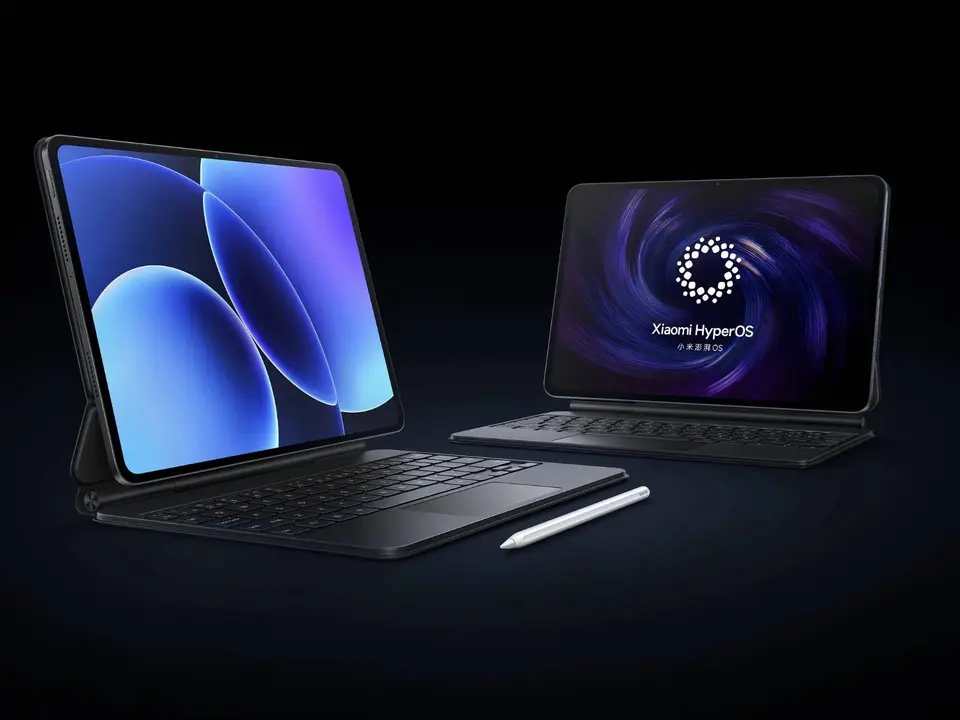
In addition to debuting the XRING O3 chip, the Xiaomi Pad 8S Pro also reaches flagship level in other hardware specifications. According to the creator@pandaverybaldlyCross-referencing the leaks on Weibo with multiple sources, the main specifications are as follows:
- Screen12.5-inch LCD panel, 3.2K resolution, 144Hz refresh rate
- ProcessorXiaomi’s self-developed XRING O3 (TSMC 3nm)
- Memory:16GB RAM
- Main camera50MP + 2MP dual camera
- Front camera:32MP
- Battery12,000mAh超大容量
- Charging: 120W wired fast charging
Compared to the previous Xiaomi Pad 8 Pro with its Qualcomm Snapdragon 8 Elite processor, 9,200mAh battery, and 67W fast charging, the 8S Pro boosts battery capacity by about 30% and raises fast charging from 67W to 120W, nearly doubling charging speed.
The strategic significance of the XRING O3 debuting on a tablet rather than a phone.
The first device to feature the XRING O3 is not the Xiaomi MIX Fold 5 foldable or the Xiaomi 18 Ultra flagship phone that外界 had previously expected, but rather a tablet product. This choice reveals several strategic considerations. First, a tablet’s larger chassis provides better heat dissipation conditions than a phone, allowing the chip to deliver full performance within a more relaxed temperature range—making it a safer testing ground for a new chip’s debut. Second, tablet users are more sensitive to battery life than phone users, and the XRING O3’s efficiency cores, with a 68% surge in clock speed, are precisely suited to demonstrate advantages in long-duration usage scenarios.
Additionally, the XRING O3 was previously reported to be featured in a new foldable device with the codename “2608BPX34C,” which is speculated to be the MIX Fold 5. Now that the 8S Pro has received network certification first, it may indicate that Xiaomi has chosen to validate the chip’s stability on a tablet before adopting it in its flagship smartphone lineup.
Price and launch timeline
According to a report from IT之家, the starting price of the Xiaomi Pad 8S Pro is expected to be 2,799 RMB (approximately NT$12,400). Considering its in-house flagship chip, 12,000mAh large battery, and 120W fast charging, it offers solid value for money among Android tablets in the same class. Xiaomi has not yet announced an official launch date, but the product has already passed network access certification, and based on past practice, it typically makes its official debut within one to two months. Industry watchers expect the Xiaomi Pad 8S Pro to launch alongside the Xiaomi 18 series, or at a standalone tablet product event.(Editor’s note: May not be released in Taiwan)
Xiaomi’s next step for its self-developed chips
The launch of the XRING O3 marks the second phase of Xiaomi’s self-developed chip strategy. When the XRING O1 debuted at Xiaomi’s 15th anniversary event in May this year, Lei Jun stated that Xiaomi had invested a cumulative total of over RMB 200 billion in R&D funds in the chip field. Judging by the rapid iteration from O1 to O3, Xiaomi’s chip team is advancing technological evolution at a pace of one generation per year.
As the XRING O3 begins shipping from tablets, it is expected to gradually expand to flagship phones such as the Xiaomi 18 Ultra and MIX Fold 5. Whether Xiaomi can secure a stable position in the self-developed chip arena and form a three-way standoff with Huawei’s HiSilicon Kirin and Apple’s A-series, the actual market performance of the XRING O3 will be a key indicator to watch.
Source: KOCPC Chinese