


The weather has been getting stranger lately—issues like Korea seeing snow as early as November this year, while Taiwan still isn’t very cold even in December. These kinds of weather anomalies are making it difficult for weather forecasts to be accurately assessed. Some people might think weather forecasts are inaccurate, but the real reason is that current models have limited ability to predict extreme weather. As climate change brings more extreme weather events, it’s natural that current models can no longer predict weather as effectively as they once did. Google DeepMind saw this problem and developed an AI weather prediction model called “GenCast” that uses generative AI to make probabilistic weather forecasts. DeepMind states that GenCast achieves up to 99.8% accuracy in forecasts beyond 36 hours, and it performs especially well when predicting typhoons, heat waves, and strong winds.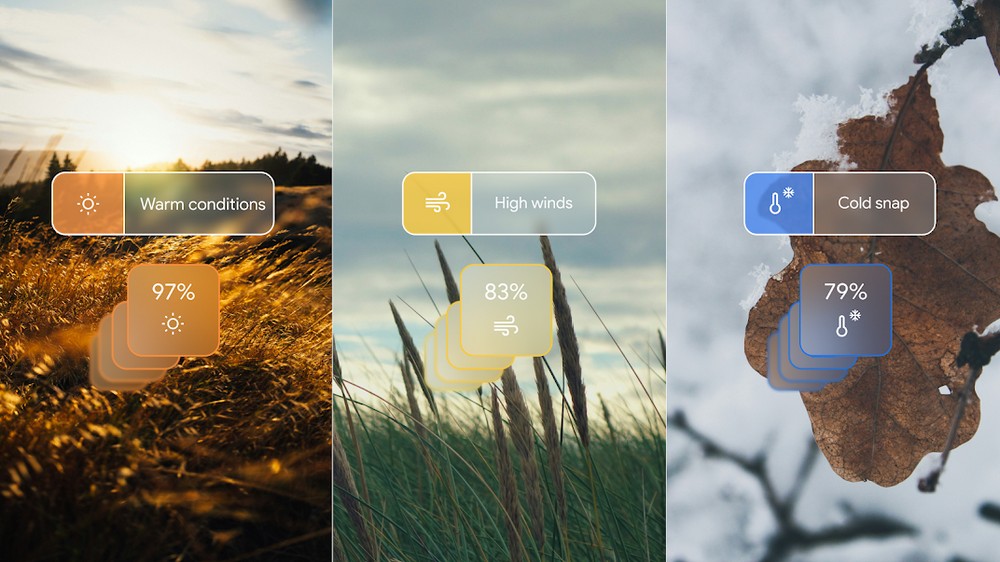
Google DeepMind AI Weather Prediction Model “GenCast”: 99.8% Accuracy for Forecasts Beyond 36 Hours
As climate change becomes increasingly severe, extreme weather events are now occurring more frequently, such as scorching summers and early snowfall, all caused by climate change. Beyond triggering serious natural disasters, climate change has also made weather forecasting extremely difficult. Because traditional weather forecasting models require long computation times, they have weaker predictive capability when it comes to sudden weather changes, which is why people have recently felt that weather forecasts have become less accurate.
Google DeepMind recently published a paper in the journal Nature on GenCast, an AI weather prediction model. GenCast is a high-resolution (0.25°) AI ensemble model that can provide more accurate daily weather and extreme event forecasts than the ENS system currently used by the European Centre for Medium-Range Weather Forecasts. DeepMind tested GenCast and ENS and found that GenCast outperformed ENS with a 97.2% accuracy score. For forecasts beyond 36 hours, GenCast’s accuracy reached 99.8%.
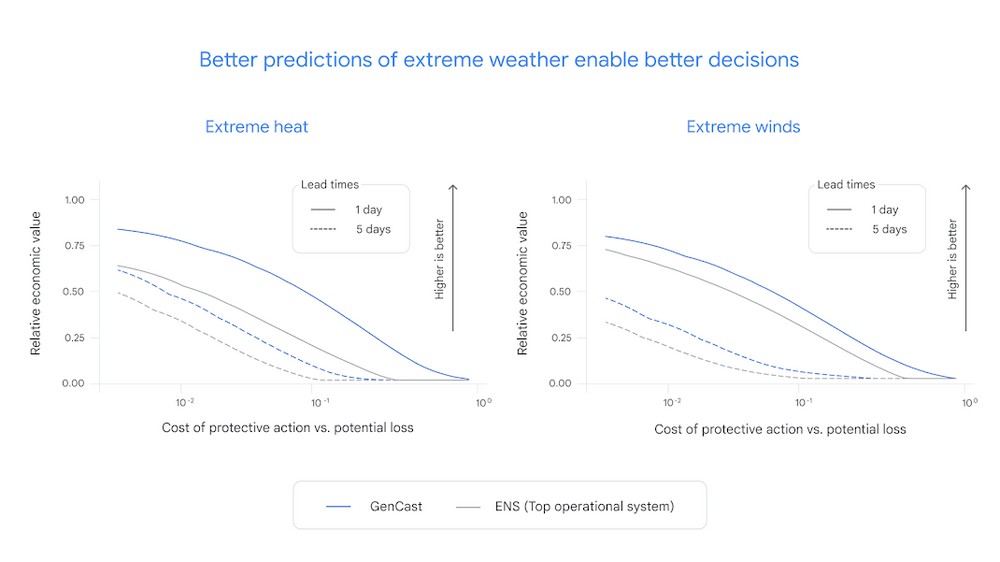
GenCast was trained on forty years of historical weather data from the ERA5 archive at ECMWF (the European Centre for Medium-Range Weather Forecasts), allowing it to learn global weather patterns from previously organized variables such as temperature, wind speed, and air pressure at various altitudes.
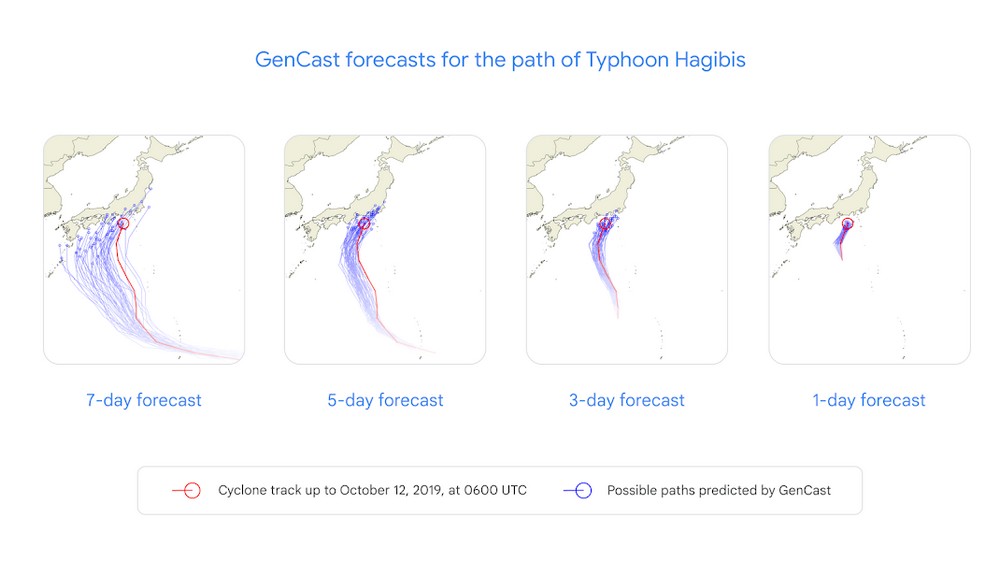
Traditional weather forecasting systems can only predict a single scenario, but GenCast takes just 8 minutes on Google Cloud TPU v5 to generate an ensemble of over 50 forecasts, simulating the possible trajectories of future weather changes. GenCast is better suited to the increasingly frequent extreme weather events in recent times, and it can predict weather conditions and potential extreme weather up to 15 days in advance.
Google DeepMind has already open-sourced the GenCast model.Program code、weightand forecast data, hoping to promote meteorological and climate research. DeepMind hopes that GenCast can help governments and emergency services better respond to natural disasters in the future, and provide more accurate wind power predictions for the renewable energy industry. For those interested in learning more details about GenCast, you canVisit the GenCast official introduction page.。
Source: KOCPC Chinese