


Due to self-ignition and fire incidents involving power banks in recent years, various safety education materials about power banks and lithium batteries have drawn attention. However, some questionable safety information has been spreading rampantly, leaving the public confused. Recently, a widely shared post from a well-known fire safety social media page advised that if a home power bank shows signs of swelling, it should first be soaked in salt water for a full 7 days to discharge before being taken for recycling. This seemingly expert recommendation has been refuted by the Ministry of Environment, which states that the correct approach is to follow the three principles of “insulate, package, and inform,” and promptly deliver it to a recycling vehicle for safe disposal.
Should a swollen power bank battery be soaked in salt water? How to safely recycle a power bank with a swollen battery? Here’s a summary and analysis:
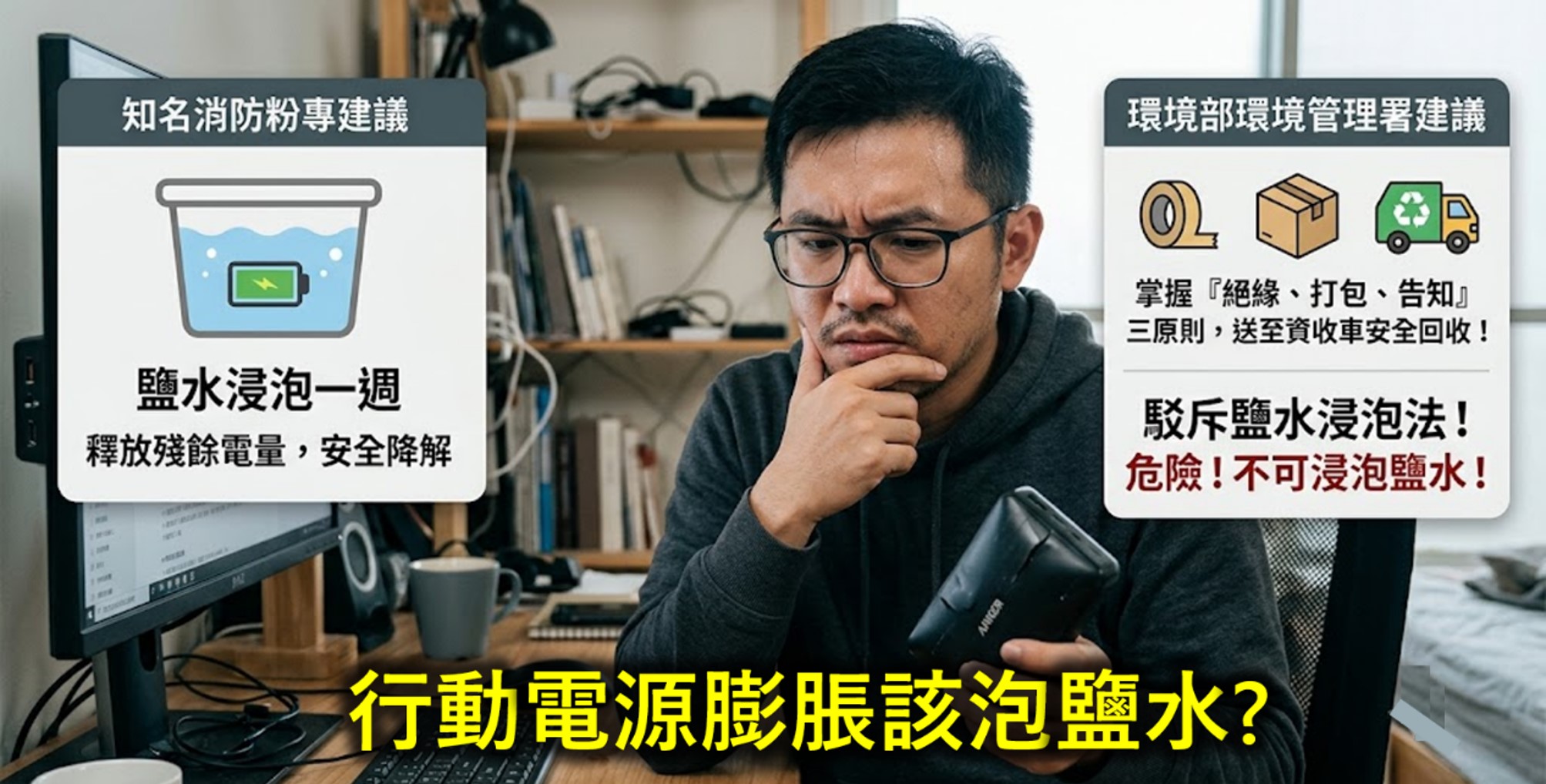
If the lithium battery inside a power bank swells, it indicates a certain level of danger. Besides immediately stopping use, proper handling is very important. Below is a summary video and detailed explanation of proper handling and recycling methods for swollen power banks:
Should a swollen power bank battery be soaked in salt water?
Due to the deep integration of mobile devices into modern digital life, power banks have become an indispensable tool for Taiwanese people to alleviate battery anxiety. However, last year saw multiple incidents of power banks spontaneously combusting globally, not only leading to large-scale recalls by well-known brands but also bringing power bank safety issues to the forefront of public attention. Many people and media outlets often cite the views of the well-known Facebook page “Fire Safety神主牌” (Fire Safety God), which is dedicated to fire safety. Regarding power bank safety, besides strongly advocating against using multi-functional power banks with built-in outlets, the page recently warned: “If citizens discover their power bank casing is swollen, due to the immediate risk of explosion and fire, they must first soak it in salt water to fully discharge for 7 days before taking it for recycling.”
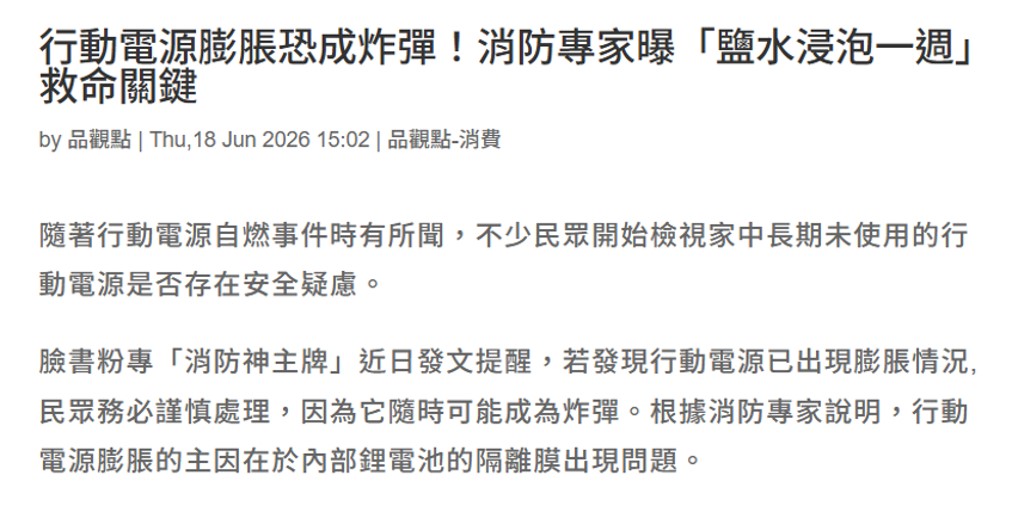
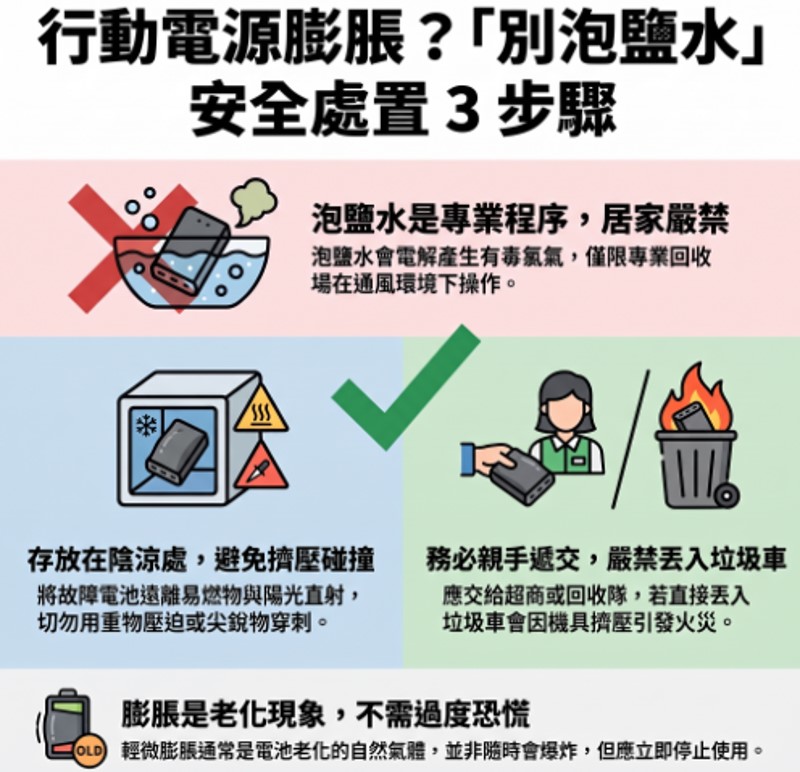
Regarding the advice that swollen power banks should be soaked in salt water for a week, this has been rejected by the Ministry of Environment and the Fire Department, who say this suggestion seriously exaggerates the fire risk posed by battery failure. They also warn that if people blindly submerge batteries in water at home without proper ventilation, electrochemical reactions could release harmful chemical gases, making this not the correct approach.
According to the clarification issued by the Resource Circulation Agency under the Ministry of Environment, the official internal guidelines in the “Precautions for the Recovery and Storage of Spent Secondary Lithium Batteries” do include a standard operating procedure of soaking spent batteries in salt water for discharge for at least 7 days. However,This guideline is specifically designed as a technical specification for recycling operators or municipal cleaning crews equipped with professional protective equipment and ventilation facilities, and is absolutely not suitable for members of the general public to attempt on their own in a home environment.Because once the conductive metal interface of a power bank comes into contact with salt water while powered on, it immediately triggers an electrolytic reaction. If this chemical reaction occurs in an indoor environment without professional ventilation systems, it will continuously produce trace amounts of chlorine gas that is toxic to the human respiratory system, and the solution after soaking will also become difficult-to-handle chemical waste.
The Fire Investigation Division of the Taipei City Fire Department also emphasized thatPower bank swelling is usually just battery agingThere is no immediate risk of thermal runaway. Only in the extreme emergency state where the power bank has already experienced “thermal runaway,” meaning the battery rapidly heats up, becomes scorching hot, and is accompanied by large amounts of smoke within seconds, would emergency fire extinguishing measures such as immersing in water or saltwater be necessary to quickly cool down and isolate oxygen.
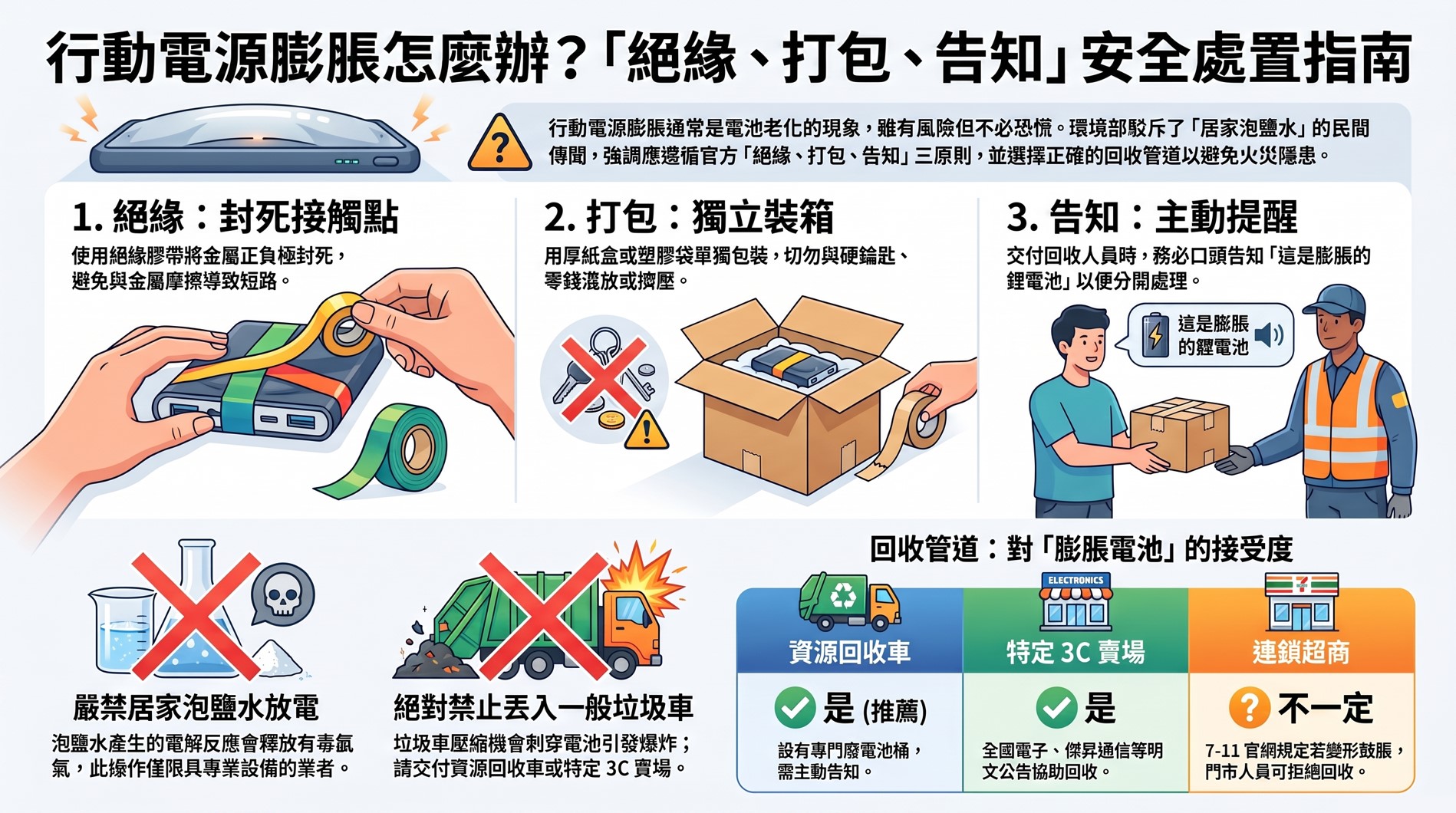
The Resource Recycling Administration under the Ministry of Environment, along with the Fire Department, advises that if a power bank swells, the correct action is to stop using it immediately and follow the three principles of “Insulate, Package, Report,” then safely dispose of it by taking it to a recycling collection vehicle as soon as possible. The three principles of “Insulate, Package, Report” are explained as follows:
A. Insulation:
Swollen power banks pose certain hazards. Besides stopping use immediately, you should use insulating tape (such as electrical insulation black tape) to seal the metal contacts or positive/negative terminals of the power bank to avoid friction and short circuits with other metal objects. Do not put them in your pocket or bag.
B. Takeout:
Please pack it in a thick cardboard box, metal tin, or plastic bag, and pack it separately. Do not mix it with metal items such as keys or coins, and avoid crushing. No need to discharge or soak in salt water—just pack it as is.
C. Notify:
Since environmental recycling trucks have dedicated containers for waste batteries, power banks or batteries that are swollen should be packaged separately. When handing them over to cleaning crew or at designated recycling locations, proactively inform them verbally that “this is a swollen lithium battery.” Separate processing can prevent friction with other recyclables that could cause fire, reducing the risk. Important reminder: never dispose of power banks in regular garbage trucks, as they will be punctured by the garbage truck compressor and cause an explosion!
2. How do I safely recycle a swollen power bank?
Since swollen power banks or lithium batteries are classified as high-risk hazardous waste, the recycling channels differ slightly from those for normal, intact old power banks and batteries for safety reasons. Convenience stores generally do not “necessarily” accept swollen batteries. According to 7-ELEVEN’s official website guidelines, store staff will refuse to recycle batteries that are deformed, swollen, or leaking.
Here are the correct locations and channels for recycling swollen power banks and lithium batteries:
A. Recycling trucks of city/county sanitation departments:
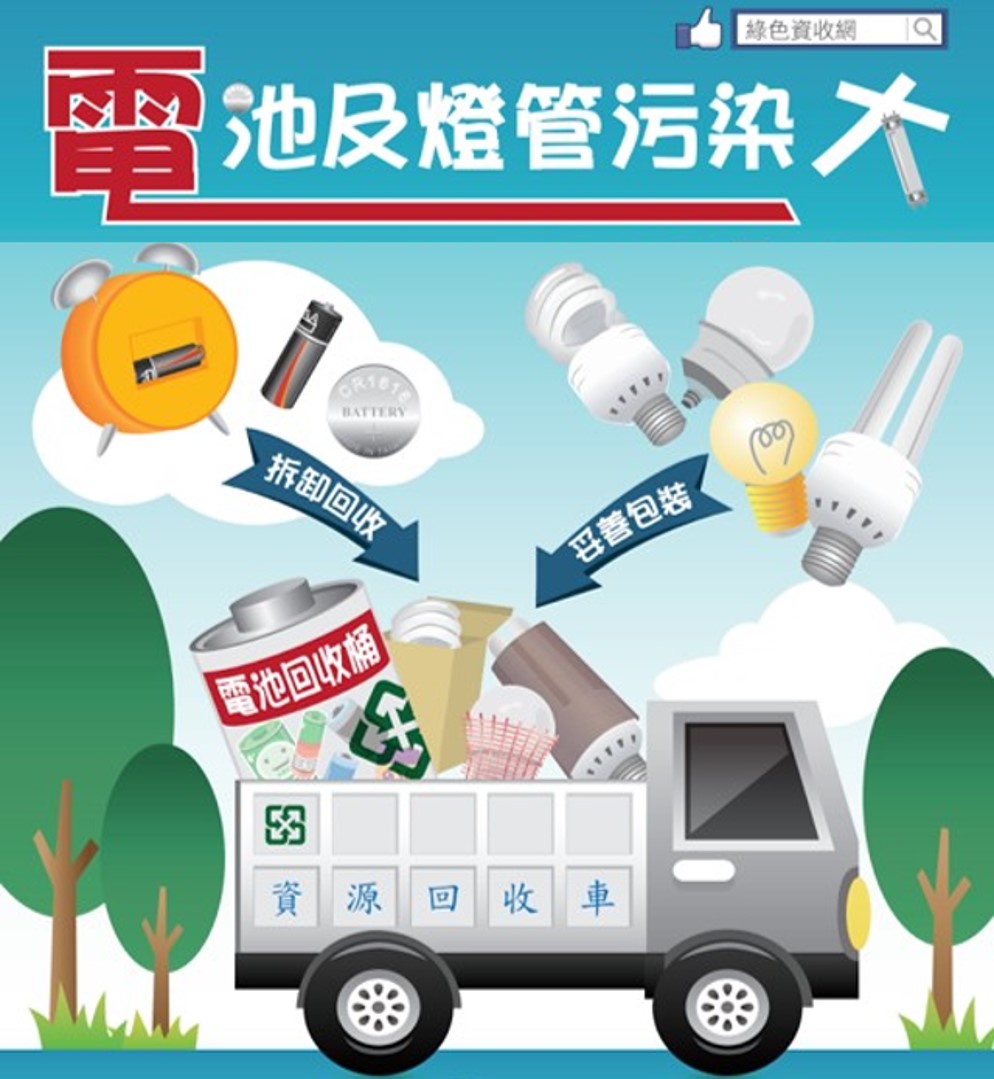
The most recommended recycling channel for swollen power banks is through the “resource recycling vehicles” of local environmental cleanup teams across various counties and cities, which have dedicated waste battery collection bins. Citizens only need to pack the swollen power banks or batteries separately and verbally inform the cleanup team members upon handover that “these are swollen lithium batteries” to ensure safe recycling.
B. Specific telecommunications chain stores and chain 3C retailers:
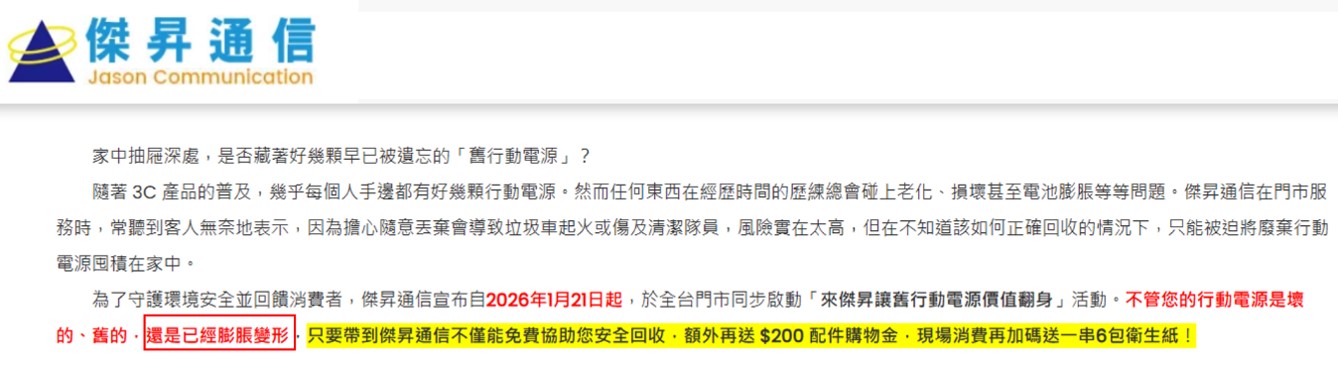
Some communication chain stores (such as Jie Sheng Communication) and chain 3C retailers (such as Quan Guo Electronic) have officially announced that all stores nationwide will unconditionally assist with recycling swollen power banks. For recycling, first pack the battery individually in a ziplock bag or cardboard box, and when entering the store, directly inform the staff “this is a swollen battery,” and a dedicated employee will help with proper disposal.
Gomaji has stores equipped with dedicated large battery recycling bins. You can ask the on-site staff to confirm before disposing of your batteries. Jesion Communications also offers recycling rewards in the form of accessory purchase credits!
C. Waste Dry Battery Recycling Stations designated by County/City Environmental Protection Bureaus
Citizens can also take swollen power banks and batteries directly to designated recyclers or recycling stations listed by their local environmental protection bureau, which are equipped with professional hazardous waste storage facilities.
Source: KOCPC Chinese