


Elon Musk(Elon MuskOnce again pushing the limits of human technology!SpaceX Has formally filed an application with the U.S. Federal Communications Commission (FCC), planning to launch up to 1 million satellites to form a massiveOrbit Data Center」 network, powered by endless solar energy for AI computations.
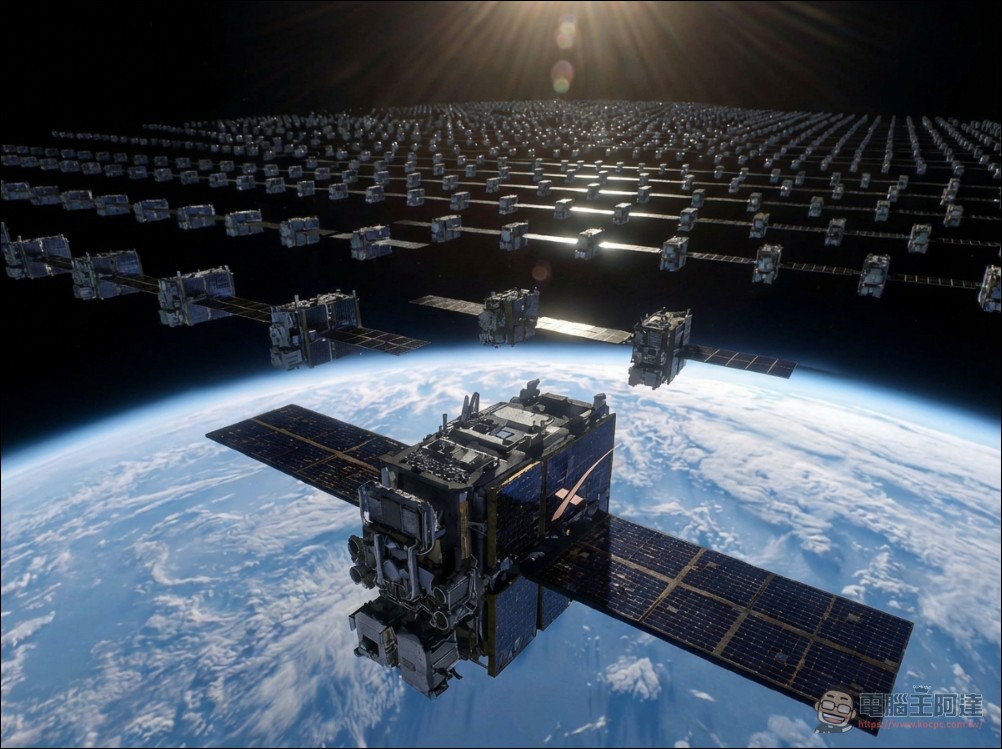
SpaceX applies to launch 1 million solar-powered satellites to form an orbital data center
This technological marvel, called the “Orbital Data Centre” system, is expected to handle the most demanding AI workloads in space. In space, solar energy is inexhaustible, and cooling issues can be easily resolved. The proposal was submitted to the FCC in early January 2026, promising to address the growing energy crisis on Earth—a crisis that is threatening the pace of AI development.
The satellites will actually be so far apart that it will be hard to see from one to another. Space is so vast as to be beyond comprehension. https://t.co/oDuBtJQCHj
— Elon Musk (@elonmusk) January 31, 2026
How do solar satellites operate in space?
Each satellite is equipped with solar panels, capturing sunlight almost continuously, unhindered by clouds or the darkness of night. The vacuum of space itself serves as a natural refrigerator, eliminating the need for cooling systems that would require massive amounts of energy. High-speed laser beams transmit data between satellites at petabit-per-second rates—trillions of bits per second—before routing the results down to Earth stations. Musk explained that this configuration enables high power density, potentially dropping below 100 kilowatts per ton after assembly, making orbital AI both efficient and practical.
What does 100 GW/year of AI satellites mean?
Musk stated that building 100 gigawatts of solar AI satellites annually requires producing an equal 100 gigawatts of AI computers on Earth first. One gigawatt can power approximately 800,000 households, making this a massive industrial endeavor. This figure has been confirmed by SpaceX’s FCC filing, indicating that ground-based factories must increase production of chips and servers to support the launch and maintenance of orbital satellites.
Elon Musk: The lowest cost place to put AI data centers will be space —-
“The lowest cost place to put AI will be space. I think the case is a no-brainer for building AI, solar-powered AI data centers in space because, as you mentioned, it’s also very cold in space. If you’re… pic.twitter.com/CvBDj1kRXJ
— Beanie👾 (@CoCoKruszynski) January 31, 2026
Vision: Type II Kardashev Civilization
SpaceX said in an FCC filing that this is the first step toward a Kardashev Type II (kardashev 2) civilization capable of harnessing the full energy of the Sun.
According toreport, SpaceX atdocumentIt reads: “Launching an orbital data center constellation of one million satellites is the first step toward becoming a Type II Kardashev civilization: a civilization capable of fully utilizing the sun’s total energy output, while supporting AI applications used by billions of people, and ensuring humanity’s multi-planetary future among the stars.”
The system will operate at altitudes ranging from 500 to 2,000 kilometers, using a 30-degree angle and sun-synchronous orbital inclination. SpaceX plans to design and operate different versions of satellite hardware to optimize performance for each orbital shell.
Please provide the text you would like translated.
Musk tooto expressI think we’ll start small and gradually increase.
Technical Challenges and Risks
Such space AI programs face enormous technical challenges. For example, during ISRO’s PSLV-C62 launch mission on January 12, 2026, the early stages were successful, but control was lost during the third stage. Rocket debris scattered across the Indian Ocean, destroying the MOI-1, an experimental AI data center payload that was originally carried. Failures like this are part of the steep learning curve in space exploration, highlighting the technical hurdles even established players like ISRO and SpaceX must overcome to safely and reliably scale their programs. Not to mention the challenges of maintaining so many satellites once they’re deployed in sun-synchronous orbit.
Key Data Overview
| Item | data |
|---|---|
| Number of satellites applied for | 1 million pieces |
| Orbital Altitude | 500–2,000 km |
| Target annual production capacity | 100 gigawatts |
| power density | < 100 kilowatts per ton |
| Data transfer rate | gigabits per second (Gbps) |
| FCC application time | early January 2026 |
Source: KOCPC Chinese