


Qualcomm officially announced today that SpaceX will use Qualcomm Dragonwing A cellular infrastructure platform to build a nationwide terrestrial 5G network for Starlink Mobile. According to the press release, the network will use the Dragonwing QRU100 and QDU100 platforms and commercial-grade Layer 1 software, combining high-capacity massive MIMO radios and baseband technology with energy-efficient processing capabilities to support large-scale deployment of mobile base stations. SpaceX plans to begin deployment across the U.S. in 2027 and to build tens of thousands of base station sites over the multi-year partnership. The two parties position the collaboration as a commercial step toward a vision of AI-native 6G infrastructure; financial terms were not disclosed.
What solution is used for the base station?
Starlink Mobile’s terrestrial network will use massive MIMO radio units with 64 transmit and 64 receive paths (64T64R), aiming to improve coverage, capacity, and spectral efficiency so the network can carry more traffic more efficiently. The QRU100 platform provides highly integrated processing for massive MIMO radio units. The QDU100 platform handles high-performance, low-latency Layer 1 processing, and together the two platforms raise the per-watt performance of the radio unit and distributed unit, making the cost structure of large-scale deployment more economical. Dragonwing-powered modules will help Starlink build a multi-band network through phased deployments, with an architecture that leaves room for future evolution.
What do the managers on both sides say?
Durga Malladi, Executive Vice President and General Manager of Technology Planning, Edge Solutions and Data Center at Qualcomm Technologies, said that building a nationwide network requires ensuring every base station site has high performance and high energy efficiency. The Dragonwing platform integrates massive MIMO, dedicated processing capabilities, and commercial-grade Layer 1 software to help Starlink build a nationwide network. He also framed the collaboration as a bridge between 5G deployment and future AI-native 6G plans.
Starlink Senior Vice President Michael Nicolls said that whether at home or on the go, people should no longer face dropped calls, and Starlink is working to build the first nationwide communications network that fully integrates satellite and terrestrial networks, so people can stay connected wherever they are.
What cards does Starlink Mobile have to play?
This entry ticket to the terrestrial network is the spectrum SpaceX has acquired over the past year or so. The largest purchase was EchoStar’s 65 MHz nationwide mid-band, comprising 40 MHz of AWS-4, 10 MHz of H Block, and up to 15 MHz of AWS-3 added later. The total price was about US$19.6 billion (about NT$643.4 billion), of which about US$11.1 billion was paid in SpaceX Class A shares. The FCC approved the transaction on May 12, 2026, with a two-stage closing: the spectrum first goes into a trust and will be officially transferred to SpaceX no later than November 30, 2027.
In October this year, SpaceX again bought up to 14 MHz in the 800 MHz low band from investment firm Grain Management, adding an indoor-penetration coverage layer; this spectrum was originally released by T-Mobile through a license swap. Another key regulatory move was that the FCC approved SpaceX to launch and operate up to 15,000 next-generation Starlink Mobile satellites, with about 650 of the relevant satellites currently in orbit. The new network has set a target of 150 Mbps 5G speeds per user and is expected to launch service by the end of 2027, and because SpaceX owns the spectrum itself, after obtaining a waiver it can sell mobile phone service without relying on authorization from traditional telecom operators.
How to build the terrestrial network was just hotly debated in August.
At SpaceX’s first earnings call after its IPO in August this year, the company publicly outlined its ground network architecture for the first time. President and COO Gwynne Shotwell said mobile base stations could be mounted directly on the equipment supporting Starlink broadband antennas, blanketing the country in the form of small cells. Elon Musk added that these small sites are in fact “Starlink dishes that also provide mobile-band connectivity” and can be deployed in large numbers. At the time, Starlink had about 12 million global subscribers, while AT&T, T-Mobile, and Verizon together had annual revenue of about $600 billion in the U.S. wireless market (about NT$19.7 trillion). Shotwell vowed to use better service to win away a substantial number of their customers.
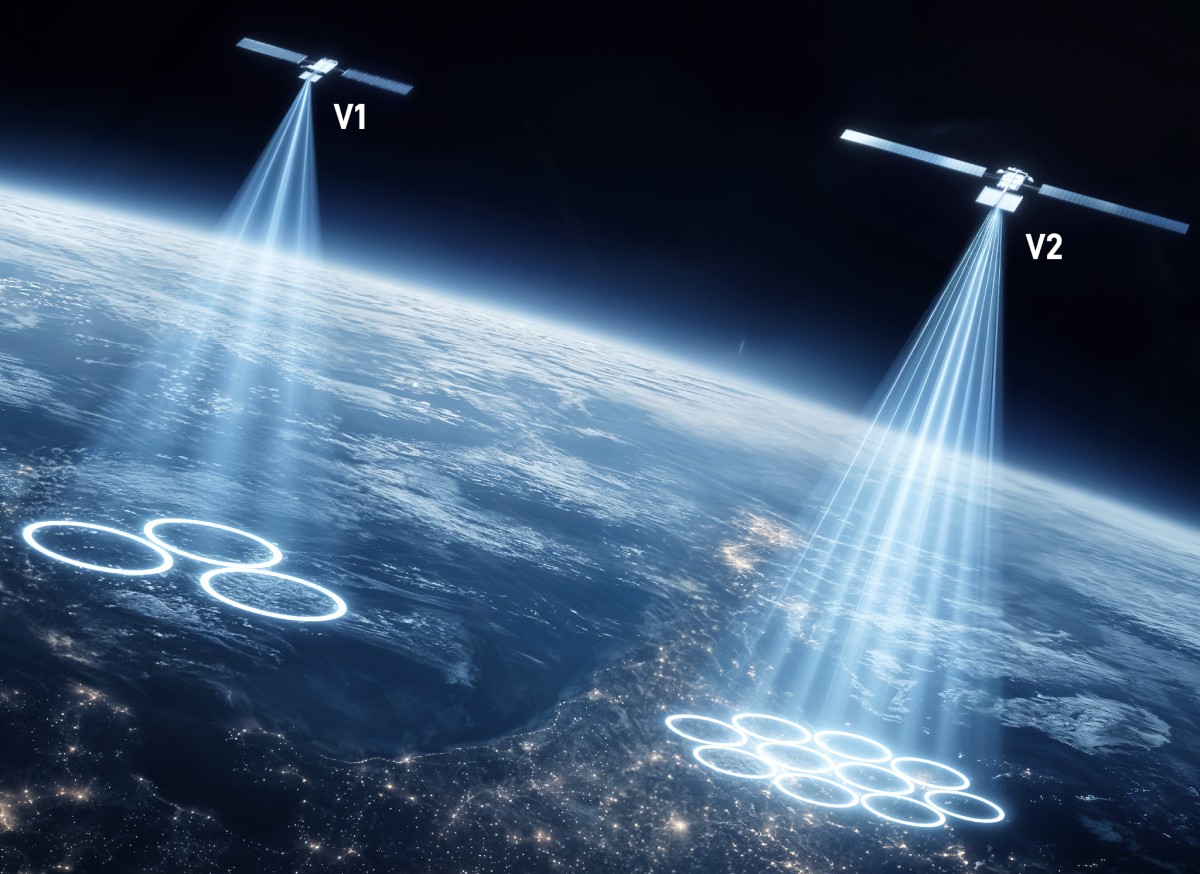
The industry is not entirely buying into the idea of “turning dishes into small cells.” Dimitris Mavrakis, senior research director at ABI Research, criticized at the time that femtocells had long been proven by the industry to be unsuitable as the primary deployment model for nationwide mobile networks, and that power supply and site selection issues would not disappear just because backhaul goes over satellite. Qualcomm’s proposal this time sends a different signal: what Starlink is offering is 64T64R massive MIMO radio units and distributed units, which are part of a standard base station architecture rather than home small cells.
Layout comparison
For Qualcomm, this is the Dragonwing platform’s first network customer of nationwide scale. The cellular infrastructure market was previously dominated by traditional equipment vendors, and Qualcomm entered the base station supply chain with chips and Layer 1 software. This time, directly winning a major customer for a new nationwide network amounts to an endorsement of its platform. For SpaceX, this means the architecture for the fourth nationwide mobile carrier—moving from “satellite direct-to-phone” to “satellite plus terrestrial”—has officially begun, with a clear timeline: deployment starting in 2027, tens of thousands of sites, and a multi-year partnership.
The transaction process was not smooth sailing either. When approving the spectrum deal, the FCC attached conditions requiring EchoStar to set aside US$2.4 billion (about NT$78.8 billion) in an escrow account to handle claims related to Dish’s network buildout; the Rural Wireless Association opposed such spectrum concentration deals, arguing that they would further weaken small rural operators’ ability to survive. In the same approval order, the FCC also allowed EchoStar to sell 50 MHz of spectrum to AT&T for US$23 billion (about NT$755 billion), and one of the Big Three also took the opportunity to replenish its mid-band inventory.
Summary
After getting spectrum, satellites, and regulatory approvals in place, Starlink Mobile’s terrestrial 5G network is now adding base stations as the missing piece. Qualcomm’s Dragonwing platform has landed its first nationwide-level US customer, while SpaceX has secured a commercial architecture capable of supporting tens of thousands of sites. The next things to watch are clear: whether deployment starts on schedule in 2027, and what pricing and device strategy the network will use to compete with the Big Three for customers when it launches.
Source: KOCPC Chinese