


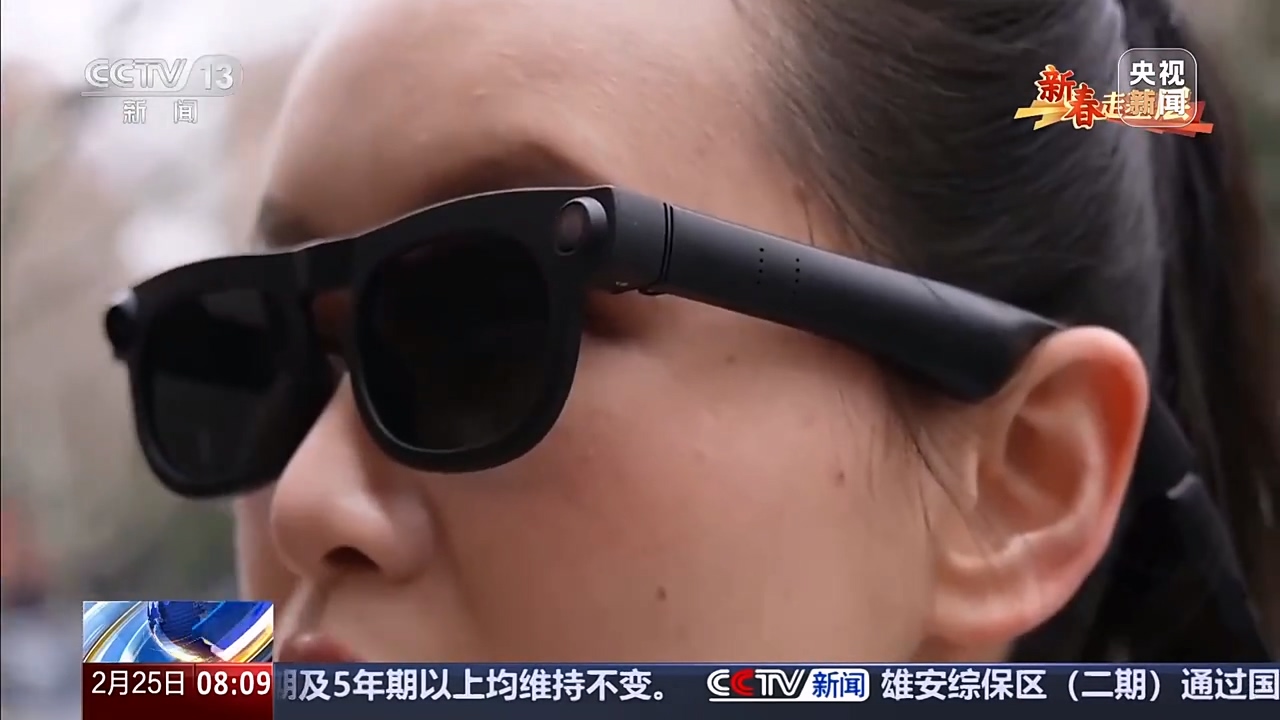
Everyone knows that visually impaired individuals face various inconveniences and challenges in daily life. In familiar environments like home, it’s manageable, but stepping outside can be fraught with dangers. The R&D team at Tongxing Technology in Hangzhou, Zhejiang, China has developed AI glasses for the visually impaired by leveraging China’s domestic large language model. These glasses can recognize road conditions, identify signs, and read menus. Based on the daily needs of over 200 visually impaired users, the team optimized the glasses’ obstacle avoidance response time from 500 milliseconds to 300 milliseconds, bringing it close to the reaction speed of most people and enabling visually impaired individuals to walk independently through unfamiliar streets and environments.

AI-assisted glasses for the blind enable a girl who has been blind for 20 years to achieve her wish of independent travel
Real Story: The Tale of Piano Tuner Cai Qionghui
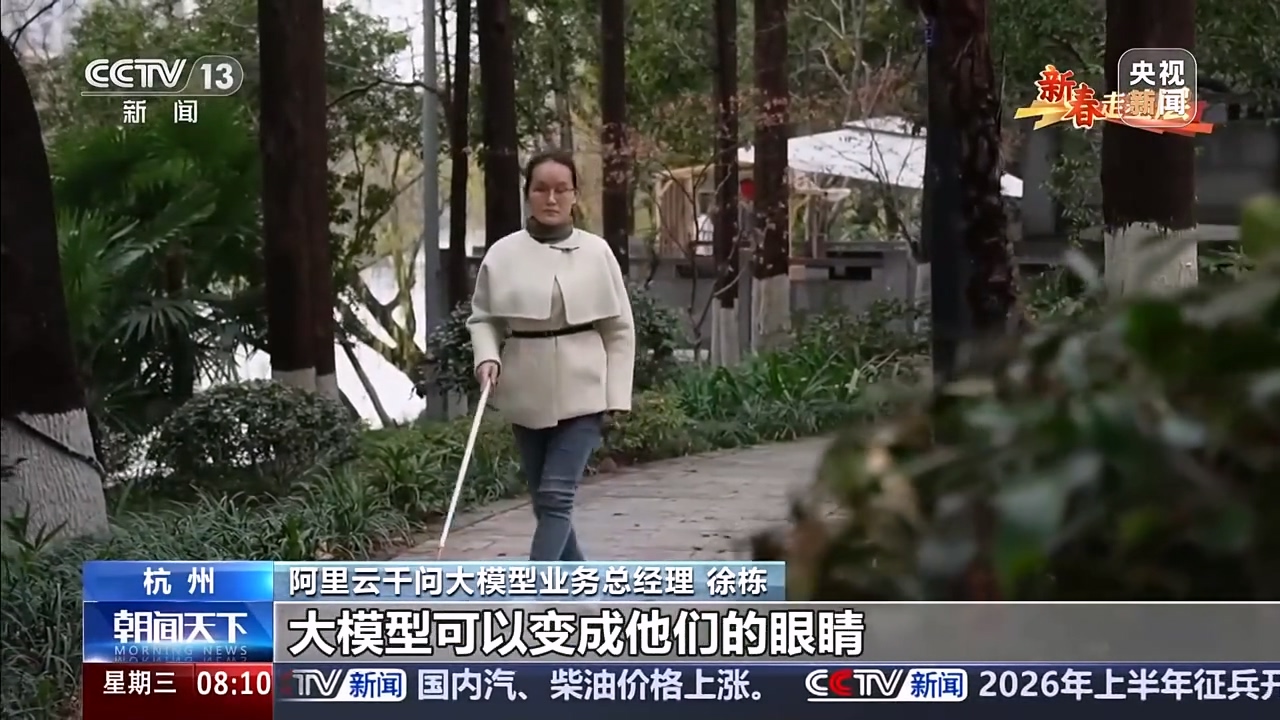
Cai Qionghui lost her sight in an accident at age 7. She can take care of herself at home and is adept at playing the piano and other musical instruments, precisely handling the over 8,800 parts of a piano. But like other visually impaired people, once she steps outside her home, a distance of just 10 meters in an unfamiliar place often leaves her disoriented.
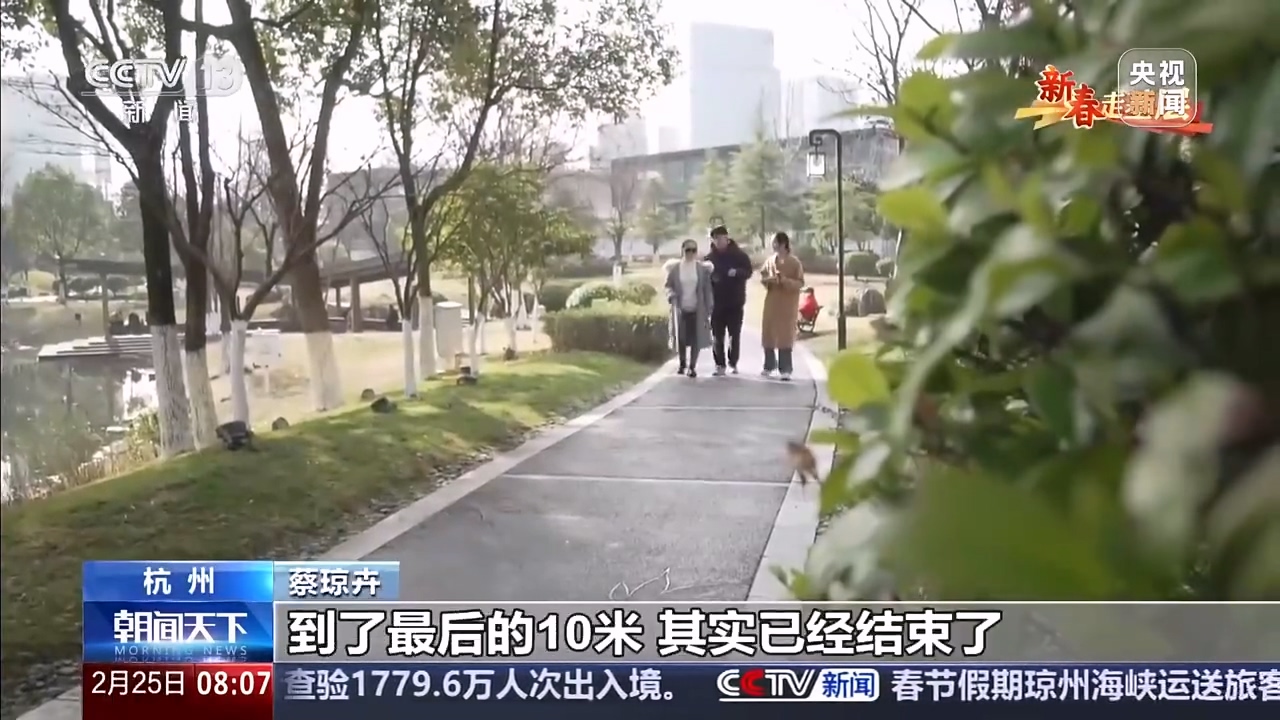
Although technology has advanced significantly and there are now convenient navigation apps available for visually impaired users, in real-world scenarios, some mechanisms in these apps (such as prompting “You have arrived at your destination” when approaching the destination, indicating that navigation has ended) still leave visually impaired users at a loss. “Most navigation apps have already ended by the last 10 meters. I often end up walking in circles and can’t find my way,” said Tsai Chiung-hui.

With AI glasses designed for the visually impaired, Cai Qionghui can now navigate unfamiliar streets on her own and make her way to the correct destination. She can also read menus and order food by herself.


Cai Qionghui said: “I have a seemingly extravagant hope that I can live and work like an ordinary person. I used to think it was impossible, but the advancement of technology in recent years has truly shown me that it’s possible.”
Technical Architecture: A Three-Part System
The AI glasses for the blind mentioned in the report are made by a Chinese companyTongxing TechnologyTheir first product, called “Tongzhe,” is a lightweight system consisting of three components.
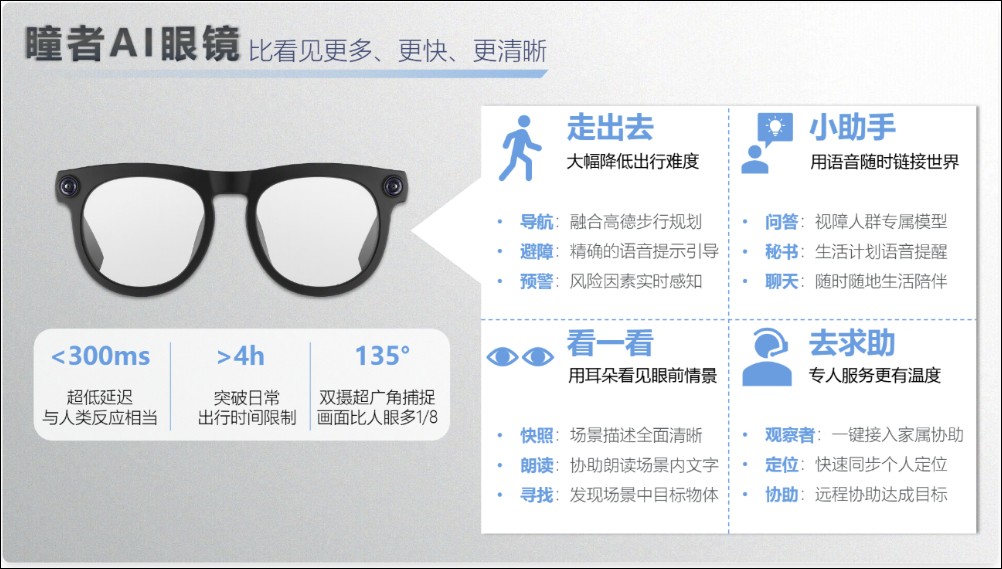
1. Smart Glasses: Dual cameras work like two eyes, capturing the world in real time. The glasses feature two high-resolution cameras, each responsible for capturing the environment from different angles, ensuring comprehensive monitoring of the surrounding area with no blind spots.
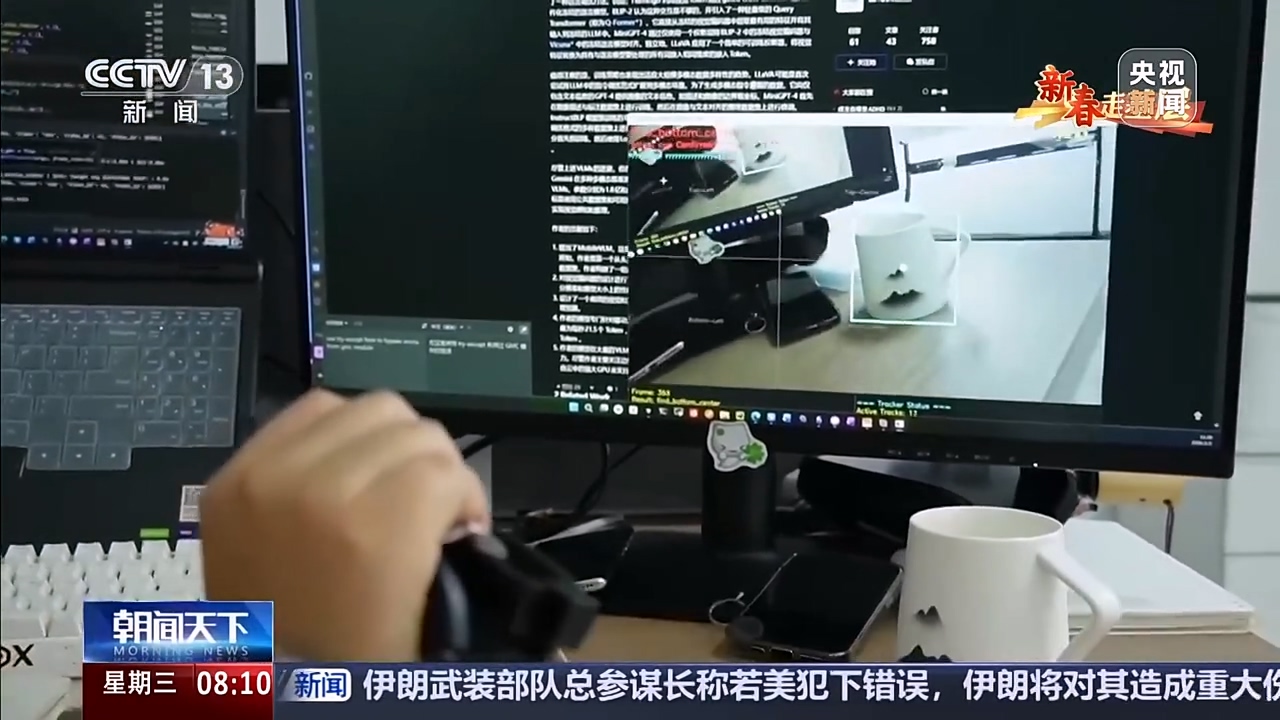
2. Bluetooth Ring: Acts as a user’s baton, allowing commands to be issued with a gentle touch. The ring features a minimalist design, enabling visually impaired users to quickly switch modes through touch gestures, such as “Identify Road Conditions,” “Read Text,” “Find Objects,” and more.
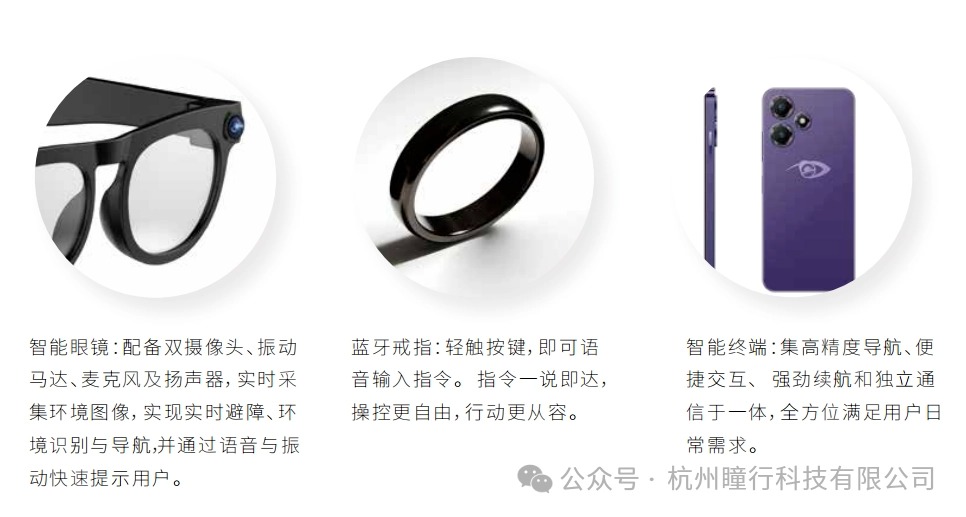
3. Smart Terminal: The AI brain that processes all information here. The terminal device is equipped with Alibaba Cloud’s Qwen model from China, a large multimodal model that analyzes camera-captured images in real time and returns voice feedback within milliseconds.
Technology Breakthrough: 300ms Obstacle Avoidance Response
Tongxing Technology’s R&D team conducted extensive testing and optimization based on the daily needs of over 200 people with visual impairments. Team members also cover their own eyes with blindfolds to test the real-world usability on actual roads.


Key breakthrough:
Initial reaction time: 500 milliseconds
Optimized response time: 300 milliseconds
Improvement: 40%
This 200-millisecond improvement means a safer and smoother travel experience for visually impaired individuals. Why is 300 milliseconds important? Because for people with visual impairments, the obstacle avoidance system’s response time is directly related to travel safety.
• 500 milliseconds: When walking briskly, you may have already moved 1 meter, leaving no time to react to obstacles
• 300 ms: reaction distance reduced to 0.6 m, significantly enhancing safety
Core Features of AI Assistive Glasses for the Blind
Currently, these AI glasses can recognize road conditions in real-time to assist visually impaired users when they’re out and about. The company has also released an introduction video. While most of these features are available in standard AI glasses, this AI-assisted glasses for the blind has focused particularly on daily assistance and real-time object recognition:
Pedestrians, vehicles, obstacles
Traffic light status
crosswalk, sidewalk
Construction zone, temporary obstruction
It can also recognize road signs, and the system can identify and read them aloud:
Street name
House number
Bus stop sign
Subway Station Signs
Mall directory
In scenarios like restaurants, AI glasses can read menus:
Recognize paper menus
Read out the dish names and prices
Describe the dish contents
Assist with ordering
AI Glasses for the Blind: Market Status and Outlook
According to data from the China Disabled Persons’ Federation, there are over 17 million visually impaired people in China. In Taiwan, according to 2023 statistics from the Ministry of Health and Welfare, approximately 54,000 visually impaired individuals hold disability certificates (handbooks). The daily travel needs of visually impaired people include:
Independent travel (commuting, shopping, medical appointments)
Social participation (socializing, entertainment, travel)
Job opportunities (more career options)
A video from the report is also provided here for your reference. Hopefully this kind of technology can become widespread around the world (not sure if there are any R&D teams in Taiwan developing similar products). It would truly be a tremendous help for visually impaired individuals:
Conclusion
People often say “in martial arts, only speed is unbeatable,” but for “Tongzhe,” this AI-assisted blind navigation system, the optimization from 500ms to 300ms isn’t about chasing benchmark scores—it’s about giving visually impaired friends the confidence and dignity to take every step. This 200ms reduction successfully bridges the disorienting “final 10 meters” blind spot that traditional navigation software leaves behind.
For a long time, the development of artificial intelligence has been shadowed by the cold, hard debate about “replacing humans.” But through the story of piano tuner Cai Qionghui, we discover the warmest application of AI technology. When cameras become eyes, rings become canes, and large language models become brains, AI-powered hardware is no longer just cold electronic components—it becomes a bridge that breaks down visual barriers.
Tsai Qionghui says she hopes to live and work like an ordinary person. This once “luxurious” hope is now becoming reality step by step, thanks to the maturation of AI visual recognition and multimodal large language model technologies. Looking ahead, as model computing power improves and hardware miniaturizes, we have good reason to believe that technology will not only be able to “see” the world, but also truly “look after” every person who needs to be illuminated.
Source: KOCPC Chinese