


Recently, an alleged internal Microsoft presentation leaked online, stating that the specifications for next-generation Windows AI PCs will be divided into four tiers based on local AI computing capability, with memory as the key factor. The lowest tier starts at 8GB of memory, indicating the entry level, while the highest-end AI development devices and personal supercomputers require 128GB or more. More importantly, the presentation also revealed next-generation processors from Intel, AMD, Qualcomm, and NVIDIA that have not yet been officially announced.
Microsoft’s AI PC roadmap revealed! Windows computers are divided into four tiers based on AI capability, ranging from 8GB to over 128GB.
This slide deck was shared by well-known hardware leaker HXL (@9550pro). The slide deck’s title reads “Windows is the home for hybrid intelligence,” meaning “Windows is the home of hybrid intelligence,” and it divides Windows AI PCs into four tiers, Tier 0 through Tier 3:
https://t.co/iqoDGdAg0n
— HXL (@9550pro) November 3, 2026
The term “Hybrid Intelligence” was already used by Microsoft on the Windows Experience Blog last month, and we also reported on related news (Windows will introduce Hybrid Intelligence), this time revealing a more detailed hardware tier breakdown. The differences among the four tiers are summarized below:
| Level | Memory allocation | AI computing positioning |
|---|---|---|
| Tier 0 A typical Windows PC | Starting at 8GB | Basic local operations paired with cloud AI |
| Tier 1 Copilot+ PC | 16GB~64GB mainstream configuration | On-device AI Q&A, agent tasks, and long-running jobs |
| Tier 2 Professional AI development-grade PC | 128GB and above | Build, run, and provide AI model services locally |
| Tier 3 AI supercomputer | High-capacity memory and professional acceleration hardware | Run frontier large AI models locally. |
The actual coverage of each tier may include different configurations and is not an official certification standard for market launch.
Tier 0 is the most entry-level Windows PC. The local machine only handles the most basic AI tasks, such as contextual understanding and actions—for example, knowing which files you currently have open and performing simple system actions for you—while the parts that require heavy computing are handed off to the cloud. Although Microsoft sets 8GB as the entry level, with current usage demands it can easily become a bottleneck. Personally, I think 8GB is better suited to light usage such as basic web browsing, email, working with Office documents, or Teams video calls, and adding AI would be a bit of a stretch.
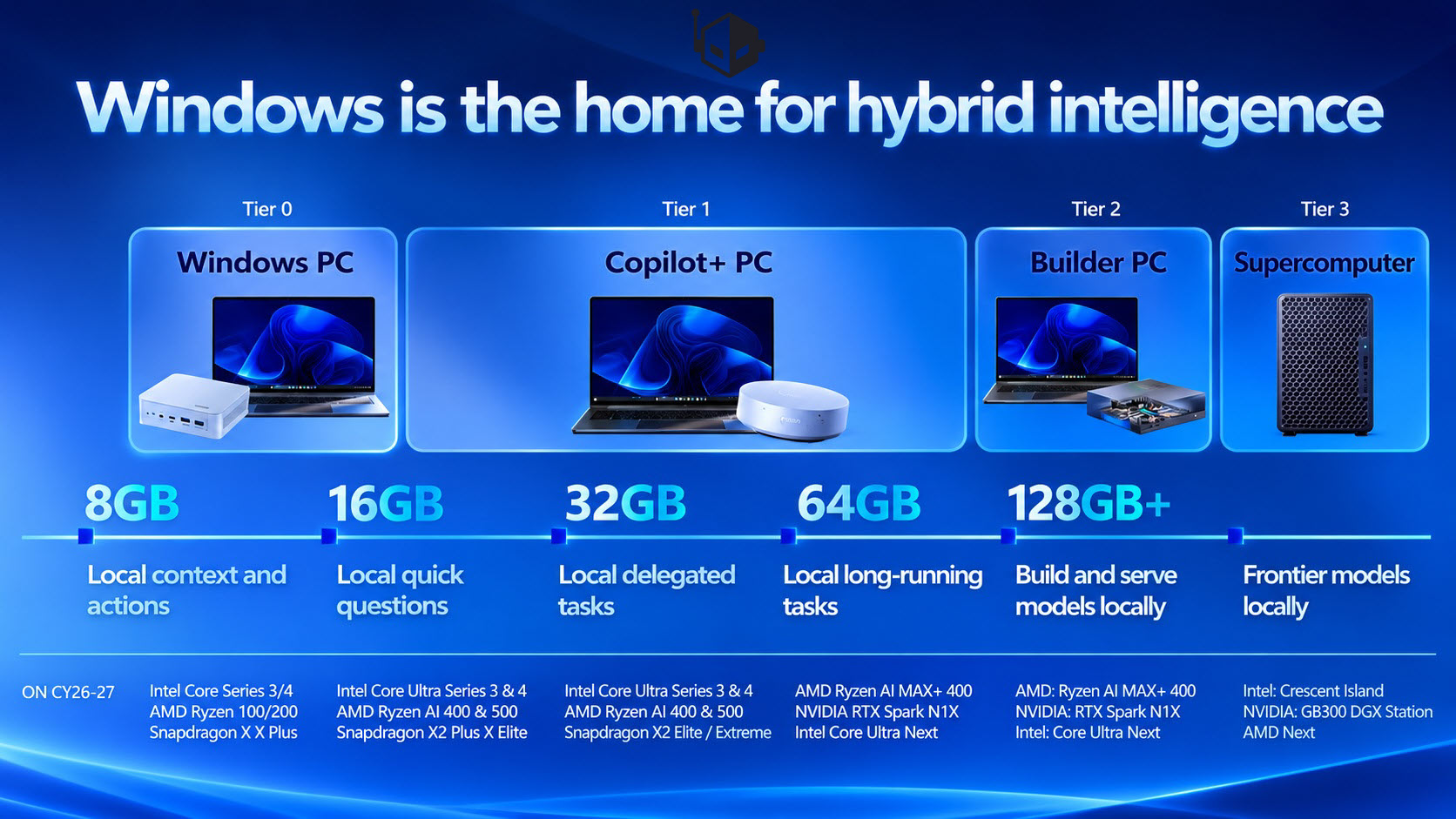
Image source:Wccftech
Tier 1 covers mainstream Copilot+ PCs. Memory ranges from 16GB all the way up to 64GB, enabling on-device handling of quick Q&A, tasks delegated to AI agents, and workloads that require long periods of continuous execution. This also means that a device needs at least 16GB of memory to qualify as a Copilot+ PC.
Tier 2 is the Builder PC for developers. It needs 128GB of RAM or more, can build models locally and make them available for other programs or AI agents to call, and can also be seen as a small AI server.
Tier 3 does not list memory capacity, but Microsoft calls it a personal AI supercomputer that can run “frontier models” directly on-device—that is, the most powerful batch of AI models available today.
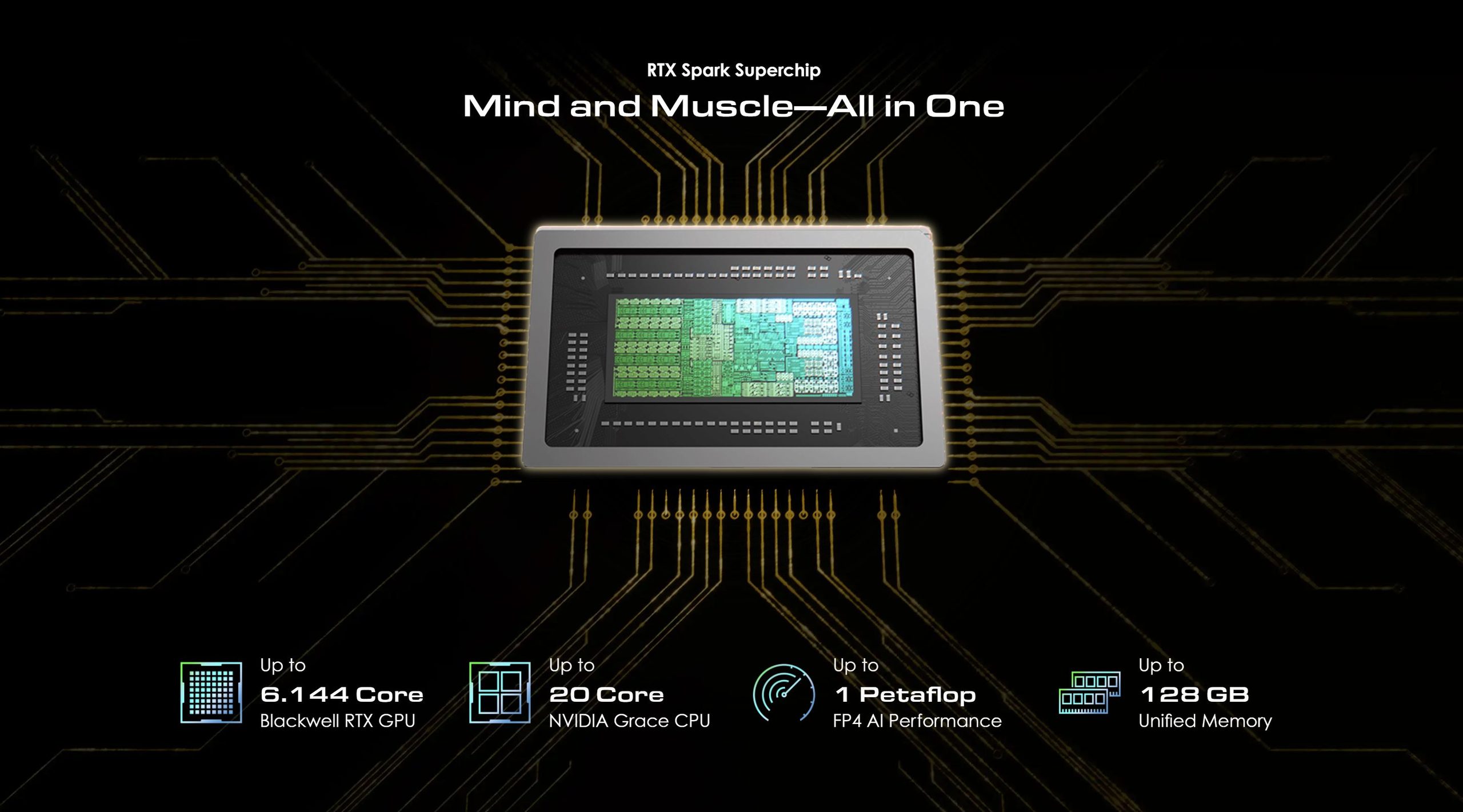
Image source:Wccftech
In addition, at the bottom of the presentation, Microsoft also included the names of several unreleased processors, including AMD Ryzen AI 500 (Zen 6), Intel Core Ultra Series 4 (Nova Lake), Intel Core Ultra Next, and Snapdragon Next. Organized by tier as follows:
- Tier 0: Already on the market are Intel Core Series 3 “Wildcat Lake,” AMD Ryzen 100/200 series, Snapdragon C, and Snapdragon X and X Plus, mostly entry-level laptops around $500. Intel Core Series 4 has not yet been announced.
- Tier 1: Already available are Intel Core Ultra Series 3 “Panther Lake,” AMD Ryzen AI 400 “Gorgon Point,” and Snapdragon X2 Plus/X2 Elite. Not yet launched are Intel Core Ultra Series 4 “Nova Lake” and AMD Ryzen AI 500 “Medusa Point.” High-end configurations with 64GB or more include AMD Ryzen AI MAX+ 400, NVIDIA RTX Spark, and Intel Core Ultra Next.
- Tier 2: Currently available are the Ryzen AI MAX+ 400 and RTX Spark, such as Microsoft’s own Surface Laptop Ultra. Intel Core Ultra Next and Snapdragon Next are listed as future products.
- Tier 3: Intel’s yet-to-be-released Crescent Island GPU, NVIDIA GB300 DGX Station, and AMD’s unnamed next-generation solution (Wccftech speculates it may be Threadripper Halo Station)
Of course, this briefing has not yet been officially confirmed by Microsoft, so it’s best just to keep it in mind. If you plan to buy a computer in the future and want to use Windows’ on-device AI features, 16GB will be the minimum safe choice (this refers to unified memory).
Source: KOCPC Chinese