


OpenClaw has taken the world by storm, with AI companies like Claude and Google even banning users who try to circumvent their token usage limits, and among those cashing in on this token-burning frenzy, China’s AI enterprises’ Coding Plan packages have become the most sought-after. Zhipu AI, the Chinese company that recently launched the highly popular open-source GLM-5 model, is seizing the moment to release the latest GLM-5-Turbo model—the world’s first general large language model specifically deep-optimized for OpenClaw “Openclaw” scenarios. From training data construction to optimization objective design, the model is built on real agent workflows, constructing diverse OpenClaw task scenarios to ensure the model can genuinely execute complex, dynamic, and long-chain tasks.
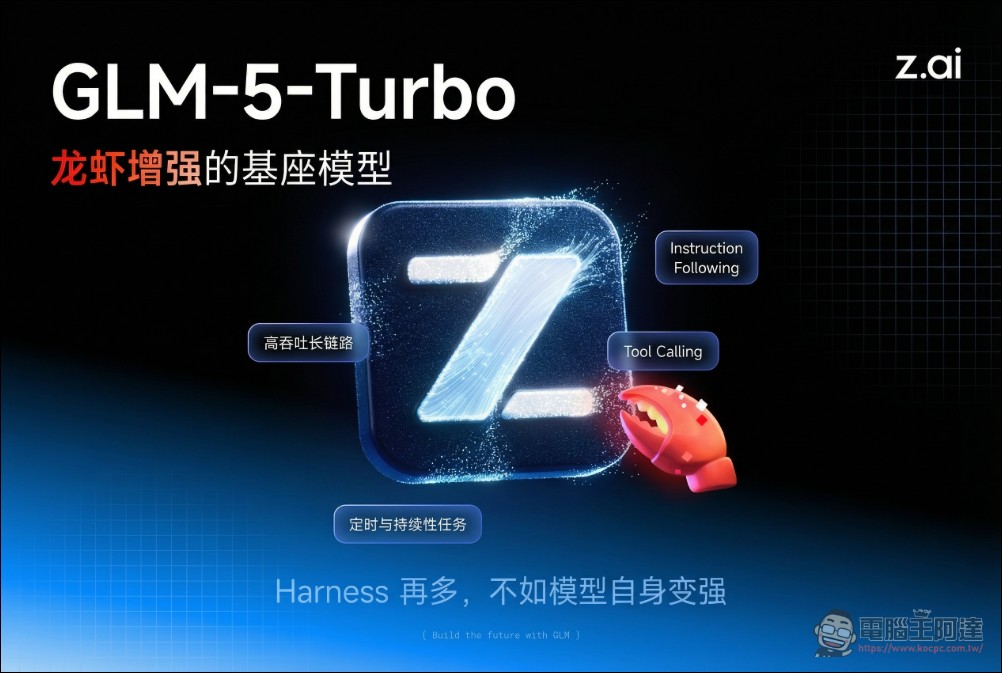
GLM-5-Turbo Technical Specifications and Core Capabilities
GLM-5-Turbo has undergone specialized architectural enhancements tailored to OpenClaw’s core requirements. According to Zhipu AI’s official documentation, the main technical specifications of this model are as follows:
| Item | Specifications |
|---|---|
| Position | ClawBench Enhanced Native Agent Model |
| Context length | 200K Tokens (supports very long conversation history and documents) |
| Maximum Output Tokens | 128K (suitable for generating long code or reports) |
| Core Features | Native MCP support, context caching, structured JSON output |
| thinking pattern | Supports multi-step reasoning and self-correction mechanisms |
GLM-5-Turbo: Enhanced Four Core Capabilities
Tool Calling: Precise Invocation, Stable and Reliable
GLM-5-Turbo has enhanced its ability to call external tools and various skills, ensuring higher stability and reliability for multi-step tasks. This means OpenClaw tasks can transition more smoothly from conversation to execution. Additionally, GLM-5-Turbo’s native support for MCP enables OpenClaw to connect with over 10,000 community MCP servers, enabling deep interaction with external services like GitHub, Slack, Postgres, and Google Drive. The official benchmarks focus on optimization specifically for Openclaw use cases, complex instructions, and long-chain scenarios.
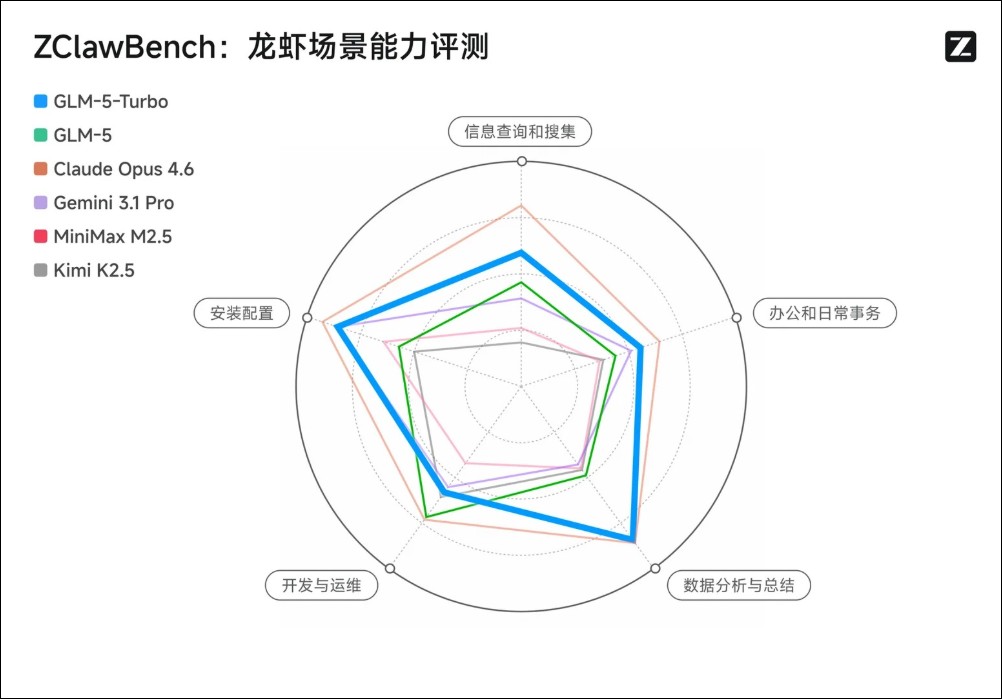
2. Instruction Following: Enhanced Decomposition of Complex Instructions
The model demonstrates stronger comprehension and decomposition capabilities for complex, multi-layered, long-chain instructions. It can accurately identify objectives, plan steps, and support collaborative task allocation among multiple agents. This represents a key enhancement for OpenClaw users who need to handle complex workflows.
3. Scheduled and Persistent Tasks: Deep Understanding of the Temporal Dimension
GLM-5-Turbo has been significantly optimized for scenarios such as scheduled triggers, continuous execution, and long-running operations. The model can better understand time-related requirements and maintain continuity during complex long-task execution processes. This is especially important for enterprise users with scenarios requiring cross-timezone operations and regular report generation.
4. High-Throughput Long Chain: Faster and More Stable Execution
For “Openclaw” tasks involving high data throughput and extended logic chains, GLM-5-Turbo further enhances execution efficiency and response stability, making it better suited for integration into production business workflows.
Strategic Significance of the “Openclaw” Architecture
“Openclaw” is OpenClaw’s typed workflow runtime, designed to combine multi-step tool invocations into single deterministic operations. The release of GLM-5-Turbo creates a perfect technical synergy with the Openclaw workflow engine.
The core values of Openclaw are:
- One call instead of many: Traditionally, complex workflows require LLMs to call tools back and forth repeatedly, with each call consuming tokens; whereas Openclaw can execute the entire workflow with just a single call.
- Built-in approval mechanism: For side-effect operations such as sending emails or modifying data, Openclaw will pause before execution and wait for human approval.
- Recoverability: Provide a resume token, and after approval, execution can continue immediately, greatly improving efficiency.
Pricing Strategy and Market Positioning
Alongside the release of GLM-5-Turbo, Zhipu AI simultaneously launched a “Openclaw Package” based on the model, attempting to transition from a traditional model provider to a digital workforce provider. Currently, two advanced plans are available: 39 RMB (35 million tokens) and 99 RMB (100 million tokens). According to netizens from across the strait, the packages sell out immediately every day they go on sale, making them harder to get than tickets to Jay Chou’s concerts (Zhipu AI has yet to open-source the model at this time). The launch of GLM-5-Turbo is expected to prompt more companies with their own AI models to release versions specifically optimized for OpenClaw. Hopefully, Google, Claude, and OpenAI (it’s rather surprising that they haven’t released a dedicated plan yet, given that their founder has already been poached to work for them) will also offer affordable options for “Openclaw buddies” worldwide.
Source: KOCPC Chinese