


Open up the back panel of an old desktop computer, and you’ve surely seen that classic pair of purple and green round ports: purple for the keyboard, green for the mouse. Today, with USB and wireless Bluetooth reigning supreme, the design of reserving separate physical ports for the mouse and keyboard seems somewhat unbelievable, but this interface, called PS/2, is a shared memory that grew up with the millennial generation. Even more surprising is that, even in 2026, this nearly 40-year-old antique standard still has not completely exited the stage of history—and even frequently appears on the latest generation of high-end motherboards.
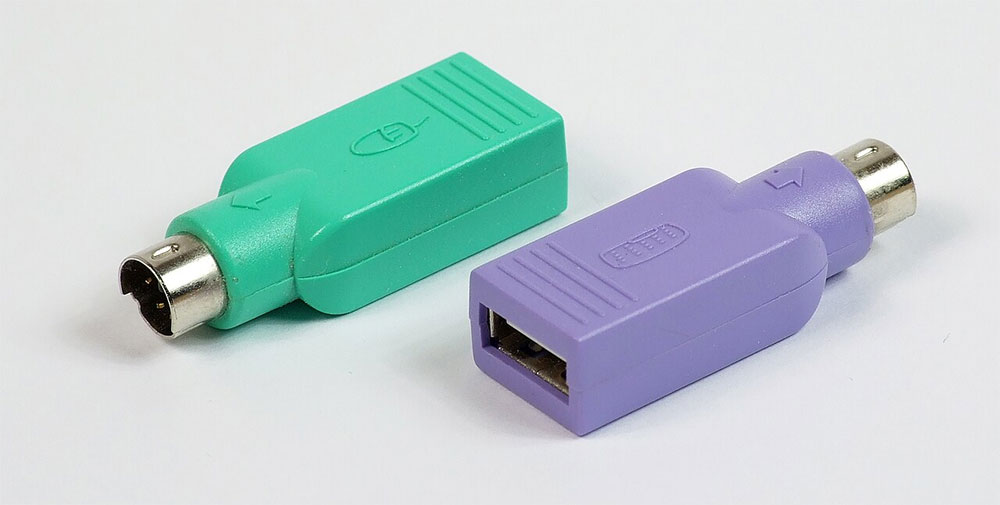
Why do top-tier overclocking motherboards still retain the “purple-green” PS/2 interface to this day?
The PS/2 interface was first introduced in 1987 by IBM alongside its Personal System/2 (PS/2) line of computers. Before its introduction, the connection standards for PC peripherals were quite chaotic:
- Keyboard: Uses the bulky AT interface.
- Early mice: they had to occupy a valuable RS-232 serial port, or an additional Bus Mouse expansion card had to be installed on the motherboard, which was neither cost-effective nor convenient for ordinary users.
The arrival of PS/2 solved these pain points in one fell swoop. It was compact, freed up scarce serial ports, and, thanks to the IBM PC’s huge market share, quickly became the de facto standard for personal computer input devices in the 1990s. However, early PS/2 also had a famous user-hostile design: the keyboard and mouse ports looked exactly the same, and if plugged in the wrong way, they would not work. It was not until the late 1990s that the PC 97 specification, led by Microsoft and Intel, formally introduced color coding—green for the mouse and purple for the keyboard—finally ending users’ “blind-plugging” nightmare and establishing PS/2’s dominance around the turn of the millennium, until it gradually yielded ground to USB, with its more convenient hot-swapping, in the mid-to-late 2000s.
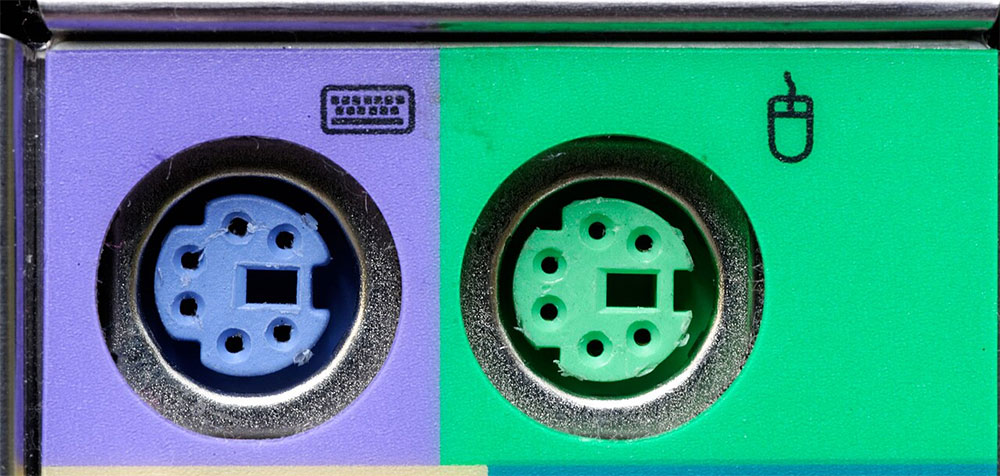
Why are 2026 flagship motherboards still using antique interfaces?
Walk into a modern computer store, and you’ll still see the odd sight of PS/2 standing side by side with USB-C and HDMI on the rear I/O panels of many new motherboards, such as the ASUS ROG Maximus Z890 Apex, GIGABYTE B850 Gaming X Wi-Fi 6E, and ASRock B860M-HDVP.
At a time when USB bandwidth and technology have long been highly mature, why are major hardware manufacturers still willing to make room for it? There are actually three key reasons behind this:
- The “lifeline” for extreme overclockers
A closer look reveals that new motherboards equipped with PS/2 are mostly aimed at hardcore enthusiasts and overclockers. When users push the CPU or memory to extreme frequencies, overall system stability drops significantly, and the first thing to suffer is often the motherboard’s USB controller—causing the keyboard and mouse to disconnect and fail instantly. PS/2, by contrast, uses a completely independent low-level connection channel, so it remains rock-solid even under extreme overclocking, allowing users to enter the BIOS smoothly and adjust parameters. - The underlying architectural differences brought about by “hardware interrupts”
In terms of signal transmission mechanisms, PS/2 uses hardware interrupts: each time a key is pressed, the keyboard immediately notifies the CPU; USB, by contrast, relies on the controller to periodically poll the device status. Although modern high-polling-rate gaming USB keyboards already respond faster than the limits of human perception, so PS/2 may not actually feel faster, this “zero polling latency” and “no key rollover (NKRO)” pure low-level characteristic is still highly praised by some hardcore gamers. - Industrial and enterprise legacy equipment compatibility
Besides the gamer market, many factory machines, medical devices, and internal enterprise systems still rely on custom legacy peripherals or proprietary software (such as early KVM switches or specific security systems), and these environments often only recognize native PS/2 signals. To meet the rigid demand of the commercial and industrial control markets, motherboard manufacturers must also continue to offer product lines that support legacy interfaces.
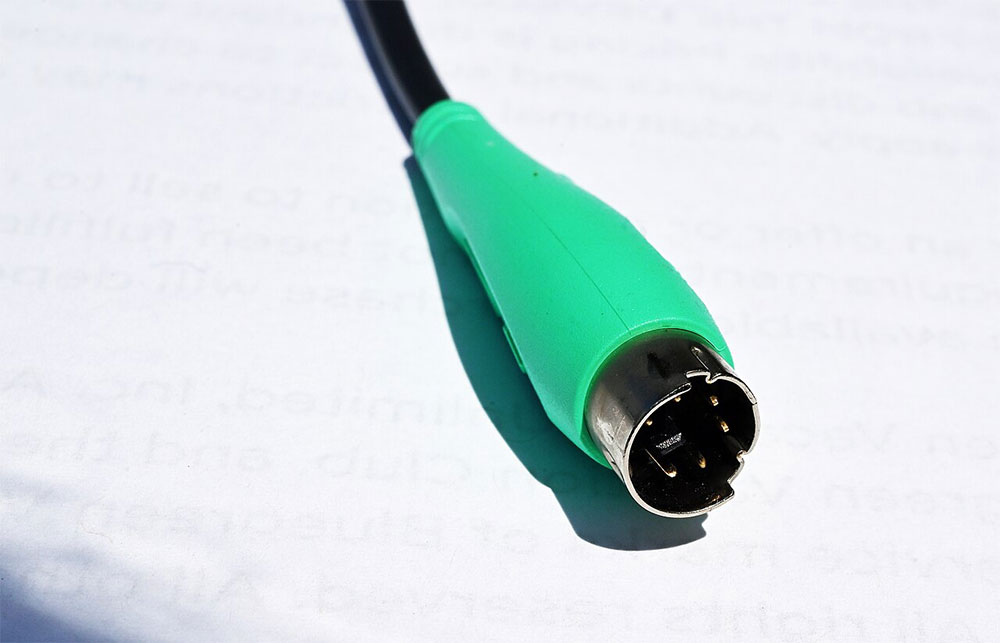
For the vast majority of everyday users, PS/2 is long gone the way of the dodo; but in the arena of extreme overclocking and specialized industrial fields, this classic pair of purple and green round ports remains an irreplaceable line of reliable defense.
Source: KOCPC Chinese