


Renowned analyst Ming-Chi Kuo said in a latest industry survey released on November 16 that strong new orders from OpenAI and Anthropic have extended visibility for Google TPU shipments to 2029, ahead of Nvidia GPUs and other AI ASIC projects (most of which have visibility only from Q4 2027 to Q2 2028). This has also enabled Google TPU to expand from an in-house proprietary chip into an external compute source for OpenAI and Anthropic, the two leading AI service providers.
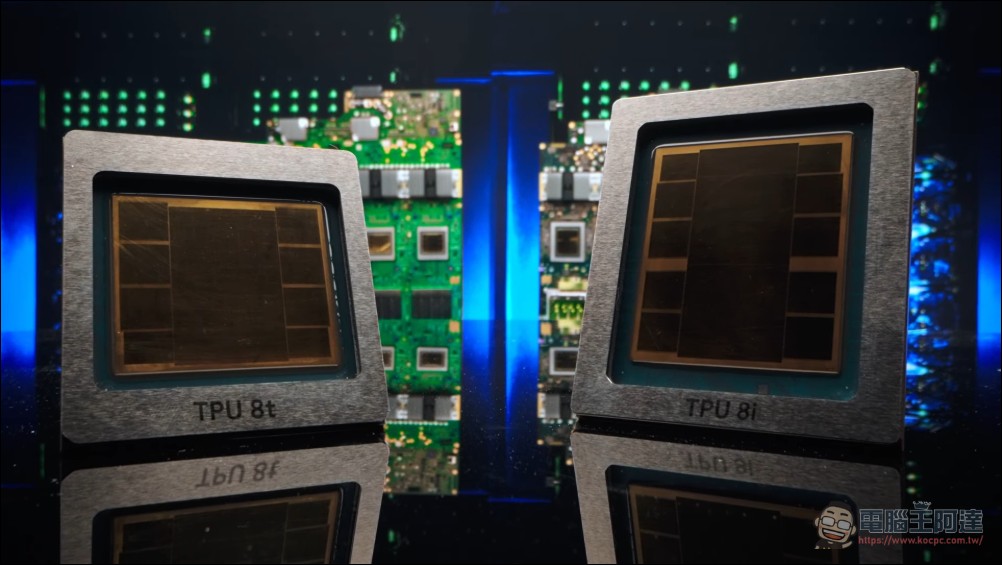
Major v10 product line restructuring: Quillfish replaces Icefish/Merope; MediaTek exclusively wins the v9 and v10 design orders.
Ming-Chi Kuo revealed in his research that the v10 product line has been significantly reorganized: the originally planned Icefish and Merope/Bladerunner have been changed to Quillfish, expected to enter mass production in 2029, with the design service order secured by MediaTek. The original Icefish has been postponed to v11, expected to enter mass production in 2030, with design services also handled by MediaTek; as for Merope, visibility is currently low, no supplier has been selected, and cancellation of development has not been ruled out.
This latest account differs from earlier market rumors. Previous models assumed that v9 would be supplied entirely by MediaTek, that MediaTek would also win v10 Icefish, and that Merope would go to Broadcom; by contrast, UBS’s October supply-chain survey concluded that Broadcom was “deeply involved” in Google’s TPU projects for the two generations after v8i, with v10 expected to ship at the end of 2028 and reach its largest volume in 2029. Ming-Chi Kuo’s version is that MediaTek will exclusively win v9 and v10; the actual situation still awaits verification from subsequent shipment data. On timing, Google was reported only last month to have delayed v9 development again because of changes to the Core A design, with the first tape-out now expected to be pushed to January 2027 and shipments possibly postponed to the first quarter of 2028. If v9 ramps more slowly than expected, the older-generation v8 will only play an even more important role.
In terms of the supply chain landscape, MediaTek will become the sole supplier for v9 (Humufish and Triggerfish) and v10 (Quillfish). Its share of total TPU supply in 2027–2029 is estimated at approximately 45% to 50%, 50% to 55%, and 55% to 60%, respectively, and TPU contribution to its revenue and profit will increase year by year. In packaging technology, starting with v9, all new TPUs will adopt Intel’s EMIB-T advanced packaging, but initial mass-production capacity will be limited, so until 2029, the v8 series will remain the mainstay of TPU shipments. Because v8 has accumulated mature learning-curve benefits and MediaTek and Broadcom handle procurement of key components and materials, it will be the main source of TPU profit growth for both companies in the coming years.
MediaTek is the biggest winner, and Broadcom’s 8i has a higher gross margin, but Broadcom is shifting focus to non-TPU businesses.
Ming-Chi Kuo stated bluntly that “MediaTek will be the biggest winner in TPUs over the next few years.” His reasoning is that MediaTek has exclusively held design services since v9, its supply share has been rising year by year, and visibility for high-gross-margin 8t series orders extends all the way to 2029, making it a key source of profit. From a product mix perspective, MediaTek’s TPU business simultaneously holds OpenAI’s directly purchased 8t orders and exclusive design services for v9/v10; in addition, starting with v9 it is responsible for procurement of key components and materials, so its advantages in cost control and on the learning curve will continue to accumulate as shipment volumes scale.
Google TPU update: New OpenAI and Anthropic orders extend shipment visibility to 2029; v10 lineup overhauled (now Quillfish); MediaTek and Broadcom lead as the top suppliers to watch Key takeaways from my latest industry survey and research conclusions: 1. Order visibility and shipment plans: Strong new orders from OpenAI and Anthropic have extended Google TPU shipment visibility to 2029, ahead of Nvidia GPUs and other AI ASICs (mostly 4Q27–2Q28). (1) From 2028, v9 will become the mainstay of Google’s own compute buildout, so v8-series orders (8t / 8i or their design variants) can be viewed as coming from OpenAI and Anthropic. (2) Combined 2028–2029 demand: about 12M units for OpenAI (8t, designed by MediaTek) and about 14M for Anthropic (8i, designed by Broadcom), with both growing year over year. OpenAI buys outright, while Anthropic uses a mix of leasing and outright purchases. (3) Given supply chain constraints, more reasonable TPU shipment estimates for 2027–2029 are 8–9M, 14–15M, and 16–18M units, respectively. The market broadly expects AI capex to peak in 2028, yet this plan shows TPU shipments still growing in 2029, driven by direct orders from AI service leaders OpenAI and Anthropic. 2. v10 lineup and supply chain changes: v10 has changed from Icefish and Merope / Bladerunner to Quillfish, with mass production expected in 2029. MediaTek has won the design service order. (1) Icefish is now v11, with mass production expected in 2030 and the design service order also going to MediaTek. Merope has lower visibility: no supplier has been chosen, and it may be canceled. (2) MediaTek will be the sole supplier for v9 (Humufish & Triggerfish) and v10 (Quillfish), accounting for about 45–50%, 50–55%, and 55–60% of total TPU supply in 2027–2029, respectively. TPU’s contribution to its revenue and profit should rise each year. (3) From v9 onward, all new TPUs use Intel’s EMIB-T advanced packaging. Given limited initial production capacity, the v8 series should remain the bulk of TPU shipments through 2029. v8 is expected to be the main source of TPU profit growth for MediaTek and Broadcom over the next few years, thanks to significant accumulated learning-curve benefits and the fact that both handle procurement of key components and materials. 3. Market attention and supplier outlook: Recent events should raise and sustain market attention on Google TPU, with key design service providers MediaTek and Broadcom likely to be the supply chain’s top focus. (1) Uncertainty over Nvidia’s CEO succession helps Google in discussing post-2028 long-term plans with customers. OpenAI and Anthropic are both key TPU customers, so their IPOs should also raise and sustain attention on TPU, and MediaTek and Broadcom are the suppliers the market most readily associates with it. (2) MediaTek is clearly the biggest TPU winner of the next few years. Its position as sole design supplier from v9 onward, together with a supply share that rises each year alongside TPU shipments, will expand its TPU revenue. The high-margin 8t series, with shipment visibility through 2029, is a key profit source. (3) Because Broadcom leads the 8i design, its gross margin is even higher than the 8t’s, supporting Broadcom’s profit growth. Note, however, that Broadcom’s focus over the next few years will be non-TPU XPU and AI networking chip orders, with non-TPU revenue expected to surpass TPU revenue as early as 2027.
— 郭明錤|Ming-Chi Kuo (@mingchikuo) November 16, 2026
On Broadcom’s side, because it leads the 8i design and its gross margin is higher than that of 8t, this helps support Broadcom’s profit growth; however, Kuo emphasized that Broadcom’s focus in the coming years will be on non-TPU custom XPU and AI networking chip orders, and non-TPU revenue will exceed TPU revenue as early as 2027. Even if MediaTek exclusively wins v9 and v10, Broadcom can still maintain growth through Anthropic’s 8i orders and other XPU customers, but TPU’s relative importance in its overall business will gradually decline as non-TPU revenue overtakes it.
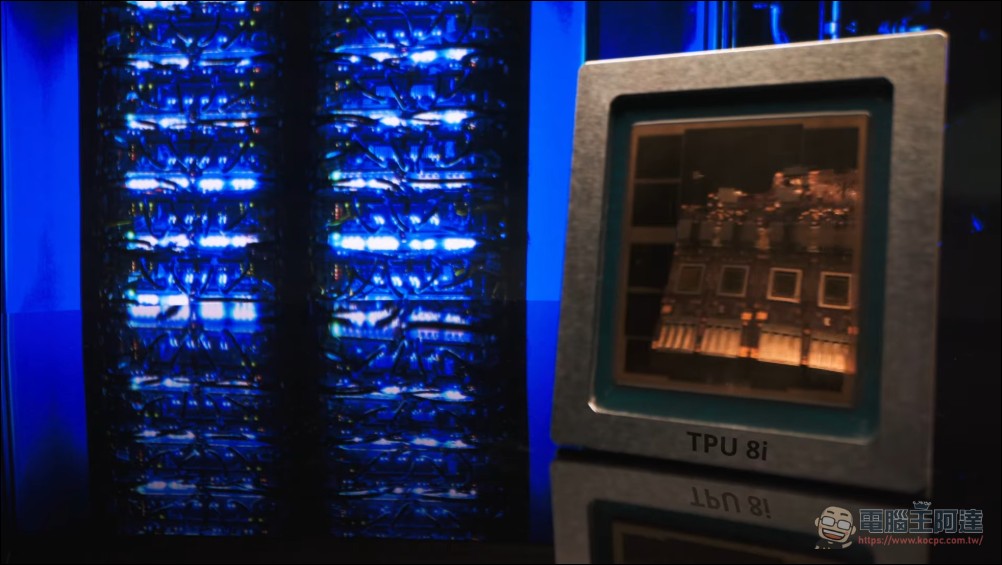
NVIDIA’s leadership succession gap plus OpenAI and Anthropic IPO catalysts put the TPU supply chain in the market spotlight.
In the conclusion of his report, Ming-Chi Kuo notes that a recent series of events will raise and sustain market attention on Google TPU, and that MediaTek and Broadcom, as key design service providers for TPU, will become the two most closely watched companies in the supply chain. From a product portfolio perspective, MediaTek holds design service orders for three generations, v9, v10, and v11, and with its supply share rising year by year, TPU’s contribution to its revenue and profit is expected to expand year by year; Broadcom, meanwhile, relies on 8i to maintain high gross margins, but its medium- to long-term growth momentum will come from non-TPU business.
Ming-Chi Kuo believes that uncertainty over Nvidia’s CEO succession is favorable for Google in negotiations with customers over long-term compute planning beyond 2028; OpenAI and Anthropic are both key TPU customers, and if the two companies proceed with IPO plans, that will continue to raise market attention on TPU, while MediaTek and Broadcom are the two most closely watched suppliers in the market.
Under the landscape depicted in this survey, Google TPU has gradually moved from an in-house chip into the external supply market and, outside the Nvidia-dominated AI training chip market, established another sizable supply chain, also bringing a new long-term growth theme to Taiwan’s IC design industry. On November 16, as Asian stock markets fluctuated and the TAIEX fell more than 722 points at one point in early trading, MediaTek (2454) opened down as much as NT$130 to NT$3,990, barely holding the NT$4,000 mark, but news of Ming-Chi Kuo’s report helped narrow its intraday losses, and the market has begun to price in the long-term TPU theme.
Source: KOCPC Chinese