


On February 15, 2026, Mark Gurman, a well-known technology analyst at Bloomberg, disclosed in his latest Power On newsletter that Apple plans to conduct a large-scale underlying code cleanup in iOS 27, with the goal of significantly improving system performance and battery life. This news is undoubtedly a shot in the arm for users who have long complained about iPhone battery performance. What’s even more exciting is that this optimization will cover all iPhone models, including older devices.
Apple plans to clean up old code in iOS 27
Mark Gurman bluntly described the underlying architecture of iOS as “a bit of a mess under the hood” in the report. These words come from an authoritative analyst who has been tracking Apple’s internal dynamics for a long time, showing that the decline in Apple’s software quality has reached a level that must be faced squarely. Looking back at the development of iOS in recent years, some worrying trends can indeed be observed. Starting with iOS 13, almost every major version release has been accompanied by complaints of various bugs and malfunctions. After system updates, problems such as increased battery consumption, application crashes, and interface lags arise one after another.
Three major technical improvement directions for iOS 27
According to Gurman’s report, Apple’s engineering team will work on improving iOS 27 in three main directions:
1. Remove old code fragments accumulated over the years
This is at the heart of this cleanup. As an operating system that has been developed for more than fifteen years, iOS has accumulated a large amount of “technical debt” left over from history in its code base. Removing these useless code fragments can not only reduce the size of the system, but more importantly, reduce the complexity of system execution and reduce potential errors and conflicts.
2. Fine-tune the interface design without making large-scale changes
Different from the update strategy of launching new design languages in previous years, iOS 27 will focus on “fine-tuning” at the visual level. This means that the familiar Liquid Glass design language will remain, but Apple will optimize and polish the details.
3. Upgrade older applications to improve execution efficiency
Many of the apps built into iOS, such as Mail, Calendar, Notes, etc., some of the underlying code has not been substantially updated for many years. Apple plans to modernize these old applications and adopt newer APIs and frameworks to improve their execution efficiency.
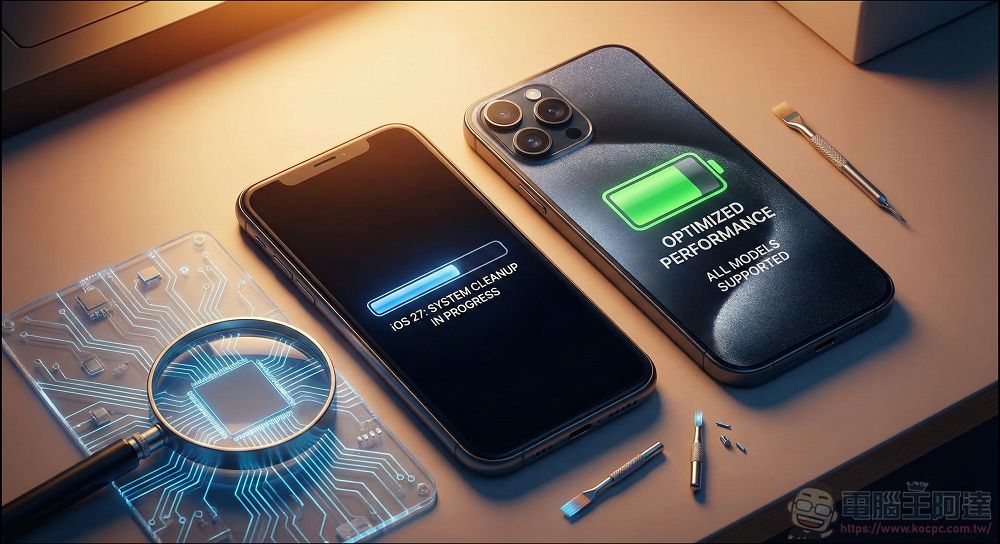
All models benefit, old iPhone users are lucky
The most exciting news about this iOS 27 optimization is that all iPhone models will benefit, including older devices. This is great news for those who don’t plan or can’t upgrade to a new iPhone right away.
From a technical perspective, optimization of the underlying code can indeed benefit all devices. Compared with new functions that often require more powerful hardware support, cleaning up redundant code and improving execution efficiency is an “indiscriminate” optimization, and both new and old machines can benefit from it.
Tesla Complaints: Warning that iOS 26 Updates Are Pushing Too Slowly
While discussing iOS 27, Gurman’s report also mentioned an interesting episode:Tesla has publicly complained about the slow rollout of iOS 26 updates, causing its Maps function updates to fail to cover enough user groups in time. This also highlights a long-standing problem with the iOS update push mechanism. Because Apple adopts a phased push strategy, it often takes weeks or even months for new system versions to be widely available.
AI function upgrades are carried out simultaneously
In addition to performance optimization, iOS 27 will also bring upgrades to AI functions. According to previous reports, some new Siri features promised by Apple at WWDC 2024 will be delayed until iOS 27.
summary
Apple’s announcement of a large-scale code cleanup for iOS 27 is to some extent a “return to the original intention” move. As competition in the smartphone market becomes increasingly fierce, major manufacturers often focus on launching new features and designs, but ignore the most basic quality and stability. Apple chose to stop and sort out technical debt this time, showing a responsible attitude towards long-term development.
From a user perspective, this is undoubtedly good news. After all, for most iPhone users, the basics of smooth system, long-lasting battery, and no lag or crash are more important than any fancy new features.
Source: KOCPC Chinese