


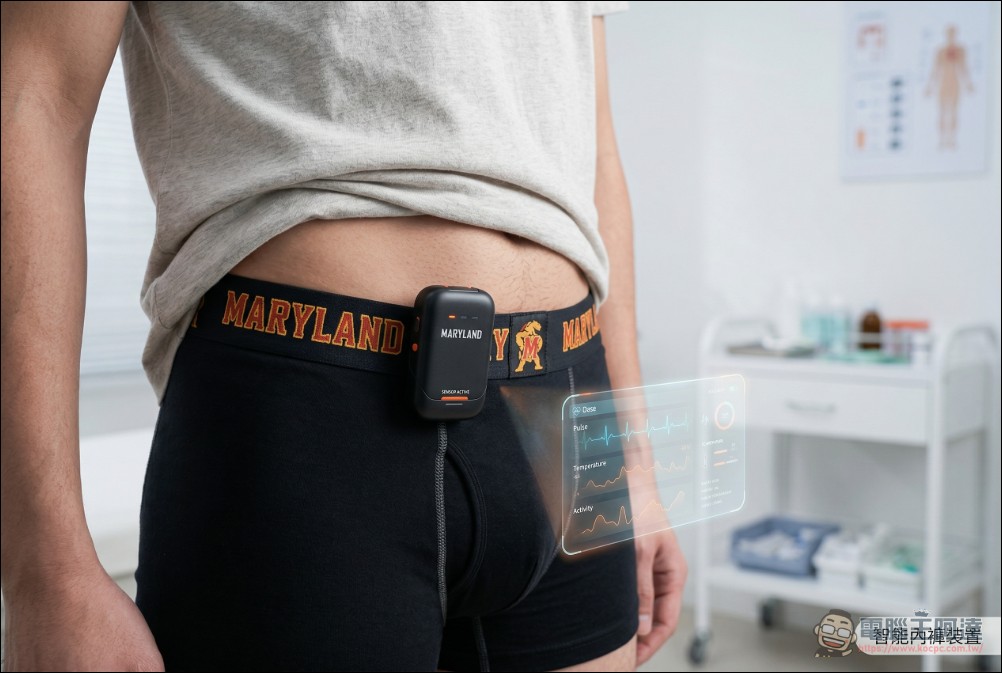
Gastroenterologists have long faced a fundamental dilemma when helping patients with intestinal gas problems. As gastroenterologist Michael Levitt wrote in 2000: “Currently available testing methods make it nearly impossible for physicians to objectively record the presence of excess gas.” To solve this problem, a research team led by Brantley Hall, assistant professor in the Department of Cell Biology and Molecular Genetics at the University of Maryland, developed a tiny wearable device called “Smart Underwear” that easily snaps onto underwear and tracks intestinal gas production around the clock using electrochemical sensors.

Study results: Healthy adults fart on average 32 times a day
The study, published in the journal Biosensors and Bioelectronics: 32 times, a number approximately double the 14 (±6) traditionally reported in the medical literature. Research shows that individual differences are huge, with the number of farts per day ranging from just 4 times to as many as 59 times (some people are particularly fond of farting XD).

Why are old estimates so low?
The research team pointed out that past estimates mainly relied on two methods:
- invasive techniques – Only used in small studies
- self-report – There are problems such as missed events, inaccurate memory, and inability to record while sleeping.
In addition, “visceral sensitivity” also varies from person to person: two people may produce similar amounts of gas but experience very different sensations.
「客觀測量讓我們有機會提高這個長期以來難以研究領域的科學嚴謹性。」— Brantley Hall 教授
How it works: Like a continuous glucose monitor
“Most people’s farts are primarily composed of hydrogen, carbon dioxide and nitrogen. Some people’s farts also contain methane. Since hydrogen is produced entirely by gut microbes, continuously tracking the hydrogen content in farts can directly show when and how gut microbes are actively fermenting dietary substrates.” Professor Brantley Hall said: “Think of it as a continuous glucose monitor, but for intestinal gas.” The device successfully detected the increase in hydrogen production after ingestion of inulin, a prebiotic fiber, with a sensitivity of 94.7%。
Human Flatus Atlas: Establishing the normal range of farts
At present, the medical community has normal range reference values for physiological indicators such as blood sugar and cholesterol, but there is no such benchmark for the number of farts.
“We don’t actually know what normal fart production looks like. Without that benchmark, it’s hard to tell whether someone is actually producing too much gas.”
To fill this gap, Hall Labs is launching “Human Flatus Atlas” project will use Smart Underwear to objectively measure daytime and nighttime farting patterns in hundreds of participants and correlate these patterns with diet and microbiome. Any U.S. resident can sign up remotely and devices will be shipped directly to participants.

Recruiting volunteers: three typical ethnic groups
| type | describe |
|---|---|
| Zen Digesters | People who eat a high-fiber diet (25-38 grams of fiber) every day but rarely fart. These individuals may hold key clues to understanding the adaptation of gut microbes to a high-fiber diet. |
| High Hydrogen Producer | To put it simply, someone who farts a lot. Studying these people may reveal what causes excess gas production. |
| ordinary people | People who fall in between the two categories above. |
The research team will collect stool samples from “Zen Digesters” and “Hydrogen High Producers” for microbiome analysis.
Research significance
“We already know a lot about the microbes that live in the gut, but very little about what they are actually doing at any given moment. The Human Flatus Atlas will establish an objective benchmark for gut microbial fermentation, which will be critical for evaluating how diet, probiotics, or prebiotic interventions change microbiome activity.” Do you think the team and project studying “fart” in this way are interesting? Friends who live locally and are interested can sign up to participate.
Source: KOCPC Chinese