


Ammaar Reshi, head of product and design at Google AI Studio, recently publicly demonstrated an open-source project called “WindowsiOS,” claiming that he has made a complete Windows 11 24H2 desktop system run natively on the Apple foldable iPhone Duo, all without jailbreaking. In a post on X (Twitter), he said the entire bring-up process was assisted by Google’s latest Gemini 4 Carbon model, and included a hands-on video and a GitHub code repository.
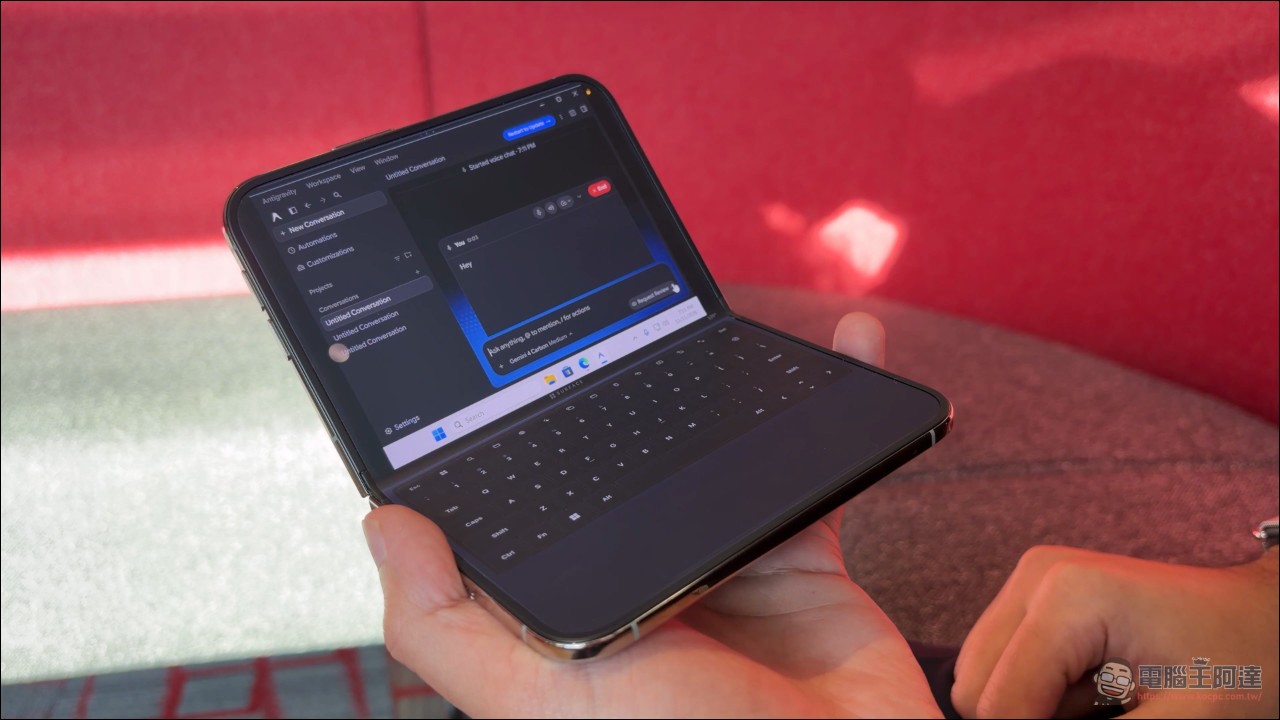
WindowsiOS project itself: a complete Windows experience on non-jailbroken iPhone
According to the description of the WindowsiOS repository on GitHub, this system runs the complete Microsoft Windows 11 24H2 ARM64 (Build 26100) at near-native speed on modern non-jailbroken iOS devices. The project was verified end-to-end on the iPhone Duo (model iPhone19,4, Apple A20 Pro chip, iOS 27), without using Apple’s Hypervisor.framework at any point.
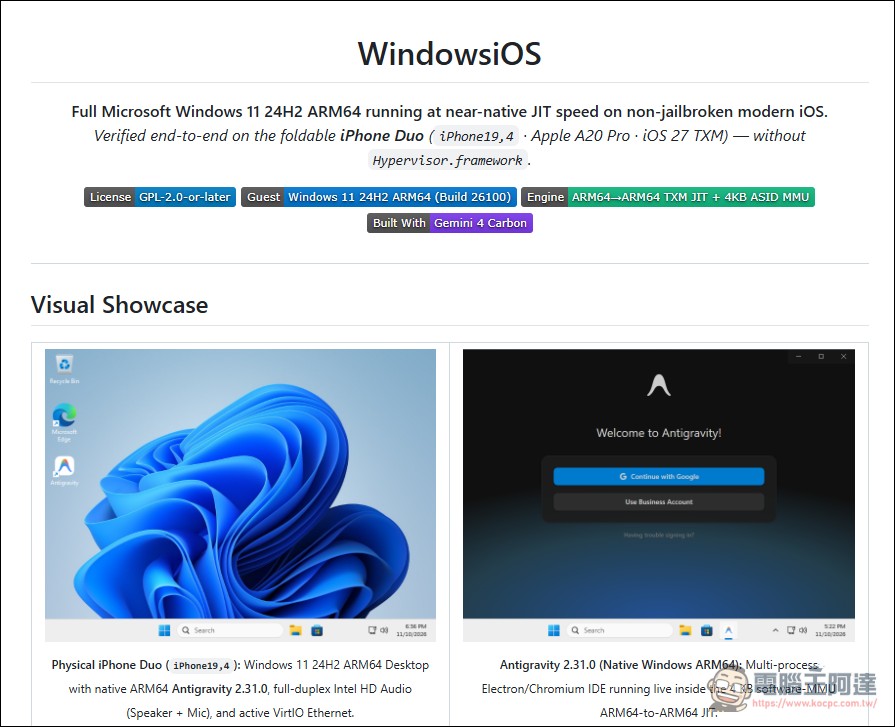
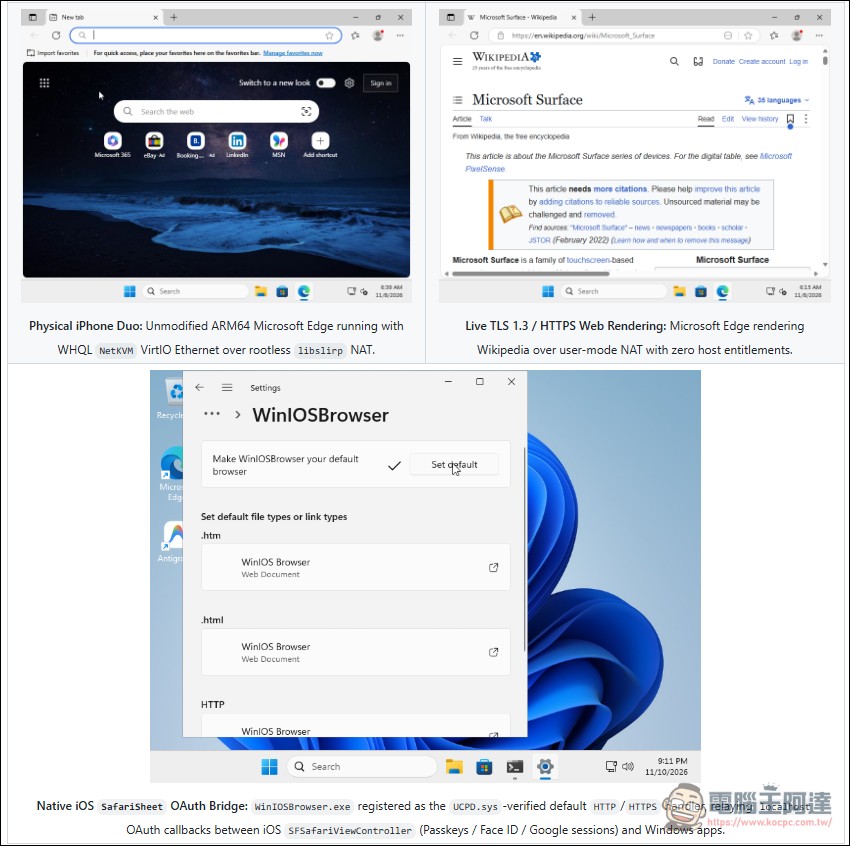
In the screen demonstrated in the repository, Microsoft Edge can load live HTTPS web pages, Antigravity 2.31.0 runs in the system as a native ARM64 application, and legacy x86-64 programs run through the Prism emulation layer built into Windows 11. The audio supports full-duplex speakers and microphone, networking connects via a VirtIO Ethernet adapter, and display output is presented at a 120Hz refresh rate.
Core technology: adopts a binary translation architecture.
WindowsiOS is not a hardware virtualization client in the traditional sense. Its engine dynamically translates Windows ARM64 code into ARM64 instructions that an iPhone can execute, along with a software memory management unit (MMU). This approach is necessary because, starting with iOS 16.4, Apple restricted the hardware EL2 virtualization capabilities of Hypervisor.framework on regular iOS devices, preventing virtual machines such as UTM HV, which previously relied on this framework, from running on non-jailbroken iPhones.
The project builds on multiple open-source projects, including Henge, which previously ran macOS on iPhone; Husk, an ARM64 binary translation framework; StikDebug/StikJIT, which provides iOS debugger attach capabilities; and libslirp, the TianoCore EDK2 firmware, and Red Hat’s virtio-win drivers. The developer does not claim the entire stack is completely original.
Windows 11 has stricter requirements for the underlying environment than the earlier iPhone emulation work. Windows requires 4KB memory pages, whereas Henge originally targeted a macOS client with 16KB pages; Windows also places process address space identifiers (ASIDs) differently from Linux and macOS; in addition, Prism uses unaligned memory-ordering instructions that the iPhone host originally produced errors on, so the engine has to handle them with software assistance. Windows refuses to boot via device tree, so the project must provide a complete PC-class platform: UEFI, ACPI, NVMe, USB 3.0 xHCI, Intel HD Audio, and VirtIO networking.
Interaction design for foldable devices
WindowsiOS adapts its layout to the iPhone Duo’s hinge. When folded like a laptop, the top screen shows the Windows desktop and the bottom screen becomes a keyboard and trackpad; when unfolded, it switches to full-screen mode. When signing in to Antigravity with a Google account, the system uses a small helper program called WinIOSBrowser.exe to hand off the sign-in flow to iOS’s Safari sign-in form, so it can reuse the existing Safari sign-in state, Passkey, and Face ID, and can also switch to signing in with Edge within the app.
I used Gemini 4 Carbon to get Windows 11 running on my iPhone Duo! 💻 Unfold the screen and it’s a pocket PC, including Antigravity running coding agents on my phone. This is the actual desktop ARM OS running locally with touch controls. Demo + repo below! https://t.co/LVdeqvvOU1
— Ammaar Reshi (@ammaar) November 11, 2026
Compared with emulators that previously had to be obtained through the App Store or sideloaded, the biggest difference with this approach comes down to speed. The WindowsiOS description notes that emulators such as UTM SE, which fall back to the QEMU TCG interpreter (TCI), take tens of minutes to reach the Windows 11 desktop in interpreted mode and cannot smoothly run multiprocess Chromium/Electron-based software such as Microsoft Edge or Antigravity, whereas WindowsiOS has none of these problems.
Project Status and Authorization
As of the time of reporting, the WindowsiOS repository had only six commits, the first on November 8 and the most recent on November 11, which added a one-click launcher for Microsoft Paint. The code is licensed under GPL-2.0-or-later, but Windows itself is not distributed with the project; users must provide their own retail installation media, so Microsoft’s normal licensing still applies to that installation. The developer also noted in the repository that the entire bring-up was completed using the Gemini 4 Carbon model.
WindowsiOS – GitHub
Conclusion
WindowsiOS is a technically complete and well-documented showcase backed by solid engineering effort. It demonstrates how many Windows platform components can be emulated on a phone chip, including UEFI, ACPI, Prism, and Chromium-based applications. For ordinary users, however, it remains a developer’s toy for now and is still some distance from becoming a pocket computer anyone can use. Its reliance on debuggers and TXM-specific behavior also means that if Apple changes the system in the future, this approach could be shut down at any time.
Source: KOCPC Chinese