


YouTube recently announced several major updates, revealing the platform’s future plans for content creation and viewing experience. Among the most notable news is a series of brand-new features showcased at its annual creator event “Made on YouTube.” From video testing tools to AI-assisted creation, and to adjustments to the homepage recommendation system, all indicate that YouTube is trying to redefine the experience for creators and viewers.
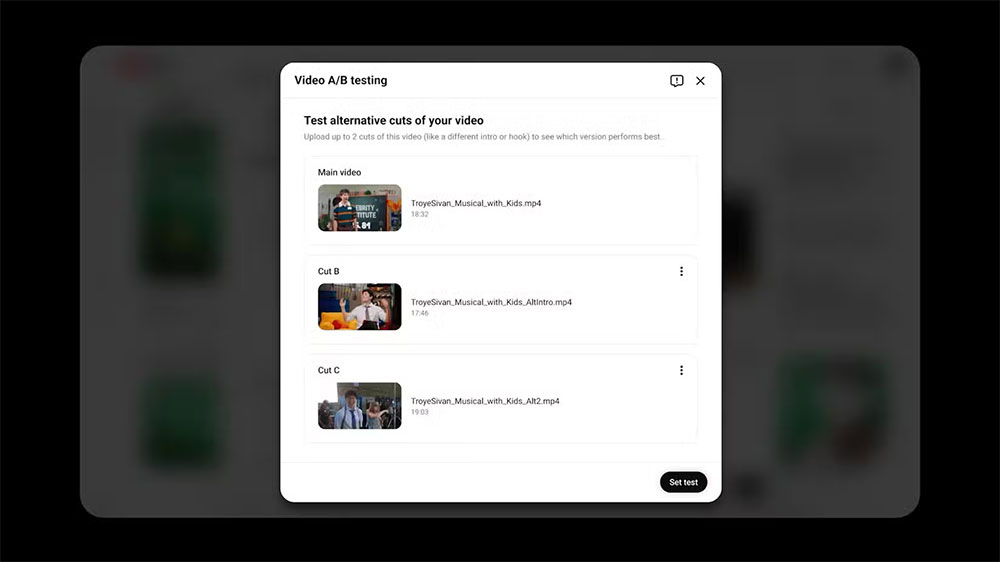
YouTube’s biggest creator feature upgrade to date brings a new way to A/B test video edits.
Previously, YouTube introduced A/B testing for thumbnails and titles, allowing creators to upload three different sets of thumbnails and titles at once and use data analysis to identify the combination that best attracts viewer clicks. Now, this testing mechanism has been extended further to the video content itself, giving creators greater creative flexibility.
In the future, creators will be able to produce different edited versions of the same video and test each version’s actual performance through the platform. Whether it is different pacing in editing, different opening designs, or even completely different narrative structures, they will have the opportunity to use data to verify which one resonates most with viewers. Although YouTube has not yet announced complete operational details, it is foreseeable that this feature will allow creators to better understand audience preferences and optimize content quality before officially publishing.
In addition to video version testing, YouTube is also integrating AI technology more deeply into YouTube Studio. The platform’s newly launched smart feedback feature can provide personalized suggestions on a video’s pacing, narrative structure, and content arrangement, helping creators identify potential issues and suggest directions for improvement. Feedback that previously required team discussions or professional consultants may in the future be quickly generated through AI, further lowering the barrier to content optimization.

By combining AI analysis with multi-version testing mechanisms, creators can not only quickly generate different edited versions, but also validate content performance through actual data. For creators hoping to increase views, boost engagement rates, or even pursue higher content quality, these new tools are undoubtedly highly appealing. Large channels and professional creative teams, in particular, are more likely to use these features to build more precise content strategies.
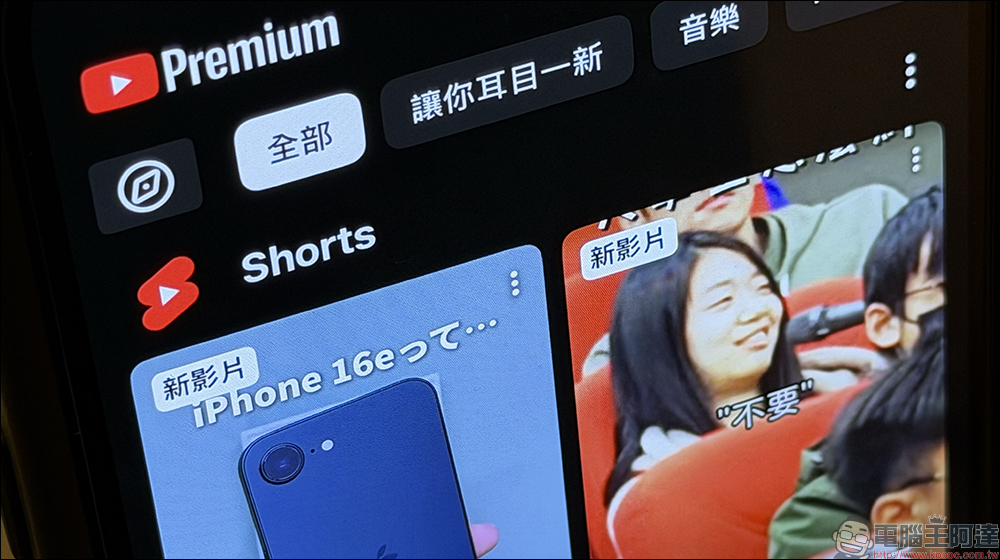
On the other hand, YouTube also announced that it will allow users to customize their homepage content. Although this update is not as buzzworthy as the AI features, for many long-time users it may be the change that is truly worth looking forward to. In recent years, although YouTube’s recommendation algorithm has continued to evolve, many users have encountered inaccurate recommendations. Sometimes, just because of one curious click, the homepage becomes flooded with a large number of similar videos, drowning out the content they are actually interested in. Many people, even if they have subscribed to numerous quality channels, still find it difficult to discover new content on the homepage that matches their interests.
What is even more regrettable is that many creators, in order to cater to algorithms and traffic rules, gradually adopt similar content packaging and production patterns. When a large number of videos have similar titles, thumbnails, and content structures, the platform may be lively, but it also makes the viewing experience increasingly monotonous. Viewers spend a lot of time scrolling through pages, yet often cannot see what they really want to watch, and may even use the platform less frequently as a result.
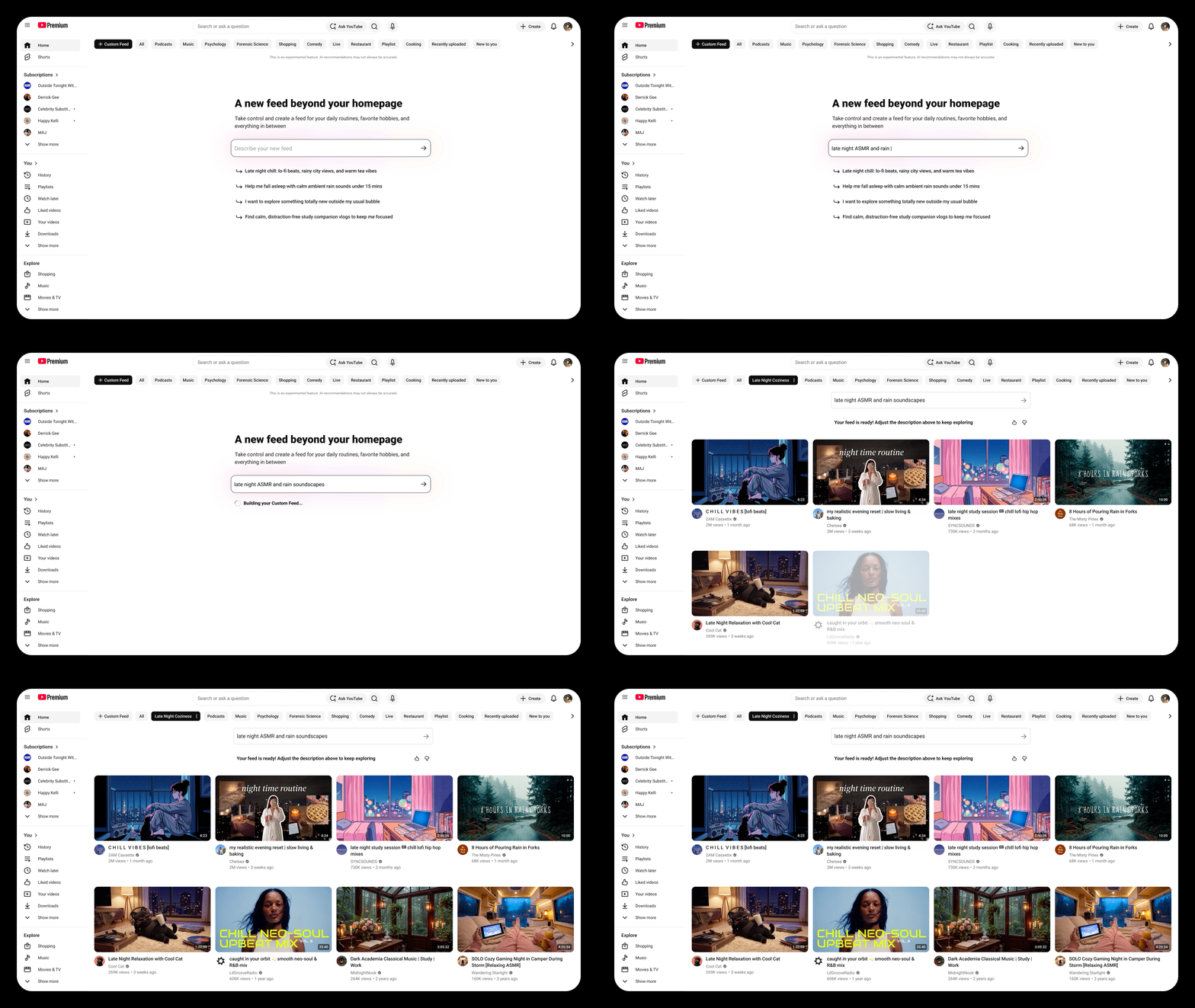
Therefore, the emergence of homepage customization may allow users to regain control over content. Through recommendation mechanisms better suited to individual needs, viewers have the chance to rediscover creators and diverse content they are interested in, rather than relying entirely on algorithmic judgment. If this feature can be successfully implemented, it may become an important opportunity for users who have gradually drifted away from YouTube or become disappointed with the current recommendation system to return to the platform.
Source: KOCPC Chinese