


At the 2026 Apple Fall Event, APPLE unveiled six major new products at once and discontinued six previous-generation products, among which the highly anticipated iPhone Duo is APPLE’s first foldable phone.
What is the difference between the price of the new product and the previous generation? What are the features of the new iPhone? Here is a summary and explanation: 51468
At its 2026 fall event in the early hours of September 10, Apple unveiled a slate of new products including iPhone Duo, iPhone 18 Pro, iPhone 18 Pro Max, AirPods 5, Apple Watch Series 12, and Apple Watch Ultra 4, and discontinued six products: iPhone 17 Pro, iPhone 17 Pro Max, iPhone 16 Plus, Apple Watch Series 11, Apple Watch Ultra 3, and AirPods 4. Below is a summary video and detailed explanation of the guide to the features and pricing of Apple’s 2026 new iPhone lineup:
1. Suggested retail price:
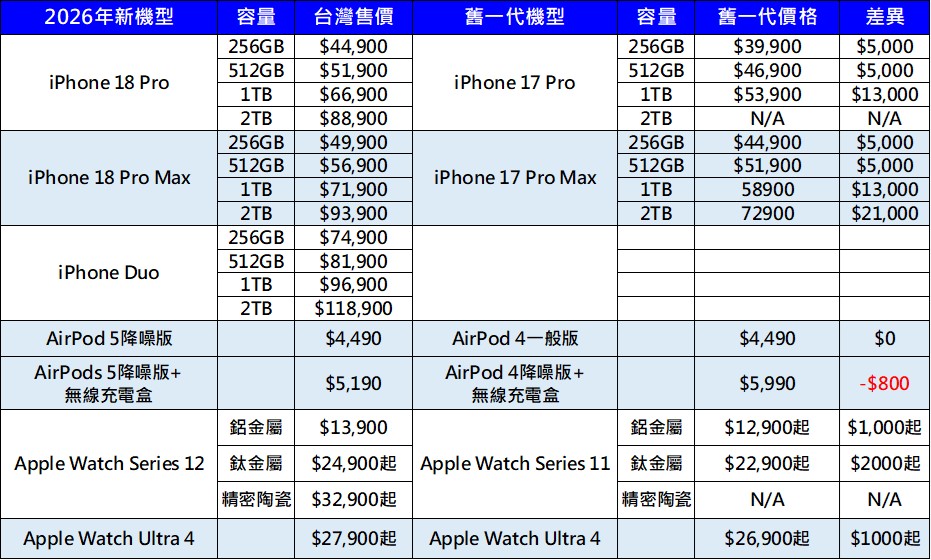
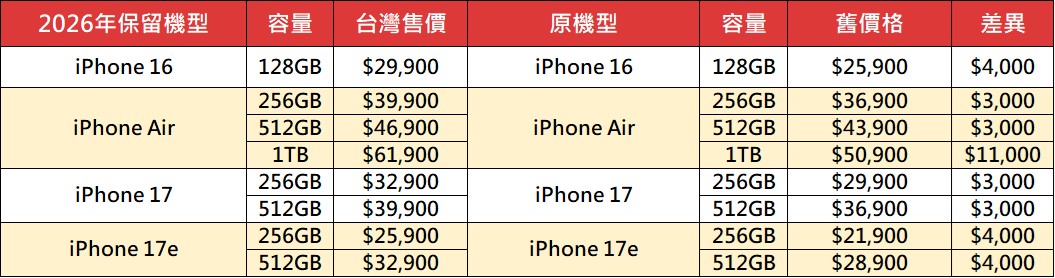
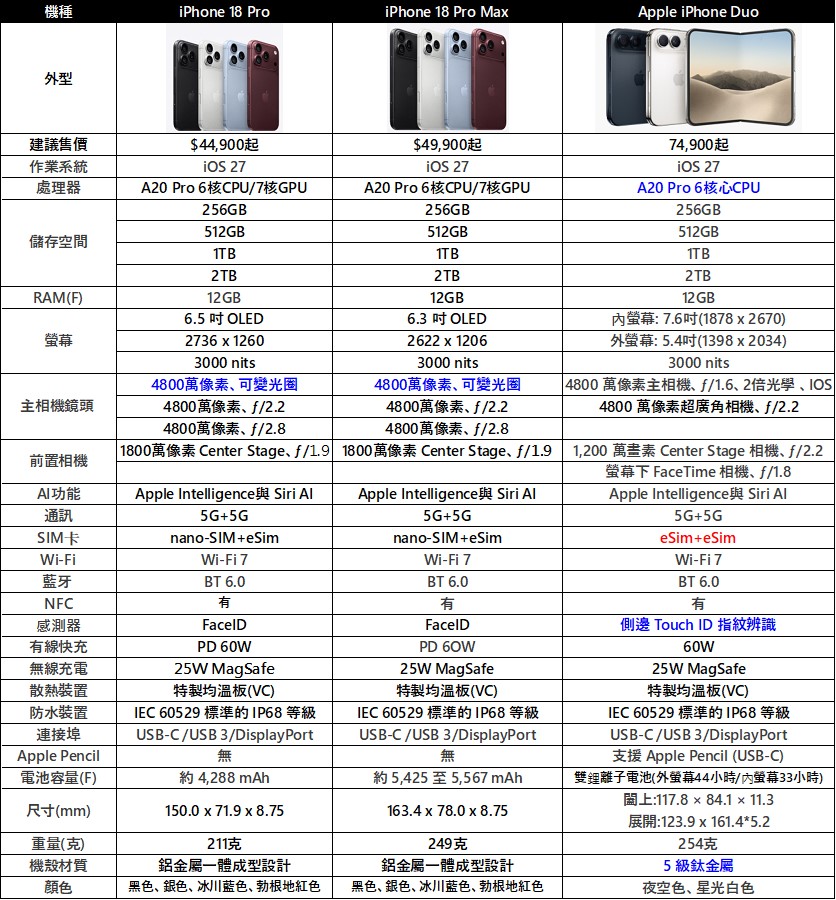
Due to soaring memory prices and rising prices for various components, new 2026 iPhone models will cost $5000–$13000 more than the previous generation, while retained models will increase by $3000–$11000. The first foldable phone to launch, the iPhone Duo, The entry-level 256GB model starts at 74,900 yuan, while the 2TB version costs as much as $118,900 yuan—already comparable to the price of a high-end laptop.
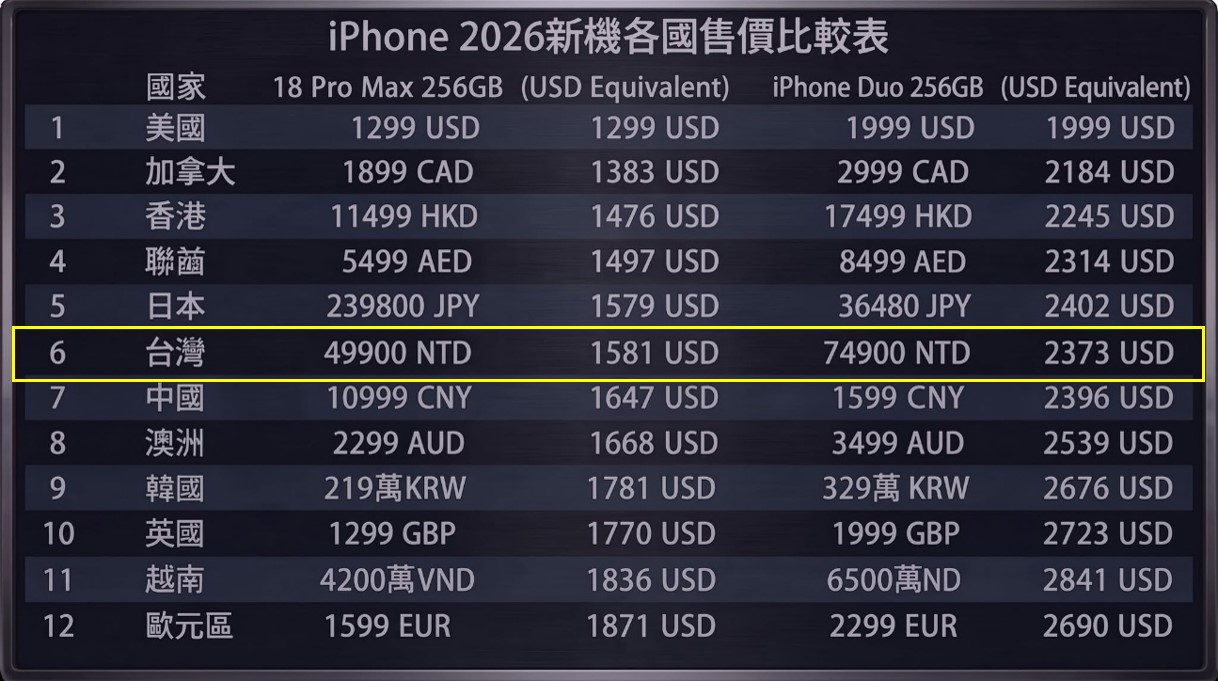
Due to exchange-rate fluctuations against the US dollar and their relationship with local sales tax rates in various countries, the recommended retail prices of the iPhone 18 Pro Max and the entry-level iPhone Duo vary, and Taiwan’s price is now quite close to Japan’s.
The AirPod 5 series will either stay at the original price or drop by $800; the Apple Watch 12 series will rise by $1,000–$2,000; the Apple Watch Ultra 4 will rise by $1,000, breaking the iron rule that older-generation phones usually drop in price!
2. New Product Specifications and Features:
A. iPhone Duo:
This article“)。
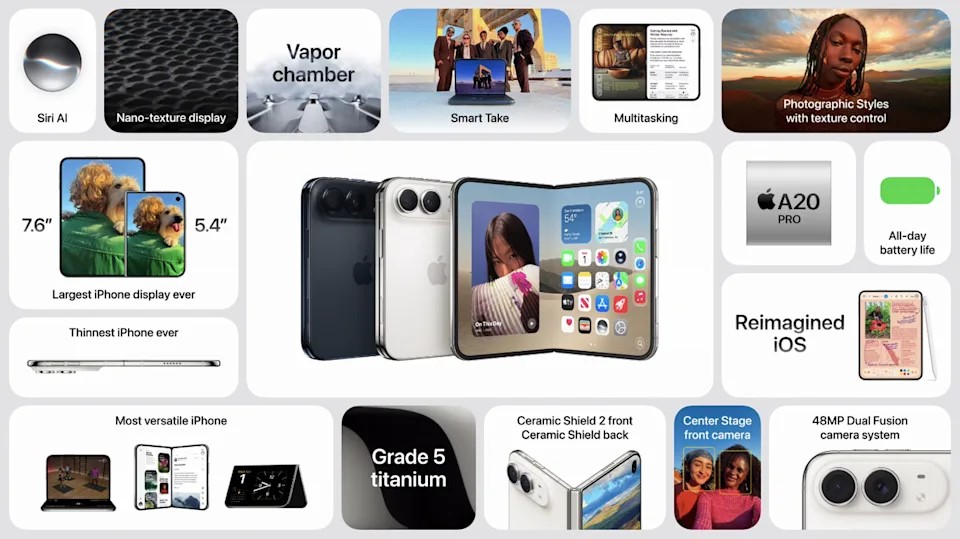
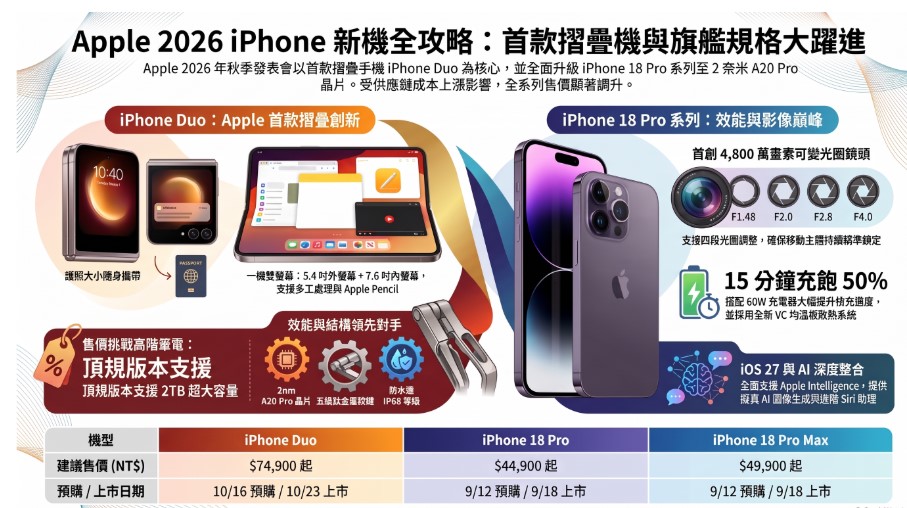
Pre-orders for iPhone Duo open at 8 p.m. Taiwan time on October 16, and it goes on sale on October 23, with a suggested retail price starting at NT$74,900.

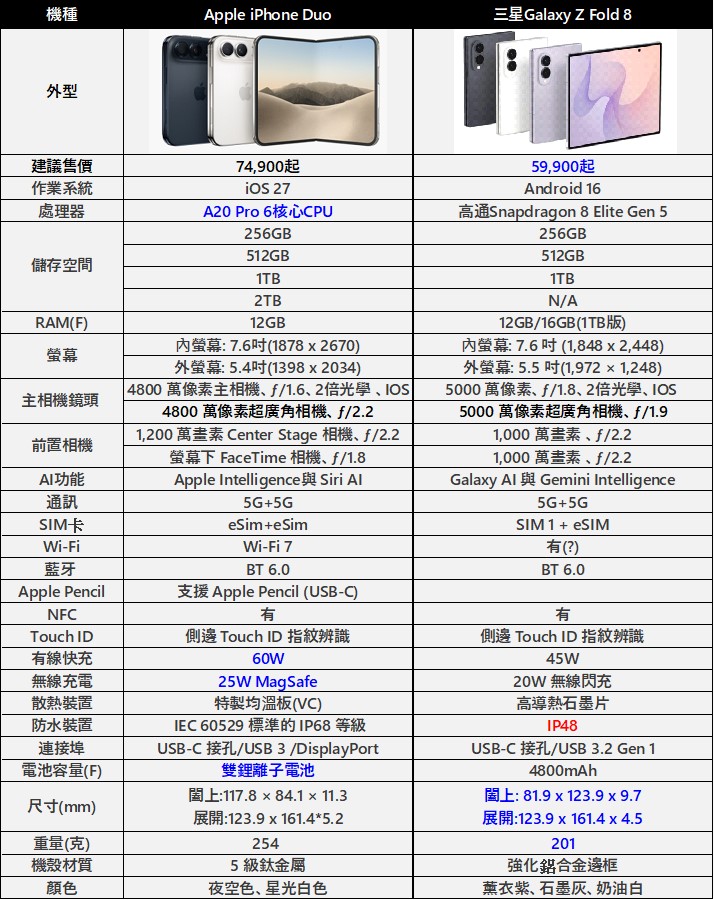
APPLE iPhone Duo vs. Samsung Galaxy Z Fold 8:
a. Size and weight comparison (Samsung wins):
When folded, the iPhone DUO is more elongated and heavier (254 g), like a passport, and when unfolded it is slightly thicker (5.2 mm). The Samsung Z Fold 8 is more squarish (4:3), making it suitable as a simple tablet for reading e-books, and it is lighter (201 g); when unfolded, it is slightly thinner (4.5 mm).
b. Price comparison (Samsung wins):
The iPhone Duo 256GB has a Taiwan suggested retail price starting at $74,900, while the Samsung Z Fold 8 256G has a Taiwan suggested retail price starting at $59,900. Both have a U.S. suggested retail price of only US$1,000, but in Taiwan the exchange-rate conversion price gap is as high as $15,000!
c. Camera specs: dual-camera layouts each have their pros and cons:
The Z Fold8 has a slight edge in main camera megapixels (50MP) and maximum video recording specifications (8K/30fps), while the iPhone Duo is stronger in optical image stabilization (sensor-shift OIS) and HDR video formats.
d.Next-generation flagship chip showdown:
The iPhone Duo uses an A20 Pro chip built on TSMC’s 2nm process, with the entire lineup featuring 12GB of RAM and ROM storage up to 2TB; the Z Fold8, meanwhile, is equipped with Qualcomm’s Snapdragon 8 Elite Gen 5 processor built on TSMC’s third-generation 3nm (N3P) process, offering 12GB/16GB RAM options and ROM storage up to 1TB, giving the iPhone DUO a slight edge in performance;
For charging and battery, the iPhone Duo uses a dual-battery system, with up to 31 hours of video playback on the inner screen and up to 44 hours on the outer screen, and supports 25W MagSafe/Qi2 wireless charging; the Z Fold8 has a 4800mAh battery capacity, offers up to 26 hours of video playback, and supports 45W wired fast charging and 20W wireless charging. The iPhone Duo has a slight edge in performance.
e. Body structure and durability: Titanium hinges are standard, water resistance ratings vary.
iPhone Duo uses Grade 5 Titanium for its chassis and hinge, with Ceramic Shield 2 glass on the front and a nano-texture coating to reduce reflections; its water and dust resistance rating is IP68. The Z Fold8, by contrast, uses what Samsung calls a “Flex Titanium” display structure paired with a titanium midframe, and its dust and water resistance is only IP48. Samsung entered the foldable phone market earlier and has more mature related experience. Whether Apple’s screen-folding technology has come from behind to overtake Samsung remains debatable, but it is ahead in water and dust resistance guarantees!
B. iPhone 18 Pro and iPhone 18 Pro Max:
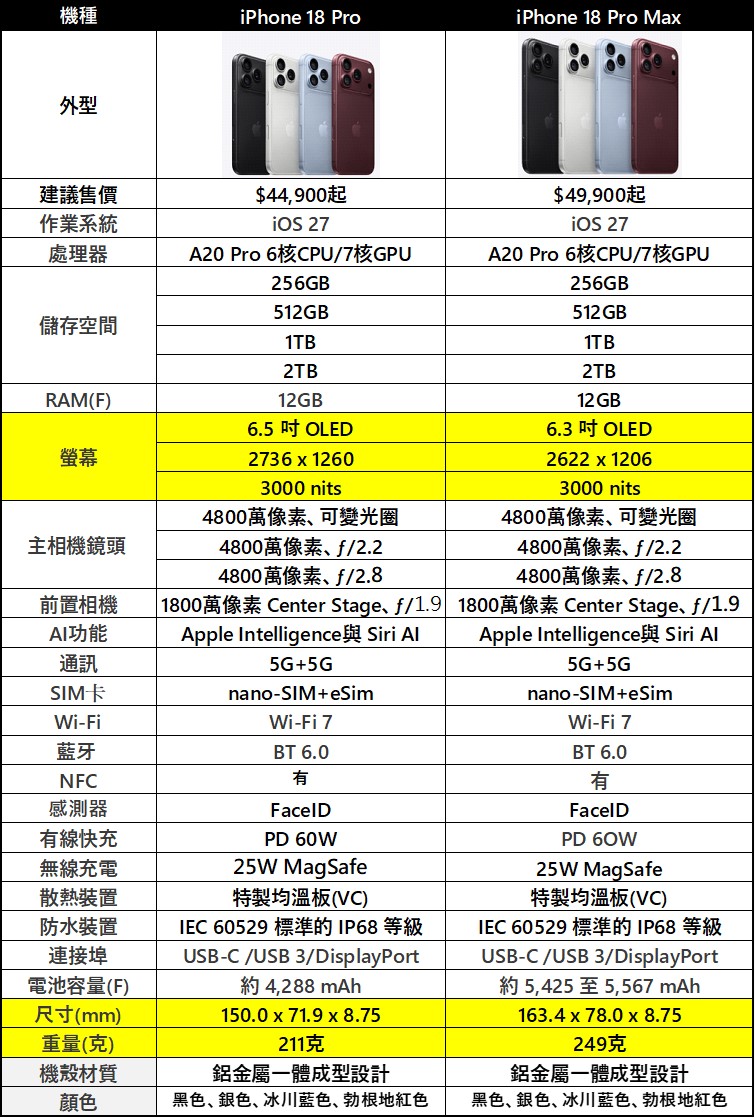
Apple has launched the new iPhone 18 Pro and iPhone 18 Pro Max, with the main differences between the two being screen size and battery capacity. The suggested retail prices in Taiwan for the iPhone 18 Pro and iPhone 18 Pro Max start at NT$44,900 and NT$49,900, respectively. Pre-orders open at 8 p.m. on 9/12, and the models are expected to go on sale on 9/18.
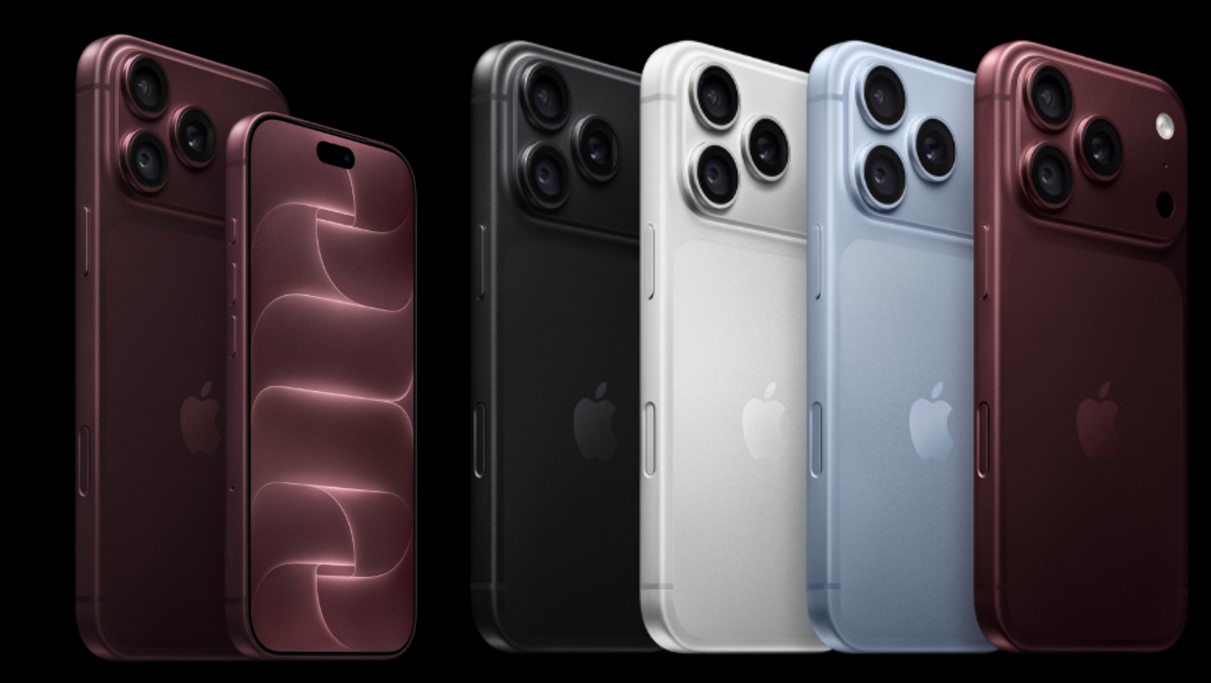
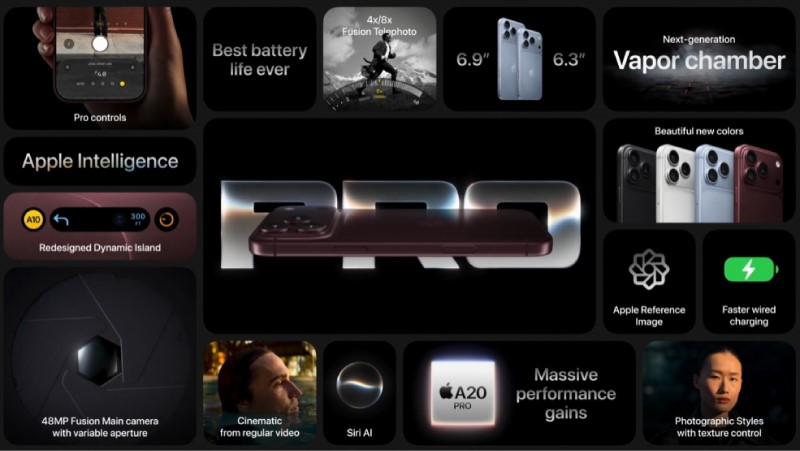
The major hardware upgrades for the iPhone 18 Pro series mainly include debuting a 2nm A20 Pro chip, adding a variable aperture camera design, a more compact Dynamic Island, an all-new cooling architecture, and iOS 27 among other upgrades, while significantly improving computing performance and fully supporting the advanced Siri AI assistant.
a. A20 Pro chip and vapor chamber cooling:
The world’s first smartphone chip built on TSMC’s 2nm process, featuring a 6-core CPU (2 super cores and 4 efficiency cores), a 7-core GPU, and dual 16-core neural network engines; paired with a new vapor chamber (VC) cooling system, sustained performance can be improved by up to 40%.
b. 48MP variable-aperture main camera:
The 48MP Fusion main camera introduces a variable aperture design for the first time, supporting four aperture settings—F1.48, F1.8, F2.8, and F4.0—and features smart focus tracking to keep moving subjects locked in focus.
c. Smaller Dynamic Island and 3000nits screen:
The Dynamic Island is significantly smaller and can display up to three Live Activities at once; the Retina XDR OLED display’s outdoor peak brightness has been increased to 3000 nits.
d. Battery and fast-charging speeds have been significantly upgraded:
When paired with a 60W or higher charger, it can charge to 50% in 15 minutes.
e. Comprehensive upgrade of lens specifications:
The front camera has been upgraded to 18 megapixels; the telephoto camera has been upgraded to a 48-megapixel Fusion Telephoto, offering 4x and 8x optical zoom options; the ultra-wide camera also maintains its 48-megapixel specification.
f.iOS 27, Apple Intelligence new features:
The iPhone 18 Pro series fully supports Apple Intelligence, and users can further refine their work through the Photos app’s Spatial Reframe, Extend, and upgraded Clean Up features; Image Playground can generate more realistic AI image content; Safari’s new Notify Me feature can track webpage content updates, helping users stay on top of important information in real time; Apple Intelligence uses a dual architecture of on-device processing and Private Cloud Compute to deliver powerful AI capabilities while continuing to protect user privacy; iOS 27 also comprehensively improves system responsiveness, stability, and ease of use, and brings more Liquid Glass personalization options, while adding more comprehensive family management tools to help parents flexibly manage the content their children can access, the people they can contact, and their device usage time.
Below is a comparison table of the features and prices for three new models: iPhone 18 Pro, iPhone 18 Pro Max, and iPhone Duo:
Source: KOCPC Chinese