


Gotta admit, GPT-6 Astra is truly impressive, not just helpingPlayers Solve Performance Bottleneck in Age of Empires IV Mac VersionEven playing through an entire game autonomously is no problem. Recently, developer CozyBlaze conducted an interesting experiment: he had GPT-6 Astra autonomously play Valve’s classic puzzle game Portal. The AI observed the screen, controlled the character, and solved each level on its own. Unexpectedly, it managed to clear the entire game, and the whole challenge took about 23 hours and 43 minutes.
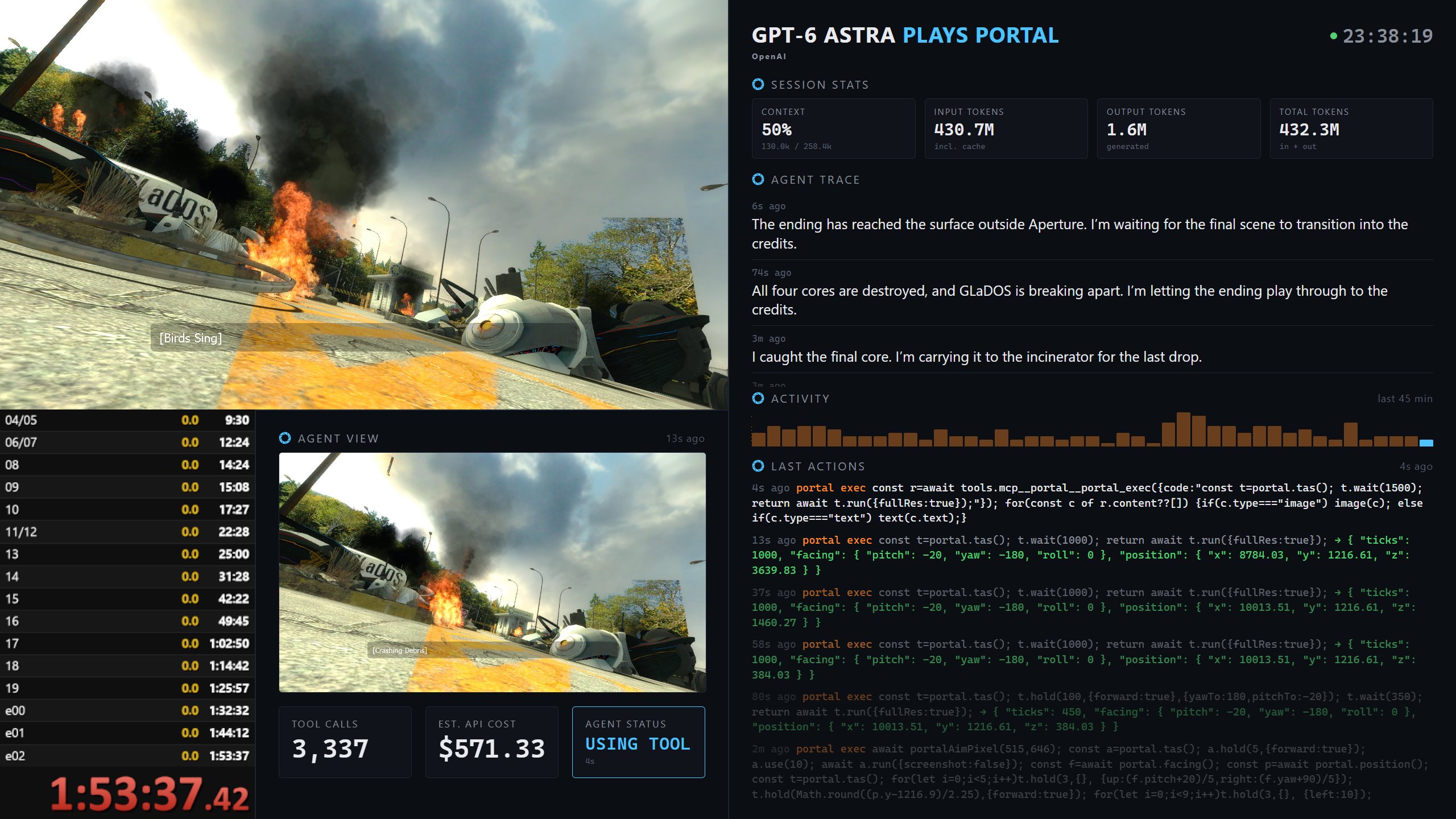
GPT-6 Astra autonomously beats Portal: reaches the ending in under 24 hours, but the game pauses while the AI thinks.
Portal is a single-player 3D puzzle game released by Valve in 2007. The portal gun in the player’s hands can create entry and exit portals on specific wall surfaces, requiring players not only to find the correct positions but also to utilize fall speed, spatial orientation, and environmental mechanisms to reach platforms that were previously out of reach.
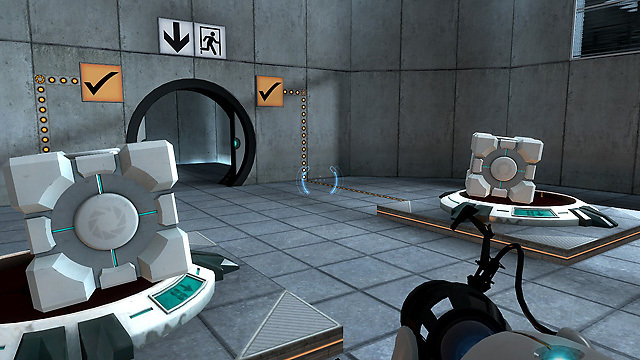
Image source: Steam
According to the Portal Agent project publicly released by CozyBlaze, this test started at 5:00 PM on September 4, 2026, San Francisco time, and reached the end credits at 4:43 PM the following day, completing in approximately 23 hours and 43 minutes. It was run using `gpt-6-astra` with the highest reasoning intensity. However, the session was interrupted due to service capacity issues, and after resuming, it was switched to Fast mode.
CozyBlaze said that initially he only told GPT-6 Astra to complete the goal of “Portal,” without providing any walkthroughs, puzzle hints, or controlling the character on its behalf. Only after the game ended did he add an instruction to let the credits keep playing. In addition, the public notes mentioned that web search and general Shell/browser tools were disabled, so the AI could only explore and operate on its own, making it quite challenging.
The real key to completing this challenge smoothly was a “pause, think, execute” control method. CozyBlaze used MCP to connect Codex/GPT-6 Astra to a local controller, and a modified version of SourcePauseTool then sent commands into Portal. The representative said that at the start of each round, the model receives a game screenshot, the character’s coordinates, and the camera angle, then decides how much to turn the view, how long to hold the direction keys, and when to jump, crouch, pick up objects, or fire portals.
Only after the AI has planned out a sequence of actions does the game unpause and operate normally according to the instructions for a few seconds. When the actions are finished, the game pauses again and sends the latest frame back to the model. As a result, the process involves a continuous cycle of thinking, pausing, and resuming the game.
When people play a game, they can tell where their character is just by looking at the screen. But Astra is different. In addition to screenshots, it also needs to read the character’s exact position and viewing direction, which is a large amount of data. Automatically returned screenshots are scaled down to 360 pixels in height. Each action plan contains up to 1,000 steps and covers about 99 seconds of gameplay. Moreover, the AI does not press keys frame by frame. Instead, it writes an action plan first, has the character actually run through it, and then checks the results.
In the end, the entire process involved a total of 3,336 tool calls, meaning Astra didn’t breeze through with just a few dozen operations—it spent nearly a full day continuously observing, planning, executing, and then revising its next steps based on the results. The final reported cumulative usage was approximately 434.8 million tokens, of which over 426.4 million were cached input.
Calculated based on API usage, the equivalent cost of the entire test was about $571.18. However, CozyBlaze later clarified that he didn’t actually pay an additional $571 for this gaming session—the usage was covered by his monthly $200 Codex Pro subscription.
CozyBlaze has made the controller, SourcePauseTool modifications, test settings, and cleaned session logs public at GitHubAnyone interested can take a look, and can even follow the tutorial to try to reproduce it on Windows.
Source: KOCPC Chinese