


On September 1, Tesla published an engineering blog post detailing how its design philosophy—from battery cells to modules to the entire pack—ensures the safety, durability, and lifespan of its electric vehicle batteries. The post revealed a striking statistic: across more than 265 billion miles of cumulative driving as of the end of 2025, Tesla claims it has not found a single case of a vehicle fire caused by spontaneous battery failure, covering the Model 3, Model Y, Cybertruck, and Semi.
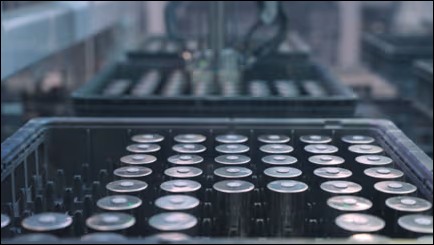
265 billion miles of safety record
In an article titled “Engineering Tesla Vehicle Batteries for Safety, Durability and Longevity,” Tesla directly states: “Based on over 265 billion miles of operational data through the end of 2025, we have no evidence of any single vehicle fire caused by spontaneous battery failure in the Model 3, Model Y, Cybertruck, or Semi.” Tesla also emphasizes that this record is no accident—from cell chemistry formulation, battery pack architecture, and thermal management to remote monitoring, every layer of design serves this goal.
This safety data excludes Model S and Model X. Tesla ended S/X production earlier this year, and the four new-generation models use newer cell chemistry and battery pack structure designs. In other words, this safety record reflects the real performance of Tesla’s next-generation platform.
The keyword is “spontaneous.” Tesla isn’t claiming that no Tesla vehicle has ever caught fire—high-speed collisions, road debris punctures, and post-crash fires are a different matter, and NHTSA data in the U.S. tracks incidents in those categories as well. Tesla’s claim is that the battery pack will not spontaneously catch fire on its own during normal use or charging. Compared with the overall vehicle fire rate in the U.S. (roughly one fire per 19 million miles across all fuel types), 265 billion miles without a spontaneous battery fire is a rather remarkable engineering statistic.
Passive transmission resistance: Tesla’s multi-layered safety philosophy
The article details Tesla’s design philosophy called “Passive Propagation Resistance” (PPR). The goal of this approach is that even if a single cell fails and triggers thermal runaway, the reaction is contained within that cell, preventing it from spreading to adjacent cells and certainly not triggering a chain event across the entire battery pack. PPR works by focusing on material selection, cell spacing layers, and thermal isolation structures to physically block heat diffusion at the structural level, rather than relying on active fire suppression or warning systems.
This multi-layered protection is interconnected across cell design, module structure, and the thermal management system of the entire battery pack. Tesla’s battery packs use active thermal management, with liquid cooling channels continuously maintaining each cell within an optimal temperature range, balancing performance and lifespan. In the structural design of the 4680 cells, the cells themselves also play a structural reinforcement role, helping to disperse forces during a collision and reduce impact on the cell bodies.
The vehicle’s fleet telemetry system continuously sends back anonymous data on battery health, temperature, charge cycles, and performance. This system allows Tesla’s engineering team to detect potential anomalies before problems occur, and to adjust battery management strategies through OTA updates. This data, in turn, feeds back into the engineering design of next-generation batteries.
Dual-Track Chemical Formulation Strategy: NMC and LFP
Tesla’s battery strategy maintains a dual-track approach: using high-nickel NMC cathode materials in 4680 cells and long-range models to pursue energy density, and using lithium iron phosphate (LFP) in standard-range models for better durability and cost efficiency. LFP batteries don’t require nickel or cobalt, have lower raw material costs and longer cycle life, but their energy output is limited in low-temperature environments. If owners have LFP batteries (most standard Model 3 and Model Y), Tesla recommends charging to 100% at least once a week to maintain accurate state-of-charge estimates; meanwhile, 4680 or NMC batteries (Long Range, Performance, Cybertruck, Semi) follow the classic principle of charging to 80% daily and 100% only for long trips.
Practical advice for car owners
The practical value of this safety and lifespan article for existing car owners can be summarized into the following practical principles:
- Trust thermal management systemTesla’s battery preheating is automatically activated when you navigate to a Supercharger station. If owners frequently charge without setting a destination, they’re essentially skipping the preheating cycle that keeps the battery cells within their optimal temperature range. Even if you know the route well, it’s recommended to set the Supercharger as your destination in the vehicle’s navigation system.
- No need to turn off Sentinel Mode.Some owners turn off Sentry Mode to save power, but Tesla’s battery architecture is designed to support continuous low-load power supply. If you’re concerned about battery consumption, you can set your “Home” and “Work” locations as exclusions in settings instead of turning it off completely.
- Thermal warning, handle immediately.If you see a “Battery needs service” or “Vehicle may not restart” warning, don’t ignore it—schedule a service appointment through the App the same day. Although the multi-layer safety design can contain a single cell issue within a certain range, the prerequisite for PPR is that the problem cannot be allowed to keep accumulating.
- For long-term storage, please keep it plugged in.In extreme high or low temperatures, the thermal management system requires electricity to regulate battery temperature. If a vehicle is parked in a lot above 38 degrees Celsius for a week without being plugged in, the damage to cell chemistry is far greater than if it were plugged in with the charge limit set to 50%. If you’re going on a long trip, the best practice is to plug the vehicle into a 110V outlet and set the charging limit to 50%.
Source: KOCPC Chinese