


NCC recently sent two nationwide PWS alert messages in less than a week to announce its first-ever communication disruption drill. Compared to the unannounced “Emergency Alert” sent on August 3 that startled the public, the PWS broadcast by NCC on August 7 was not only promoted through major media but also downgraded to “Alert Notification,” minimizing public backlash.
What is the difference between PWS “Emergency Alert” and “Alert Notification”? How much public funds does it cost to send a PWS? The following explains:
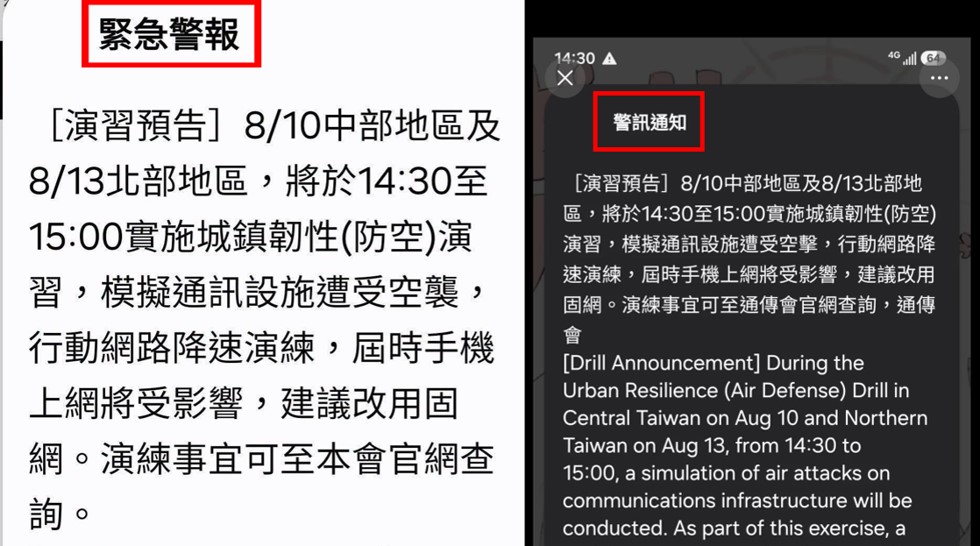
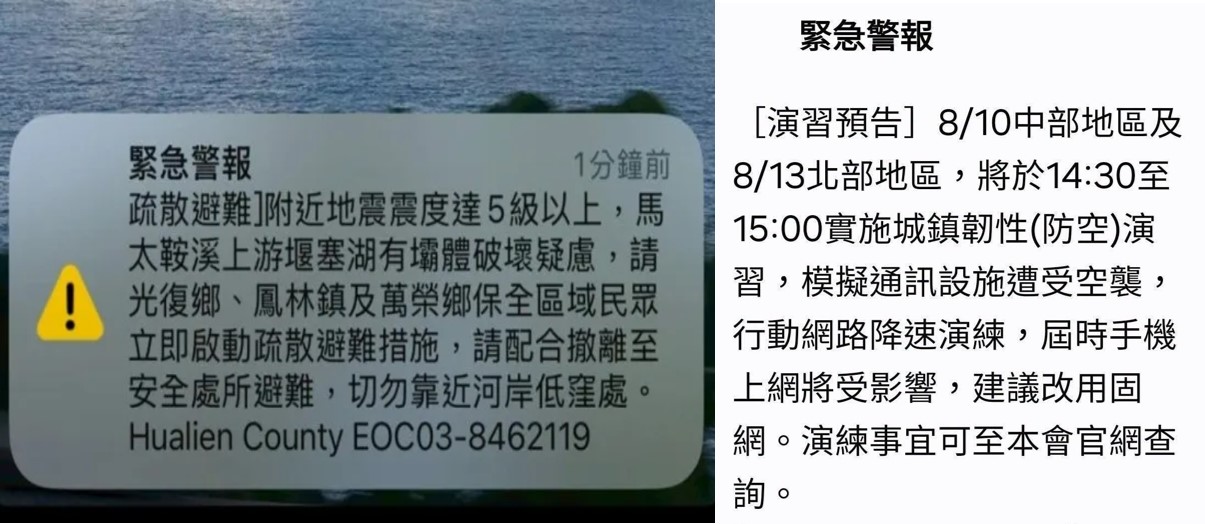
On August 7, NCC once again sent out advance notices for the PWS drills for communications disruption in the central and northern regions, scheduled for 2:30 PM on August 10 and 13. This time, NCC learned from the criticism over the August 3 PWS alert and not only announced it through various media outlets but also created its own graphic cards for publicity. It also downgraded the PWS level from the previous “Emergency Alert” to “Alert Notification.” Since this PWS only triggered vibrations and text alerts on phones, rather than the loud siren from last time, backlash has significantly decreased, though a small number of people still feel the frequent alerts are disruptive.
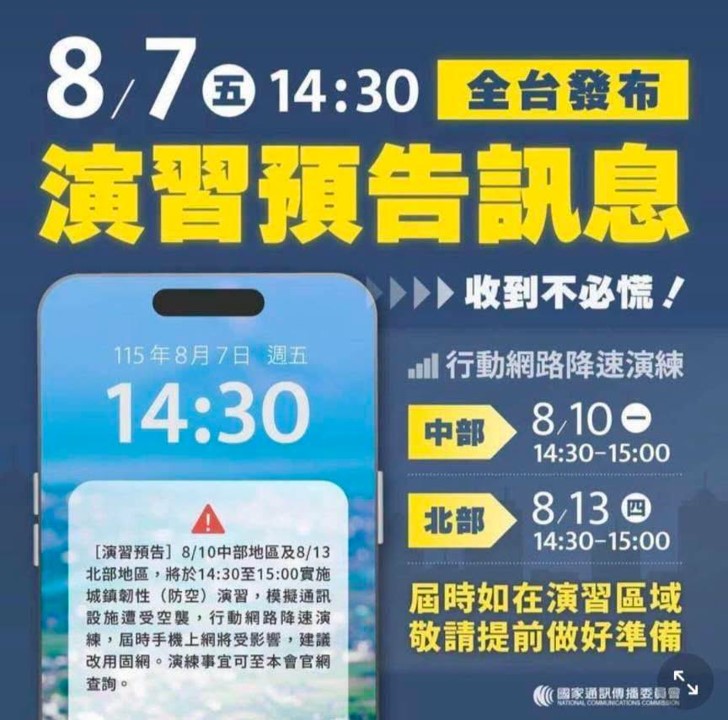
What’s the difference between these two PWS sessions? Summary video and detailed explanation are as follows:
1. Types and differences of PWS alert messages:
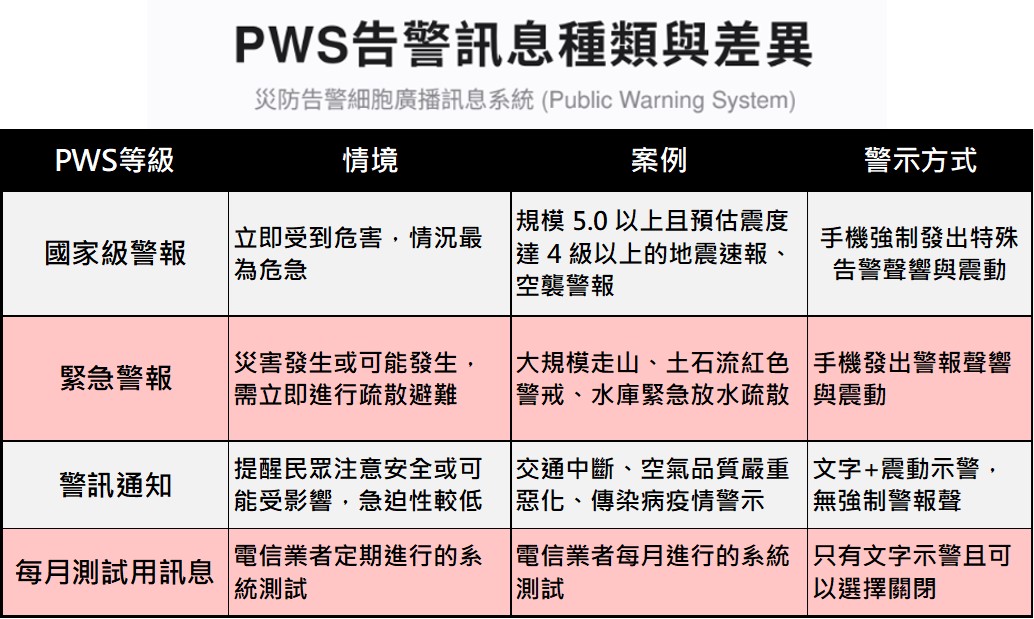
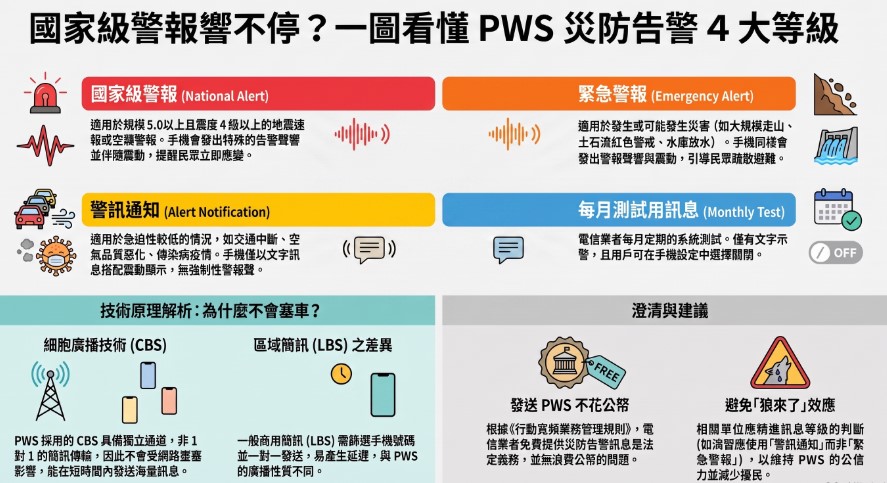
PWS (Disaster Alert Cell Broadcast Messaging System) has four message levels based on disaster urgency and response needs: National Alert, Emergency Alert, Alert Notification, and Monthly Test messages. Different types of PWS are issued depending on the urgency and potential harm to the public, and the alert methods on phones also differ.
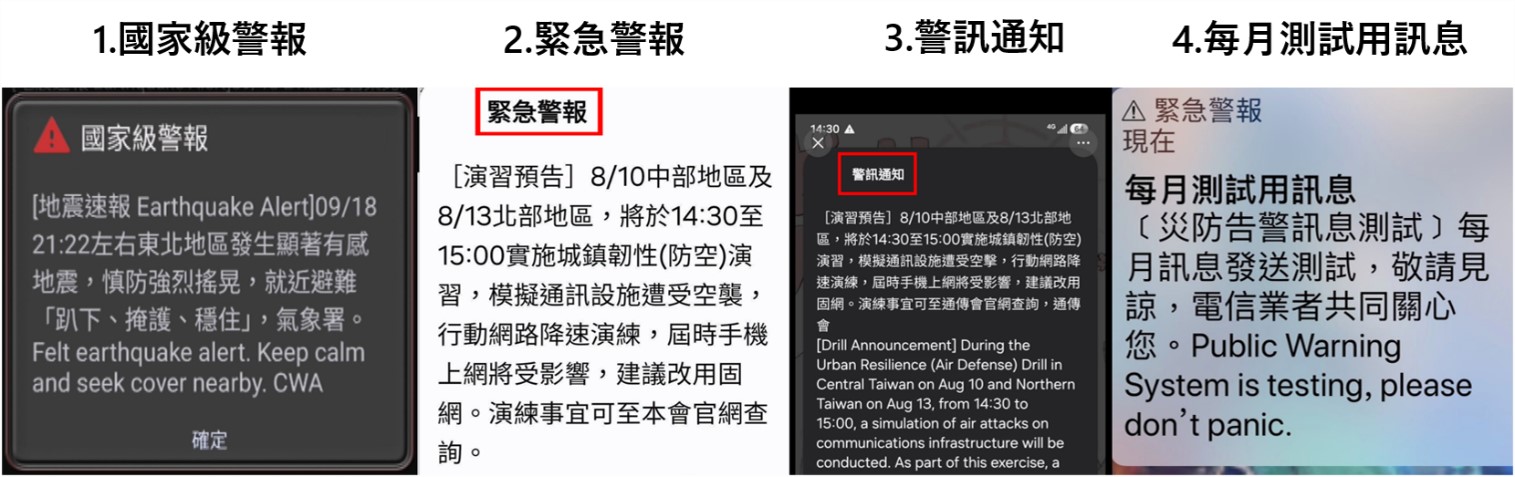
A “National Alert” is an earthquake rapid report issued when a magnitude 5.0 or higher earthquake occurs with an estimated intensity of 4 or above, or an air raid alert that puts the public in immediate danger — the phone emits a special warning sound and vibrates. An “Emergency Alert” is issued when a disaster (such as large-scale landslides, red-level mudslide warnings, emergency reservoir releases, etc.) is happening or may happen — the phone emits an alarm sound and vibrates so the public can immediately evacuate and take shelter. A “Warning Notice” is issued for traffic disruptions, severe air quality deterioration, infectious disease outbreaks, etc. — it is less urgent and appears as text with vibration but no mandatory alarm sound, reminding the public to stay safe or be aware of possible impacts. “Monthly Test Messages” are system tests conducted by telecom carriers on a regular basis each month — they only display a text warning, and phones can be set to turn them off.
The PWS “Emergency Alert” sent by the NCC on August 3 was merely an advance notice for the communications disruption drill, so issuing an “Emergency Alert” was somewhat overkill. Switching to “Alert Notification” on August 7 was the correct level of PWS.
2. How much public money does it cost to send PWS?
PWS is Cell Broadcast Service (CBS), not a 1-to-1 Location Based Service (LBS).
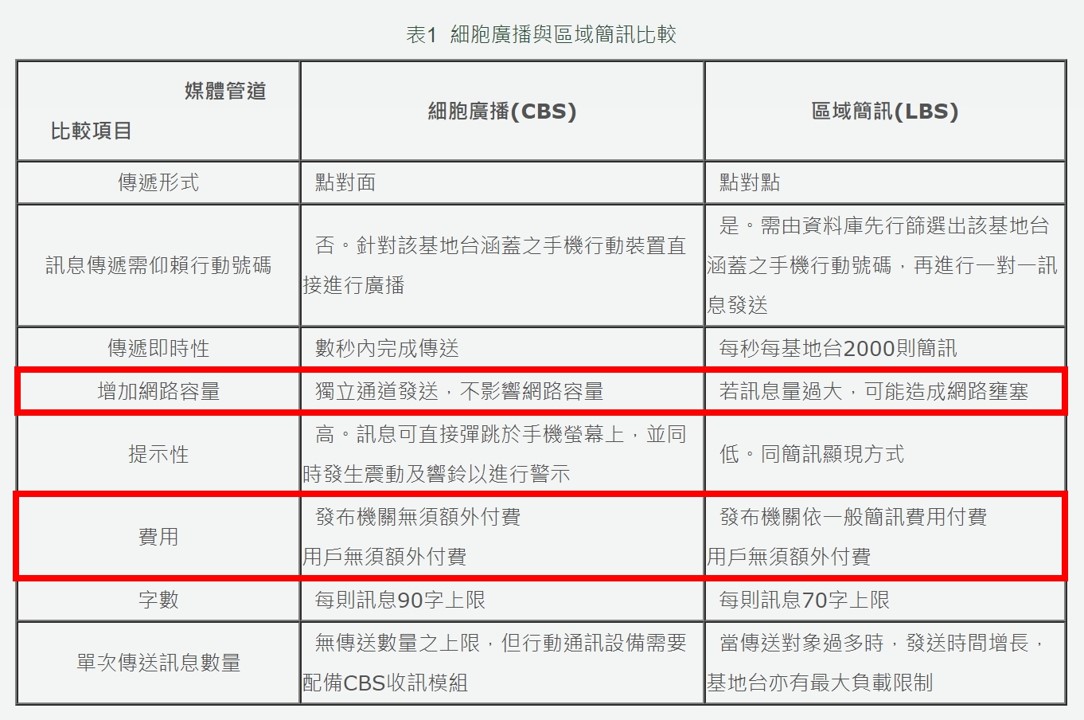
The Public Warning System (PWS) is a service that uses the Cell Broadcast Service (CBS) technology of mobile communication networks to deliver disaster alert messages. It sends messages through a dedicated channel, so it is not affected by network congestion or delays. This allows the government to send large numbers of disaster warning messages to people’s mobile phones in a short time, enabling the public to receive early warnings about disasters. This is different from telecom operators’ paid SMS services, which use Location Based Service (LBS) technology and require first filtering phone numbers covered by base stations in a specific area before sending messages on a one-to-one basis.
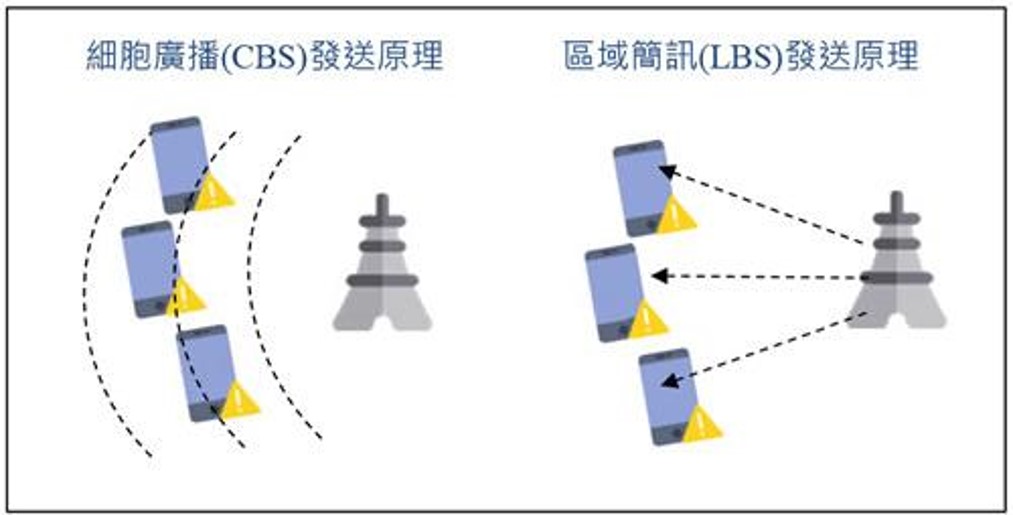
The transmission and maintenance of PWS is a statutory obligation of telecom operators and is free of charge.
Pursuant to Article 55 of the Regulations for Administration of Mobile Broadband Business, “Telecommunications enterprises shall provide disaster prevention warning cell broadcast messages to users free of charge.” Telecommunications enterprises are obligated to cooperate with Taiwan’s various disaster prevention competent authorities (including the Ministry of National Defense, Council of Agriculture, Ministry of Economic Affairs, Environmental Protection Administration, Ministry of the Interior, Ministry of Transportation and Communications, Ministry of Health and Welfare, Nuclear Safety Commission, and 22 local city and county governments) in promptly sending and regularly maintaining the PWS, all of which is free of charge and involves no waste of public funds.
The controversy over NCC’s sending of PWS this time is mainly that it has not been Taiwan’s competent authority for disaster prevention, yet it issued advance notices of communication disruption drills in the form of “emergency alerts” and planned to send four within 10 days, appearing to act as both referee and player while cutting corners and disturbing the public.
The incidents from October 8 last year, when the Hualien County Government issued a PWS evacuation alert based on a misjudgment of the standards even though the Matai’an River barrier lake had not met the evacuation criteria, causing panic among local residents, and from August 3, when the NCC issued an “emergency alert” without prior notice as a drill notice for communication disruption, sparking public complaints, both demonstrate how the decision-making of the authorities in charge of disaster prevention operations and their handling personnel regardingDisaster warning message sending levelandDecide when to release the drill notification、Coverage area、Alarm typeandMessage content There are areas where everyone needs to improve.
Taiwan is prone to frequent natural disasters, and in the face of increasingly severe global extreme weather and military threats from across the strait, the disaster prevention authorities must use PWS judiciously with the right timing, scope, and type, so as not to cause public annoyance or give rise to the negative “cry wolf” effect that would tarnish this vital tool for protecting public safety.
Source: KOCPC Chinese