


Anyone who has followed the news recently has probably noticed that tens of thousands of travelers have been stranded at U.S. airports, causing widespread public frustration, after the Federal Aviation Administration (FAA) issued a nationwide ground stop order last Friday. The nearly five-hour nationwide grounding, seen as the longest in the United States since the September 11 terrorist attacks in 2001, was not caused by a cyberattack or any sophisticated cybersecurity incident. Officials said the source of the problem was a newly installed router at a remote radio station in Arkansas. U.S. Transportation Secretary Sean Duffy said Monday that the device sent about 1,000 connection requests every four to five seconds to the FAA’s dedicated communications network, overwhelming the backbone network supporting radar and air traffic control communications and ultimately affecting 17 of the 22 air route traffic control centers across the country. The root cause has not yet been identified, and the incident has once again exposed the aging U.S. air traffic control infrastructure, vendor lock-in, and budget disputes.
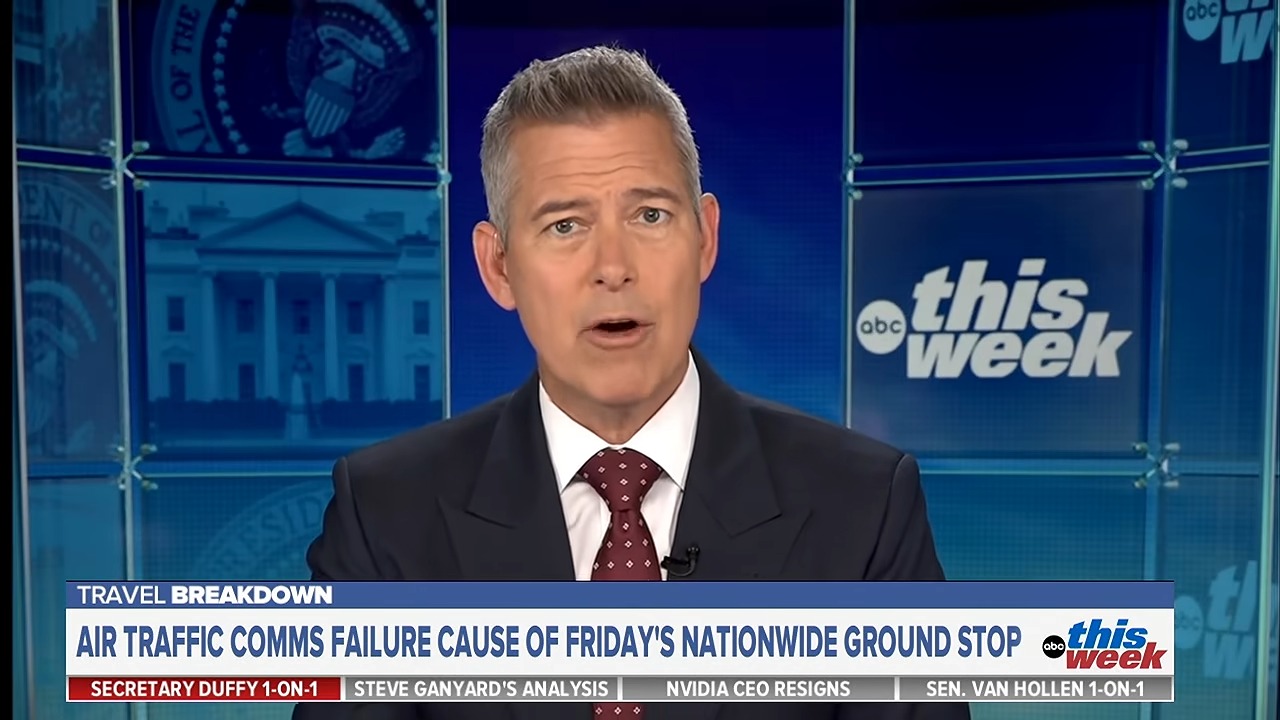
The incident occurred around 3:30 p.m. New York time on November 13. At the time, FAA network operator L3Harris was performing routine maintenance at a remote radio station in El Dorado, Arkansas, replacing old copper lines with fiber optics and installing a new router. After the new equipment came online, it began sending connection requests to the network at an abnormal frequency, and it took technicians about 45 minutes to locate the problem.
Even more unexpectedly, there was a second trigger point. In a television interview, Duffy explained: “After we opened that router, we found that a system in Amarillo, Texas, that had been replaced only about three weeks earlier also began flooding our system.” Amarillo is a radar facility that had completed the same copper-to-fiber upgrade just weeks before. The FAA said that after L3Harris blocked these two locations, the network stabilized, and as a precaution it disabled the broadcast function on about 60 routers of the same type across the network. At the time of the ground stop, about 3,500 aircraft were in the air, and all landed safely. After air traffic control was restored, the ground stop was lifted at 8:15 that evening.
More than 10,000 flights affected, with the impact extending into Thanksgiving.
On the day of the grounding order, airlines canceled about 12,462 flights, and the backlog over the following two days was slow to clear. Statistics from flight-tracking website FlightAware show that on the 14th (Saturday), more than 6,400 flights were canceled and more than 8,000 delayed across the United States; on the 15th (Sunday), more than 2,300 flights were still canceled and about 7,700 delayed, with more than 10,000 flights affected in total. According to statistics cited by Futu, the cumulative number of flights canceled due to this incident exceeded 12,000; the two sets of statistics use different counting methods. Duffy himself said in an interview that the grounding directly caused more than 18,000 flight cancellations.[1]Reuters reported that more than 1 million passengers were affected overall.
The hardest-hit airline was JetBlue, which canceled 28% of its flights on Sunday; American Airlines canceled 17%; and cancellation rates at United, Southwest, and Delta ranged from 3% to 5%. The chaos on the ground went far beyond waiting for planes: several NBA, NHL, and college football teams were forced to take buses or scramble for hotels; the Cleveland Cavaliers were still looking for a hotel 90 minutes before tip-off; and the Tulane University football team chartered five buses and drove 350 miles to make its game in Houston.
A router bought in 2001 is still running in 2026.
A set of figures Duffy cited in an ABC interview became a footnote to the entire incident: “The routers that had problems were purchased in 2001, were already obsolete by 2006, and we were still using them in 2026—just to emphasize how old this network is.” The new routers involved were manufactured by HPE subsidiary Juniper Networks, and L3Harris is using them to gradually replace Cisco equipment that was manufactured in 2001 and originally scheduled for retirement in 2006. In a statement, HPE said that, based on what is currently known, “our equipment is operating as configured,” and the FAA is assessing the configuration and performance of all related infrastructure.
Industry technical analysis points to a speed mismatch between new and old equipment: new devices send data faster than legacy systems can handle, causing the old equipment to clog and the problem to spread rapidly across the network. John Hansman, a professor of aeronautics and astronautics at MIT, noted that the new devices pushed the old systems’ operating speed to levels they had never experienced, with multiple components working at their limits simultaneously, causing previously hidden compatibility issues to erupt all at once. Cybersecurity outlet Spiceworks described the incident as a script all too familiar to IT staff: one device starts spewing traffic, everything downstream degrades, until someone finds the source and cuts it off.
Suspicions of a cyberattack and AI involvement have been ruled out; the investigation is still ongoing.
When the grounding order was first issued, speculation ran wild. The White House Situation Room urgently convened a high-level meeting, and the FBI Director spoke by phone with the Director of National Intelligence and the Pentagon, concerned about foreign government involvement. Officials later explicitly denied it: Duffy said no online discussions pointed to hackers, and that it “was not the work of a foreign actor.” Some also suspected AI, because three days before the grounding, the FAA had just expanded SMART, an AI air-route congestion advisory tool, from Washington airspace to nationwide. The FAA explained that SMART is only a data aggregation tool and does not feed data to air traffic control systems; developer Air Space Intelligence also stressed that the grounding “was not based on and was not caused by the SMART system.”
The two routers involved have been sent to L3Harris’s Florida headquarters for diagnostic testing. Both the FAA and the FBI are participating in the investigation, with the focus on determining whether the problem was a equipment defect, a configuration error, or an installation mistake. Duffy emphasized that L3Harris has performed this type of maintenance and switchover operation thousands of times without ever causing a system outage; the engineer responsible for the installation is understood to be a U.S. military veteran, and there are no signs of deliberate sabotage. Some aviation consultants are not convinced, arguing that a single device should not be capable of crippling a national-level network. They believe the incident is more like a long-standing architectural flaw being torn open, exposing serious deficiencies in the redundancy design and fault tolerance of the air traffic control communications network.
The $50 billion budget battle: Congress first wants to know where the money is going.
After the accident, Duffy immediately shifted the focus to the budget. He asked Congress to allocate US$50 billion (about NT$1.6 trillion) before the end of the year to comprehensively upgrade the air traffic control system, an increase of two-thirds from the US$30 billion he had previously proposed, and advocated bringing in AT&T, Verizon, and Lumen to build a new communications system to replace the existing FTI network. He said on NBC: “I already have the architecture ready. These companies can deploy tomorrow. All I lack is money. I want to get rid of L3Harris, but they own the network, and I can’t cancel the network I operate on.” President Trump publicly stated for the first time on Sunday that a large part of the U.S. air traffic control system has been in use for 50 years, and the upgrade should be done all at once, not piecemeal.
Lawmakers’ questions were blunt. Rick Larsen, the ranking Democrat on the House Transportation and Infrastructure Committee, and André Carson, ranking member of the Aviation Subcommittee, noted that Congress approved $12.5 billion for air traffic control upgrades in 2025, about $11 billion of which remains unused; the Department of Transportation has committed only $4.3 billion and actually spent just $1 billion. Duffy explained that the old budget is restricted to specific purposes and does not cover the new software needed for airspace management, and that he needs more flexible funding. FAA Administrator Bryan Bedford apologized for the impact of the groundings and estimated that completing modernization will require about $10.1 billion more.
Warning signs existed long before the accident. A 2023 assessment commissioned by the FAA itself labeled the FTI network as obsolete; a September report this year by the Government Accountability Office (GAO) criticized the FAA for lacking reliable cost estimates and schedules, warning that it could “cause aviation disruptions or prolong reliance on severely outdated systems,” and counted that as of May only 2,560 of 5,170 old copper lines had been replaced. Two years ago, the GAO had rated 51 of the FAA’s 138 systems as unsustainable, with another 54 facing the same risk. Capital markets reacted first: L3Harris shares fell 3.3%, and HPE, which acquired Juniper, fell 4.5%.
Conclusion: No one can guarantee there won’t be another grounding next time.
When reporters pressed Duffy on whether similar disruptions could happen again, his answer was that he could not guarantee it: “First, we need to figure out what actually happened.” This nationwide grounding triggered by a single router is, in the short term, a technical incident involving installation or configuration; in the long term, it is the final reckoning for decades of underinvestment in the U.S. air traffic control system, vendor lock-in, and a replacement pace that cannot keep up with risk. The investigation results are not yet out, and the Thanksgiving travel peak has already begun; all travelers can expect is the official line that “the system is currently stable.”
Source: KOCPC Chinese