


Wi-Fi 7 is not yet fully popular for most users, but now Wi-Fi 8 Already here.TP-Link Officially released its first Wi-Fi 8 (IEEE 802.11bn) router platform on May 29, 2026 Archer 8, expected to be launched globally in October of the same year. This is one of the first Wi-Fi 8 router products among consumer network products to clearly announce its launch date. Different from the upgrade route of each generation of Wi-Fi that emphasized “peak speed” in the past, the core design concept of Wi-Fi 8 has shifted to “Ultra High Reliability”, focusing on solving daily pain points such as signal dead spots, device congestion, and soaring delays in real home environments.
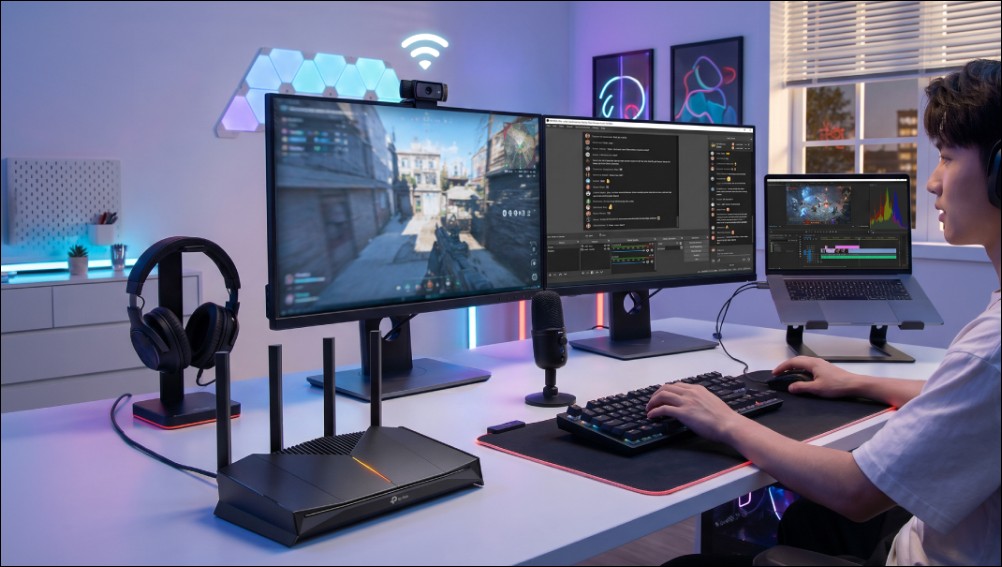
The core idea of Wi-Fi 8: stability replaces peak speed
The full name of Wi-Fi 8 technology is IEEE 802.11bn, also known as “Ultra High Reliability” (UHR). In the past, the focus of every generation of Wi-Fi standard upgrades has almost always been on increasing the theoretical peak rate. However, for ordinary users, what really affects the user experience is often signal attenuation across floors, disconnections caused by neighbor Wi-Fi interference, and congestion problems when multiple devices are connected at the same time.
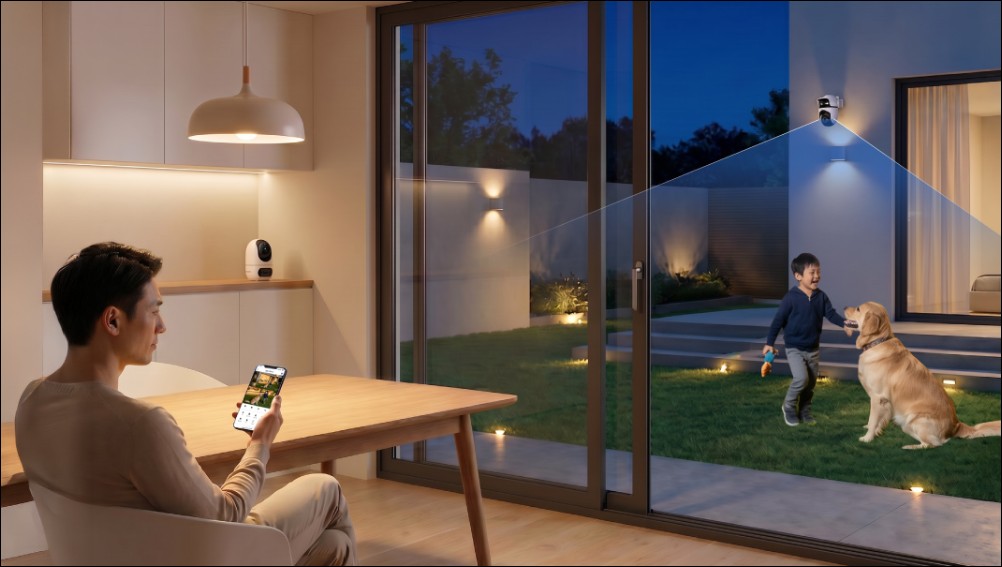
The design goal of Wi-Fi 8 is to solve these real pain points of the “last mile”. According to the technical direction of the IEEE 802.11bn specification, Wi-Fi 8 can bring about a 25% increase in throughput, a 25% reduction in 95th percentile latency, and a 25% reduction in packet loss probability under the same distance and signal conditions. These numbers don’t look as spectacular as the jump from Wi-Fi 6 to Wi-Fi 7, but each one directly corresponds to the issues that users feel most about in their daily use.
“For years, Wi-Fi innovation has been measured by peak theoretical speeds, but what users really care about is consistency,” said Jeff Barney, president of TP-Link. “Archer 8 is designed to deliver lower latency, better performance in interference environments, and more stable connections in real-world environments.”
Archer 8 new product design language and hardware specifications
Archer 8 adopts a new high-end product ID design. The body integrates minimalist architectural geometric aesthetics, with detailed Micro Ridge Texturing and precise contour lines. It is equipped with soft luminous lights on the front to show its technological quality. At the hardware level, Archer 8 integrates advanced thermal engineering, antenna architecture, radio frequency (RF) optimization, and AI-assisted network intelligence technology.
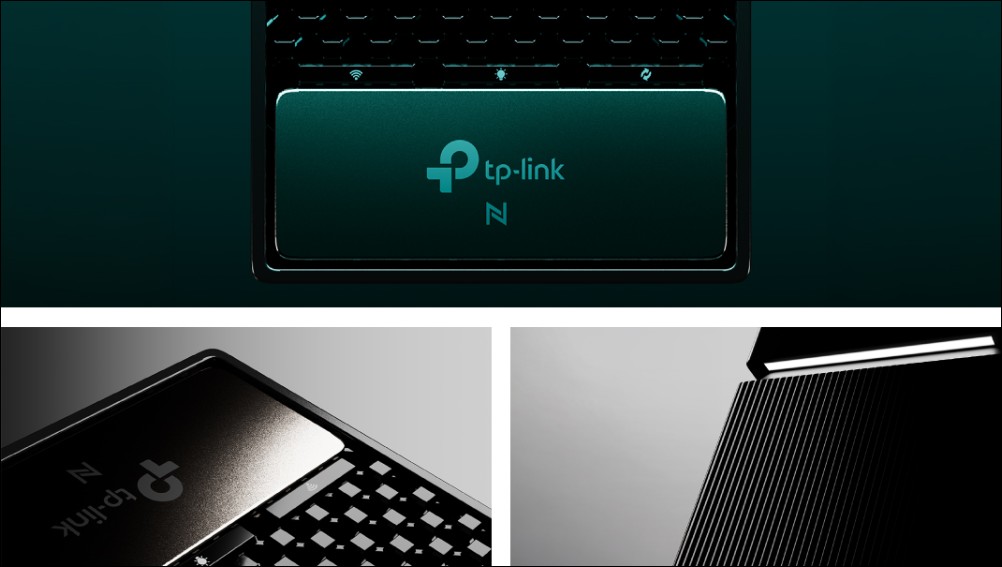
TP-Link has not announced the complete hardware specifications of Archer 8 (such as processor model, number of antennas, port configuration, etc.) and is expected to reveal the final product specifications closer to launch. The price has not yet been announced.
Archer 8 laboratory test data: five important upgrades
Through controlled laboratory testing, TP-Link compared early Wi-Fi 8 technology with current Wi-Fi 7, simulating real home environment conditions, and obtained the following quantitative results:
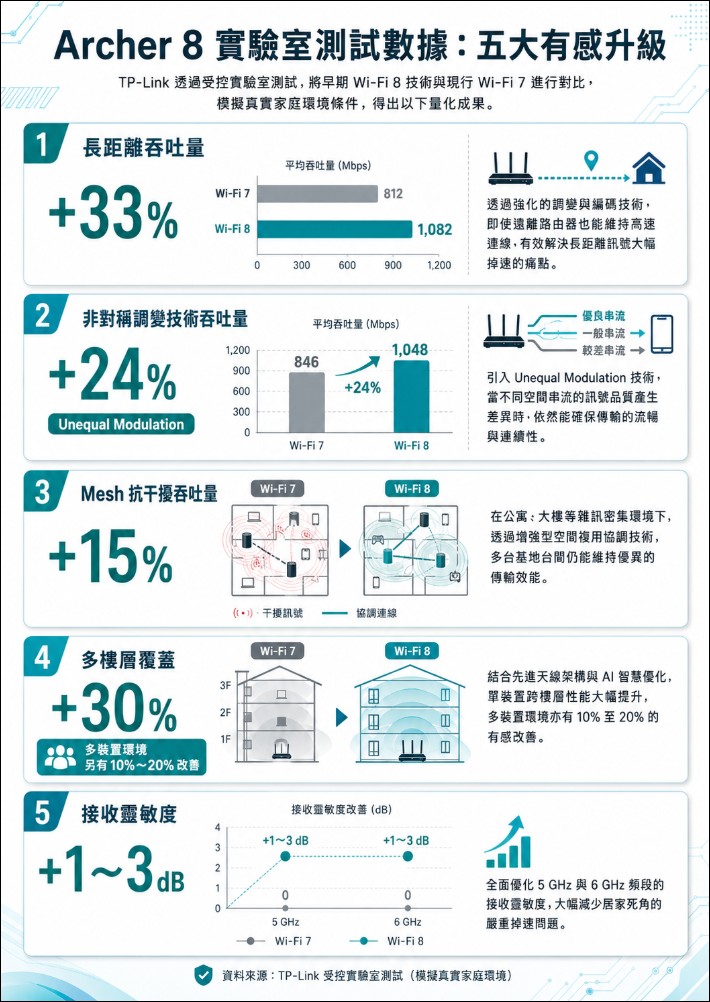
Long-distance throughput increased by 33%:Through enhanced modulation and encoding technology, high-speed connections can be maintained even when far away from the router, effectively solving the pain point of significant signal slowdown over long distances.
Asymmetric modulation technology increases throughput by 24%:Introducing Unequal Modulation technology, when the signal quality of different spatial streams differs, the smoothness and continuity of transmission can still be ensured.
Mesh anti-interference throughput increased by 15%:In dense noise environments such as apartments and buildings, through enhanced spatial multiplexing and coordination technology, excellent transmission performance can still be maintained between multiple base stations.
Multi-floor coverage increased by 30%:Combining advanced antenna architecture and AI smart optimization, the cross-floor performance of a single device is greatly improved, and the multi-device environment is also improved by 10% to 20%.
Improved reception sensitivity by 1 to 3 dB:Comprehensively optimize the reception sensitivity of the 5 GHz and 6 GHz frequency bands, greatly reducing the serious speed drop problem in blind spots at home.
Complete Wi-Fi 8 product line layout
Archer 8 is just the starting point for TP-Link Wi-Fi 8 strategy. The complete product roadmap announced by TP-Link is as follows:
– Archer 8(Wi-Fi 8 router): expected to be available in October 2026
– Deco 8(Wi-Fi 8 Mesh router system): expected to be available in the first quarter of 2027
– Roam 8(Wi-Fi 8 travel router): expected to be available in the second quarter of 2027
– Wi-Fi 8 signal extender and network card: Expected to be launched in the second quarter of 2027
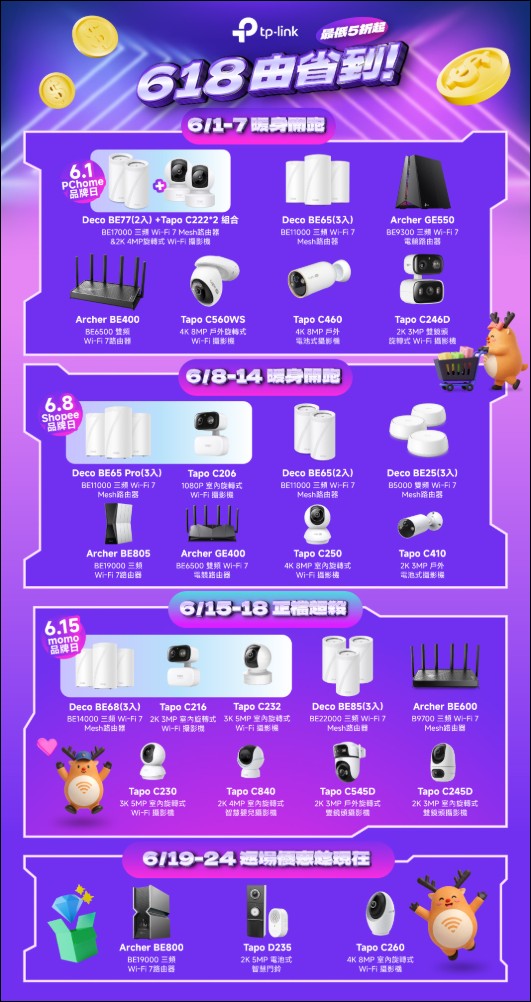
618 schedule starts simultaneously: Wi-Fi 7 and Tapo smart housekeeping discounts
While looking forward to the future of Wi-Fi 8, TP-Link also took advantage of the 2018 Mid-Year Shopping Festival to launch discounts on the current Wi-Fi 7 and Tapo smart home care series, and cooperated with the three major e-commerce platforms PChome, Shopee, and momo to launch Brand Day:
– PChome Brand Day on June 1st:Features Deco BE77 Mesh system plus Tapo C222 camera buy 2 get 2 free combination
– Shopee Brand Day on June 8:Features Archer BE600 router paired with Tapo C545D outdoor dual-lens camera
– June 15 momo brand day:Features Deco BE68 Mesh system with Tapo C245D indoor dual lens camera

In addition, those who purchase the Archer Wi-Fi 7 gaming router series at designated channels from June 1st to 30th can also participate in a lottery for a chance to win a special Xbox wireless controller Breaker series and a “Forza Horizon 6” game code.
Source: KOCPC Chinese