


Last time I introduced several commonly used filters for cameras. This time I will sort out some filters with special uses. The advantages and disadvantages of each will also be listed for your reference. The last one is the most special, it is a universal filter placed inside the camera, regardless of the lens diameter. Want to know what makes this filter so special? Hurry up and read this article!

▲ Picture 1: Special filters released! Is this how the close-up filter and starburst lens are used? /From Pexels
Special filter categories
Before I introduce it, let me give you an idea.Each filter has common shortcomings and will reduce the image quality to a certain extent., so this shortcoming is not specifically listed. But there is no need to be overly nervous. Filters with good coating quality can be more reassuring.
Close Up Filter

▲ Figure 2: Close-up lens/from Marumi
Last time, the editor shared Sony’s affordable lenses. In the article, I introduced the macro lens, which can take close-up photos of many small insects, decorative accessories, or cartoon figures. If you currently don’t have the budget to buy a macro lens, or are afraid that frequent lens changes will cause dust to enter, another consideration is to buy a “close-up lens”, which is also very suitable for shooting close-ups of still life.
The close-up lens isShorten the minimum focusing distance of the lens and increase the magnification. Although it is very easy to disassemble and assemble, you can disassemble it after shooting macro, and the volume is much smaller, which improves convenience a lot, but these filters are generally very thick, which will still affect the quality of the image to some extent.
The editor here found some shooting samples for you to see the effect before and after using the close-up lens, such as the comparison picture below. It is not difficult to find that after using the close-up lens, the subject is magnified a lot, and more details can be seen clearly.
The price of the close-up lens is much cheaper than the previous filters. I highly recommend everyone to buy it and have fun with it.
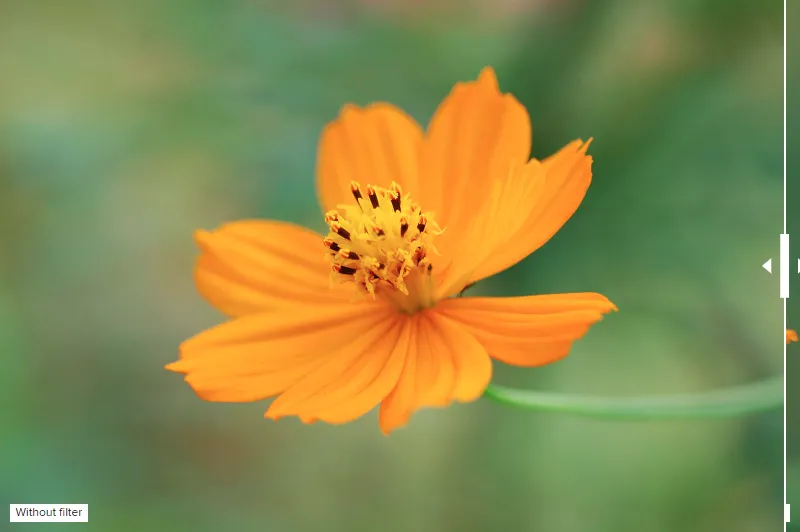
▲ Figure 3: Close-up lens not used
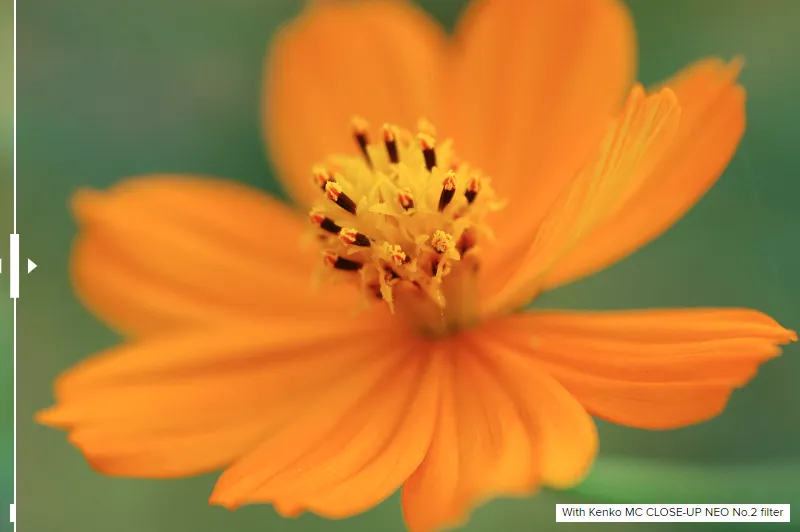
▲ Figure 4: Apply close-up lens
Star Cross Filter

▲ Figure 5: Starburst filter/from Marumi
I think you must have heard of starbursts and know that this phenomenon can be obtained by narrowing the aperture of the lens.

▲ Figure 6: The effect of using the starburst filter / from Marumi
With the help of a starburst mirror, you can produce a starburst effect at any time. And the frame can be rotated to change the direction of the stars, making them easier to obtain. Some star mirrors can only produce 4 rays of light to achieve a starburst effect. Marumi’s ones are better, with 6 or 8 rays, but they don’t seem to be available in Taiwan’s e-commerce stores.
This kind of filter effect can be achieved using post-production software, which is considered a special effect! If you don’t know how to make it, you can also buy it and try it out!
Built-in filter series (Clip Filter)

▲ Figure 7: Designed for specific models such as Canon, Nikon, Sony… / from STC
This filter series is exclusively produced by Taiwan STC for specific models of mainstream brands (Canon, Nikon, Sony) on the market.hereYou can see the supported models. Currently, there are various types of lenses to choose from, such as light pollution filter series, infrared filters, light reduction lenses, photosensitive element protection lenses, etc. If you are interested, you may wish to goOfficial websitehave a look.
The features of this filter areYou don’t need to change filters when changing lenses, and you don’t have to worry about lens diameter.. There is no need to worry about dust getting into the photosensitive element when changing lenses, and the design is made of “non-magnetic” stainless steel or iron, which will not scratch the photosensitive element. The anti-fouling and anti-static design makes filter maintenance easier.
The innovative design has attracted reports from foreign media. You can read the following articles to understand the influence of this product.

▲ Figure 8: Built-in filters exclusive to Sony full-frame cameras/from STC Built-in Filters for Sony

▲ Figure 9: Built-in filters exclusive to Nikon full-frame cameras/from STC built-in filters for Nikon
Conclusion
The above three filters have their own suitable uses, and the effects they can produce are also different. If you are interested, you can refer to them. When I first saw the built-in filter made by STC, I thought it was quite novel. It has nothing to do with the lens diameter. In addition to protecting the photosensitive element, it can also serve as a filter when placed inside the camera.
The article also introduces what you should pay attention to when buying filters. I believe that after reading this, you should know how to choose these special filters.
If you like the above article, welcomeSubscribe to newsletter, and you will receive photography-related teaching articles!
by Engineer Blake
Source: KOCPC Chinese