


After the Republican Party under the Trump administration suffered a major defeat in the U.S. midterm elections due to factors such as AI policy, the U.S.-Iran war, and inflation, less than a week after the elections ended, OpenAI submitted a local commitment letter focused on data centers and simultaneously released the National Community Compact and the Compute Campus Policy Blueprint, announcing that future self-owned and self-operated compute campuses will fully cover electricity and related infrastructure costs, disclose water and electricity usage data, and stop signing confidentiality clauses with local elected officials. The timing of this document’s release is extremely sensitive, and every step of OpenAI’s new policy is being interpreted as a response to voter dissatisfaction.

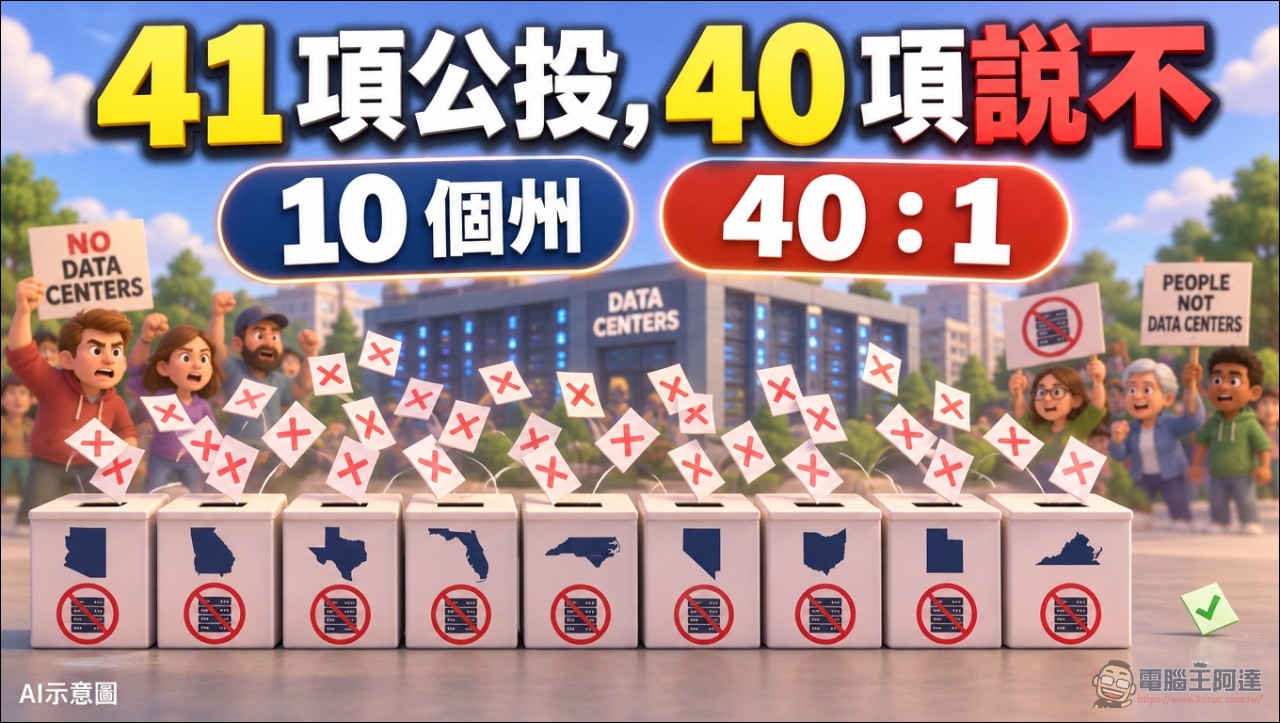
Voters rejected 40 of 41 referendums on data center expansion.
This election is seen as American voters’ first large-scale vote on data center expansion. According to Ballotpedia’s analysis and media summaries, of 41 local ballot measures in 10 states, voters supported restrictive measures or rejected pro-development proposals in 40 of them. According to research firm Data Center Watch, as early as the second quarter of 2026, 45 data center projects across the US totaling US$88 billion (about NT$2.77 trillion) had stalled due to local opposition. (Editor’s note: because data centers cause local electricity rates to soar and generally have noise and air pollution problems.)
The Democratic Party also won governorships in key data center states such as Texas, Georgia, and Ohio. The new governor of Texas has publicly called for a pause on new facility construction. AI infrastructure shifting from “an investment that automatically receives a welcome” to a negative talking point in local elections is the direct backdrop for OpenAI’s release of this pledge.
Three types of commitments: pay electricity bills, report data, provide jobs
OpenAI’s commitments fall into three parts: First, “pay for its own power”: the company says it will cover the full cost of the electricity used by the campus and the infrastructure needed to supply the campus, and will provide financial guarantees before major spending begins so that other electricity users are protected if the project is scaled back, delayed, or canceled. Surveys indicate that although data center development has not actually driven up local electricity prices, Americans generally still believe rising electricity bills are caused by data centers.
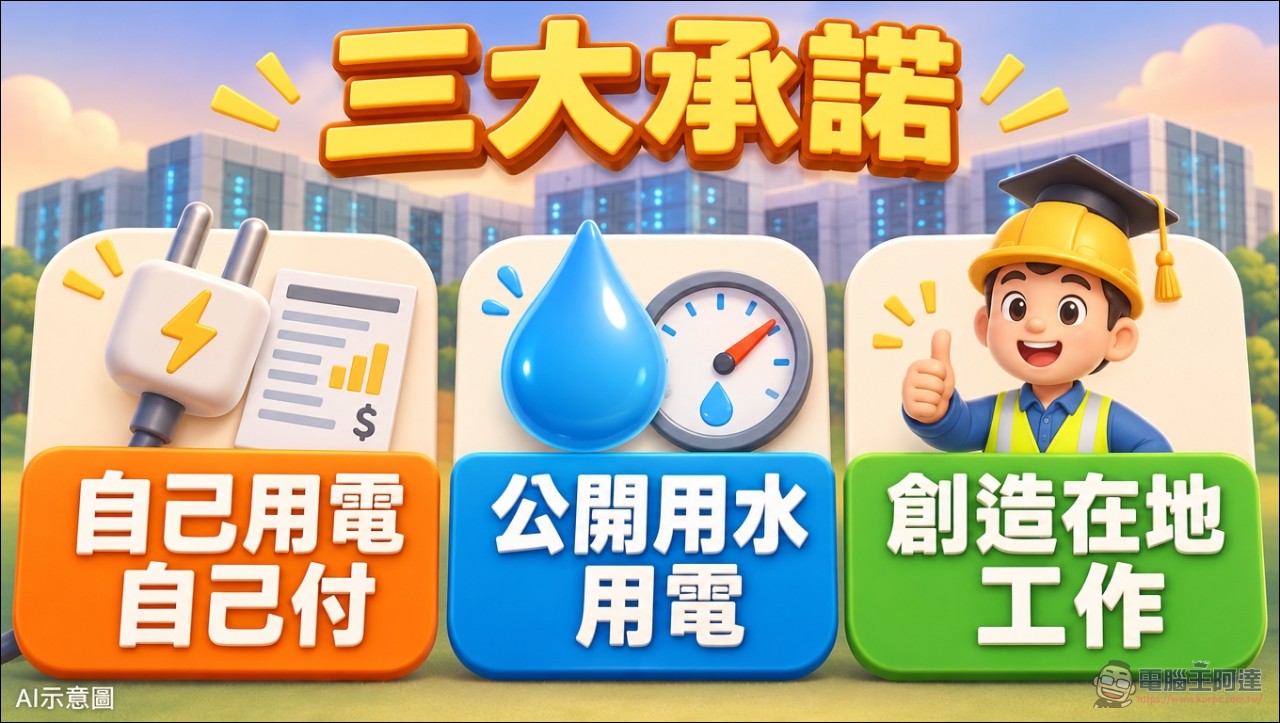
Second, protect local resources and publicly disclose impact reports: each campus must develop a water resource plan, prioritizing recycling or water-saving cooling systems, and disclose on-site water and electricity consumption at each campus; before operations begin, it must publish construction plans and an independent noise survey, and continue to publish them annually thereafter. The same commitment also includes that OpenAI will no longer sign non-disclosure agreements (NDAs) with public officials, with limited exceptions only for security information, trade secrets, and commercially sensitive information.
Third, create opportunities for local workers and businesses: publish the jobs expected to be created, partner with unions and training institutions to help residents qualify, and report annually on hiring and apprenticeships. In the past, data centers hired local workers only during construction; after operations began, staff came from elsewhere (or very few people were hired at all because of automation), so their contribution to the local area declined accordingly. This is the pain point that the commitment letter specifically addresses.
Cases already implemented: school lunches and childcare.
Some of OpenAI’s commitments have already been implemented. Residents of Effingham County, Georgia, helped plan a $4.8 million (about NT$151 million) grant that provides free nutritious lunches to all 14,000 elementary and middle school students in the county. Families in Pike County, Ohio, made child care a priority, and OpenAI and SB Energy jointly contributed $6 million (about NT$189 million) to child care.

Effingham County is also a power demonstration case in the policy blueprint: the agreement between OpenAI and Georgia Power allows the utility to cut power supplied to the campus by up to 1,000 megawatts (1 million kilowatts) during peak periods when supply is tight. The blueprint also calls on the state public utilities commission to require large electricity users to share the costs they add to the grid, that tax incentive provisions be made public and include trackable commitments, and for Congress to accelerate transmission line upgrades and restore clean electricity tax credits.
CFO: Election results do not change expansion plans.
The day after the pledge was released, OpenAI CFO Sarah Friar said at the Citi TMT Summit that the company will continue investing in AI infrastructure to meet demand and that fundraising efforts will not stop; she believes the election results will not bring major changes to the company, saying, “If the midterm elections mean more people start paying attention to data centers and communities, we will continue to enter these communities and build trust with them.” Friar also confirmed that OpenAI is negotiating a new funding round at a $1.25 billion pre-money valuation (about NT$39.4 billion) and continues to explore a 2027 IPO.
The market reaction to the election results was split: specialized data center operator Hut 8 plunged 23%, IREN fell 11%, and Core Scientific dropped 10%, amid concerns over tighter scrutiny; cash-rich tech giants Microsoft rose 6.7%, Amazon rose 6.1%, and Alphabet rose 3.2%, as investors believe slower construction would actually help control their capital expenditures.
Conclusion: A PR Offensive or New Rules of the Game?
OpenAI officially framed this announcement as a continuation of January’s Stargate community commitments, and the blueprint also unusually calls on federal, state, and local governments to enact industry-wide rules, pushing voluntary commitments toward binding rules. ABC News, meanwhile, directly characterized the document as a recalibration move after the Democrats’ big win. The commitments’ coverage excludes partner-held facilities, the amounts involved in the cases are vastly out of proportion to the investment scale, and with the CFO reiterating the same week that expansion remains unchanged, whether this “responsible construction” narrative can persuade communities that just expressed dissatisfaction with 40 public ballot votes will depend on the actual terms and annual reports for each campus going forward.
Source:OpenAI
Source: KOCPC Chinese