


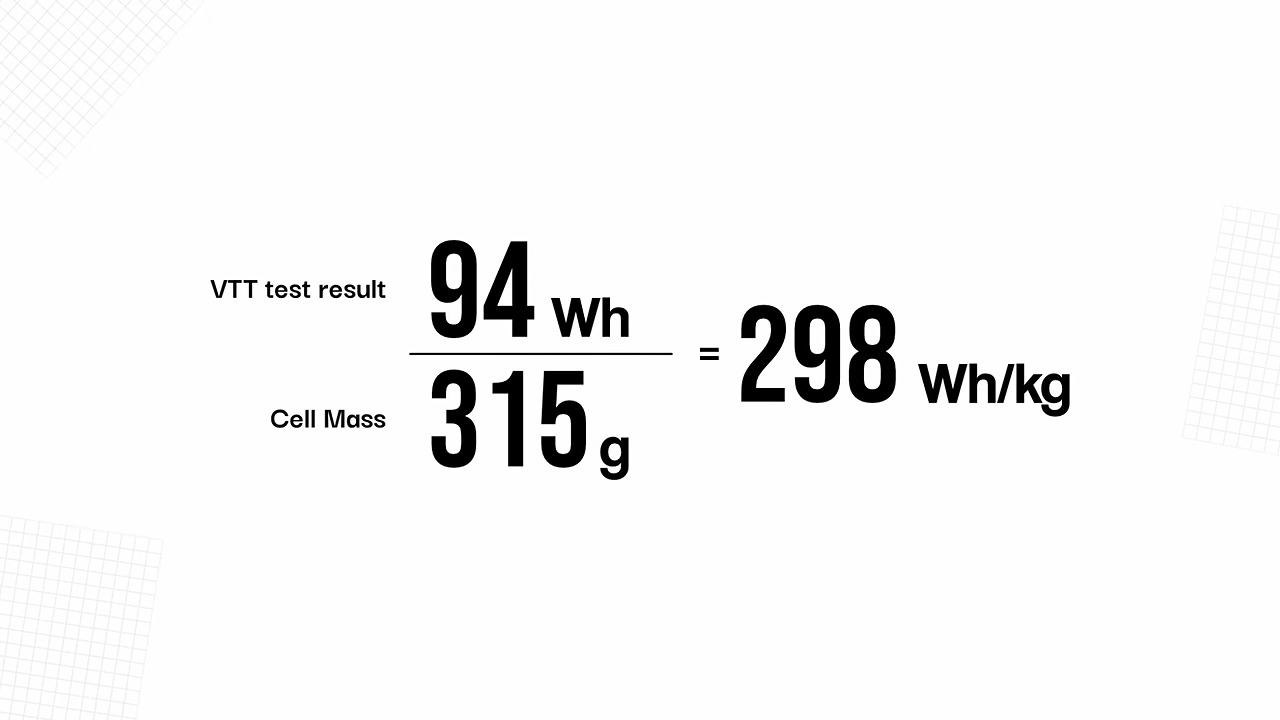
At the Consumer Electronics Show (CES) in the United States earlier this year, Finnish startup Donut Lab announced at the venue that it had developed the world’s first all-solid-state battery, with an energy density of up to 400 Wh/kg, a cycle life of 100,000 times, and a full charge in just 5 minutes. These figures far exceed any known battery technology in the current industry, instantly attracting the attention of global investors and industries. However, this sensational battery breakthrough has recently been proven to be a carefully packaged scam. According to well-known battery researcher Ziroth, he teamed up with more than 20 independent battery experts from Germany’s Fraunhofer Institute (Fraunhofer), Giessen University and other institutions to conduct in-depth investigations and confirmed with conclusive electrochemical data: Donut Lab’s so-called “revolutionary all-solid-state battery” is actually a common high-nickel lithium-ion battery (NCM chemical structure) on the market, with an energy density of only about 298 Wh/kg.
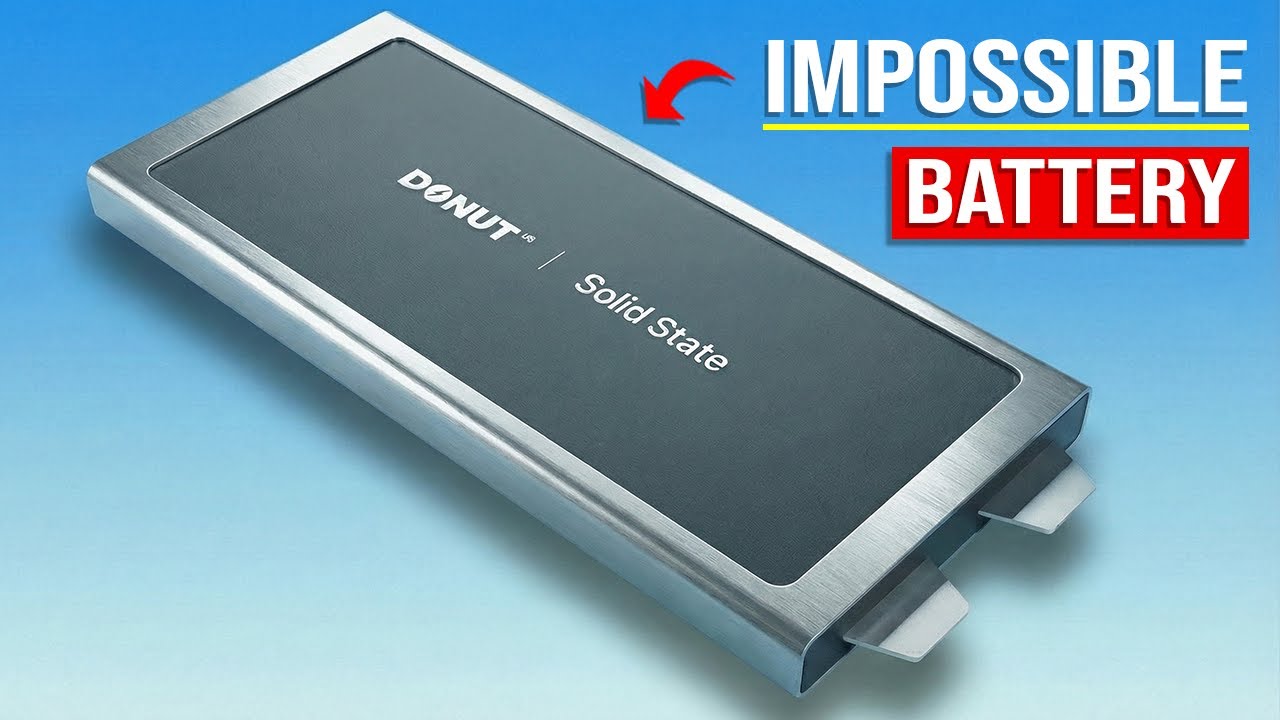
Finnish start-up Donut Lab’s world’s first mass-produced solid-state battery myth shattered
Look back at the timeline of this scam. In January 2026, Donut Lab CEO Marko Lehtimäki enthusiastically introduced this “game-changing” battery at the CES show. It is claimed to be entirely made of abundant, low-priced and geopolitically safe materials, does not rely on rare elements, and costs less than traditional lithium batteries. In extreme temperatures ranging from minus 30°C to over 100°C, the battery maintains over 99% of its capacity without any signs of fire or performance degradation.
These data, which were so exaggerated as to be almost impossible to imagine, aroused widespread suspicion in the industry at the time. However, Donut Lab’s extremely short delivery time (it claims to be mass-produced and shipped in the first quarter of 2026) has made some people choose to wait and see or even look forward to it. However, when the Finnish National Technical Research Center (VTT) conducted five independent tests, Donut officials completely avoided the two most critical indicators: energy density and cycle life. A battery company that claims to have an energy density of 400 Wh/kg did not allow the outside world to see the energy density data during independent testing. This operation itself is full of strange signals. We reported at the time that the whole thing was quite suspicious.
Internal whistleblowers come forward
On April 17, 2026, the first domino fell. Lauri Peltola, the former chief commercial officer of Donut Lab’s battery manufacturing partner Nordic Nano Group, filed a criminal complaint against the Finnish Financial Supervisory Authority, the Minister of Justice and Helsinki police, accusing Donut Lab of deliberately misleading the public. Peltola reported to Finland’s largest newspaper Helsingin Sanomat and Science magazineConfirm, the battery performance claimed by Donut Lab is “not worthy of the name”.
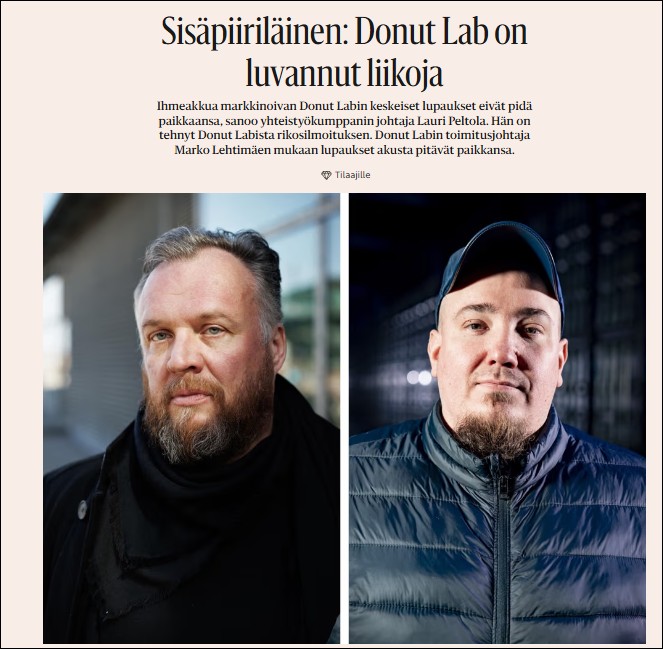
Peltola revealed that the batteries provided for independent testing are actually old-generation products. Donut Lab and its partners have long given up development, while the new-generation batteries are still in the early stages of research and development and cannot be mass-produced at all. As soon as the news came out, Donut Lab and Nordic Nano issued a joint statement denying any criminal conduct and claiming that Peltola “does not have the necessary knowledge of battery technology” and did not participate in the battery development working group.然而,Nordic Nano 后来承认 Peltola 目前处于「休假状态」,这一措辞的转变耐人寻味。
Voltage curve and expansion data: two fatal pieces of evidence
If the whistleblower’s accusations are still unsubstantiated, the investigation led by Ziroth has produced scientific evidence that Donut Lab cannot refute. More than 20 independent battery experts analyzed VTT’s test data and came to completely unanimous conclusions.
The first piece of ironclad evidence: the voltage curve.VTT’s test data shows that Donut Lab’s battery operates at 3.7 to 3.8 volts at 50% charge, which is typical of high-nickel lithium batteries (nickel manganese cobalt, or NCM chemistry). In the case of a sodium-ion battery, the voltage usually does not exceed 3.5 volts for the same amount of charge. This difference of 0.2 to 0.3 volts is enough to determine the true chemical composition of the battery.
The second piece of hard evidence is even more devastating: battery expansion data.As the battery charges, ions become embedded in the negative electrode material, causing the volume to expand. Lithium batteries using graphite negative electrodes will have a unique “turning point” in the expansion curve when the charge reaches 50% to 70%. This is due to the rearrangement of lithium ions in the graphite layered structure. Donut Lab’s battery fits this profile perfectly.
The investigation report describes this to the point: “It’s like we have a slightly blurred fingerprint and a photo of the suspect’s face at the same time, and the two match again.” The key is that sodium ions are much larger than lithium ions and cannot be embedded in the graphite layer structure like lithium ions. The occurrence of that turning point in the expansion curve directly confirms that the inner workings of the battery are lithium ions, not sodium ions as Donut Lab claimed. After calculation, the actual energy density of this battery is about 298 Wh/kg, which is at best an ordinary lithium battery with good performance, which is more than 25% different from the claimed 400 Wh/kg.
Shell company network and technology traceability
The investigation further revealed the intricate corporate structure behind Donut Lab. This battery technology actually comes from a German company called CT Coatings, which has patents ranging from sidewalk tile printing to menu clips, and a complete lack of background in battery research and development.
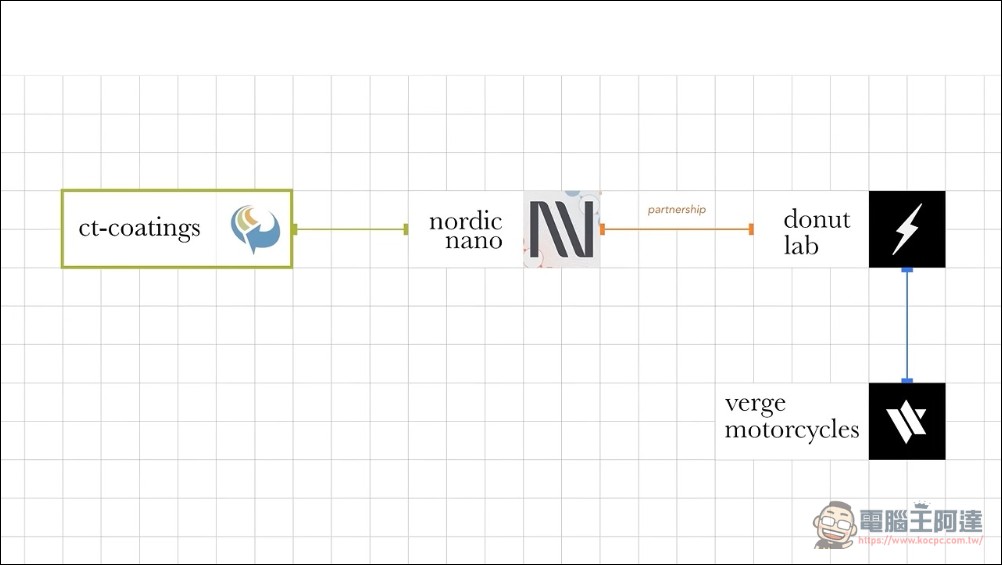
The division of labor model between the three companies is: CT Coatings provides technology, Nordic Nano is responsible for manufacturing, and Donut Lab conducts commercialization. However, the investigation found that Nordic Nano never actually produced a single battery cell. Julian Zanau from Germany’s Fraunhofer Institute bluntly recalled his impression of meeting with CT Coatings representatives: “My first impression was that these people had no idea how batteries worked. They said there were no rare earth metals in the battery so there was no lithium, but to any chemist, lithium and rare earth minerals are completely different things.”
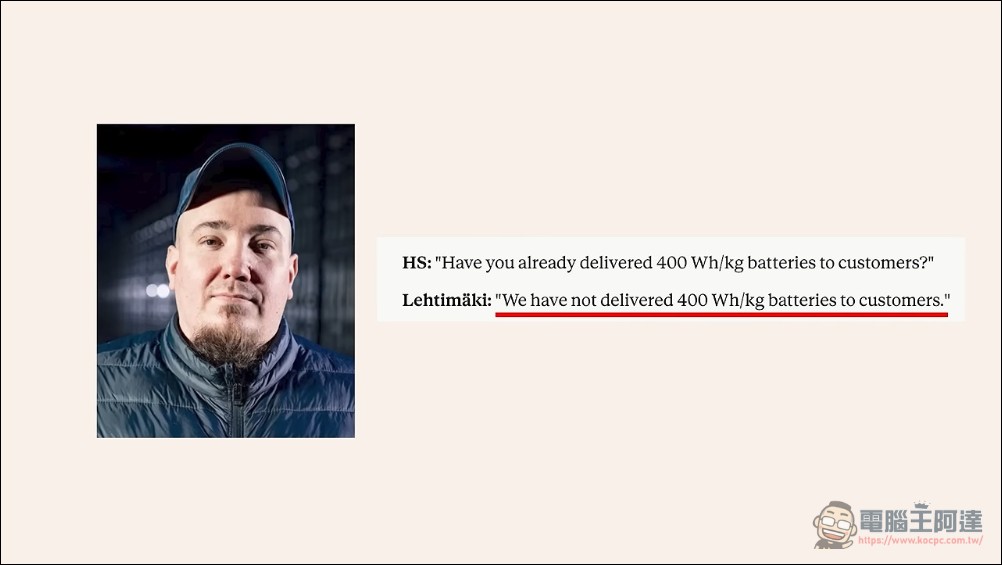
What’s even more ironic is that Donut Lab CEO Lehtimäki admitted in an interview that the batteries originally sent for testing were not even the models that would be shipped to customers in the future. In other words, not even Donut Lab itself can come up with a battery that lives up to its claimed specifications.
False mass production promises and retail investor traps
In addition to technical fraud, Donut Lab’s business promotion is also full of lies. The company had claimed to have delivered production vehicles equipped with the battery to consumers in the first quarter of 2026. However, internal leaked videos show that the first batch of products are just trial production vehicles used to optimize the manufacturing process. Lehtimäki later admitted to Finnish media that the 400 Wh/kg cells were not installed in any vehicles.
The core purpose of this scam is entirely directed at the capital market. Donut Lab raised a total of approximately US$25 million (approximately NT$810 million), and the company’s valuation was once pushed to US$1.25 billion (approximately NT$40.6 billion). Among its more than 1,300 shareholders, the vast majority are small and medium-sized retail investors who have invested US$3,000 to US$23,000 (approximately NT$97,000 to NT$748,000), and more than 900 shareholders hold no more than 50 shares.
Lehtimäki once drew a big picture in a letter to investors, promising “up to 10 times return within 12 to 18 months” and encouraged investors to continue to increase their investment. This strategy accurately bypasses the strict due diligence mechanisms of large venture capital institutions and targets retail investors who lack professional judgment.
The dream and reality of solid-state batteries
This incident also sounded the alarm for the entire solid-state battery industry. Solid-state batteries have long been regarded as the “holy grail” technology in the field of electric vehicles and energy storage, theoretically providing higher energy density, faster charging speed and better safety. However, major manufacturers around the world, from Toyota to Samsung SDI, have spent more than ten years investing billions of dollars in research and development, and have yet to achieve large-scale mass production. Against this background, a little-known Finnish startup suddenly claimed to have broken through all technical bottlenecks, which should have aroused more doubts rather than blind pursuit.
Markus Gehring, a battery materials expert at PEM Motion, a German battery testing service provider, commented: “When you focus all the data on one battery, it is difficult to be convincing.” This sentence points out a fundamental problem in the industry: on the solid-state battery track, too perfect data is often not a breakthrough, but a warning.
At present, the Finnish Financial Supervisory Authority and criminal authorities have been involved in investigating the case. This incident may become one of the most high-profile technology investment fraud cases in the Nordic battery industry, and it has also taught a profound lesson to all investors who have high expectations for the “battery revolution”: In the field of technology, the more perfect the data, the more stringent verification is needed.
Source: KOCPC Chinese