


PhotoBot is a photography robot that can follow the subject’s natural language instructions while also referencing what “objects” in its surroundings can be included in the shot. It proactively searches a photo library for pictures of people, displays them, and uses text instructions to guide the user on how to strike the pose it has analyzed. The system then uses a robotic arm to reposition itself and complete the photo. Continue reading: could PhotoBot, which knows how to teach you to strike a POSE, become the ideal, endlessly patient photographer? See the full report.
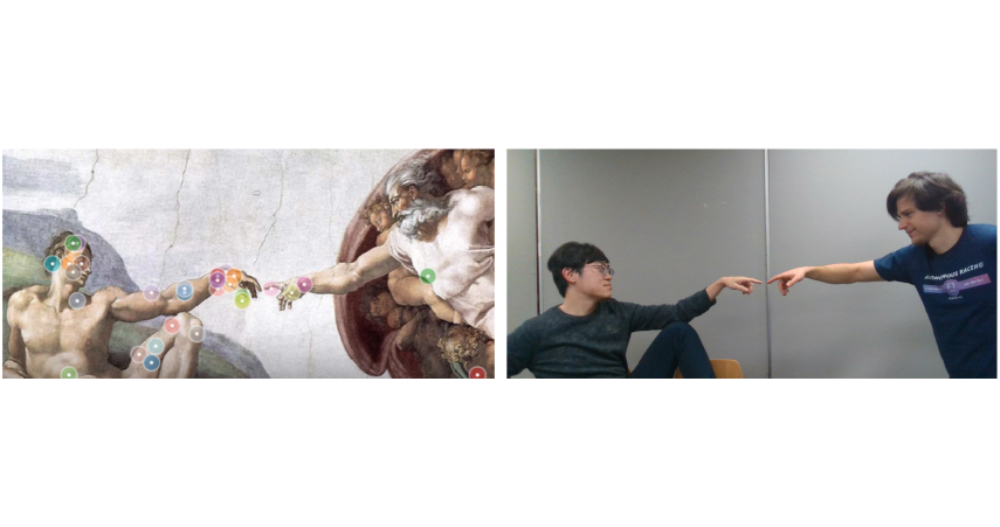
▲Image source for this article: ‘PhotoBot: Reference-Guided Interactive Photography via Natural Language,’ by Limoyo, Li, Rivkin, Kelly, and Dudek.
Could the PhotoBot photography robot, which knows how to teach you to strike a pose, become the ideal patient photographer?
Although many people see the development of AI and immediately worry about what jobs it will replace next.
However, in the survey within the research paper on the “PhotoBot” photography robot presented by the researchers, it was found that in about 2/3 of the cases, the photos it took were considered by humans to surpass the photos taken by 8 human photographers. It still inevitably makes one feel a bit uneasy (huh, why am I still worried).
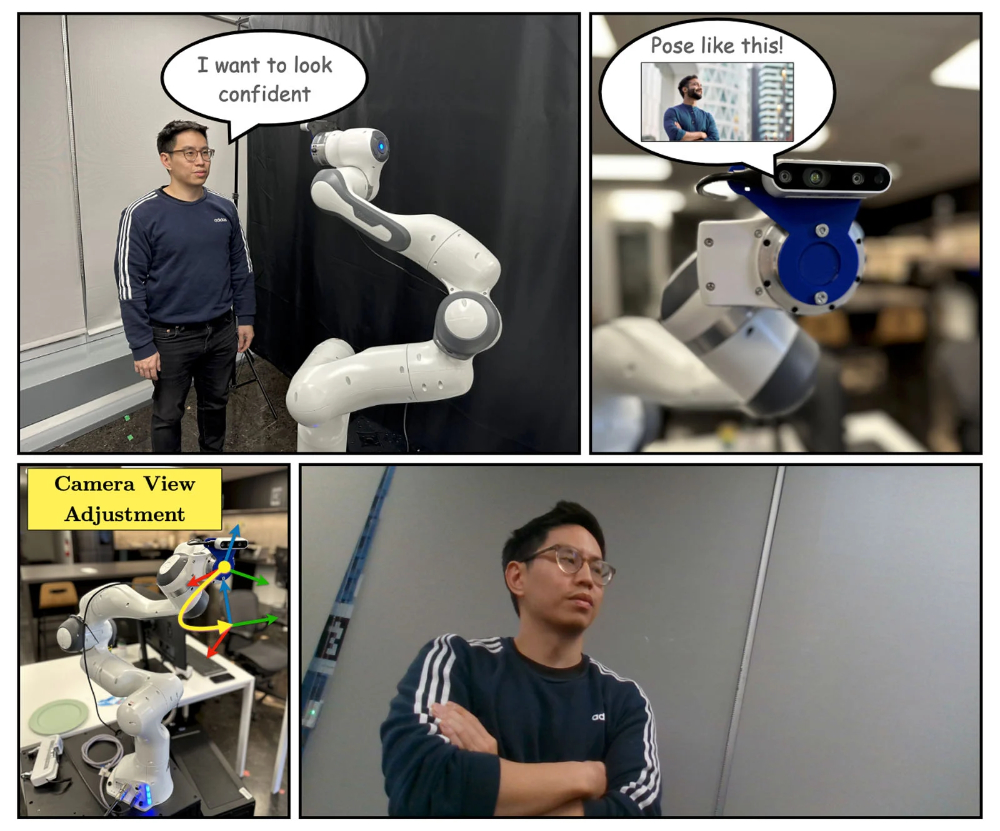
This “PhotoBot: Reference-Guided Interactive Photography via Natural Language” paper is literally translated as “Reference-Guided Interactive Photography via Natural Language” photography robot.
Its operating principle is that it can respond to the subject’s natural language commands (such as: “Take a photo of me that looks fierce”), and it can also reference—or choose not to reference—the “objects” in the camera robot’s surrounding environment that could be incorporated into the shot.
Say cheese! We introduce PhotoBot, a framework for fully automated photo acquisition based on an interplay between high-level human language guidance and a robot photographer. PhD candidate @OliverLimoyo will present this work at #IROS2024!
Paper: https://t.co/DHGFvfOKJf pic.twitter.com/BPrxDkMxlD— STARS Laboratory (@utiasSTARS) October 3, 2024
Next, PhotoBot will proactively search the photo library for photos of people, display them, and use text instructions to guide the user in striking the pose it has analyzed. The technology will then use a robotic arm to move itself into position and complete the shot.
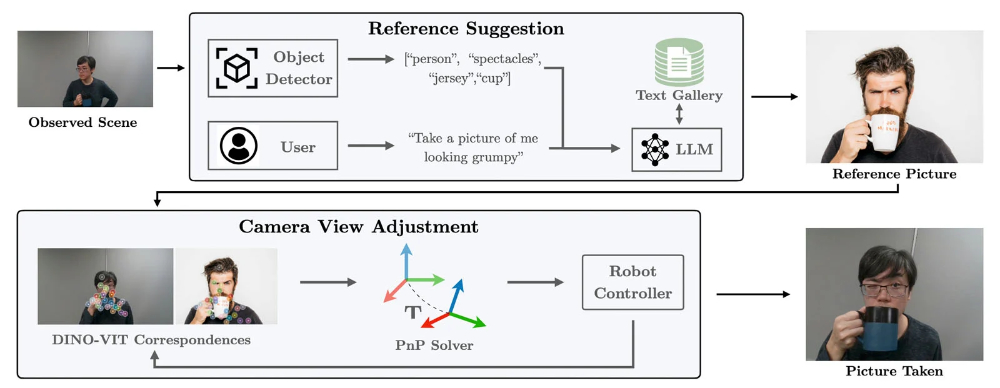
To be honest, on one hand, this system currently “supposedly” doesn’t have the ability to create compositions on its own – it still needs to reference stock photos. But the author also thinks we can’t rule out a version that evolves to learn the best composition and then generates images on its own to guide humans on how to be photographed (scary…).
On the other hand, it’s also limited by the “robotic arm” and requires a depth camera to operate. So if it’s really going to replace photographers, there’s still a long way to go (at least PhotoBot would need wheels or legs — though I feel that part should be the least difficult…).
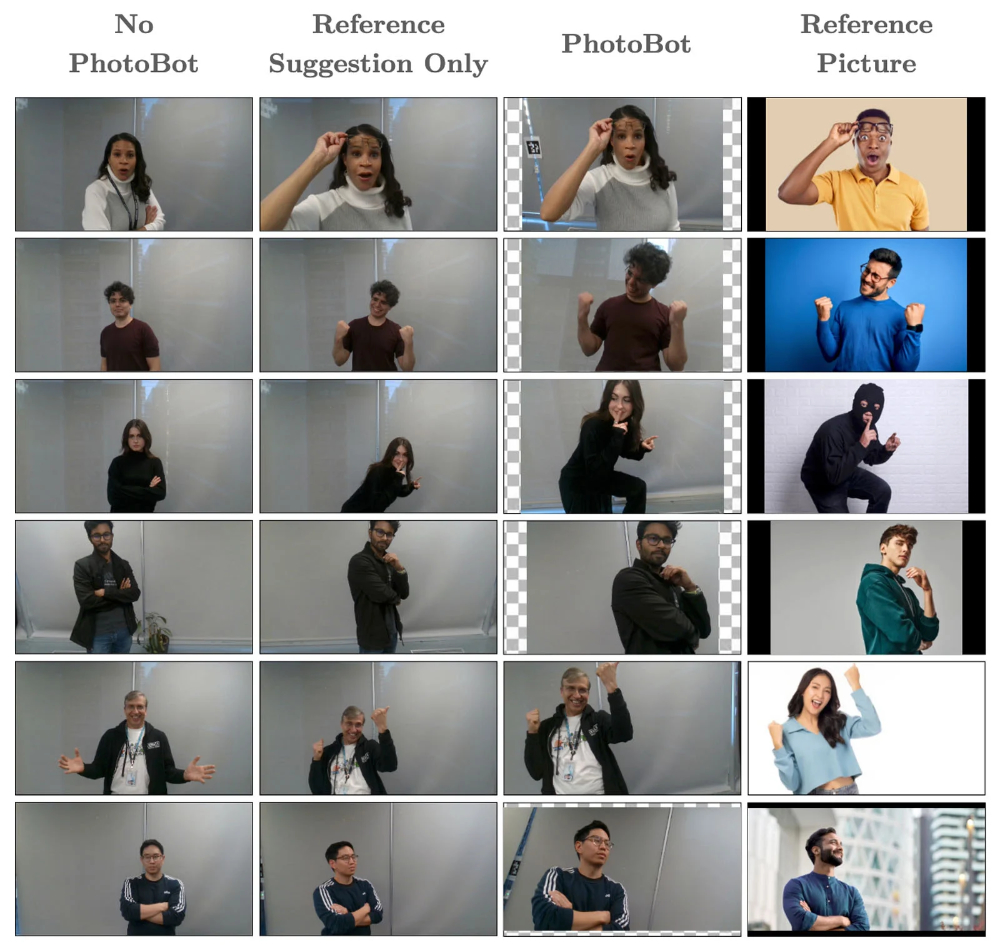
Based on the image examples demonstrated by the research team so far, I personally think the system’s strongest feature is its ability to detect limb states and figure out how to move from the 2D photo reference to the correct compositional position in 3D space (did you notice that the AI also knows to automatically crop the photo to match the example’s aspect ratio?). Of course, the preliminary object detection and image suggestion mechanisms are also quite impressive.
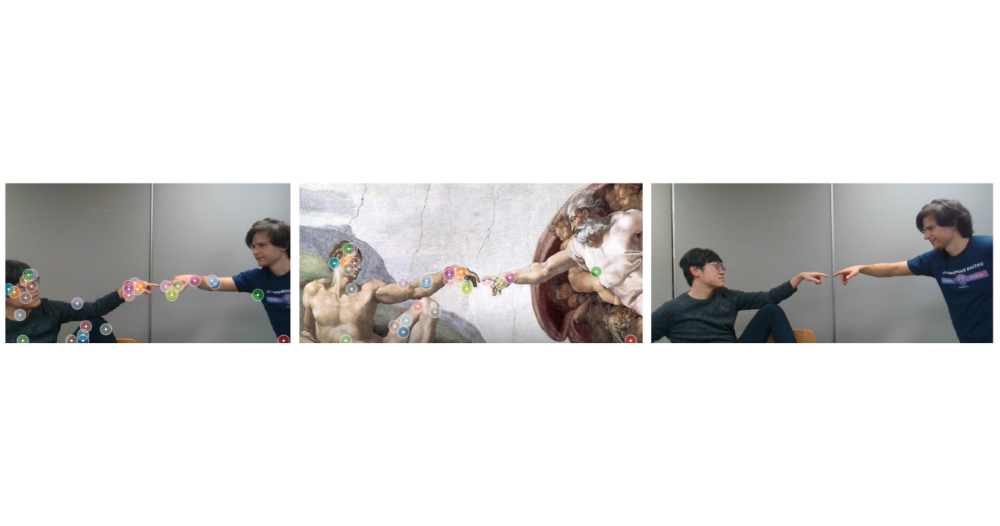
The development team believes this system has the potential to further improve areas like smartphone photography assistance in the future. However, I personally think that when paired with more advanced three-axis gimbals or drones, it could very well lead to automatic shooting features that actively capture classic compositions, much like a robotic arm – or conversely, provide unexpected assistance for documentation functions like time-lapse photography at fixed locations.
I wonder if everyone also sees any future potential in the PhotoBot photography robot?
Citation source:arXiv| Via:PetaPixel|
Further Reading:
The Beauty of Efficiency: An Interview with Apple on iPhone 16 Series Product Design
Source: KOCPC Chinese