


Valve It finally went on sale recently Steam Machine The home game console has undergone multiple rounds of real-machine testing by the media and creators, and there is a clear gap between the performance and the initial official publicity. What’s even more embarrassing is that Valve has recently quietly adjusted the Steam Machine official website product page. The performance-related words that originally clearly stated “4K resolution, 60 FPS frame rate for gaming” have been deleted, leaving only the vague “up to 4K resolution.” This low-key modification action has also been interpreted by the outside world as Valve’s default Steam Machine cannot meet the performance level originally promised.
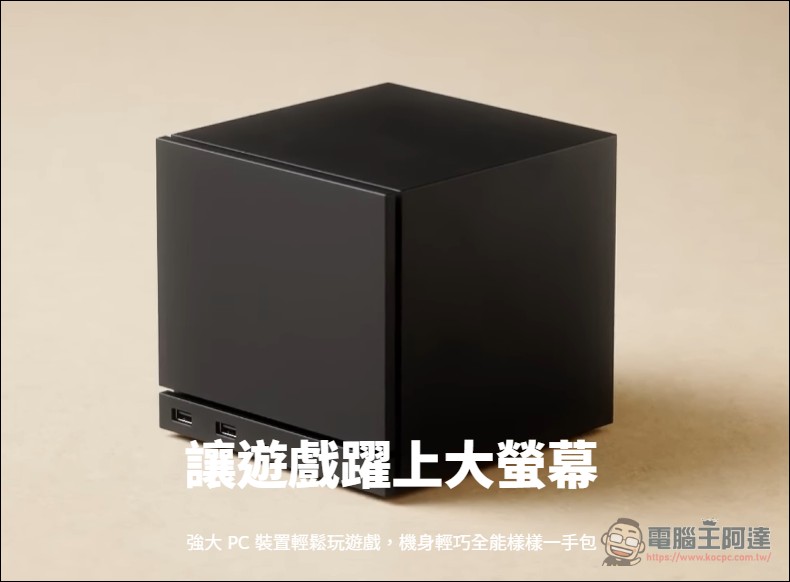
Steam Machine rolls over in actual test! Valve quietly removes words related to 4K/60 performance running
Actual test results: The promise of 4K 60 frames is difficult to fulfill
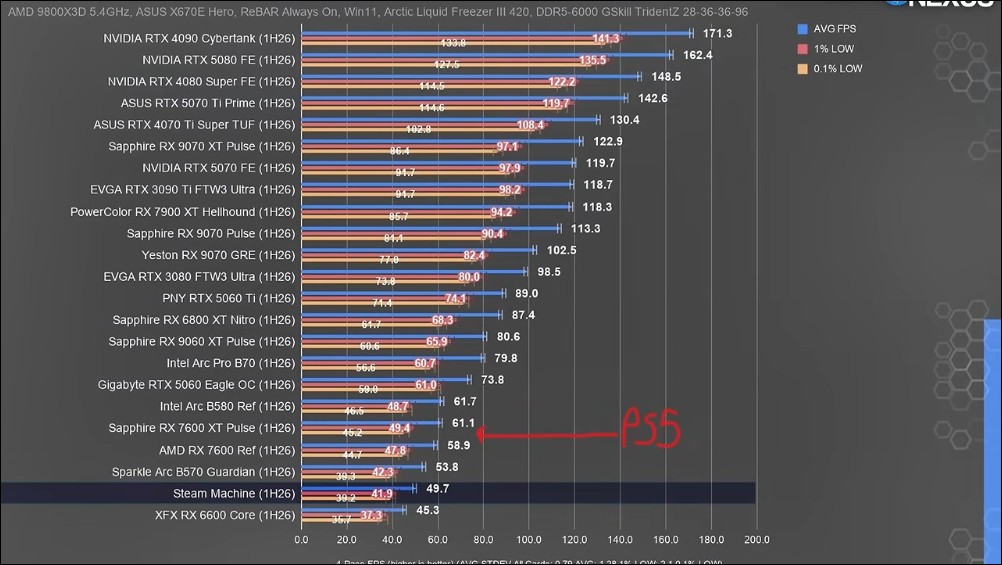
According to actual measurement results from multiple media, Steam Machine’s performance in several popular AAA games is indeed not as good as expected. In “Cyberpunk 2077” and “Forza Horizon 6”, the Steam Machine can roughly maintain around 60 FPS, barely reaching the advertised level. But in “Death Stranding 2” (Death Stranding 2), the average frame rate is only about 45 FPS, which is far from 60 frames. James Bond is just under 60 FPS. Considering that the pricing of Steam Machine is not close to the people, these actual test results put it in an embarrassing position: it neither has the exclusive optimization and stable 4K gaming experience like PlayStation 5 or Xbox Series X, nor does it have the flexible upgrade space and price advantage like a self-built PC.
Well-known hardware whistleblower Moore’s Law Is Dead even directly criticized Valve for “lying to consumers.” He pointed out that the actual performance of the Steam Machine was “terrible,” and Valve even told Tom’s Hardware that they decided to make the game launch at 1080p by default, despite claiming it was a 4K60FPS console a year ago. Moore’s Law Is Dead bluntly said: “Either they messed up, or Valve lied to you.”
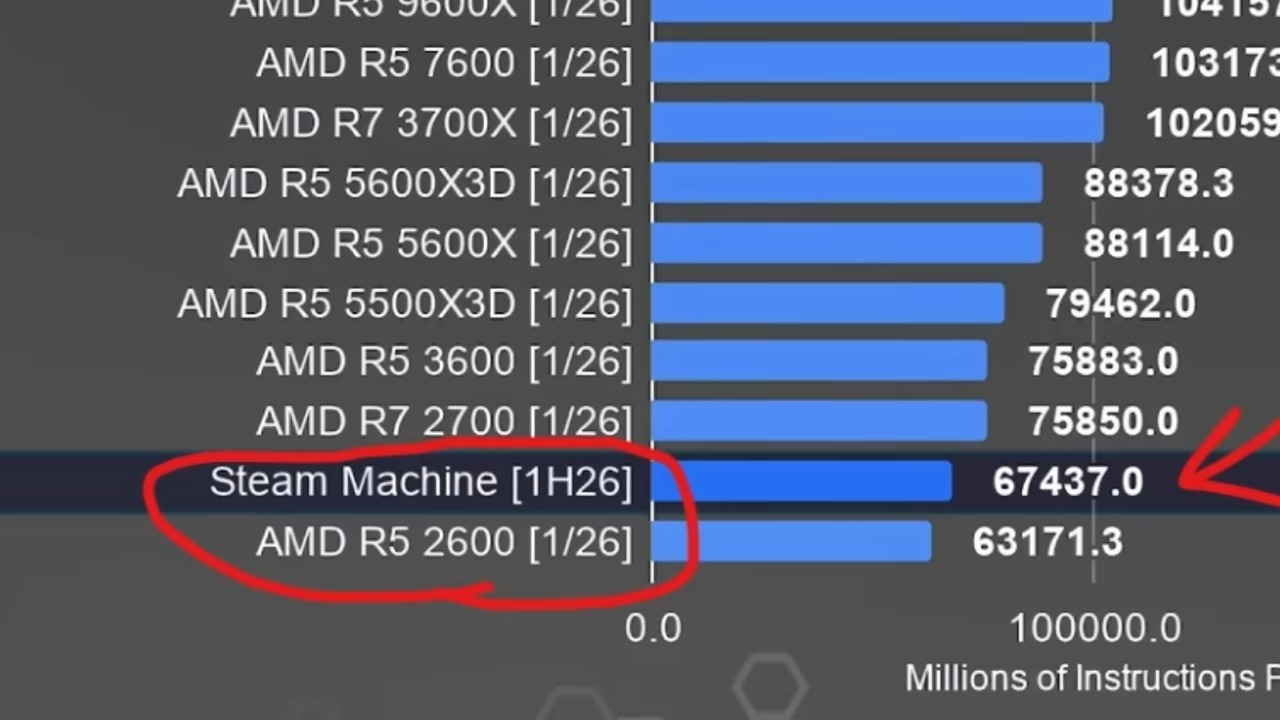
According to the Game Nexus test, the performance of the Steam Machine is close to the RX 6600, and even worse than the RX 7600 XT of the PS5 GPU:
Innate limitations of hardware architecture
The Steam Machine’s hardware specs themselves may be the source of the problem. The GPU performance of this console is roughly equivalent to that of the AMD Radeon RX 7600M mobile graphics card: this is a mid-range notebook GPU, and it is already quite difficult to drive modern AAA games at 4K resolution.
IGN The Steam Machine Verified verification mechanism reported at GDC 2026 also confirmed this performance reality. According to the verification standards announced by Valve at GDC, in order for a game to obtain the “Steam Machine Verified” seal, it only needs to meet the minimum threshold of 1080p resolution and 30 FPS. This standard is much lower than the Steam Deck verification requirements: Steam Deck also requires about 30 FPS smoothness, but only at 800p resolution. In other words, for a console that claims to be 4K60, its official game verification standard is only 1080p/30FPS.
Moore’s Law Is Dead further criticized the Steam Machine for not being a good PC. He points out that the CPU cannot be upgraded, the GPU cannot be replaced, and the RAM is very difficult to remove. He compared it to a custom PC (Ryzen 5 7600 + RX 7800 XT + 32GB DDR5), which was cheaper but had 70% better GPU performance and nearly twice the CPU performance.

“Low-key” modification of product pages and trust issues
The reason why Valve’s modification to the product page caused controversy is not only because the performance did not meet the claimed level, but also because of the lack of transparency in the modification method. Valve has not issued any official statement to explain the reasons for the specification changes, nor has it explained to consumers who have pre-ordered the difference between actual performance and promotion. This “cut first and then tell later” approach has caused quite a crisis of trust in the European and American game communities.
Eurogamer Germany also reported this,The title directly points out Valve’s “secret changes” to 4K performance promises. The article points out that the revised page only retains the description of 4K support and FSR 4.1, and any target of 60 FPS has disappeared.
Compare Valve’s past success with Steam Deck: Steam Deck is also limited by hardware performance, but Valve frankly set the right expectations for handheld games before launch and continues to improve the experience through software optimization. The gap with Steam Machine is that Valve chose to promote 4K/60FPS in a high-profile way this time, and then low-key revised the specifications after the actual test results came out. This approach hurts the brand’s long-term image of integrity in the DIY community.
The awkward positioning of the Steam Machine
Looking back at the positioning of the Steam Machine: a closed game console with a high price, using the SteamOS system, customized AMD hardware, and focusing on the living room gaming experience. The problem is that if the 4K gaming experience is choppy, it loses its competitiveness against the PlayStation 5 Pro; if it ends up running most games at 1080p 30 FPS, it’s not even as good as a similarly priced self-built PC.
In addition, there has been controversy over the RAM configuration of Steam Machine. Some media reported that Valve has adopted the practice of randomly configuring RAM sticks of different brands, which has always been taboo in the field of DIY PCs: Mixing memory of different brands and different timings may cause stability problems. Considering that the Steam Machine has a starting price of US$1,049 (approximately NT$33,410), the market naturally has higher expectations for its performance. However, the gap between actual measurement results and publicity has made the cost-effectiveness of this console widely questioned. At this price point, consumers’ expectations are not excessive.
Conclusion
There’s nothing inherently wrong with the idea of a Steam Machine—a closed-box gaming console designed for a living room Steam experience. Valve has proven with the Steam Deck that they are capable of making great hardware products. But the problem with Steam Machine is that it gave the market too high expectations when it was released, and the actual product failed to find a balance between performance and price. The huge gap between the slogan of 4K60 and the verification standard of 1080p30 has caused this console to bear an excessive trust debt from the beginning.
For Valve, perhaps the most important thing to do now is not to modify the text on the product page, but to face the reality of performance and redefine the market positioning of Steam Machine: it remains to be seen whether it will reduce the price, launch an enhanced version of the hardware, or focus on optimizing SteamOS to make the existing hardware play its full potential.
Source: KOCPC Chinese