


For Google, helping people with disabilities, includingNearly 700 million people with disabilities in the Asia-Pacific region) and ensuring that they can use the Internet without any barriers is one of our very important tasks. The good news is that advances in technology mean we are better equipped than ever to build inclusive online tools and platforms for everyone. When we prioritize accessibility when developing technology, we have the opportunity to remove barriers and create possibilities for things that were previously unachievable.
With this weekglobal accessibility day(Global Accessibility Awareness Day) is coming, we are launching some new accessibility tools, hoping to bring changes to people living in Taiwan and around the world.
In response to Global Accessibility Awareness Day, Google launches a number of new Android accessibility features
Smartphones are the most common way people connect with the world, and we’ve been working hard to make the Android platform easier to use, so we’ve launched several new Android features:
Action Blocks
We hope to provide a simple and seamless way for people with cognitive disabilities to easily complete daily tasks on the Android system, including making video calls to relatives and friends, checking the weather, etc.
So we developed “Action Blocks”, you can perform daily tasks through customized buttons on the phone’s home screen. Users only need to launch “Action Blocks”, select a preloaded application, or enter personal settings directly, then select an image for this customized button and place it on the phone’s home screen to complete the setting.
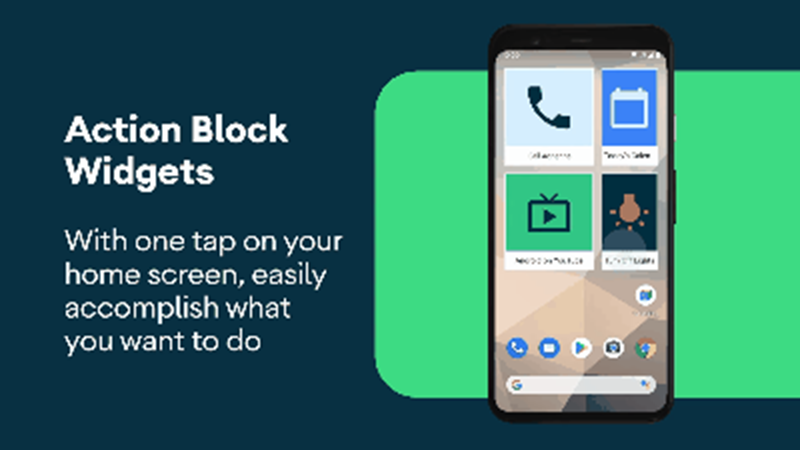
Action blocks allow users to easily perform daily tasks, such as making calls and controlling power
Instant transcription (Live Transcribe)
In February 2019, we launched “Instant transcription“The application provides free real-time voice conversion to text subtitles, making it easier for the hearing-impaired to carry out daily conversations. Today we’re announcing the third major update to Live Transcription, including:
· Users can set their phone to vibrate when their name is called.
· Add your frequently used words, places and things, and add them to the “Instant Transcription” function (even words that are not commonly found in the dictionary can be added)
· Search among copies of records you have chosen to keep
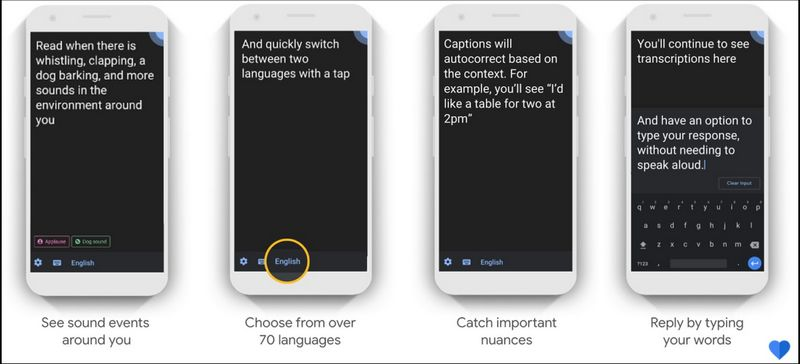 Hearing-impaired people can conduct daily conversations through real-time transcription
Please click here for instant transcription download and teaching
sound amplifier(Sound Amplifier)
By introducing “sound amplifier”, we make the audio on Android smartphones clearer. Users can set it according to their personal preferences to enhance weak volumes without over-amplifying louder volumes.
From now on, the “sound amplifier” can be used with Bluetooth headphones, just like a portable amplifier. This means users can place the device close to the sound source and increase the volume without disturbing others. In addition, Sound Amplifier can also be used to amplify the sound of other apps on Pixel devices, such as YouTube and Spotify.
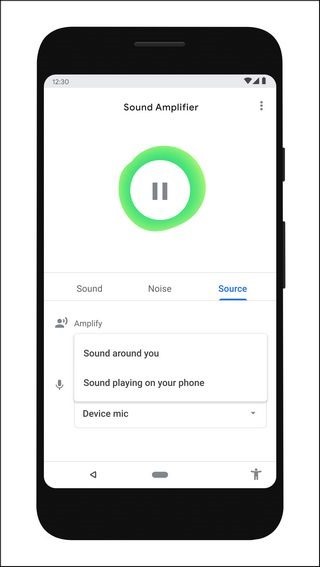
Sound Amplifier Makes Audio Clearer on Android Smartphones
Focus on education Highlighting the importance of accessibility tools
With more and more people learning from home these days, Global Accessibility Awareness Day provides an opportunity to focus on more inclusive distance learning and emphasizeAccessibility ToolsAvailable to students, teachers, parents, and educational technology developers.
in ourHome distance learning websiteThere is a special “Guardian’s Guide”, which is specially written for children with disabilities who have to study at home due to school closures.A11y Project websiteProvides recommendations for assistive technology developers, as well as lists and links to tools such as screen readers, while “Guardian’s Guide to Accessibility” helps parents and guardians learn how to useVoice inputand other accessibility tools.
In addition to these resources, we recently shared a series of simpleTips and Tools, assisting students with disabilities face unique challenges in distance learning. We will continue to work with educators and families to ensure that all students have accessible, fulfilling, and enjoyable learning experiences during this time and into the future.
Continuing to expand accessibility and inclusion
Only when the Internet can also provide the help needed by people with disabilities, will the Internet really be helpful to everyone. There is no doubt that we have made considerable progress in developing inclusive technologies, tools, and applications, but there is still much room for continued efforts, and expanding online accessibility features will be a top priority for our continued efforts.
Author: Eve Andersson, General Manager of Machine Learning Equity and Accessibility at Google
Source: KOCPC Chinese