


in recent yearsfold screencell phoneIt is becoming more and more popular, and many people are accustomed to using it to record travel and life details. However, as long as a cold wave hits, especially when used in a low-temperature environment, it may instantly transform from a high-tech flagship to an expensive repair case.
Recently on social platforms, many netizens shared that they were traveling to cold areas with their foldable screen phones, but as soon as they opened the inner screen, cracks, bright lines, and even the entire display appeared abnormal. This situation is not a single brand problem, but related tofold screenThe material properties, structural design, and physical changes brought about by the low-temperature environment are closely related.
There is actually a clear scientific logic behind why foldable screens are particularly sensitive to cold, what irreversible damage can occur at low temperatures, and how to use them safely in winter to avoid “instant retirement” of mobile phones during travel.
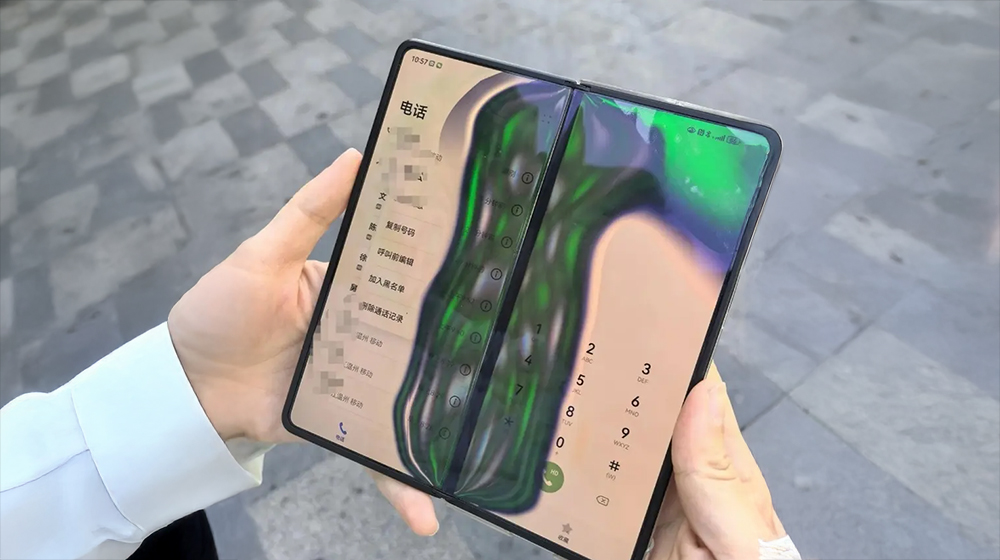
▲Picture source: Weibo
It is not an urban legend that foldable screen mobile phones turn into “crushed ice”. Low temperature will really destroy it! Google and Samsung user manuals have reminders about the usage environment
Whenever a cold wave comes in the past few years, it’s unbearable to hold a mobile phone outside until your hands get cold, let alone in extremely cold high latitudes. For example, in Northeast China, extremely low temperatures of tens of degrees below zero are common in winter. This has also made “folding screens break down in extremely cold areas”, which has become a word-of-mouth topic among users recently.
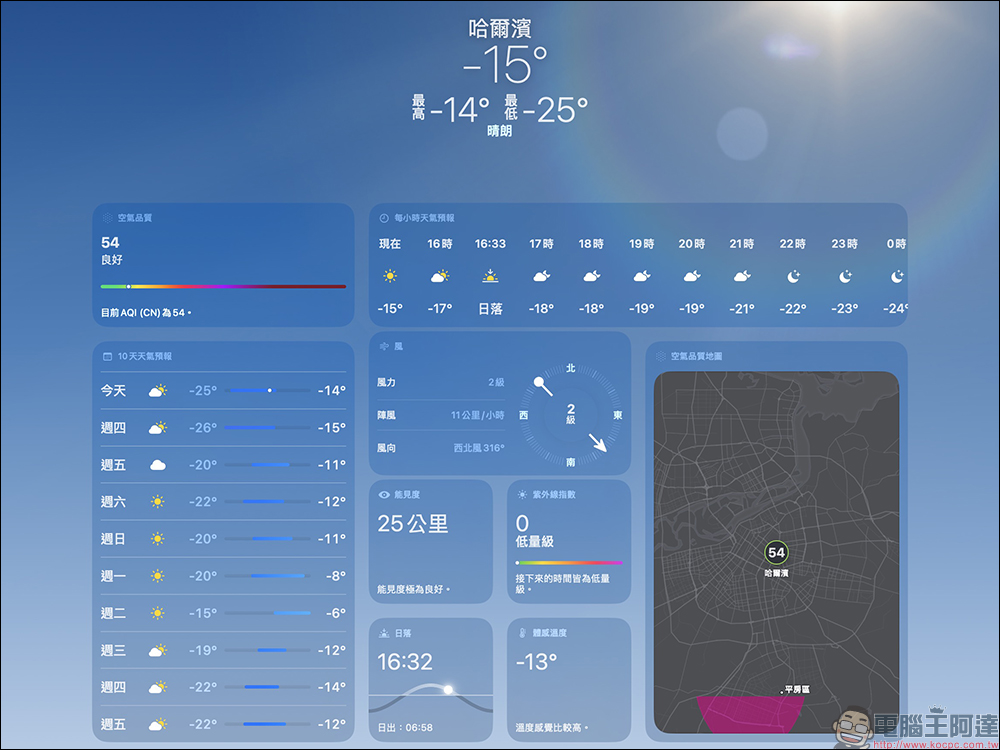
In the sub-zero environment in winter, the endurance of foldable screen mobile phones is obviously lower than that of traditional flat screen mobile phones. The root cause of the problem actually lies in the material and structure itself.
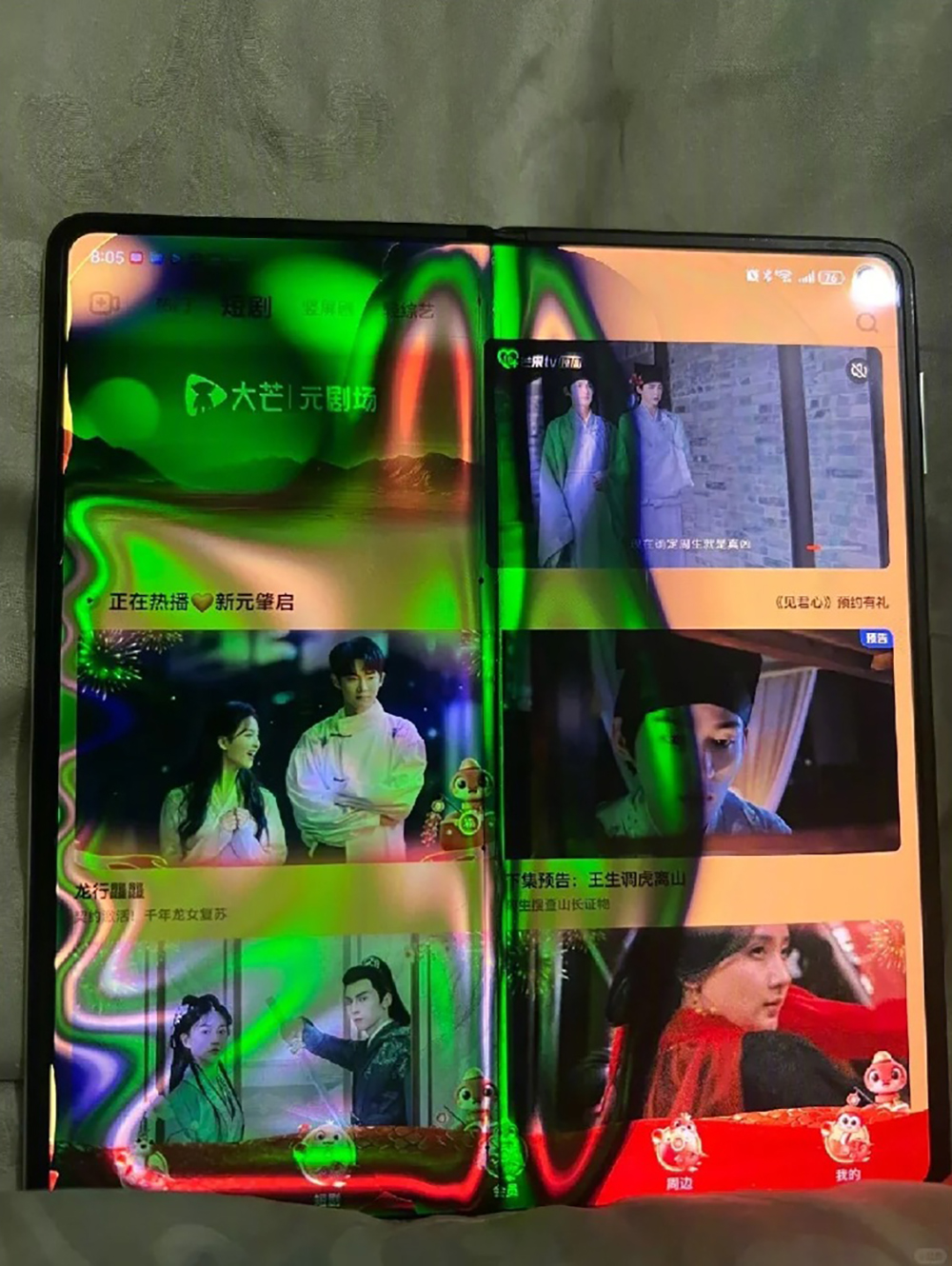
▲Picture source: Weibo
The foldable screen uses flexible OLED display technology. The interior is not a single panel, but composed of multiple layers of polymer materials, organic light-emitting layers, and ultra-thin glass. These materials all have a common characteristic, which is the so-called “glass transition temperature.” When the temperature is moderate, the material can maintain flexibility and elasticity, but when the ambient temperature continues to drop, the material properties will gradually change, from a state that can withstand bending to a harder and brittle structure.
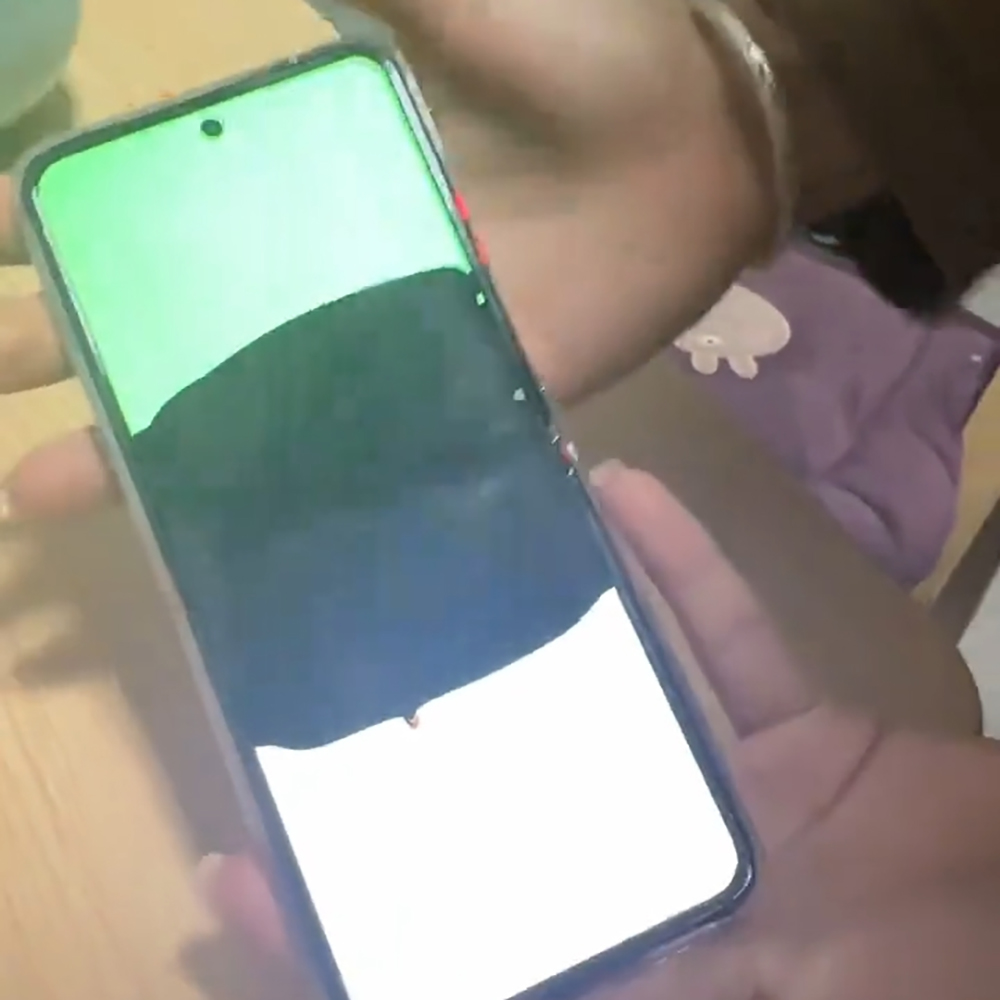
▲Picture source: Weibo
Once it enters an extremely low temperature environment, the bending area of the foldable screen will become the most vulnerable part of the entire phone. The screen that usually looks soft seems to be “frozen” at low temperatures. When the user turns on the phone as usual, the instantaneous stress on the screen cannot be absorbed, and cracks, bright lines, and even display abnormalities will appear immediately.
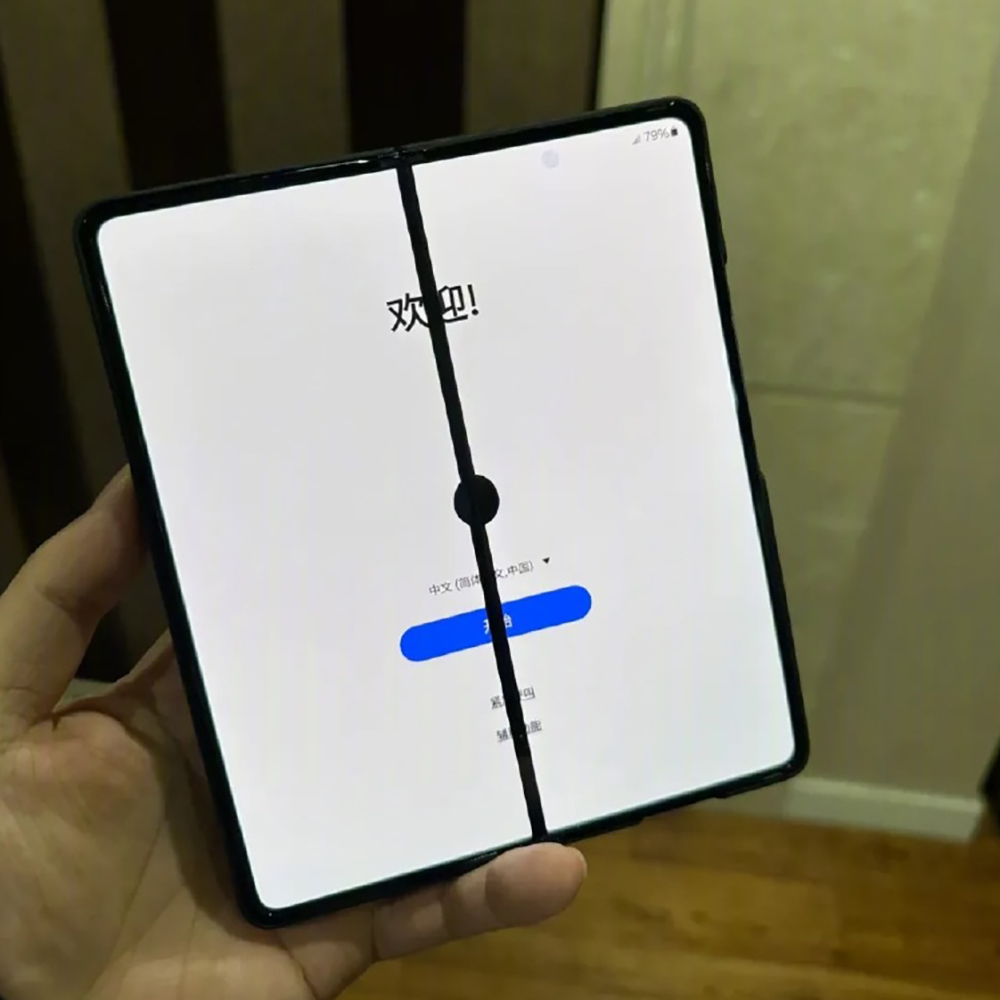
▲Picture source: Weibo
In addition to the screen material itself, another key that is easily overlooked is the hinge structure. A large part of the opening and closing feel of the folding screen comes from the internal lubrication design, but the lubricating oil will thicken significantly at low temperatures and even approach a solidification state. At this time, the resistance to opening and closing will increase significantly. If the user forcibly opens the phone outdoors, it will be like trying to break off a frozen plastic pipe. Not only will it feel weird in the hand, but it will also put the screen at greater risk of pulling.
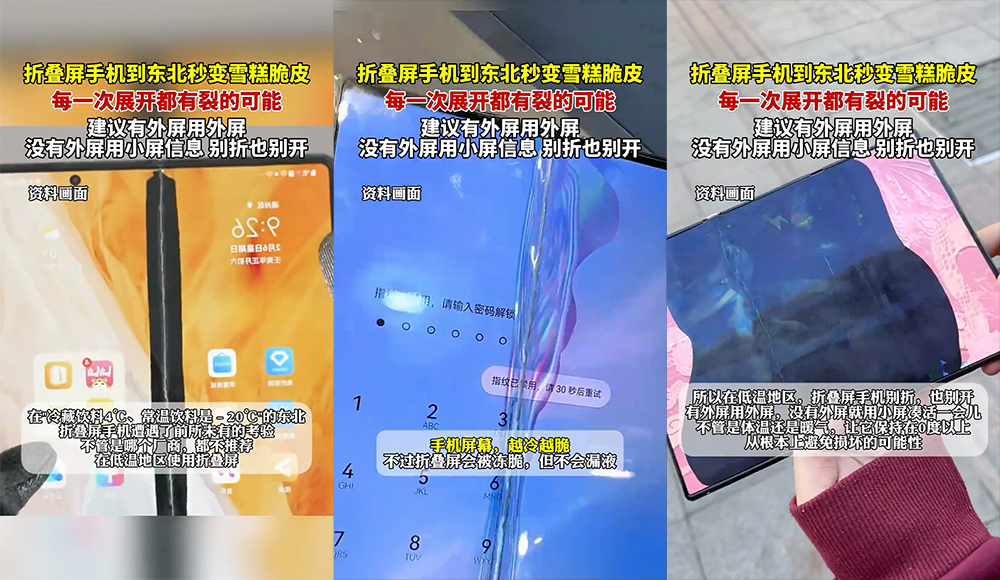
▲Picture source: Weibo
In actual use, the impact of low temperature on foldable screens is often not a single problem, but multiple conditions occurring at the same time. The first physical changes usually appear, such as the screen becoming hard and small cracks appearing in the bend area, followed by display abnormalities such as bright lines, dark spots, or partial discoloration. Then there is the structural problem. The hinge is stuck, making it difficult to open and close smoothly. If it is used continuously, it may further damage the inner layer of the screen.
The functional side will also be affected. Low temperature will affect the resistance change of the touch layer, resulting in slow or malfunction of the touch response. Reduced battery activity may also lead to rapid loss of power, or even automatic shutdown. These problems may not be immediately apparent in indoor environments, but as long as the folding screen is opened in the cold outdoors, it is often the last straw that breaks it.
Therefore, the recommended operating temperature of most foldable screen mobile phones on the market actually falls in the range from above zero degrees Celsius to mid-to-high temperature. Once exposed to sub-zero environments for a long time, the risk of failure will naturally increase significantly. This is not a case, but a physical limitation under current technical conditions.
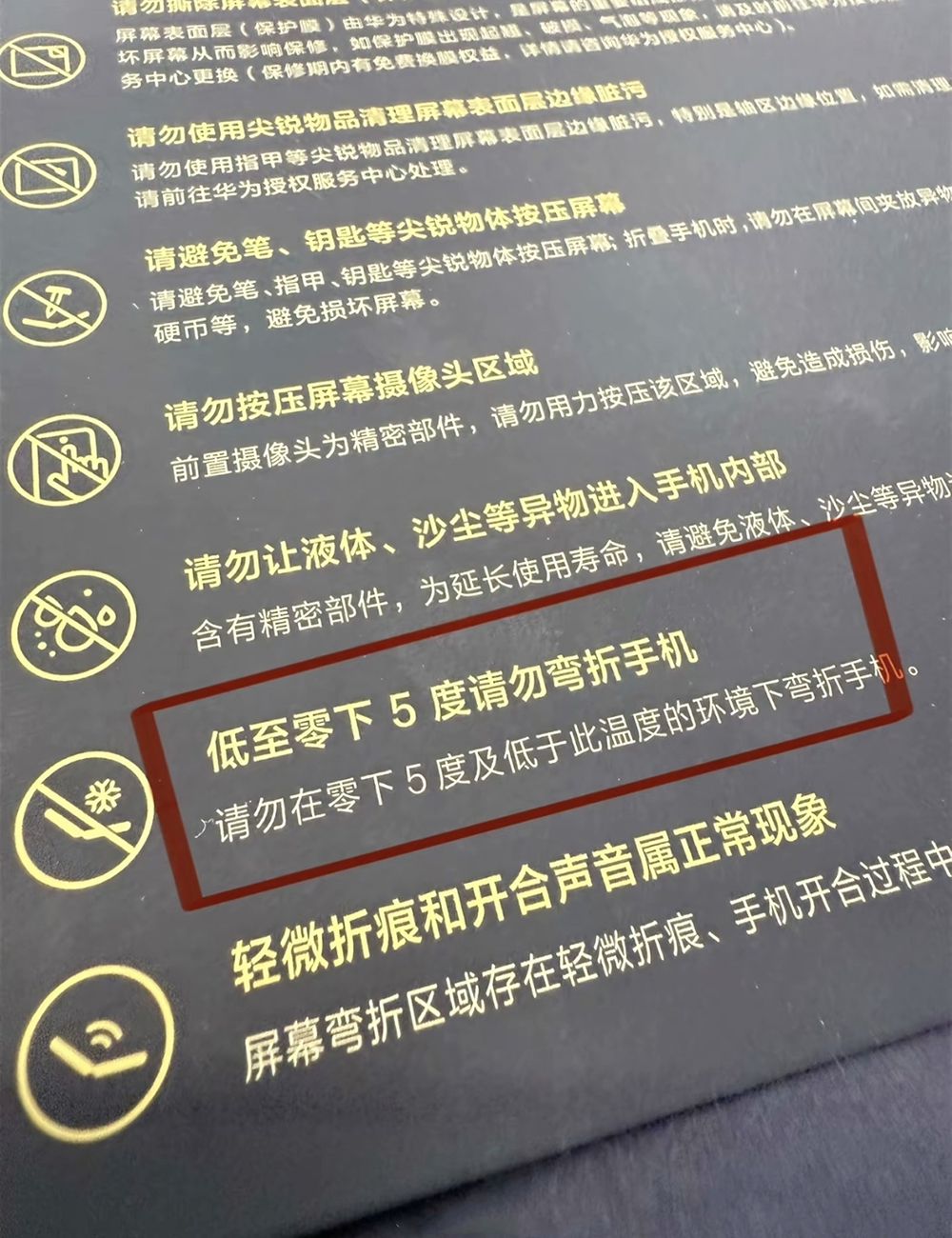
▲Picture source: Weibo
Although Taiwanese consumers may not pay attention to it, in fact, taking several mobile phones sold in Taiwan as an example, many have relevant reminder messages for ambient temperature. like Google Pixel 10 Pro FoldOfficial instructions for useIt was mentioned:
“The optimal operating environment temperature is 0°C~35°C, and the storage environment temperature should be -20°C~45°C. Do not place the phone in a place with a temperature exceeding 45°C (such as on a car dashboard or near a heating vent), otherwise it may cause damage to the device, overheating of the battery, or fire.” It is also emphasized that “Do not fold or unfold the device below -20°C in extremely cold environments.”
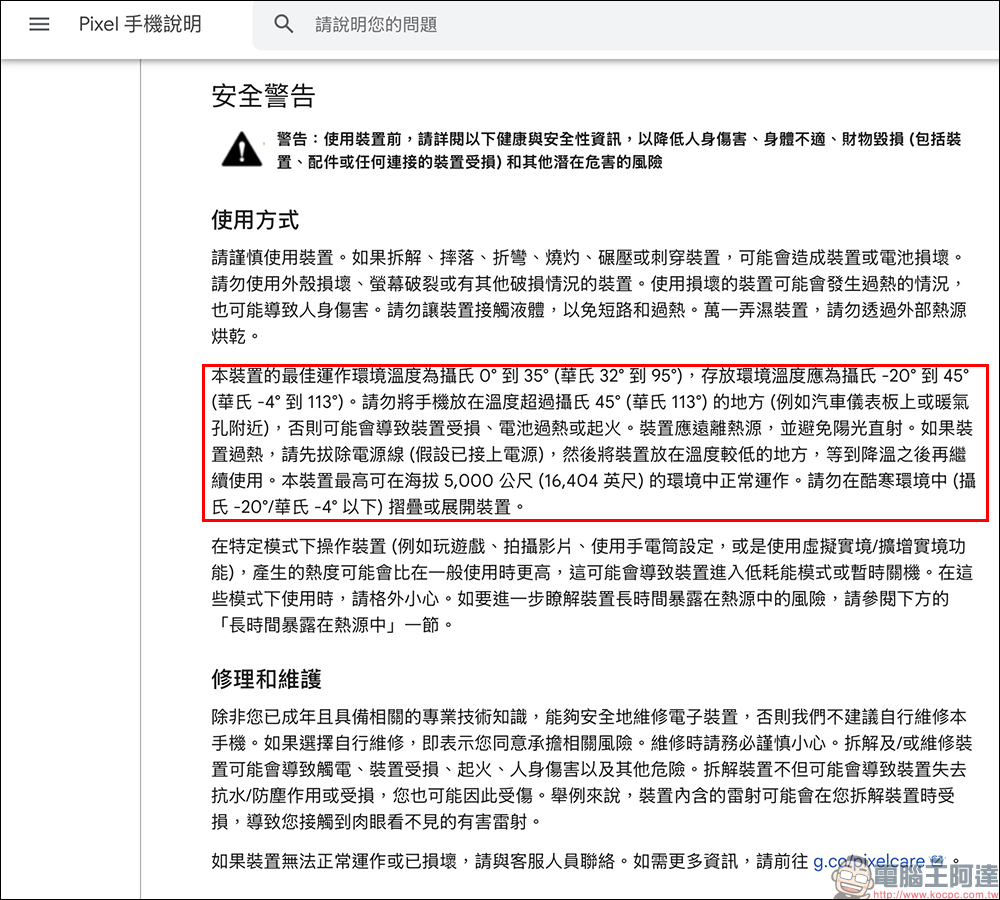
▲Picture source:Google
in additionSamsungpart, in Samsung Galaxy Z Fold 7Official manualIt is also mentioned that “the device can be used in locations with ambient temperatures between 0℃ and 35℃. The device can be stored at ambient temperatures between -10℃ ~50℃. Using or storing the device outside the recommended temperature range may damage the device or shorten the life of the battery.”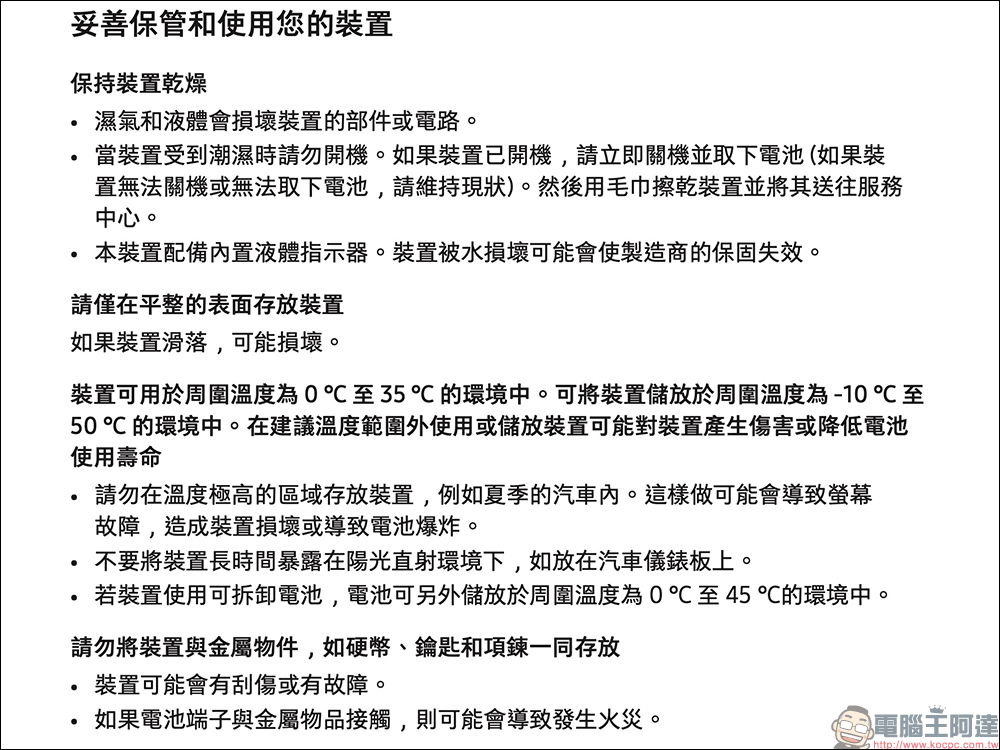
▲Picture source:Samsung
Faced with such use risks, the industry has not stopped. Including flexible substrates that are more resistant to low temperatures, stronger ultra-thin glass, and hinge lubrication designs that can maintain stability in low-temperature environments are all current directions for continued research and development. Some technologies have even begun to try to add auxiliary heating or intelligent restriction mechanisms into the structure. When the ambient temperature is too low, the folding action is automatically restricted to reduce the risk of misuse.
However, before the new technology fully matures, what users can do is to adjust their actual usage habits. When using a folding screen in winter, the most important principle is heat preservation. Putting your mobile phone in your pocket and using your body temperature to maintain temperature and avoid being exposed to cold wind for a long time is the most basic and effective method.
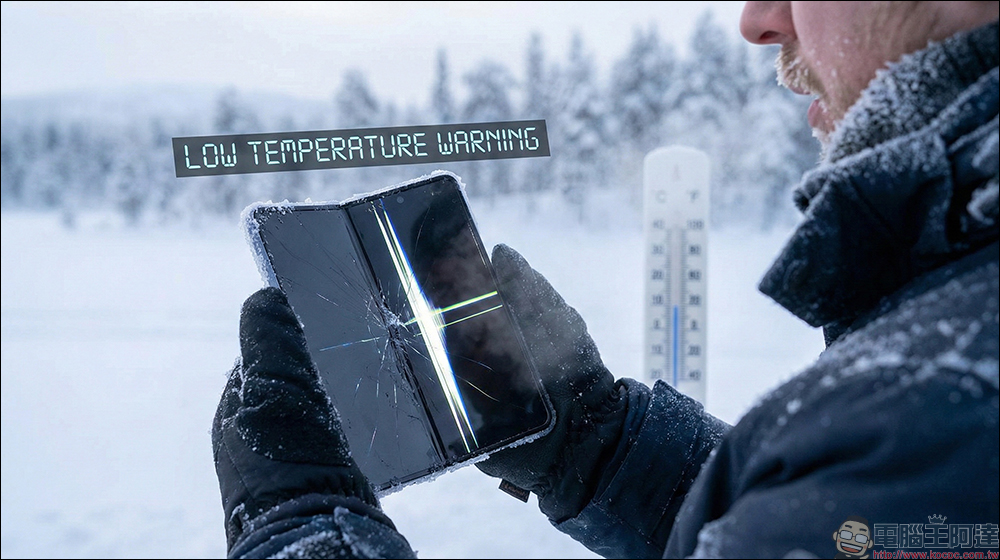
Experts also recommend that users minimize the number of openings and closings when outdoors. If they need to be used, it is best to complete folding or unfolding indoors first, and maintain a fixed shape when outdoors. After entering the room from a low-temperature environment, do not rush to operate the mobile phone. Let it sit for a few minutes and wait for the temperature to rise before using it. This can effectively reduce the material stress caused by the temperature difference.
If you find that the phone is obviously stuck in opening and closing, you should avoid forced operation. The safest way at this time is to return the phone to a warm environment and wait for it to return to normal before using it. It is far more cost-effective than sending it for repair afterwards.
Further reading:
Source: KOCPC Chinese