


Late night yesterday (2nd) Apple Update the product line without warning and launch a new iPhone 17e and iPad Air M4. The appearance is almost unchanged, but the core specifications have been fully upgraded, including chips, memory and wireless connectivity. However, the focus that netizens are most concerned about still falls on the “10,000-year 60Hz” display screen. How much has the iPad Air M4 been upgraded this time? How is it different from the previous generation M3? If you are considering buying one, this article will help you sort it out.
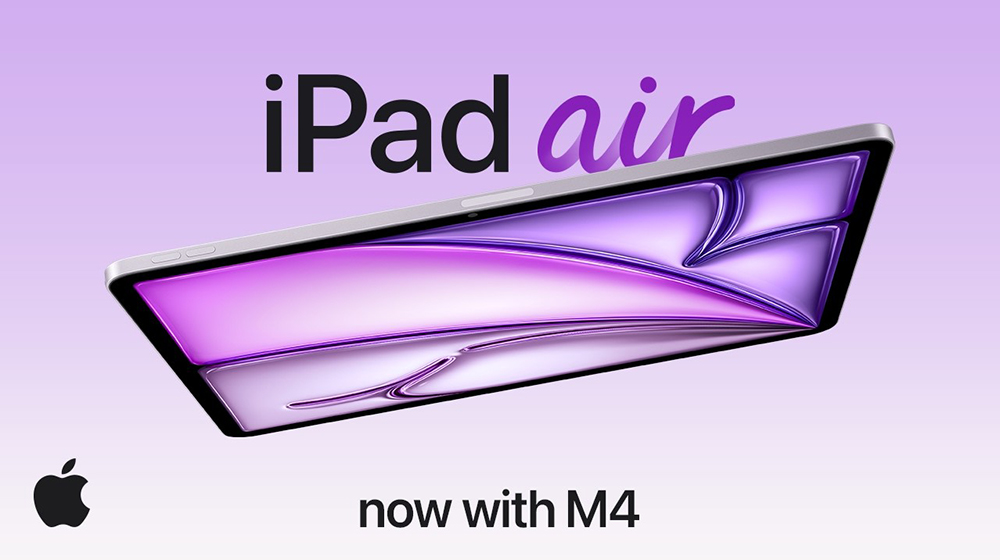
Is the iPad Air M4 worth upgrading? What’s the difference between M3 and M3?
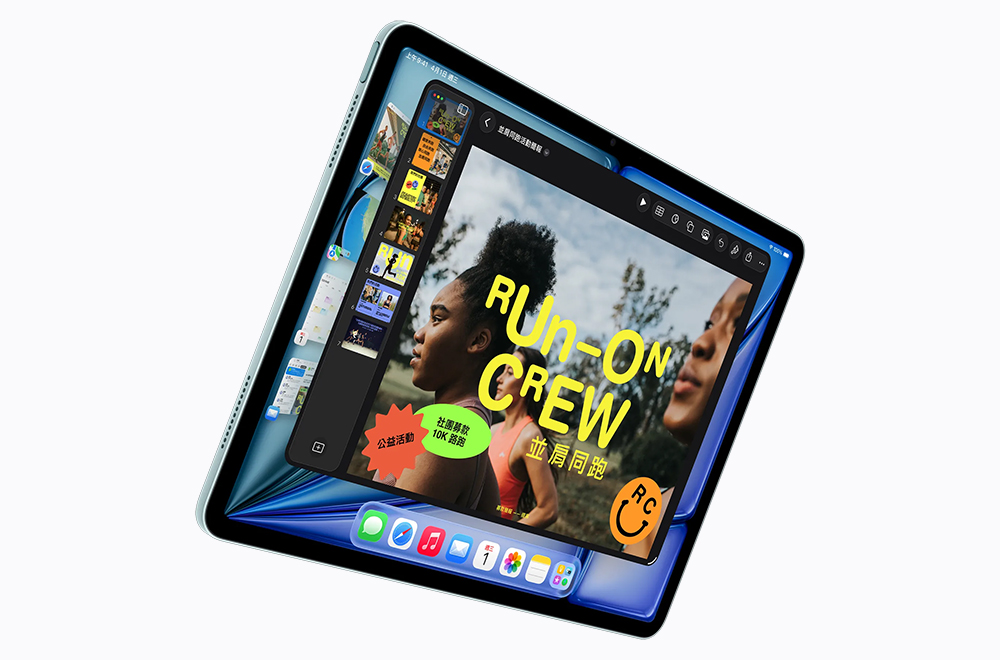
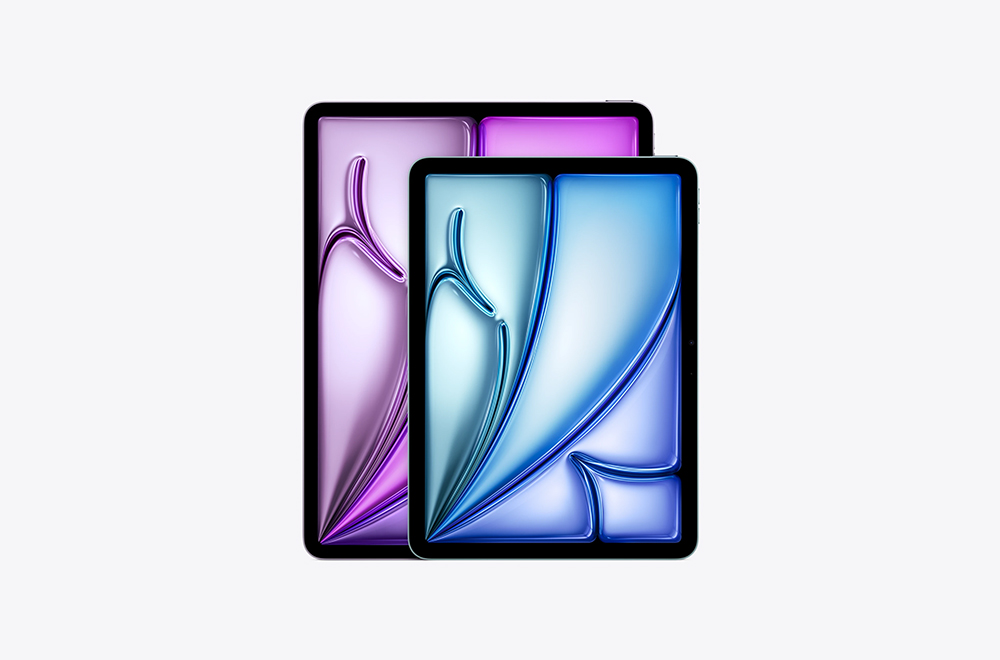
This time the iPad Air M4 is almost identical in appearance design to the M3 version, and still offers two size options of 11 inches and 13 inches. For people who are used to the thin and light body of iPad Air, there won’t be much difference in feel.
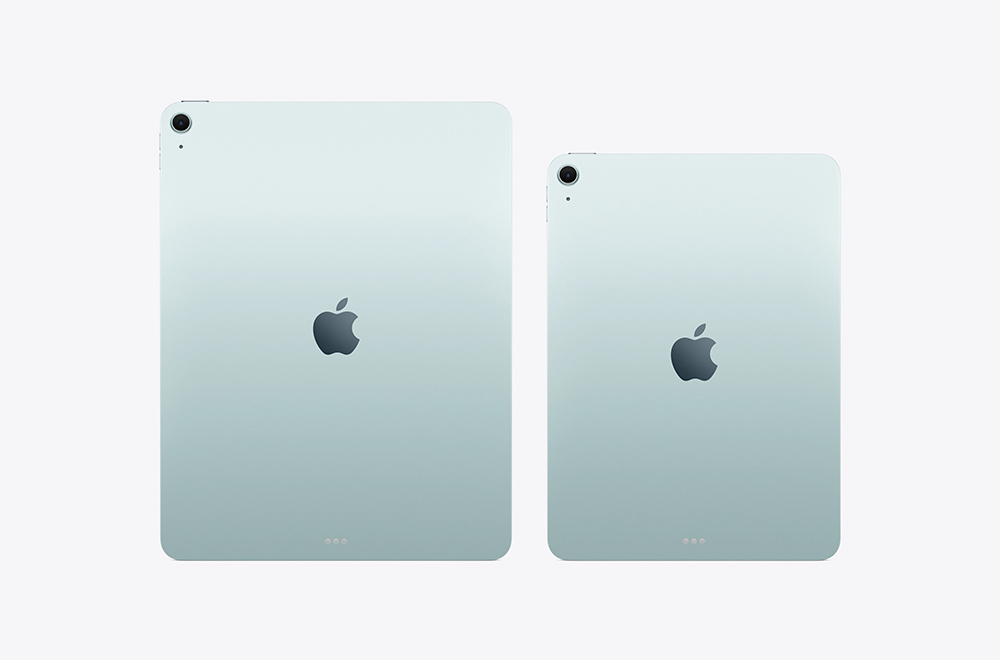
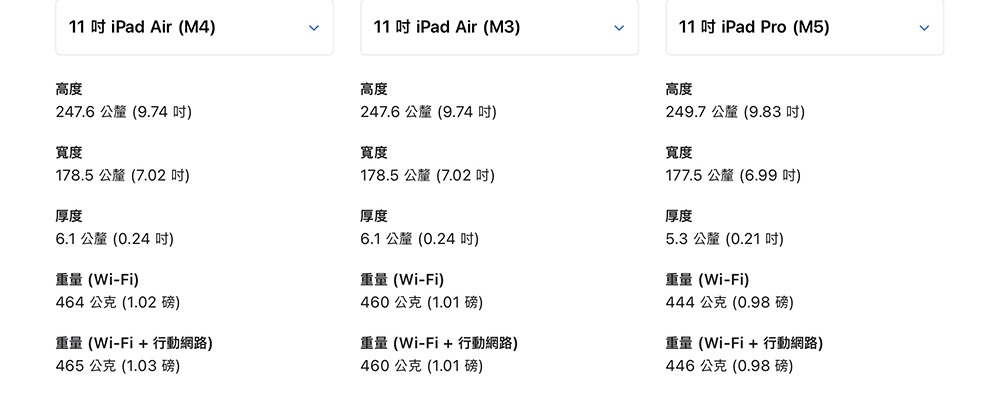
In terms of weight, the 13-inch version of iPad Air M4 remains unchanged at 616 grams, while the 11-inch version of iPad Air M4 weighs 4 grams more than the M3 version, coming to 464 grams. This difference is almost imperceptible in daily use. If you put it in your bag or hold it for a long time to read or watch TV series, you will not feel any obvious burden due to these 4 grams. The real upgrade is actually hidden inside the fuselage.
Processor upgrade 30% performance gap felt
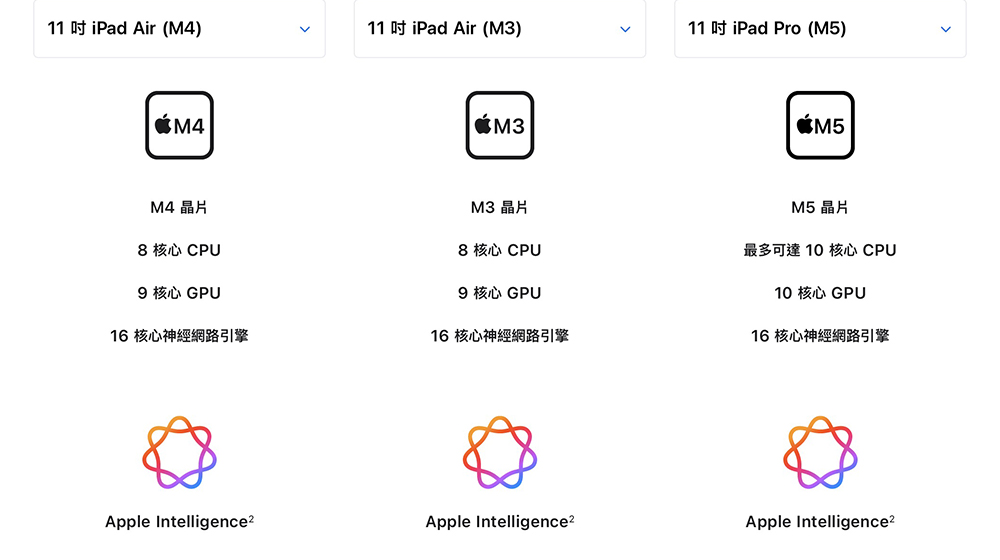
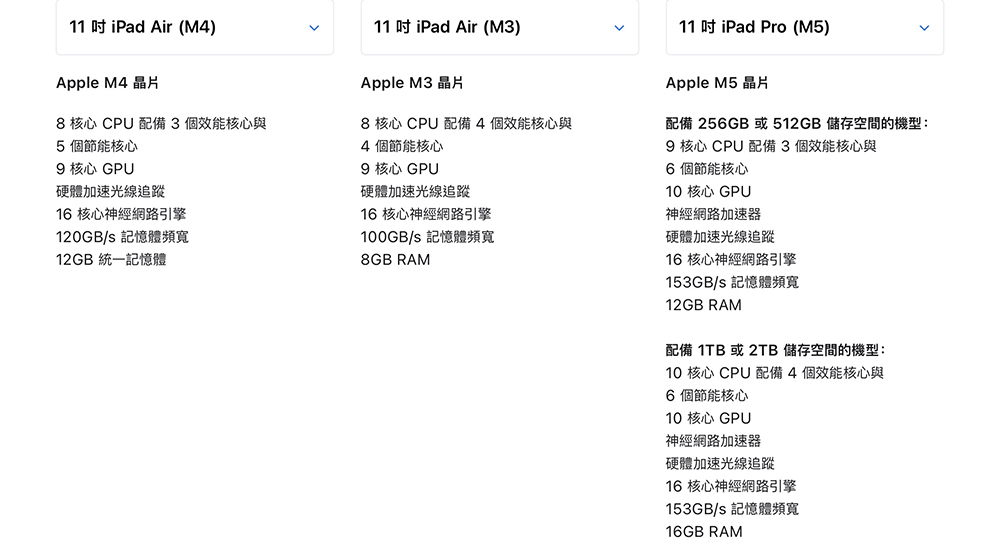
iPad Air M4 uses an 8-core CPU and a 9-core GPU. Compared with the previous generation model equipped with M3, official data shows that the overall performance is improved by about 30%. This gap is reflected in daily use, such as multitasking, editing 4K videos, editing RAW photos, or running large drawing apps, and you will feel a smoother operating experience. For people like you who usually write articles, edit pictures, and even process audio and video materials, the upgrade of M4 is not just about good performance, but it can really widen the productivity gap.
Especially as the functions of iPadOS become more and more powerful, background multitasking, split screen and AI applications all consume more resources. The improvement of the M4 chip can be regarded as laying the foundation for the service life in the next few years.
Memory upgraded from 8GB to 12GB
Another key upgrade this time is the memory increase from the original 8GB to 12GB. In the current situation where software is getting bigger and bigger, 12GB memory will have significantly better stability for opening multiple apps for a long time, having too many browser paginations, or using design software. More importantly, despite the rising global memory costs, Apple has maintained the same pricing strategy as M3 this time, which really surprised many people.
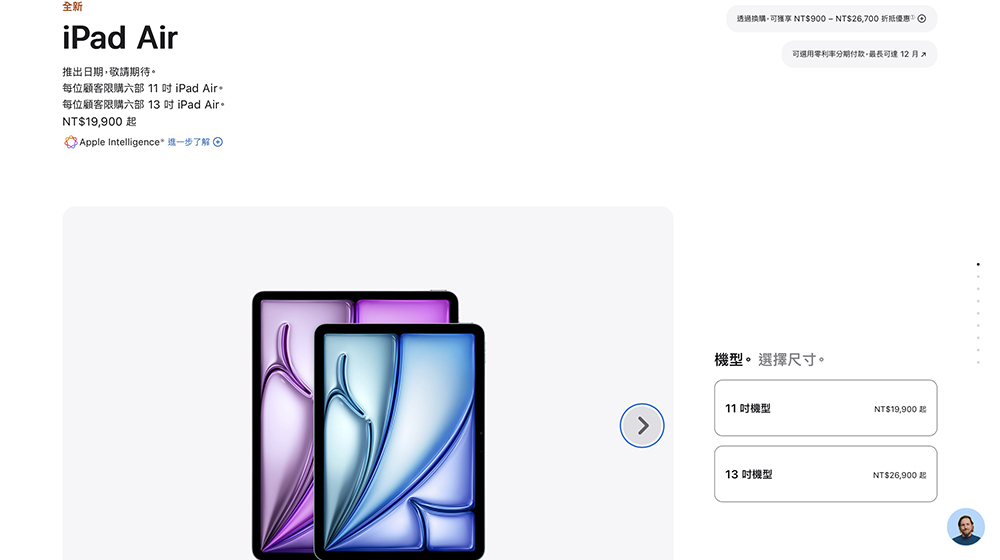
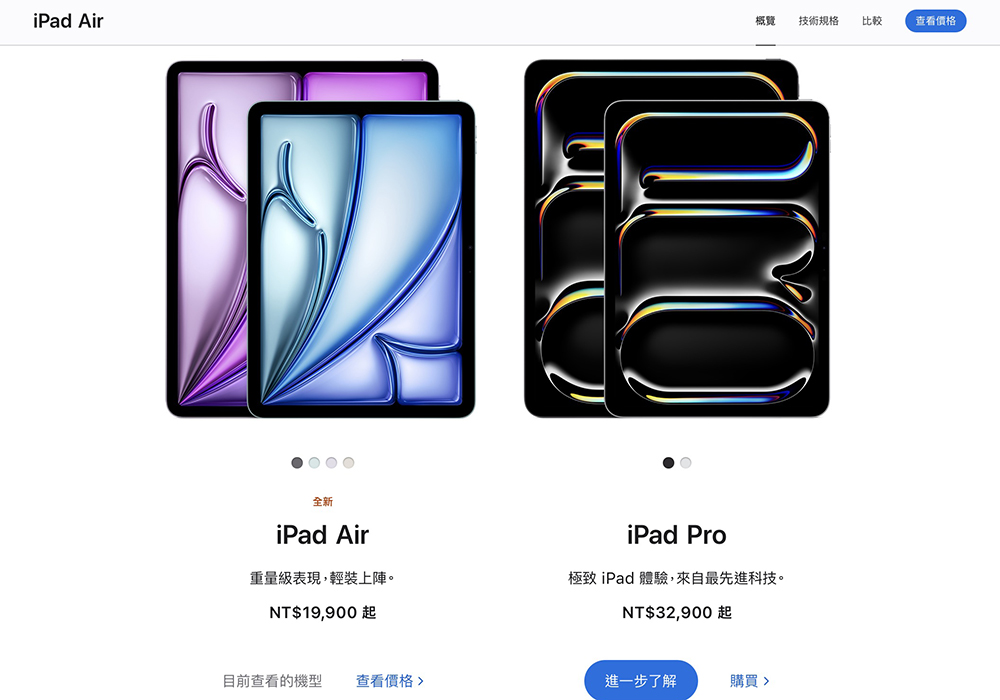
In terms of price, the Wi-Fi version starts from 19,900 yuan for the 11-inch 128GB model and 26,900 yuan for the 13-inch model. The Wi-Fi plus mobile network version starts from NT$24,900 for the 11-inch 128GB model and NT$31,900 for the 13-inch model. Capacity options range from 128GB to 1TB. Judging from the fact that the price has not been increased, and purely in terms of the extent of the specification upgrade, this is considered an update relative to Buddha’s heart.
The biggest regret is that the screen is still 60Hz
But when it comes to the screen, this is where netizens discuss it the most. iPad Air M4 still uses an LCD display screen and a 60Hz refresh rate. Compared to the iPad Pro, which uses an OLED panel and a 120Hz update rate, there is still a gap between the two in terms of sliding smoothness and picture detail.
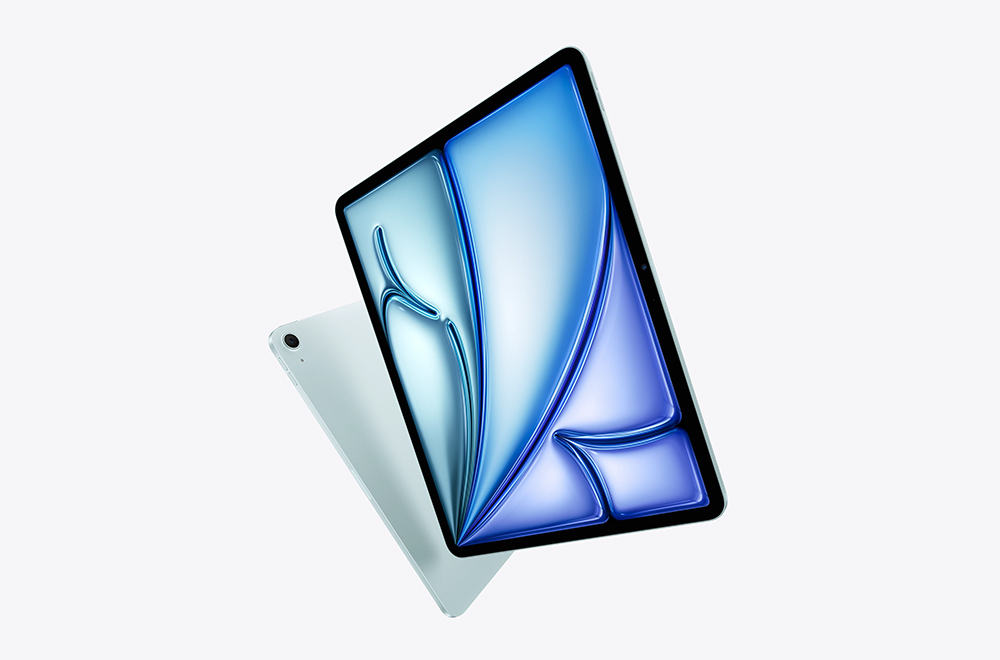
At this point in 2026, many mid-to-high-end Android tablets and even mobile phones are already equipped with 120Hz as standard. This time the iPad Air still stays at 60Hz. No wonder it is jokingly called 60Hz by netizens. If you are someone who is very sensitive to picture smoothness, especially if you often play games or write notes by hand for a long time, then the smoothness brought by 120Hz will indeed be more comfortable. However, if the main uses are audio-visual entertainment, word processing, and light creation, 60Hz is actually still within the acceptable range.
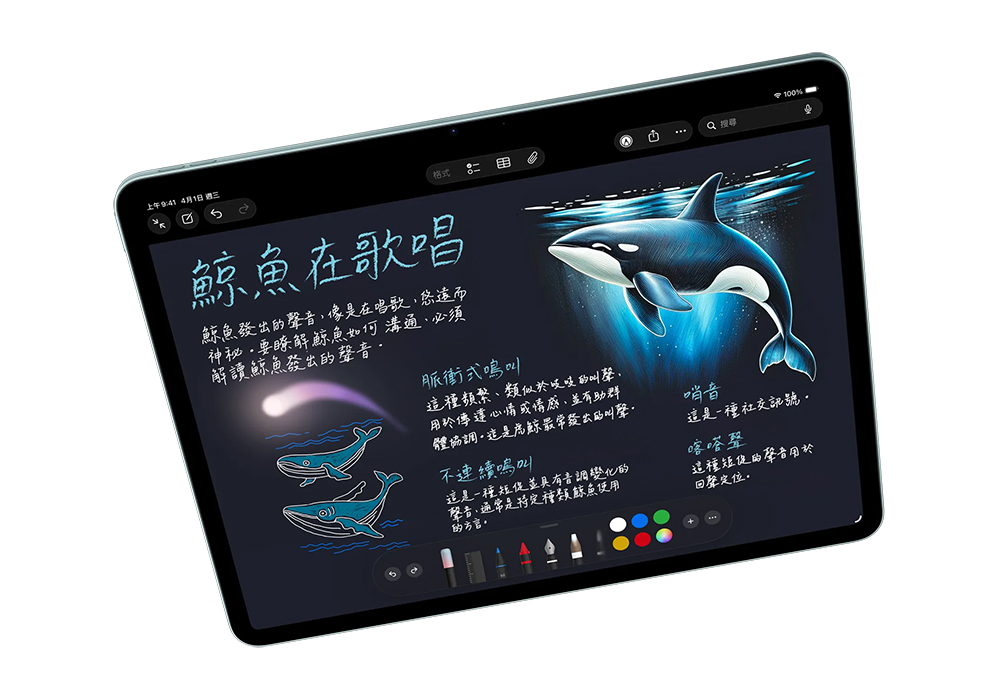
This is also a deliberate differentiation of Apple’s product line. If you want a better display experience, you have to go to iPad Pro.
Self-developed chip blessing, mobile data is faster
Another highlight of iPad Air M4 this time is that it is equipped with a self-developed mobile data chip C1X and a self-developed wireless chip Apple N1, and supports Wi-Fi 7. Compared with the M3 version, mobile data performance is improved by up to 50%. For people who often go out and use the mobile network for work, uploading files or holding video conferences will be more stable.
With the addition of Wi-Fi 7, it also means that after the wireless environment is upgraded in the next few years, this tablet can still keep up with the speed and will not be eliminated too soon. This kind of upgrade that is invisible but actually affects the experience is actually more important than the appearance change.
Conclusion
Overall, the iPad Air M4 is an internally enhanced update. The processor performance has been increased by 30%, the memory has been upgraded to 12GB, and a self-developed data chip and Wi-Fi 7 have been added. There has indeed been a significant improvement in core specifications, and the price has remained unchanged. It is quite sincere. However, the display screen is still 60Hz, which will still be a regret for many people. If you pursue ultimate smoothness or want to experience the delicate picture of OLED, the iPad Pro is still a better choice.
If your usage scenario favors productivity and daily entertainment, and you hope to get stronger performance and larger memory within your budget, then the iPad Air M4 is actually a more balanced and durable choice. The key is whether you can accept that 60Hz display screen.
Further reading:
Source: KOCPC Chinese