


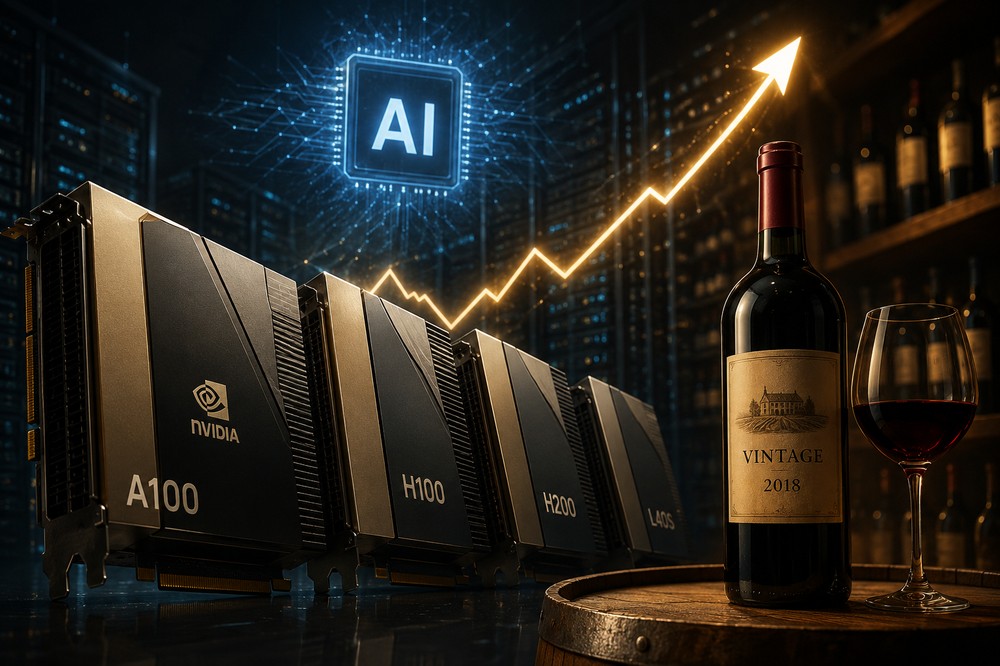
Recently, the entire hardware market has been tight, and everyone knows the underlying reason is AI computing power demand. It’s not just affecting new products—even NVIDIA GPUs launched 4-5 years ago aren’t just undiscounted, their prices are continuing to rise, reminding people of the previous mining frenzy. At a recent global conference abroad, NVIDIA CEO Jensen Huang also confirmed this, comparing old graphics cards to aged fine wine—the longer they sit, the more valuable they become.
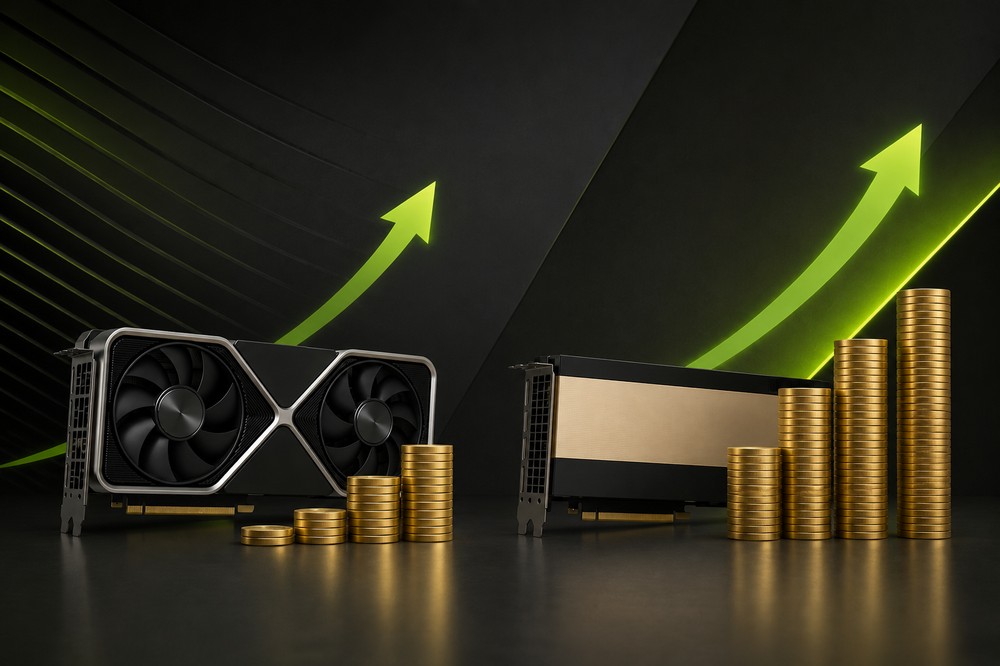
Jensen Huang: GPUs 4-5 years ago were appreciating faster than fine wine, with the A100, H100, H200, and L40 all posting quarterly gains
In recent days, theLeading in the Age of AIAt the conference, when Jensen Huang was asked whether there’s a limit to the explosive growth of AI computing demand, his answer was:
but then you multiply that by the number of people who now want to use it by 100x, which is the reason why GPU consumption is going through the roof, and even GPUs we sold four or five years ago now are rising in price faster than good wine.
That is to say, the number of people wanting to use AI has increased a hundredfold, which is why GPU consumption has gone through the roof. Even GPUs that were sold four or five years ago are now appreciating faster than fine wine — buying NVIDIA GPUs has become like investing in artwork.
Jensen Huang breaks down the evolution of AI over the past two years into three stages. Two years ago, ChatGPT sparked the generative AI era, where everyone is familiar with inputting prompts to generate text, images, and videos. Last year, we entered the era of reasoning AI, where AI began to “think step by step” and derive answers on its own. In recent months, agentic AI has exploded, where AI not only answers your questions but also breaks down tasks, uses tools, and gets things done.
Agentic AI requires 1,000 times the computing power of generative AI, while the number of people wanting to use AI has also grown 100 times over the past two years. Multiplying these two factors together, the overall AI computing power demand surges to a level 100,000 times higher.
This also explains why prices for older graphics cards keep climbing higher, and the tight supply of the latest platforms has spread market demand to GPUs from several generations ago. Of course, when Jensen Huang said that old graphics cards are appreciating faster than fine wine, he was likely referring to high-end accelerator cards like the A100 and H100 used in data centers for AI workloads, rather than RTX series consumer graphics cards. However, some consumer GPUs with large memory have also seen price increases in the second-hand market.
On this point, CoreWeave also mentioned a few days ago: “The average prices of these GPUs – the A100, H100, H200, and L40 – have all increased compared to the previous quarter, and the computational capacity available across our entire fleet in the near term remains essentially in a state of undersupply.”
Jensen Huang also explained why AI companies like OpenAI and Anthropic are competing so fiercely for computing power.
He said that over the past three to six months, OpenAI, Anthropic, and most AI-native companies have all seen their gross margins turn “significantly positive.” When a product becomes highly profitable, companies naturally want to produce more, which is why OpenAI and Anthropic are actively competing for compute capacity—the tokens, digital outputs, and intelligence they produce all carry quite strong profit margins.
Source: KOCPC Chinese