


Microsoft recently unveiled a brand new mobile platform initiative at the Build 2026 developer conference: Project Solara. Rather than being Microsoft’s return to the smartphone market, it’s a new platform built around AI agents based on the Android Open Source Project (AOSP). Its positioning is closer to a “next-generation mobile computing foundation layer” than a traditional phone operating system, with enterprise use cases targeted from the very beginning.
Microsoft is developing a new mobile product that runs Android, but it’s not a phone.
What is Project Solara?
Microsoft has tried multiple times to gain a foothold in the mobile market, from acquiring Nokia and launching Windows Phone to the later Surface Duo, but none were able to shake the dominance of Apple and the Android camp. The emergence of Project Solara represents Microsoft’s shift away from thinking about mobile devices through the lens of a “phone OS,” instead redefining the mobile platform centered around AI agents.
Solara itself doesn’t have a traditional application architecture in the conventional sense—instead, it makes AI agents the primary mode of interaction. It can run on mobile devices, fixed devices, and even future wearable hardware. Although the enterprise market remains its primary focus currently, the prototype Microsoft demonstrated at the conference makes it easy to imagine it extending to a wider range of consumer devices in the future.
Agent Identity Badge: A Miniature Phone-Like Prototype
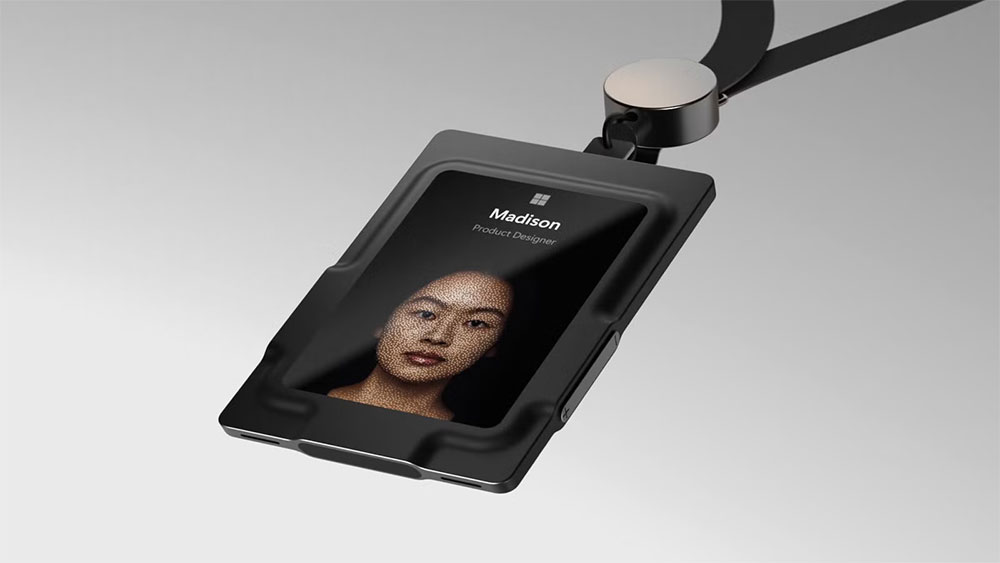
At the Build 2026 showcase, the biggest head-turner was undoubtedly a prototype “Agent ID badge” that looked like a standard employee ID card but was packed with full mobile device specs inside: touchscreen, fingerprint scanner, camera, Qualcomm processor, microphone, speaker, plus Wi-Fi and 5G connectivity. It’s not running Android or Windows either—it’s built directly on Project Solara and integrated with Microsoft Copilot AI.
In the video Microsoft demonstrated, this badge serves as a mobile assistant in a medical setting: a camera scans information, an AI agent responds to voice commands, tasks appear on screen in real-time, and fingerprint recognition keeps data secure. It looks like an ID badge, but functionally it’s more like an extremely streamlined, AI-centric phone.
More Solara Prototype Hardware: From Smart Displays to Wearable Devices
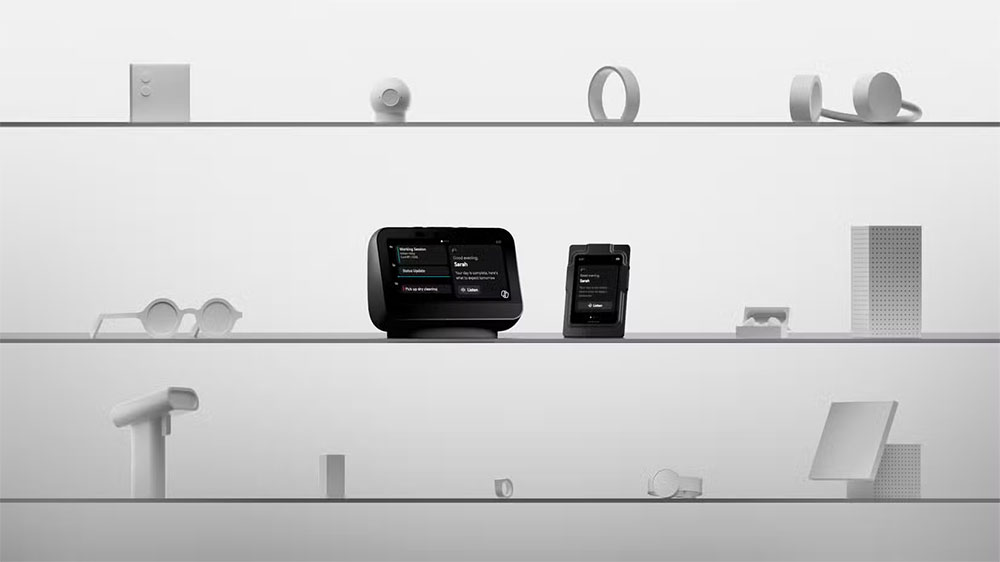
Besides the badge, Microsoft also showcased a smart display powered by a MediaTek chip, with a design similar to the Amazon Echo Show that also targets the enterprise market. More interestingly, other possible Solara device silhouettes can also be seen in the background of official promotional materials, including smartwatches, rings, earbuds, and smart glasses, among others.
Microsoft’s Corporate Vice President of Applied Science Steven Bathiche said Solara’s vision is an “agent-first” diverse device ecosystem, spanning everything from desktop stationary devices to ultra-lightweight wearables, from personal use to professional settings. He emphasized that future AI agents will no longer be confined to traditional screens and devices, but will appear on various hardware specifically designed for them.
Microsoft’s True Goal: Platforms, Not Hardware
Although Microsoft showcased several prototypes, the company has not claimed it will manufacture hardware itself. These prototypes are more like “concept demonstrations,” meant to show developers and hardware partners what Solara makes possible. Microsoft’s focus remains on the platform itself, not devices. However, from Bathiche’s description, it’s clear Solara’s ambitions extend far beyond the enterprise market—if AI agents become the next major computing paradigm as Microsoft and Google expect, Solara could well find its way into more everyday devices, from homes to workplaces.
Project Solara showcases Microsoft’s reimagining of future mobile computing: not apps, not a traditional OS, but a cross-device platform centered on AI agents. It could be Microsoft’s most forward-looking attempt in the mobile space, and may become the foundation for next-generation smart devices. If this platform succeeds, every device around us could become an entry point for AI agents.
Source: KOCPC Chinese