


I often scroll through artist pages on Spotify and take it for granted that there are real people behind those profile pictures—until recently, when I started realizing I was wrong. This kind of “guess whether this artist is AI” situation is becoming more and more common, and Spotify is also preparing to officially put an end to this guessing game.
Spotify is finally starting to publicly label AI music creators, and we should see it by mid-September.
Spotify is about to launch a new “AI Persona” badge to mark public identities generated by artificial intelligence, including names, avatars, bios, and visual assets, rather than real human creators. This label will roll out across the Spotify app in mid-September, becoming the platform’s official mechanism for identifying AI identities.
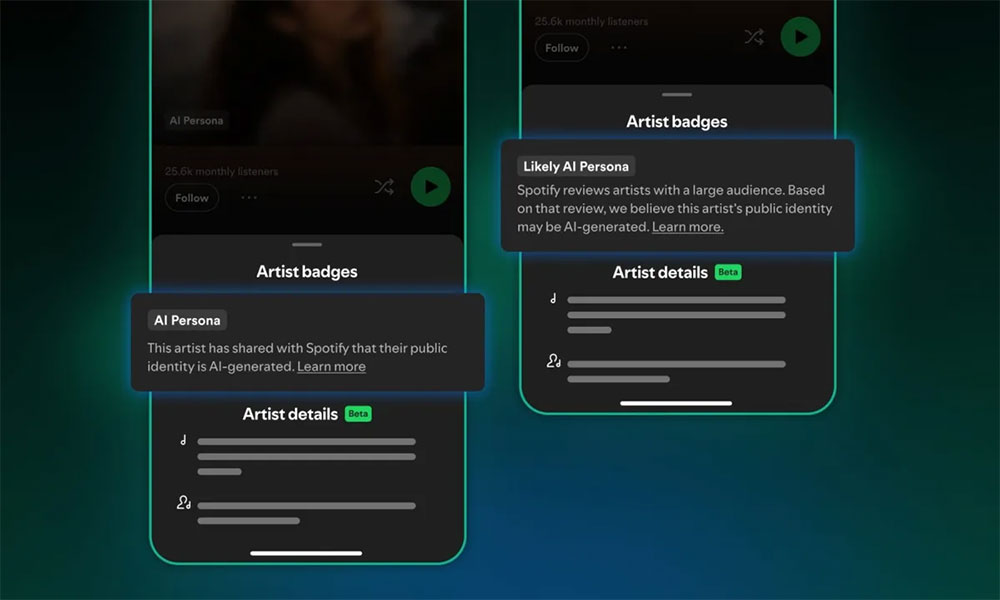
Starting today, creators can voluntarily add an “AI Persona” badge to their profiles through Spotify for Artists. This reflects Spotify’s flexible approach toward creators: the platform is willing to let users self-disclose their AI identity rather than mandating it. However, Spotify isn’t relying entirely on creators’ self-regulation. The platform has also launched its own review process, combining human review with AI detection tools to identify artist profiles that have not proactively disclosed themselves but are highly likely to be AI-generated. The review prioritizes artists who have reached a certain audience threshold, ensuring that accounts with greater impact can be flagged in a timely manner.
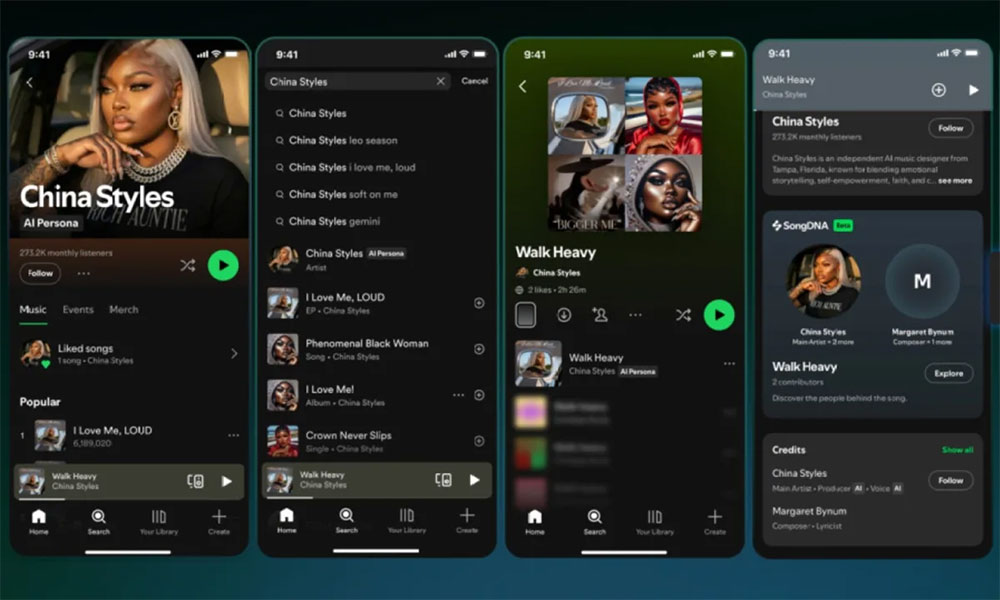
Spotify plans to complete the full review process by mid-September, at which point the “AI Persona” badge will appear in the banner section of artist pages, the “About” field, search results, and even in track listings within playlists. In other words, whenever listeners come across any public information about the artist, they will clearly see this marker. If an artist’s AI identity is proactively determined and tagged by Spotify’s review team, creators will receive a notification and can choose to confirm or appeal, which gives the tagging system a certain balance between transparency and fairness.
The real change affecting the platform ecosystem lies in the upcoming recommendation mechanism: Spotify isn’t just tagging AI identities, but further adjusting how AI-related content is exposed. In the future, as long as an artist page carries an “AI Persona” badge, its music will not be included in personalized recommendations unless listeners actively choose to follow that artist. This means creators with AI identity will see limited organic reach on the platform, and recommendation traffic will no longer be on the same footing as human creators.

It’s worth noting that the “AI Persona” badge is only used to indicate whether an artist’s public identity is a real person, and does not represent whether AI was used in the creation of the song itself. Spotify has separately indicated the level of AI involvement in the song production process through its existing AI Credits and SongDNA features. The two markers serve different purposes and are handled separately.
This new measure aligns with Spotify’s broader “trust-building strategy” that the company has been advancing throughout the year, which includes the “Spotify Verified” badge used to authenticate creators. As AI-generated content grows rapidly in the music space, Spotify is clearly trying to establish a more transparent labeling system so listeners can clearly distinguish between human creators and AI-generated identities, while also recalibrating the platform’s recommendation logic.
Source: KOCPC Chinese