


Grab Holdings Limited, the parent company of Grab, the largest food delivery and ride-hailing service in Southeast Asia, officially announced on March 23, 2026 that it will acquire the food delivery business of its foodpanda Taiwan in cash at a valuation of US$600 million (approximately NT$19.2-19.3 billion), adding Taiwan to its ninth operating market in the world. The acquisition is expected to be completed in the second half of 2026, subject to approval by the Taiwanese regulatory authorities.
Who is the Grab Group? What is Grab’s plan to acquire Taiwan? The following is a summary and explanation:
1. Who is Grab Group?
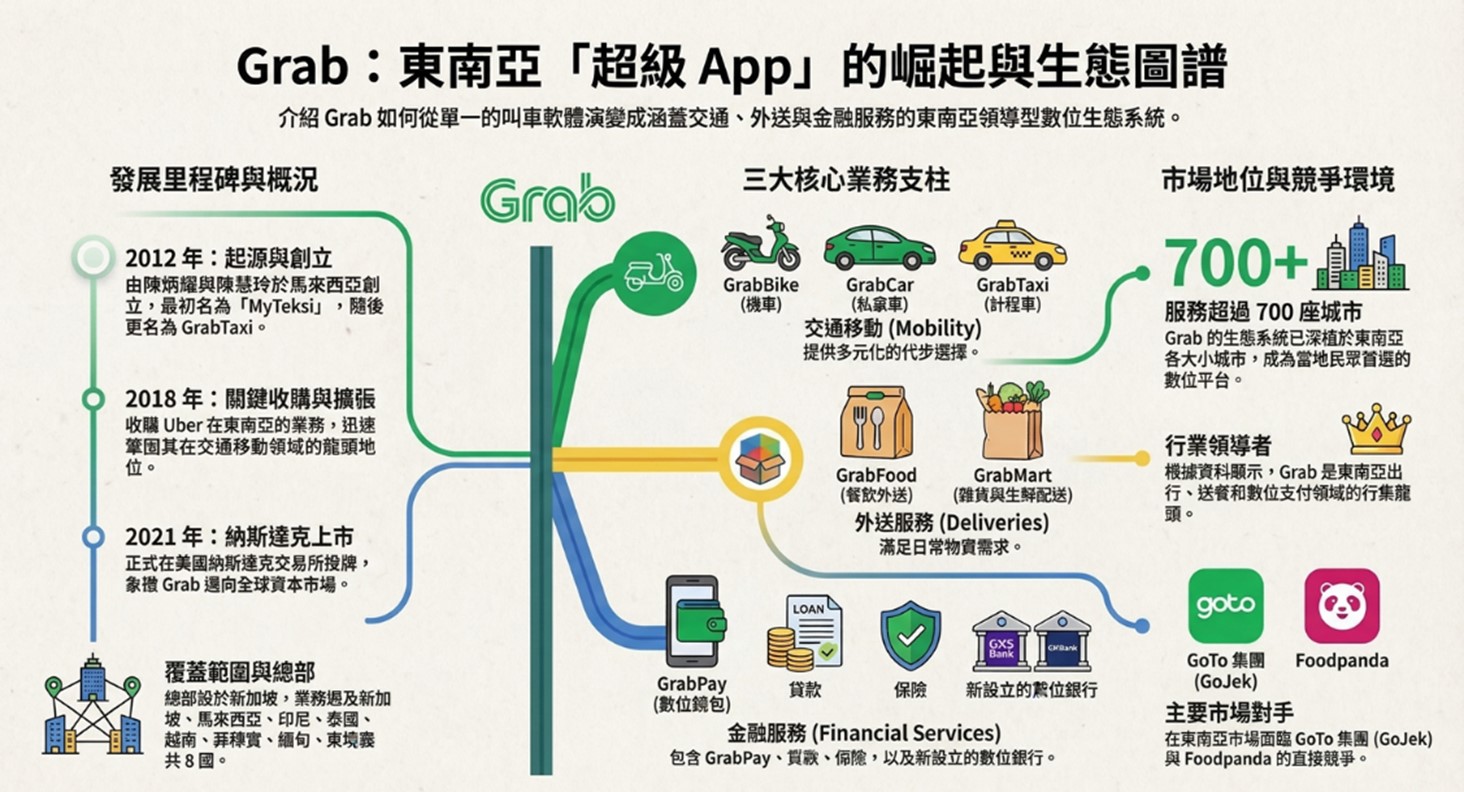
Grab (Grab Holdings) is a service-providing technology company and transportation network company established in 2012 by Malaysian Chinese Chen Bingyao and Chen Huiling. It is headquartered in Singapore. The Grab Group started with the “MyTeksi” ride-hailing software and later changed its name to GrabTaxi. It connects passengers and drivers through the app and provides sharing economy services for passenger vehicle rental and real-time ride sharing. In 2018, it acquired Uber’s Southeast Asian business and rapidly expanded its business. It will be listed on Nasdaq in 2021. During the epidemic, it also started to operate takeout, delivery, e-commerce, etc., becoming a comprehensive life platform.
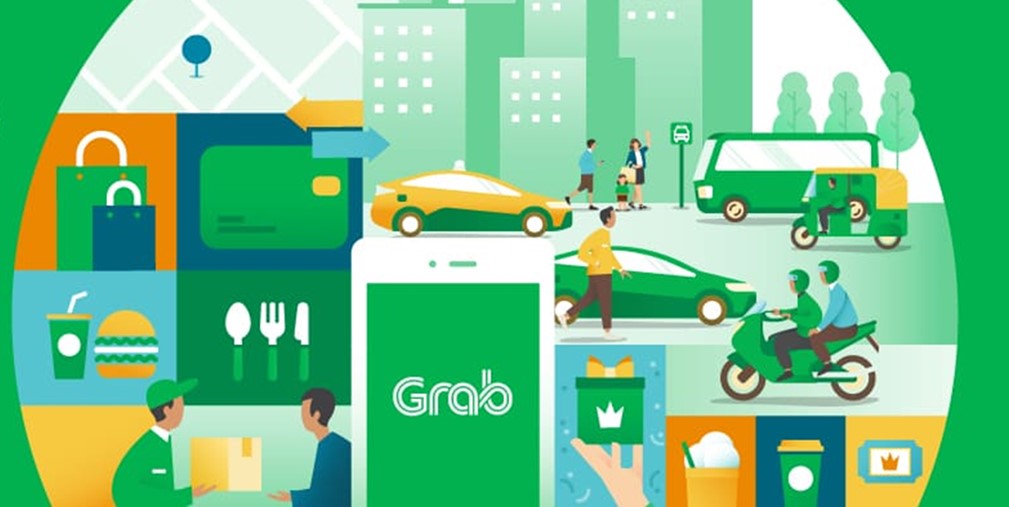
Grap Group has the following characteristics:
A. Diversified services:
Its business covers ride-hailing, catering, groceries, and financial services. The current service area includes eight countries including Singapore, Malaysia, Indonesia, Thailand, Vietnam, Philippines, Myanmar, and Cambodia. It is the largest food delivery group in Southeast Asia.
B. Flexible delivery:
Providing instant delivery, scheduled delivery and self-pickup services, reservations can be made up to 2 days in advance.
C. Advantage technology:
Import GrabMaps AI instant route planning and restaurant data analysis.
2.GWhat is rab’s plan to acquire Taiwan?
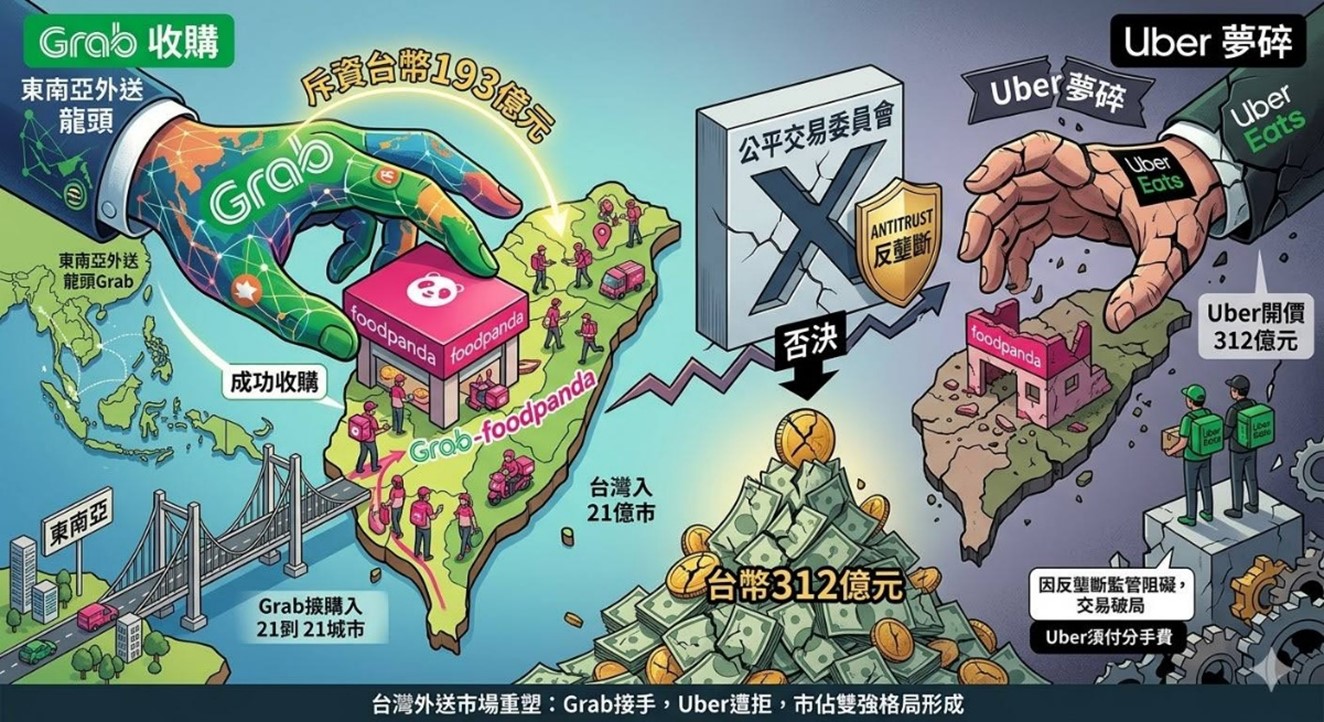
Grab’s parent company, Grab Holdings Limited, has reached an agreement with Delivery Hero SE to acquire foodpanda’s food delivery business in Taiwan for an estimated US$600 million in cash (approximately NT$19.2-19.3 billion). The acquisition is subject to approval by the competent authorities and meets other customary closing conditions, and is expected to be completed in the second half of 2026.
As for the foodpanda Taiwan food delivery business, Uber originally announced an acquisition of US$950 million (approximately NT$31.2 billion) in May 2024. However, due to market monopoly (market share exceeds 90%), the Taiwan Fair Trade Commission banned the combination in December 2024. This time Grab announced an acquisition of US$600 million, a full 36.8% reduction in the acquisition amount, which seemed to be a big bargain. However, Uber paid approximately US$250 million (approximately NT$8.28 billion) in termination fees when its last acquisition failed, and the actual price difference may only be US$100 million. What is currently controversial is that Uber is Grab’s major shareholder holding 13.5% of the shares. The outside world interprets it as Uber’s “detour to expand” Taiwan’s food delivery territory, which may affect the rights and interests of delivery workers and platform employees as well as the sound development of the industry.
However, judging from Delivery Hero SE’s sale of Taiwan’s foodpanda food delivery business at a huge price reduction, Delivery Hero SE is determined to leave. In addition, this is a transaction to “introduce new competitors” rather than “eliminate existing competitors.” Outsiders believe that the acquisition has a high chance of success. The food delivery association can only call on the Fair Association and the Ministry of Labor to protect the rights and interests of Taiwanese employees by adding additional clauses.
According to the Fair Council, the acquisition case has not yet been submitted. If complete information is received, the review period is 30 working days, but if necessary, it can be extended for another 60 working days. The last time Uber acquired foodpanda, it took about 225 days from announcement to being blocked. Grap hopes that the acquisition of foodpanda will be completed in the second half of 2026.
Chen Bingyao, CEO and co-founder of Grab Group, said that Taiwan’s 23 million people have strong demand for mobile-first services. Grab will take over foodpanda’s dense service footprint in 21 cities in Taiwan. It plans to introduce years of accumulated experience in high-density urban management into Taiwan and use self-developed localized map technology Grab Maps and AI-driven product modules to improve the accuracy of food delivery logistics. If this acquisition can be completed in the second half of 2026, Grab aims to complete the full migration of users, merchant partners and delivery partners from the foodpanda platform to the Grab App by the first half of 2027.
Grap’s business model is similar to that of UBER. In the past, its biggest niche was the convenience of grasping the Southeast Asian market (such as the Southeast Asian scooter-hailing brigade…). The biggest advantage of entering Taiwan this time is the acquisition of Taiwan’s foodpanda food delivery business, which will generate a gross merchandise volume (GMV) of approximately US$1.8 billion in 2025. As long as foodpanda users, merchant partners and food delivery partners can be successfully transferred from the platform to the Grab App, the initial marketing investment required to seize the market through subsidies will be eliminated. Furthermore, Grab has more than 50 million monthly active transaction users in Southeast Asia. Southeast Asian tourists and nearly one million foreign migrant workers from Southeast Asia can use the familiar app to seamlessly explore local food when they come to Taiwan in the future, which is a big plus for Taiwanese businesses.
However, whether Taiwanese users and merchants are willing to move to Grab App painlessly, I’m afraid they won’t be able to save money by stealing the chicken rather than giving it to the rice (spending on marketing subsidy fees). In addition, Grab has entered Taiwan beyond Southeast Asia for the first time. Originally, its main business covered ride-hailing, catering, groceries, and financial services. Among them, ride-hailing and financial services should not be launched in Taiwan in the short term. In addition, Taiwanese users have high requirements for platform customer service, but the Chinese people generally have a poor evaluation of Grab Singapore’s customer service. It is still unknown whether it will adapt to different national conditions in the future.
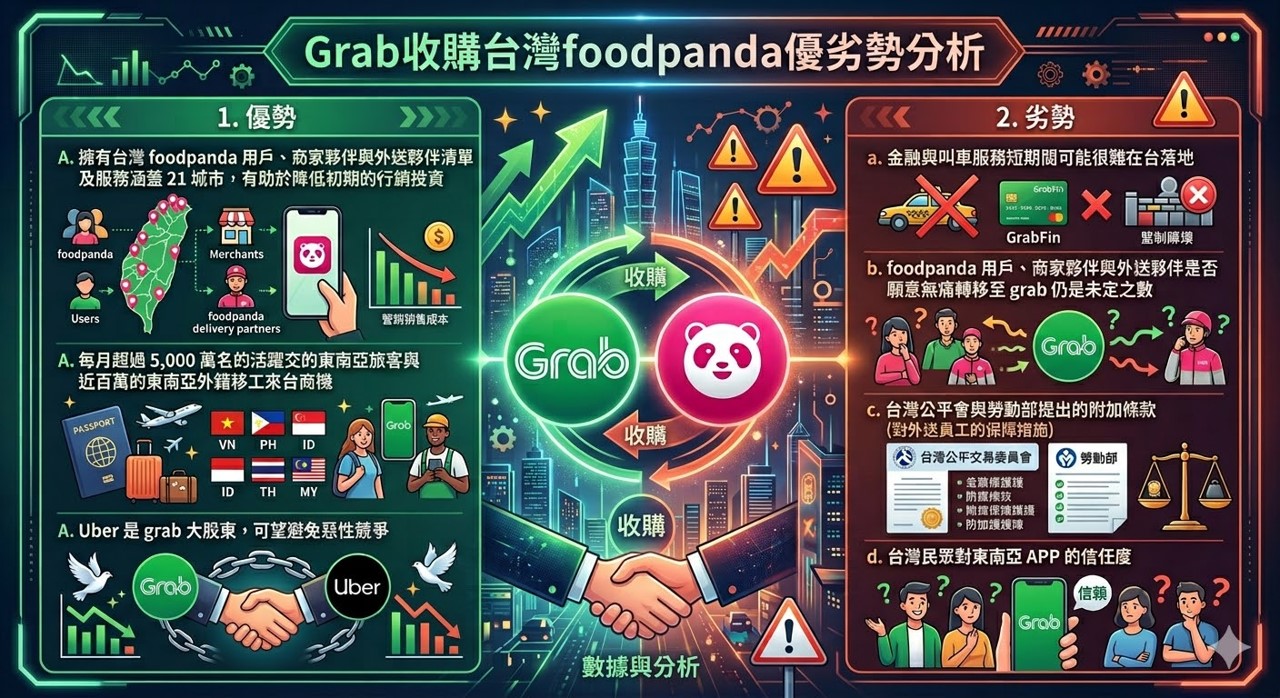
However, if this acquisition can come true, Taiwan’s food delivery market will be prosperous.

Source: KOCPC Chinese