


Do you think it would be possible if there was a battery that could last for 20 years without needing to be recharged? Recently, foreign YouTube channels 《Double M Innovations》 Published an interesting DIY video to teach the public how to use materials readily available on the market to build a miniature “Nuclear Battery” in their own studio. Experimental results show that although the instant power of this battery is so weak that it is almost negligible, its ultra-long life and stability show another possibility for future energy.
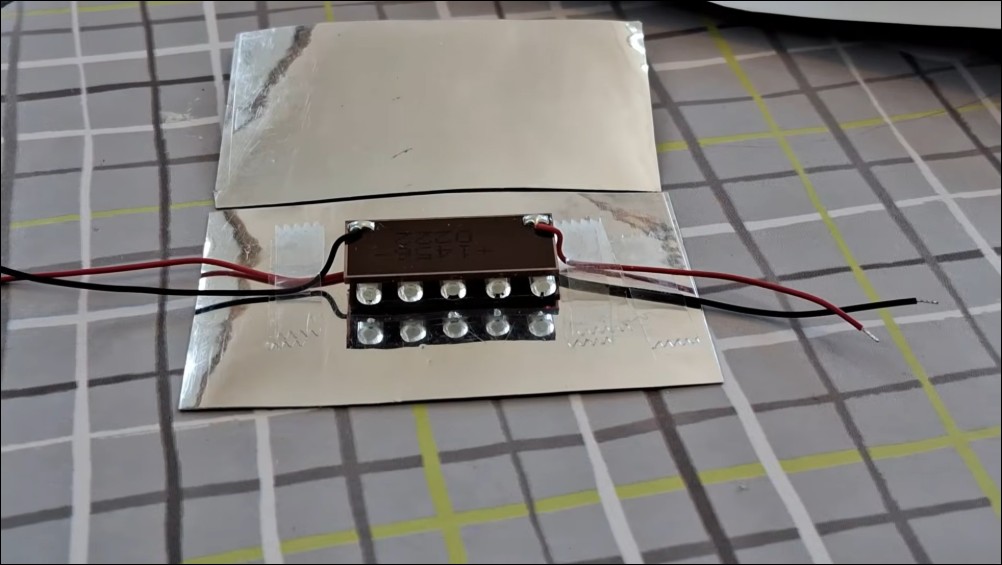
Core principle: not “nuclear fission”, but “radioisotope battery”
The core technology of this experiment is not the huge and dangerous traditional nuclear fission reactor as popular impression, but is called “Radioisotope battery (Betavoltaic device)” technology. The key radioactive material he chose was “Tritium”. Tritium is a radioactive isotope of hydrogen, commonly found in “tritium gas lamps” used by outdoor enthusiasts or in the luminous scales of high-end watches. As tritium decays, it releases electrons (Beta particles), which emit a faint glow when they hit the phosphorescent coating on the inside of the tritium lamp tube.
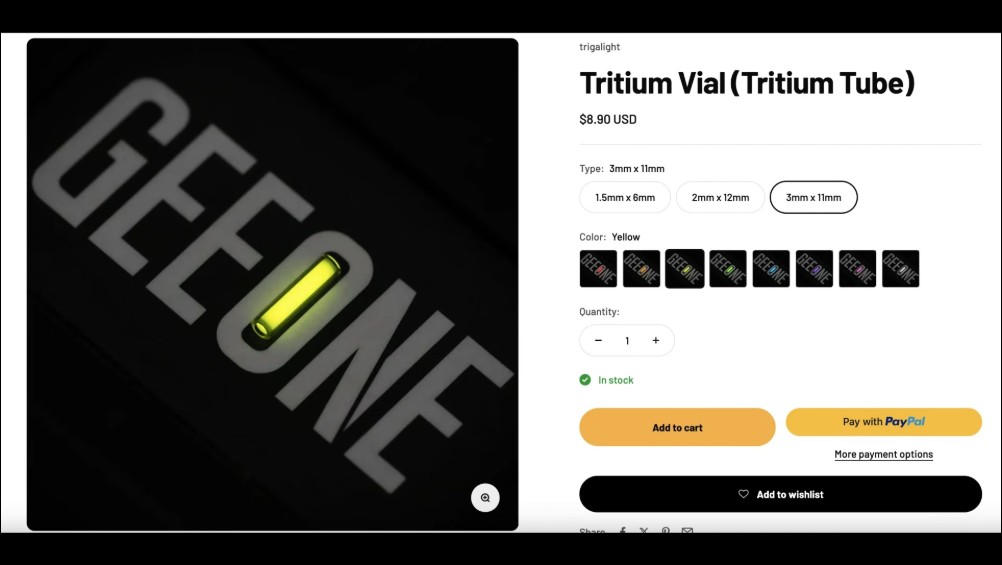
He used tiny solar panels (photovoltaic cells) attached to these tritium lamps. When the light from the decay of tritium hits a solar panel, it is converted into a weak electric current. This is essentially a three-level conversion process of “nuclear energy → light energy → electrical energy”.
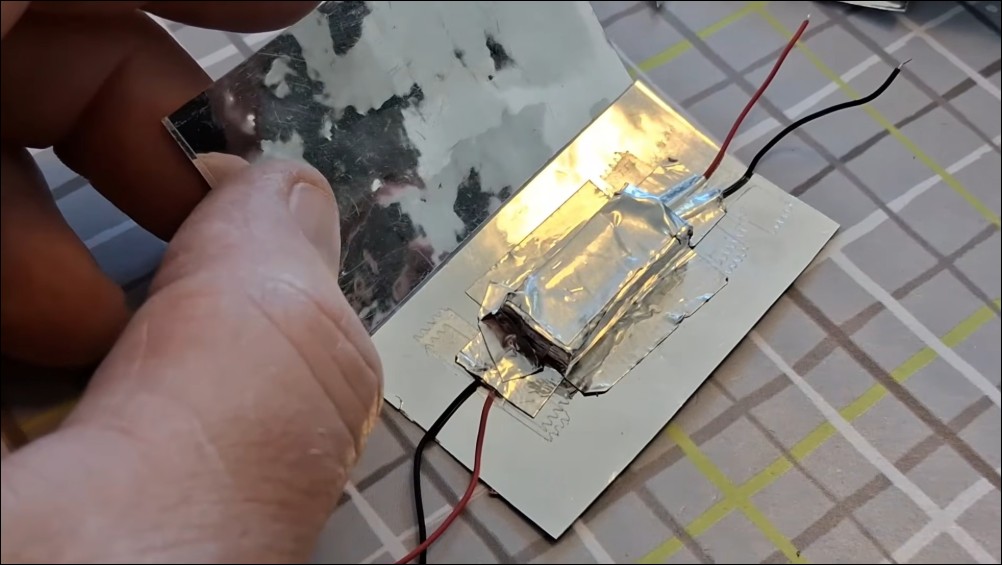
Actual measurement results: The power is so weak that it only lights up the LED?
In preliminary tests, the power produced by this homemade nuclear battery was extremely small and could not even directly drive ordinary electronic devices. According to estimates, a single solar cell measures a voltage of about 0.45V to 0.47V, and the output power is only at the “nava (nW)” level, which usually can barely keep the ultra-low-power LED light blinking for a period of time.
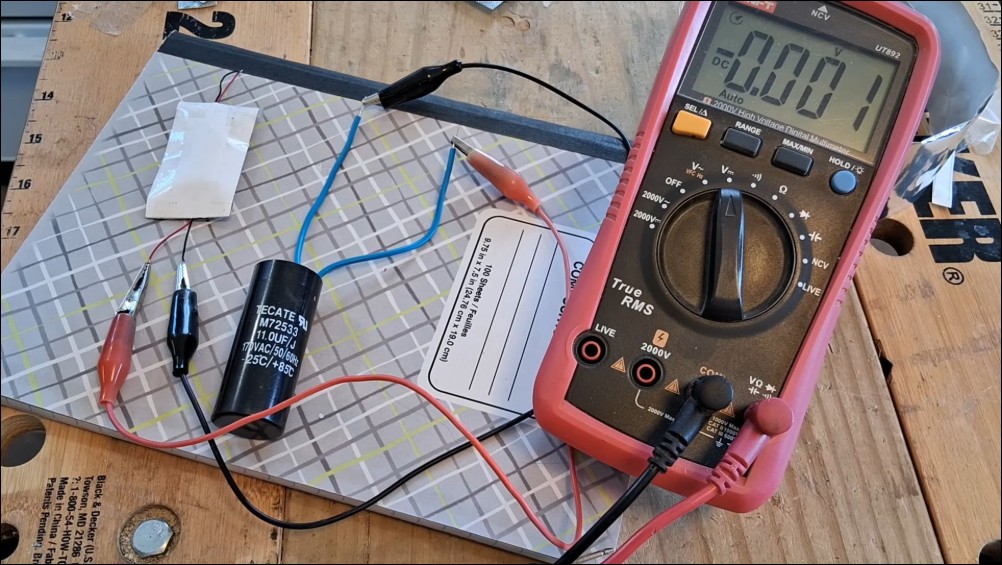
He designed a set of specialized energy storage circuits to slowly store the weak current generated by the nuclear battery in a set of high-capacity capacitors. It’s like using a small drop of water to drip into a bucket. As long as the time is long enough, the bucket will eventually be full. According to actual measurement, it reached 1.0V in 3 minutes, 1.7V in another 3 minutes, and 2.2V in 10 minutes. After charging overnight, the voltage reached 2.835V, and the highest was 2.9V.
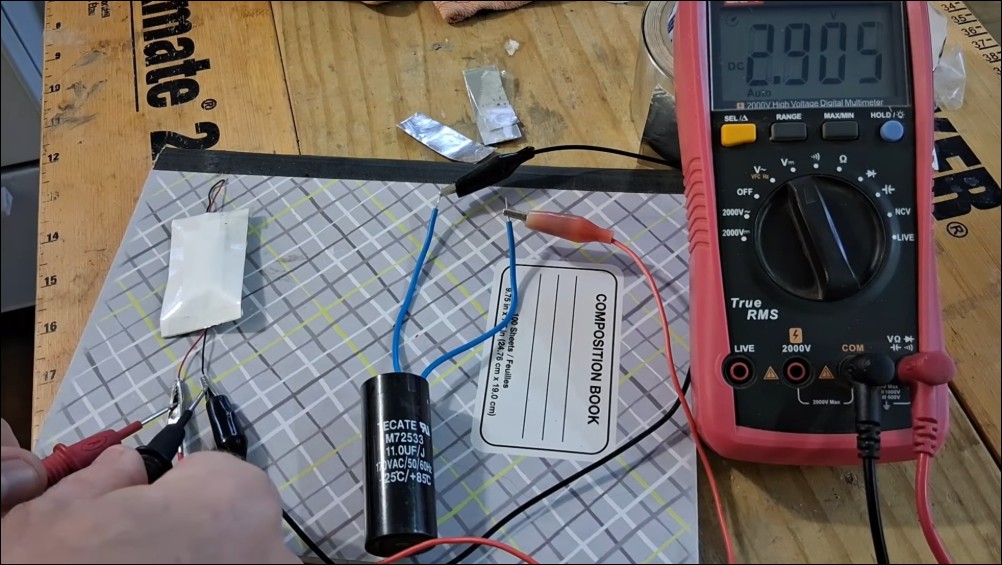
After a long period of charging, the reserve energy released by this set of nuclear batteries was finally successfully used to light up several LED bulbs, proving that even if the nuclear battery has extremely low power, it still has the potential to drive electronic products as long as it is coupled with an appropriate energy management system.
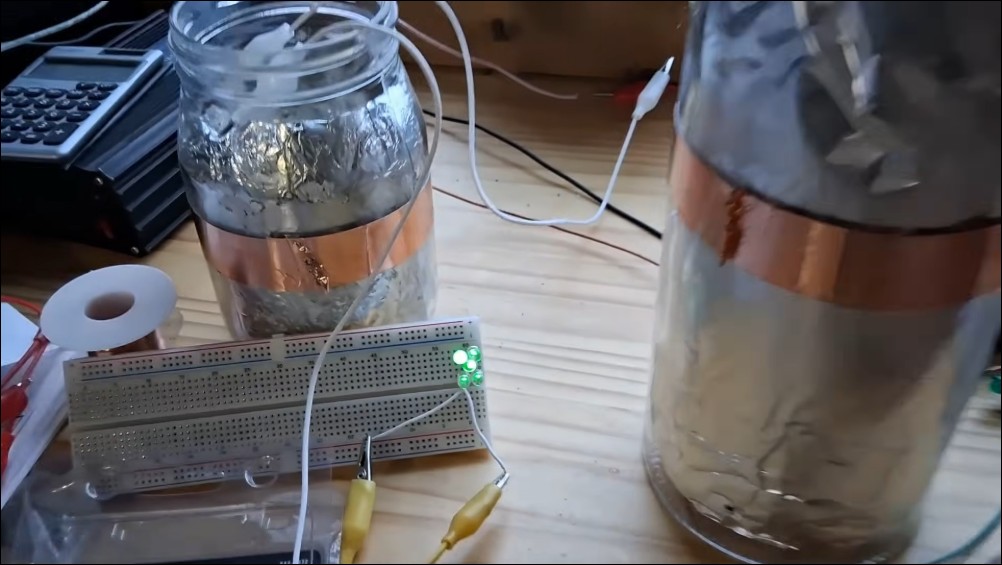
Interested friends can watch this test video:
In fact, not only this foreign YouTuber has done this kind of small nuclear battery, but the domestic “Mr. Sai Science Factory” has also done similar experiments and successfully promoted a computer:
Advantages and bottlenecks: How far is it from commercialization?
The biggest selling point of this DIY nuclear battery is its amazing “life”. The half-life of tritium is approximately 12.3 years, which means that this battery can continue to output energy stably for the next 10 to 20 years, and is completely unaffected by ambient temperature, light, or whether it is charged.
However, it is almost impossible to achieve large-scale popularization because it faces two major bottlenecks:
- Very low power density: To achieve the power supply level of traditional AA batteries, thousands of such conversion units may need to be stacked, and the size and cost will be impractically high.
- High manufacturing costs: The cost of generating the same amount of electricity is currently much higher than that of traditional lithium batteries.
Conclusion: Energy applications in special fields
Although we will not be able to see this kind of nuclear battery in complex electronic devices such as mobile phones in the short term, this technology has been around for a long time Heart rhythm regulator, deep sea sensor, deep space satellite battery There are already many practical application cases in special fields where batteries cannot be easily replaced. But for ordinary people, it may be regarded as interesting news and has little practical value at present.
Source: KOCPC Chinese