


Waiting until the end of time,Google Finally, for Google TranslateFormal introduction Gemini Translation means that the translation quality is about to become AI I called it right. Why do I say “already about to”? Because Google doesn’t roll out to the whole world at once, but starts with certain countries first. Unfortunately, Taiwan isn’t in the first wave.
In addition, Google is also introducing a new feature that many people will love: in the future, you’ll be able to wear headphones and directly hear Gemini translate what the other person is saying in real time, without needing to look at your phone screen.
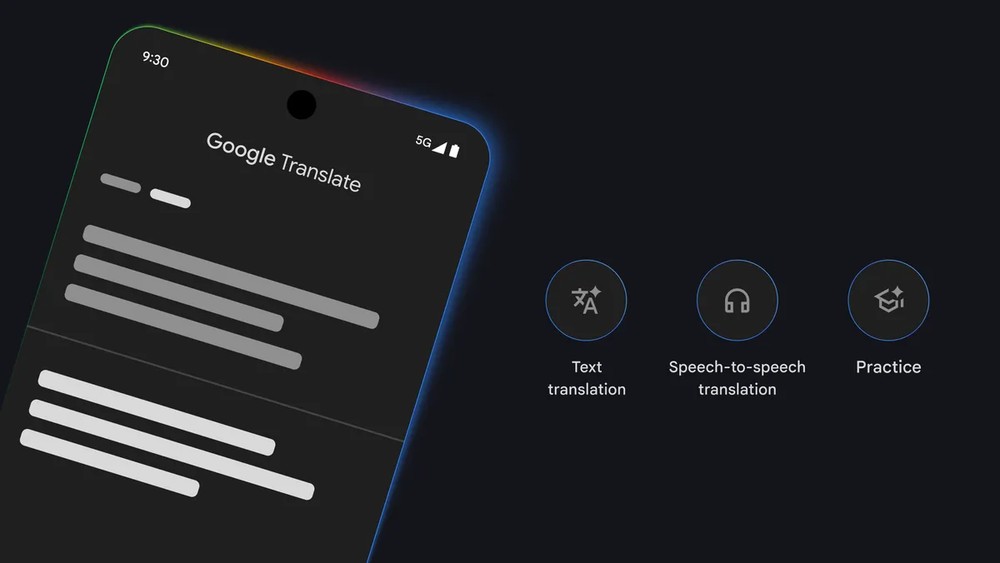
Google Translate officially adopts Gemini translation technology, with the first wave of updates rolling out in two countries.
Recently, Google announced on its official blog that “the latest text translation technology powered by Gemini has been officially introduced in Google Search and the Google Translate app, making translation results smarter, more natural, and more accurate.”
Compared to the original Google Translate, switching to Gemini technology allows for more accurate handling of sentences with contextual and nuanced meanings, such as idioms, local usage, or slang. Google also cited the example of the English idiom “Stealing my thunder” (搶走風頭), where the translation becomes more natural and closer to the intended meaning, rather than just a word-for-word translation.
Gemini also understands context, providing translation results that truly convey the meaning.
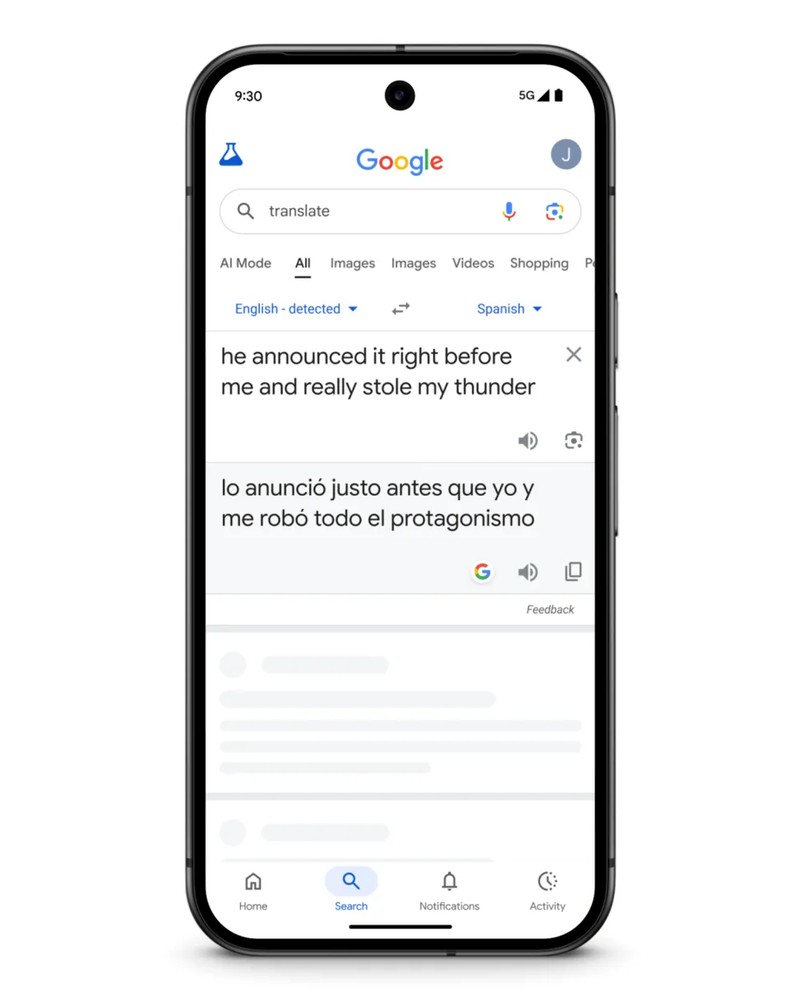
At first I thought it was a global rollout, but when I opened Google Translate and compared it with Gemini translation, I noticed something was off. The translation quality hadn’t changed; only later did I realize that Gemini-based Google Translate is currently only available in the US and India. As for when it will roll out globally and in more countries, Google hasn’t specified, but I guess it shouldn’t take too long:
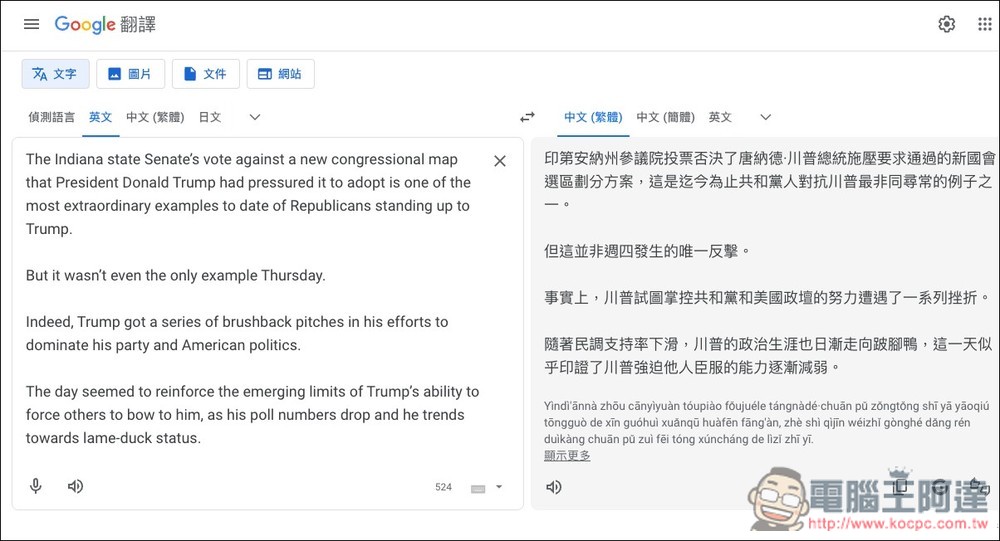
English content excerpted from CNN News
Additionally, at this stage, it only supports translation between English and nearly 20 languages, including Spanish, Hindi, Chinese, Japanese, and German, and is available in the Google Translate app (Android and iOS) and on the web.
Google Translate adds test feature for “real-time translation via headphones”
Previously, Google had already integrated Gemini real-time voice translation capabilities into Google Translate. Now, it’s expanding those capabilities further with a new experimental feature called “real-time translation via headphones.” As the name suggests, you’ll be able to listen to translated content in real time through your earphones.
Whether you’re talking with foreigners, listening to international speeches or courses, or watching foreign TV shows or movies, you can put on headphones, open the Google Translate app, and tap “Real-time Translation” to listen to the translated content in Chinese—no need to worry about your language skills anymore.
Google says this new feature will preserve the speaker’s tone, accent, and rhythm as much as possible, making the translation sound more natural and easier to tell who is speaking.
Just like Gemini translation, this new feature is first rolling out in select countries, including the US, Mexico, and India, on the Android version of the Google Translate app. It supports any headphones and can translate over 70 languages. You can see how it works in the video below:
However, Google has announced that it will release an iOS version in 2026 and expand to more countries.
In addition to the above two, Google has also expanded the language learning tools in the Google Translate app, including providing users with more practical suggestions after speaking practice, and adding a learning challenge mechanism:
Source: KOCPC Chinese