


When Apple changed the industry’s standard for “affordable laptops” with its $599 MacBook Neo, the Windows camp finally responded with a similar product. Qualcomm officially released the Snapdragon C platform on the eve of Computex 2026. This is a processor designed for entry-level notebooks priced at $300 and above. It focuses on smooth performance, all-day battery life, and a low-temperature and quiet experience.
Qualcomm launches entry-level notebook processor Snapdragon C
Positioning: Not pursuing efficiency, but pursuing “adequacy and comfort”
The “C” of Snapdragon C is not Cheap but stands for Compute. The positioning is very clear: it is not to compete with Snapdragon X Elite or Intel Core Ultra in computing performance, but to solve the most criticized problems of entry-level notebooks for a long time: performance lag, heat, short battery life, and noisy fans.
“As costs continue to rise and consumer expectations continue to evolve, Snapdragon C will further expand platform options with value-based computing at its core, combined with all-day battery life, AI capabilities and smooth performance,” said Kedar Kondap, senior vice president and computing and gaming group at Qualcomm Technologies.
Qualcomm emphasized that Snapdragon C supports smooth web browsing, video streaming and productivity applications, and has a built-in integrated NPU, bringing AI capabilities to entry-level devices. However, the computing power of this NPU is not enough to support Microsoft’s Copilot+ PC certification standard, which also makes Snapdragon C the first computing chip that does not qualify for Copilot+ since Qualcomm launched the Copilot+ platform.
Core architecture: Kryo instead of Oryon, based on mobile phone chip transformation
In terms of technical architecture, Snapdragon C and Snapdragon X series are fundamentally different. Snapdragon X is equipped with Qualcomm’s self-designed Oryon CPU core, while Snapdragon C uses Kryo core. Qualcomm confirmed that Snapdragon C and MacBook Neo’s processors are based on mobile phone chips, but declined to disclose details such as which mobile phone SoC it came from, the number of cores, and the clock frequency. These specifications will be disclosed in the next few months.
Qualcomm chose to deliberately downplay the specifications when announcing the Snapdragon C during Computex, focusing on the user experience rather than the hardware parameters. This strategy reflects the core appeal of Snapdragon C: for entry-level notebook users, “whether it is smooth to use” is more important than “how many benchmarks it scores.”
First equipped model: Acer Aspire Go 15
Acer becomes the first OEM to announce a product powered by Snapdragon C processor. The Acer Aspire Go 15 (model number AG15-Q31P) is a 15.6-inch laptop with a slim-bezel screen, up to 8GB of RAM, up to 512GB of storage, 1080p video footage, and a 53Wh battery.
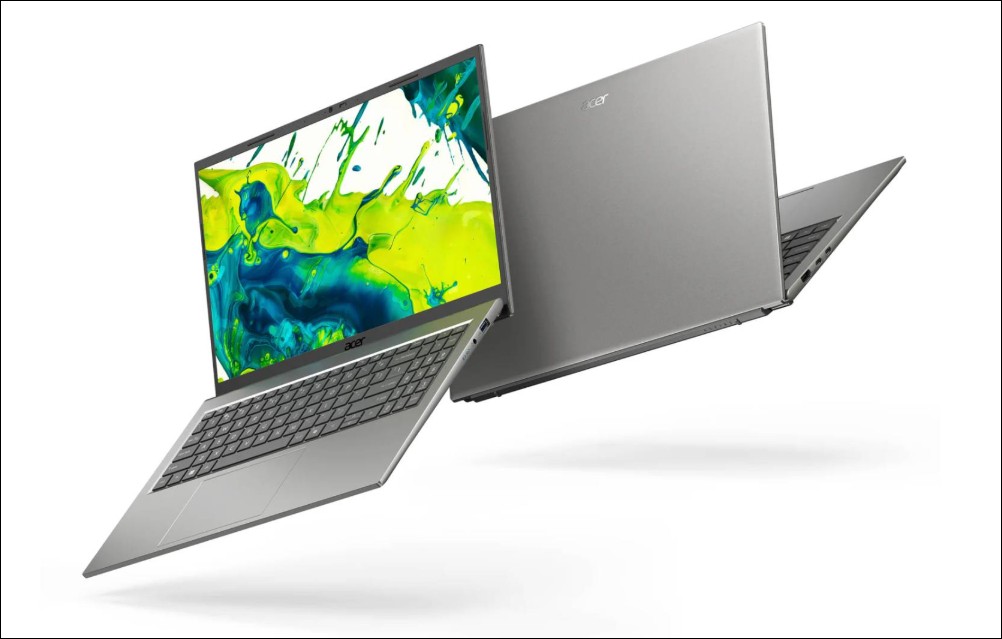
In terms of ports, Aspire Go 15 is equipped with two full-featured USB Type-C ports, an HDMI port, and supports Wi-Fi 6E. In addition, Acer has also imported its Sense management software, allowing users to monitor system performance, storage space and battery status. In terms of environmental protection, the machine uses post-consumer recycled plastic materials, 100% recyclable packaging, and has passed Energy Star and EPEAT certifications.
The price and exact launch date of the Acer Aspire Go 15 have not yet been announced and will be announced closer to launch. In addition to Acer, HP and Lenovo have also confirmed that they will launch products equipped with Snapdragon C.
Conclusion: New variables in the entry-level laptop market
The entry-level laptop market in the Windows camp has long been dominated by Intel N-series processors (such as N150 and N250). These processors use the Gracemont efficiency core architecture. Although the power consumption is extremely low, the performance has always been unsatisfactory. In the past, the user experience of $300 Windows laptops was generally considered to be “usable but not easy to use.” But earlier this year, Apple launched the MacBook Neo based on the A18 Pro processor. Its beautiful, affordable, and easy-to-use specifications and design immediately made these entry-level products equipped with Intel N processors unattractive (however, Intel has also recently launched affordable notebooks with Wildcat Lake architecture in China).
首款 Intel Wildcat Lake 筆電中國上市,記憶體、儲存、電池全面翻倍,正面挑戰 MacBook Neo 價格不到 20000 台幣
The release of Snapdragon C means that Qualcomm has finally completed full price coverage from high-end to entry-level in the Windows on ARM layout. The Snapdragon X Elite targets the flagship and commercial markets priced above $1,000, the Snapdragon X Plus covers the mid-range market priced between $600 and $1,000, and the Snapdragon C extends downward to the entry-level market priced around $300. This is of great significance to the Windows on ARM ecosystem. ARM-based Windows laptops (mainly Qualcomm processors) have not been cheap since their launch, but poor application compatibility issues and no obvious advantages in battery life compared to Panther Lake laptops have deterred most consumers. This time, as Snapdragon C brings ARM notebooks into the “correct” price range where they belong, there should be an opportunity to drive the growth of its ecosystem. After all, consumers are not stupid, so why bother buying an ARM-based Windows notebook that is expensive, has poor compatibility, has poor battery life, and does not have a better one.
Source: KOCPC Chinese