


Although OpenAI recently officially launched SoraBut because they underestimated demand, the servers are nearly overloaded, and to maintain quality, they’ve temporarily paused new user registrations, even for existing ChatGPT Plus and ChatGPT Pro users. It’s unclear when it will reopen, but I’d guess it shouldn’t be too long.
For those who want to try Sora, you probably know that it uses a credits system, where each generation deducts a fixed number of credits, so you need to be especially careful with your prompts to avoid wasting them. If you don’t have any experience generating AI videos yet, this article shares insights from a Reddit user who analyzed 32 experiments, which can help you better understand how to write prompts to get good video results.
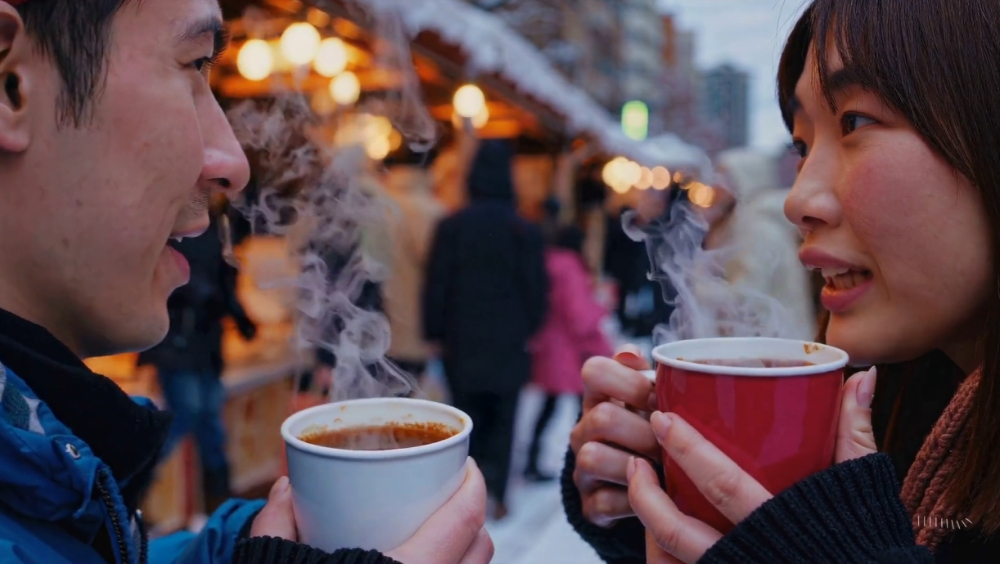
Image source: OpenAI
Reddit ran 32 Sora video generation experiments, and here are the results
Earlier, Reddit user CanadianCFO OpenAI versionHe shared his experience experimenting with 32 Sora videos, saying that on the day Sora launched, he assisted the Reddit community in conducting a series of experiments to test its various features, including “continuous scenes,” “characters,” “graphics,” “animals,” and “scene locations.”
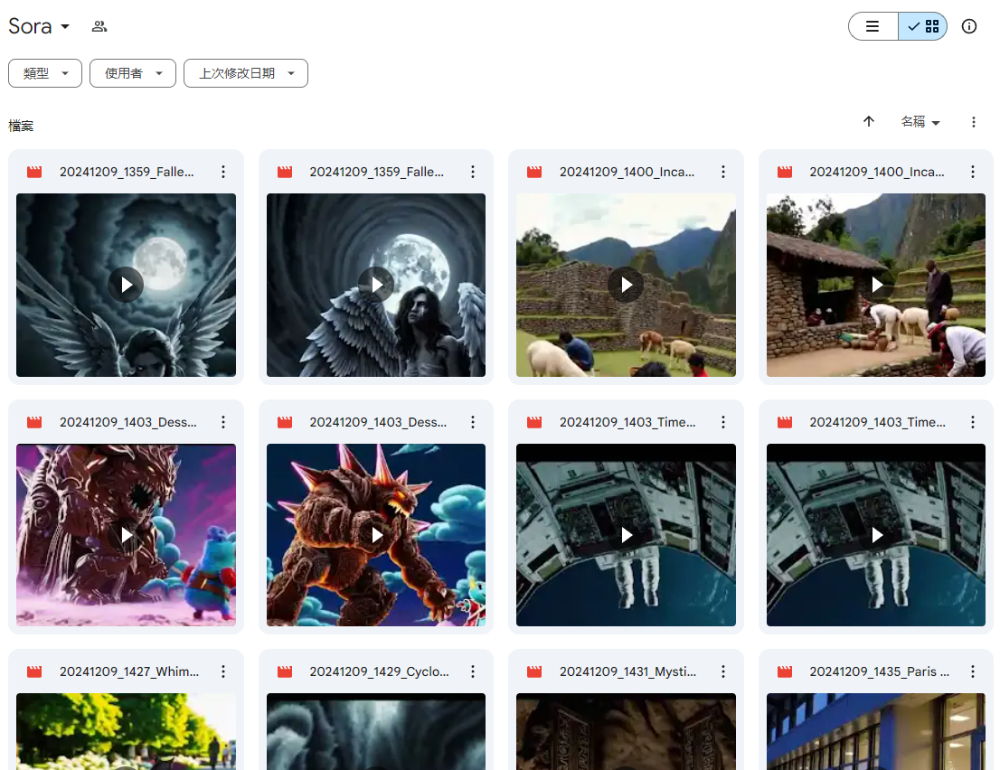
Each test result is categorized as “satisfactory” or “unsatisfactory,” based on whether the generated video output matches the prompt content. He also has all the experimental videos placed in Google DriveUpload it so everyone can view. The videos are all 16:9, 480p resolution, and 5 seconds long.
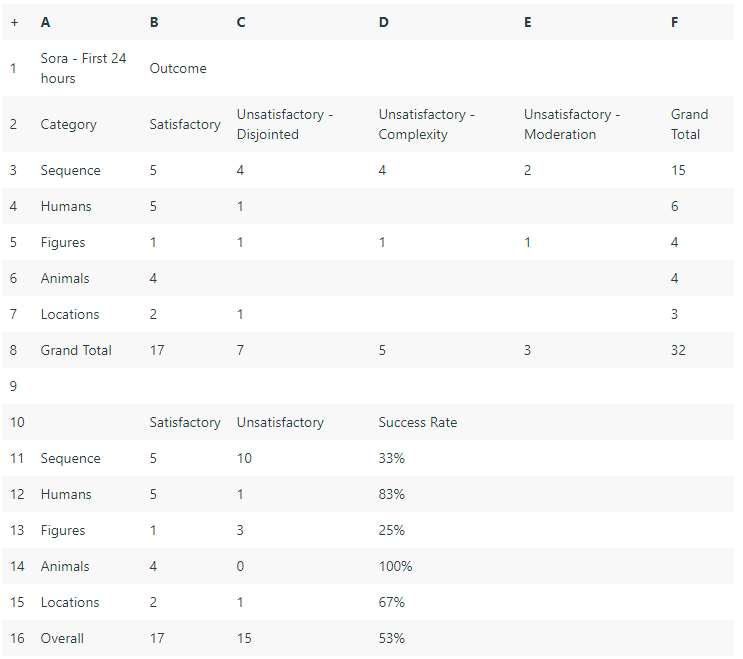
In the end, character and animal scenes performed best, with success rates of 83% and 100%, respectively. Scene locations were also passable, with 67% of videos succeeding. However, continuous scenes and graphic descriptions did not perform well, with success rates below 35% for both.
Of the 32 films, 17 were satisfactory and 15 were not, meaning it’s about half and half.
He observed that when writing prompts, keeping the word count under 120 characters tends to yield a higher success rate. The content should also focus on a single core theme or simple visual elements, and should not be too complex.
The tone can use a fun, descriptive style, which better matches Sora’s strengths. Multi-layered or abstract prompts tend to have a low success rate. Finally, prompts involving sensitive topics or copyright are prone to failure, so they need to be rephrased in a more neutral way.
The following is his brief comment on Sora:
Sora 在簡單明確的創意執行方面表現不錯,特別擅長處理有趣的畫面或故事。然而,它在處理複雜結構或精細描述時表現略顯不足,這可能與其上下文限制有關。簡短的提示更能發揮其效能。
Key Guidelines for Sora Prompts
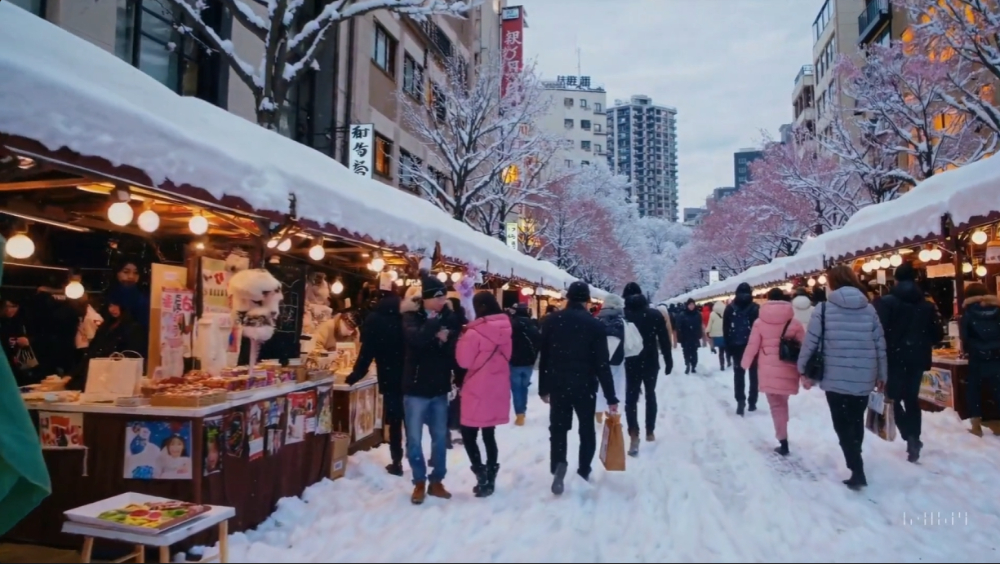
Image source: OpenAI
CanadianCFO has also laid out the key points for the prompts, so you can refer to them when trying to generate Sora videos later.
General principles
- Brevity is preferred. The prompt content should ideally be kept within 120 characters to avoid being too lengthy or complex, ensuring clear expression.
- Focus on the key points: Clearly define 1 to 2 main visual or narrative elements — don’t try to fit too many ideas at once.
- Create a sense of imagery: Provide vivid, imaginative descriptions to help spark inspiration.
- Avoid sensitive topics: Avoid content involving copyright, historical controversy, or culturally sensitive issues.
- Balance difficulty. Challenge bold creativity, but keep prompts specific and executable. Simple designs often succeed more easily.
Categorization creative techniques
-
Sequential scene design
- Effective approach: The story progression is clear, and the narration is coherent (such as “rewinding the footage of astronauts entering space”).
- Need to avoid: Overly abstract or chaotically structured design (such as “exploring the fractal structure of reality”).
- Example:On a desert planet, Balrog and Paladin Platypus engage in a fierce showdown.
-
Characters, Story, Scene
- Effective approach: Interesting, everyday, or dramatic behaviors (such as “a mime artist sprinting to the marathon finish line”).
- Need to avoid: Descriptions that are overly abstract or difficult to visualize.
- Example:A man braved a blizzard, wearing a strange helmet made of raw meat.
-
Animal Scenario Design
- Effective approach: Animals take center stage in fun and vivid scenarios (such as “a cat in a wizard’s robe casting spells”).
- Must avoid: Animal movement design is overly complex or abstract.
- Example:A saber-toothed tiger quietly strolled along a glowing river in a prehistoric forest.
-
Character Design
- Effective practice: Scenes with clear visual concepts (such as “a weathered robot searching for supplies in a ruined city”).
- Must avoid: Over-stacking cultural references or character detail descriptions.
- Example:An anime-style action scene where the protagonist shatters the earth with an earth-shattering punch.
-
Environmental Scene Design
- Effective approach: Use cinematic language to describe, evoking strong visual imagery (such as “a drone shot of prehistoric humans on a mountaintop at sunset”).
- Need to avoid: The description is too fragmented or overly complex.
- Example:On New Year’s Eve 2078, neon lights illuminate the entire city, creating a dreamlike scene.
Source: KOCPC Chinese