


According to information disclosed by multiple tipsters on the X platform recently, the A20 Pro chip that will power the iPhone 18 Pro and iPhone 18 Pro Max may adopt a 96-bit LPDDR6 memory bus for the first time, breaking Apple’s 64-bit bandwidth design that it has maintained for approximately 13 years. This change is believed to be primarily aimed at significantly improving the performance of on-device large language models and Siri, accompanied by major innovations in packaging technology and a restructuring of cost.
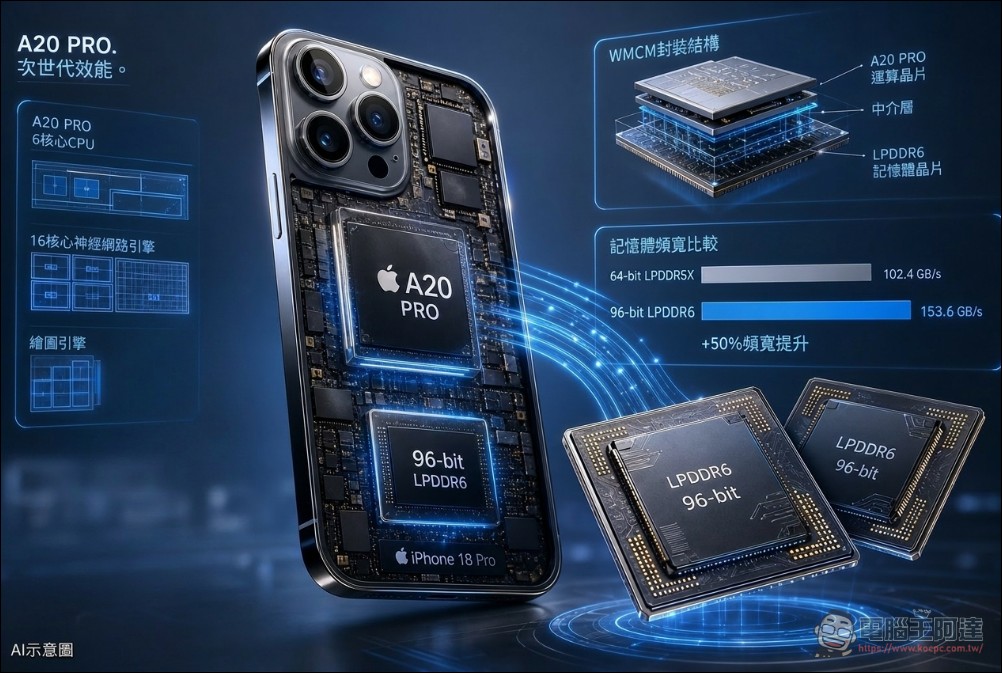
Apple A20 Pro Processor Could Switch to 96-bit LPDDR6 Memory
Leak Incidents and Reliability
The hype surrounding this leak has been unusually high, partly due to a security incident. Reports indicate that a security breach occurred at Tata Electronics’ factory last week, leaking up to 630GB of data, including the motherboard design schematics for the iPhone 18 Pro and the A20 Pro specification sheet. Recent related leaks have all been based on this data.
印度 Tata 遭World Leaks入侵 630GB 機密外流:iPhone 18 Pro 實機、主機板設計圖、供應商名單全曝光
Tipster INIYSA, citing internal information from another source called Reptalica, indicates that the A20 Pro will abandon 64-bit memory bandwidth in favor of a 96-bit memory bus, with a bandwidth improvement of approximately 50%. This is a symbolic number, as since the iPhone 5s carried the A7 chip, every generation of Apple’s flagship iPhone chips has maintained a 64-bit memory bus design and has never changed.
iPhone 18 Pro or (Prm) motherboard leaked
A20 Pro chip now adopt WMCM packaging, which move the DRAM to the side of the package, allowing for better thermal dissipation. It also get LP6 96-bit memory
Die size is roughly the same as A19 Pro, and the NPU seems to be beefed up pic.twitter.com/Y0kUjRi2Ma
— Reptalica (@Reptalicant) June 26, 2026
However, which memory standard to adopt remains a key issue. Reptalica further pointed out that the schematics of the A20 Pro show it uses a 96-bit, 8533 LPDDR5X solution, with total memory bandwidth reaching approximately 102GB/s. However, another leaker @SPYGO19726 raised a contradiction regarding package size: if continuing to use LPDDR5X in a 96-bit configuration, the overall package size would be 15% to 20% larger than the 64-bit solution; whereas LPDDR6 can achieve a 96-bit configuration in the same size as 64-bit LPDDR5X.
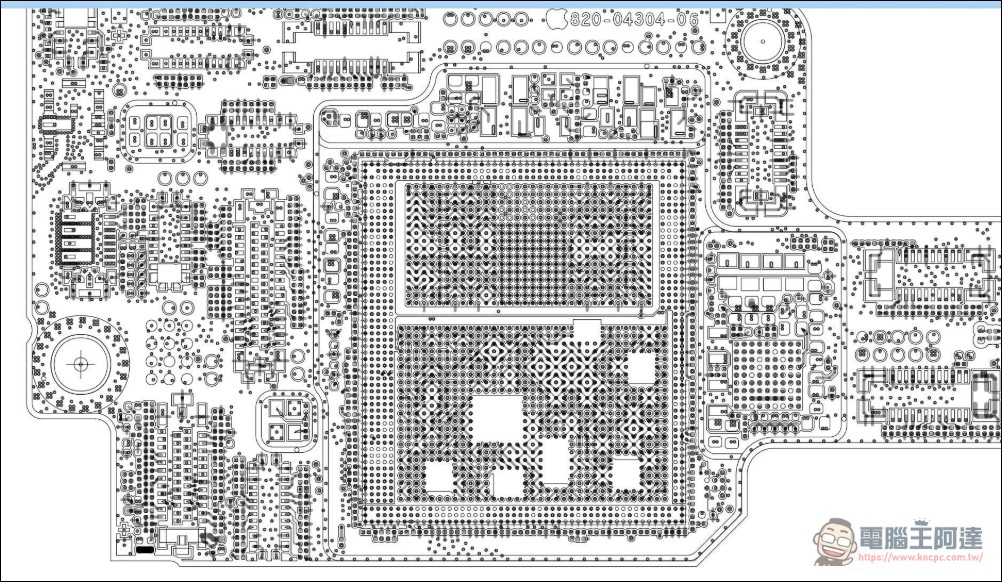
Since the leaked A20 Pro schematics do not show a significant increase in DRAM size, industry insiders speculate that Apple is highly likely to directly adopt LPDDR6, achieving a 96-bit bandwidth upgrade without changing the package size.
WMCM Packaging: A Fundamental Transformation in Thermal Architecture
The memory specification upgrade isn’t the only change—information shared by other leakers about the iPhone 18 Pro motherboard shows that the A20 Pro chip will use WMCM (wafer-level multi-chip module) packaging, replacing the PoP (package-on-package) solution used in the A19 Pro.
More detailed images of the upcoming Apple’s A20 Pro chip structure 💀
The chip is reportedly adopting a new WMCM (Wafer-Level Multi-Chip Module) packaging design that moves the DRAM to the side of the package, allowing for improved heat dissipation.
It is also expected to… pic.twitter.com/P8I4eeEdkB
— Sunny (@sunnny1583) July 6, 2026
The PoP approach stacks memory directly on top of the main chip package, which saves motherboard space but makes thermal management more challenging. WMCM, on the other hand, moves the DRAM from the top of the chip to the side, placing chips in a side-by-side configuration rather than stacking them. This design distributes the heat sources, preventing heat from concentrating in the same area when both chips are operating simultaneously.
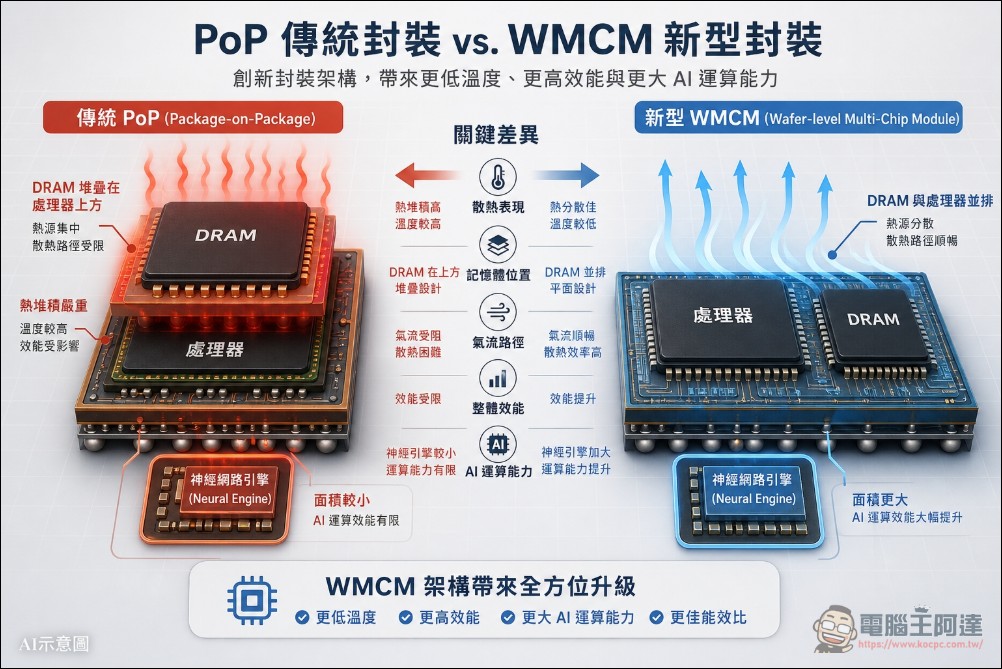
Furthermore, the die shots reveal that the A20 Pro’s Neural Engine area has grown substantially, though the overall package size remains comparable to the A19 Pro. This indicates that Apple has reallocated internal chip resources without expanding the package dimensions, dedicating more space to on-device AI processing modules.
Evolution of Edge AI-Driven Architecture
Upgrading from 64-bit to 96-bit memory bus is viewed as a reasonable and necessary evolution for Apple’s recently promoted Apple Intelligence ecosystem. Apple has adopted a hybrid on-device and cloud model deployment approach in the new Siri and Apple Intelligence, featuring both cloud-based large models and compact models running on-device, requiring higher bandwidth and greater memory capacity to handle inference workloads.
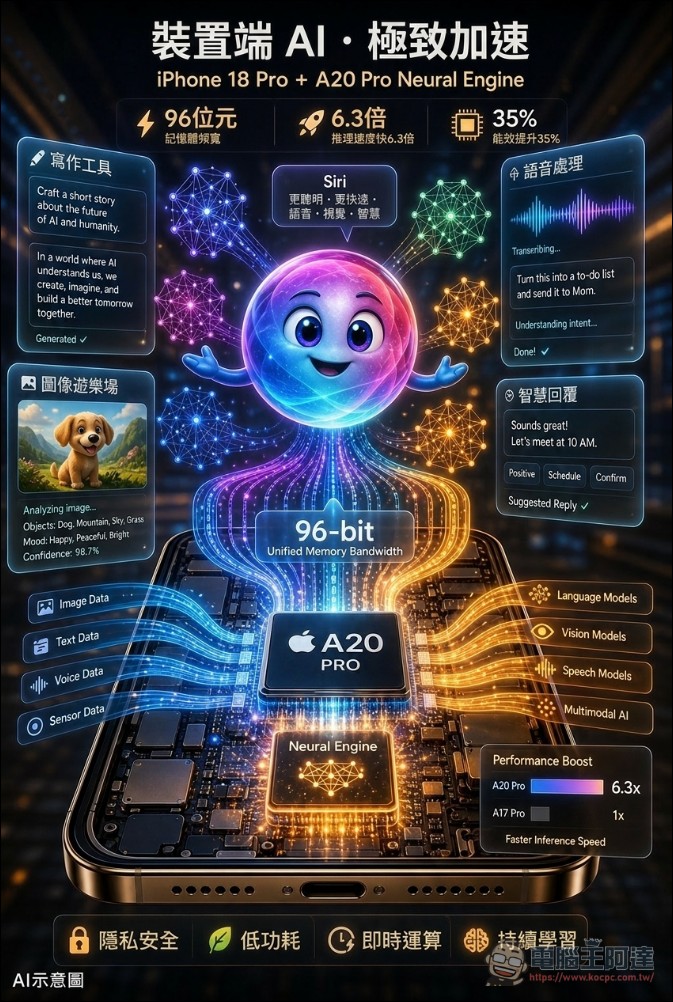
With its 96-bit bus paired with LPDDR6, the A20 Pro will provide more ample bandwidth and better latency for local large language model inference, alleviating the “memory bottleneck” that has long plagued complex model execution on devices. In fact, the Android camp has always led the way in memory specs, with the Samsung Galaxy S25 Ultra equipped with the Snapdragon 8 Elite Gen 6 Pro already supporting LPDDR6 first, leaving iPhone in the dust. If the A20 Pro is confirmed to adopt LPDDR6, it would mark the first time the iPhone 18 Pro catches up to Android flagships in memory bandwidth.
Upgrade and Downgrade Strategies Under Cost Pressure
Behind the memory upgrade lies a sharp rise in cost pressure. Industry estimates show that DRAM costs for the iPhone 18 Pro and iPhone 18 Pro Max are expected to climb to approximately NT$4,700 (USD $145) per unit, nearly quadrupling compared to the iPhone 17 Pro series at roughly NT$1,270 (USD $39) per unit. These estimates are based on a 12GB LPDDR5X configuration, and if Apple ultimately opts for the more expensive LPDDR6, memory-related expenses will continue to rise further.

Under this premise, Apple’s pressure to control overall device material costs has increased significantly, leading the company to become “frugal” with storage specifications. Recent leaks indicate that in the iPhone 18 Pro series, the 256GB and 512GB versions will continue to use faster, more durable TLC NAND, while the 1TB and 2TB high-capacity versions will switch to the slower QLC NAND. This means that the higher-priced, larger-capacity models actually have a “downgraded” underlying storage medium, with the goal of making budget room for the rapidly expanding memory costs. Additionally, Apple is also attempting to source DRAM from suppliers like Chinese manufacturer CXMT (ChangXin Memory Technologies), and is reportedly in communication with the U.S. government hoping to obtain relevant import licenses to ease memory supply chain pressures.
Conclusion
From jumping off a 64-bit bus that remained unchanged for 13 years to a 96-bit one, paired with LPDDR6 and WMCM packaging innovations, the A20 Pro appears to be Apple’s most architecturally significant mobile chip in years. However, with memory costs doubling and high-capacity models switching to slower QLC NAND, the strategic combination of “memory upgrade paired with storage downgrade” paints a complex picture of Apple’s precise balancing act between performance and cost. For consumers, the iPhone 18 Pro may run faster and have smarter AI, but higher-capacity models that cost more money might actually compromise on storage speed.
Source: KOCPC Chinese