


After GPT-5.5 debuted a few days ago,OpenAI Also released on the developer documentation GPT-5.5 Official Prompt Guide, to inform developers and users,PromptsHow to adjust this? The most important thing to note is that the long prompts everyone used to recommend are no longer necessarily the best approach. Previously, because models weren’t stable enough, writing very detailed workflows was better. But now that GPT-5.5’s reasoning efficiency has improved, this approach actually compresses the model’s search space, making answers feel very mechanical. In other words, “don’t write prompts too long anymore!”
OpenAI Releases GPT-5.5 Prompt Guide: Writing Approach Shifted from “Teaching the Model Step-by-Step” to “Telling It What You Want”
The biggest change in GPT-5.5 prompts: keep them shorter, but make the objective clearer
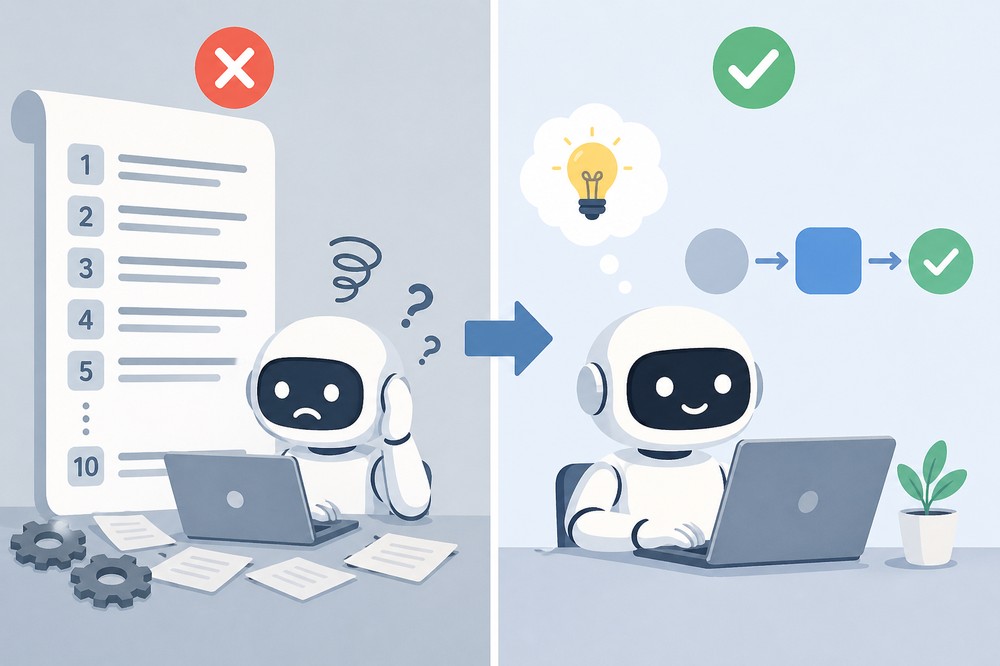
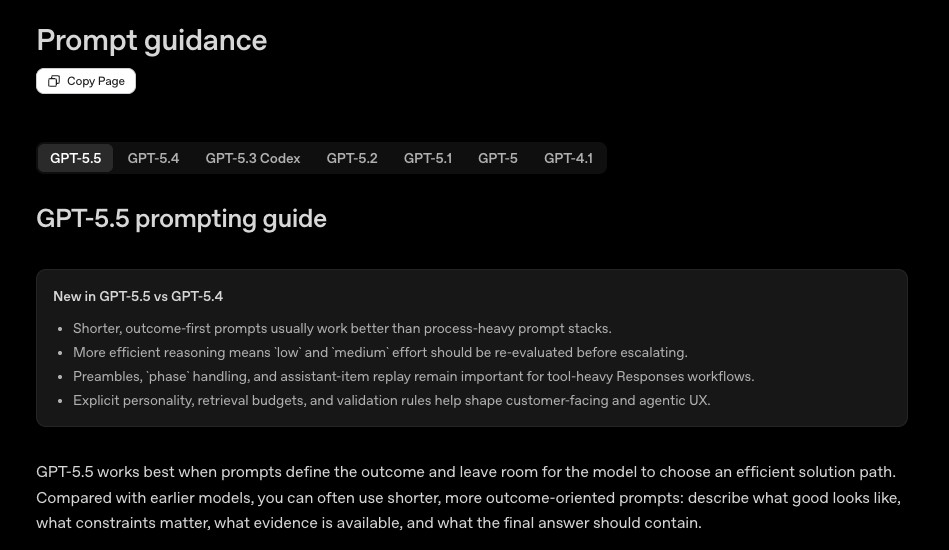
OpenAI specifically emphasizes this core shift in the GPT-5.5 Prompt Engineering Guide: “shorter, outcome-first prompts usually work better than process-heavy prompt stacks.” The idea is simple—now you just need to clearly state your end goal and any constraints, and let the model figure out the search paths, tool choices, and reasoning steps on its own.
Previously, users might write: “First search for information, then compare sources, organize key points, and finally output in a table.” But with GPT-5.5, the official recommendation is to directly describe the end result you want, for example: “Please help me organize whether this product is worth reporting on, with success criteria including major changes, user impact, quotable sources, and risk reminders.”
The benefit of this approach is that the model has more room to choose efficient methods on its own, rather than being constrained by overly granular processes.

Don’t copy over the old prompts wholesale—too many rules can actually become counterproductive
OpenAI advises against directly copying and pasting lengthy prompts designed for older models to use with GPT-5.5. The reason is that earlier models may need more step-by-step instructions to reliably complete tasks, but GPT-5.5 has stronger reasoning and task-handling capabilities, so over-specifying the process may actually introduce noise.
For example, if you hard-code every step in the prompt, the model may become more rigid, even overlooking more efficient solutions.
This is also why the official recommendation is that strong rule words like “must,” “always,” and “never” should be reserved for safety-critical or error-intolerant behaviors, rather than restricting every decision with absolute rules.
Result-oriented: define what counts as done first
Being result-oriented doesn’t mean just writing “organize this data for me” and calling it done—you need to let the AI know what constitutes completion.
OpenAI suggests that prompts can include several key points: what the goal is, what the criteria for success are, what constraints exist, what data is available, and what the final answer should look like.
For example, if you want to ask GPT-5.5 to help you write a product review, instead of writing a bunch of “first do A, then do B, then do C,” a better approach might be:
Please help me organize whether this product update is worth reporting on. Success criteria: explain the new features, summarize the user impact, highlight which content is supported by official sources and which is speculation, and finally write a summary in a way general readers can understand.
Such prompts don’t specify what the AI should do at each step, but they clearly define what the final output must include.
More isn’t always better: even GPT-5.5 needs to know when to stop
Another notable point is that OpenAI specifically mentioned the concept of a “retrieval budget.”
Simply put, this is a search stopping rule: when you have enough data to answer the question, stop searching.
For example, when you just need to verify whether a feature exists, checking official announcements or a few reliable sources might be enough. But if you want to write a comprehensive comparison, organize market conditions, or verify multiple details, you’d need to do further research. This helps keep answers from becoming lengthy and reduces unnecessary tool usage.
For creative tasks like writing articles, presentations, marketing copy, or summaries, OpenAI reminds users to distinguish between “source-backed facts” and “creative writing that can be freely developed.” This way, the AI won’t fabricate product features, customer case studies, data, launch dates, or competitive comparisons just to make the content sound more impressive.

Have AI review your own work, especially code, spreadsheets, and visual content.
When tasks can be verified, GPT-5.5 should be asked to check its own work. For example, after code changes are complete, you can ask it to run tests, type checks, linting, or build checks. For visual work, you can ask it to render and then check the layout, cropping, spacing, and whether any content is missing.
OpenAI’s recommended prompt framework: Role, Goal, Constraints, Output and Stop Rules
OpenAI has compiled suggestions into a simple template that can be divided into several sections: role, personality, goals, success criteria, constraints, output format, and stop rules.
Role:
[用 1~2 句定義模型的功能、情境與工作]# Personality
[語氣、態度、協作風格]# Goal
[使用者可看見的成果]# Success criteria
[最終回答前必須達成的條件]# Constraints
[政策、安全、商務、證據與副作用限制]# Output
[章節、長度與語氣]# Stop rules
[何時重試、退回備案、拒答、提問或停止]
This framework doesn’t need to be used in full every time, but it’s well-suited as a prompt skeleton when tasks are more complex, such as writing research reports, creating presentations, comparing products, developing features, or fact-checking news.
Source: KOCPC Chinese